Monthly Archives: May 2010

31 May 2010 radio show – wild fermentation

yes it was  a hubble bubble show when we talked about harnessing the wild things in the air to make our food more delicious and healthier.  Our wonderful new bellysister Andrew gave us a quick introduction to permaculture, it sounds like you can adapt its principles to gardens large and small, wild and messy or neat and contained. And he has a fermentation fetish!  (His words I promise)  We love a boy with a fetish on belly.  This intro will drive the search engines crazy I reckon. Sister T

GUEST : Andrew Carter, permaculture, sustainable living and delicious fermented things educator

Introduction to wild fermentation – by Andrew

My approach to pickles and ferments is inspired by living in Korea several years ago. Also Sandor Katz has been a huge inspiration. He wrote a great Wild Fermentation Book which you can get from the wild fermentation website www.wildfermentation.com  The book’s called Fermentation: The Flavor, Nutrition, and Craft of Live-Culture Foods (Chelsea Green, 2003). It’s the best and most accessible book on fermentation. Sandor is a long-time HIV survivor living in the States and boosts his natural immunity with a range of ferments that he makes (from miso, to sourdough to sauerkraut and much more). Sandor has earned the nickname “Sandorkraut” for his love of sauerkraut.

There is a wide range of scientific evidence that traditional fermentation techniques like these create healthy, disease preventing foods. But for me it’s also about the unique tastes that fermentation creates, no two ferments are ever the same.

Some people worry about germs and contamination which is understandable given the social emphasis against germs, bacteria etc. We forget that we have co-evolved with microorganisms and need them for optimum nutrition. Anyone not into yogurt these days. In the war on germs, we forget that some bacteria are highly desirable to add nutrients, assist in preserving, and removing toxins. Further, presence of many probiotic, healthy lacto-bacteria displace other unwanted ones. I believe we should take precautions against spreading disease and contamination but I sometimes think our society’s obsession with sterile conditions is linked to our state of chronic disease.

For both of the following recipes you need some equipment that can compress the pickle contents. Different cultures use different strategies. I find it easiest to use a wide mouthed, round food grade container and then find something that fits snuggly inside to weight down the ingredients. Use either food grade plastic (a honey container), glass jar or ceramic crock that easily fits your ingredients (with room to spare). The size depends on the quantity but for these recipes 1-3 litre capacity should be fine. This technique helps the material ferment and also protects against contamination. You will find that the salt draws liquid out of the ingredients which rises above the other contents – this is what you want.  You can use a saucer weighted down by a glass jar full of water, or just use a glass jar which fit inside the mouth of your chosen fermentation vessel. You will also need a muslin cheesecloth to cover the ferment to keep out flies.

Organic ingredients work best and have healthier bacteria. Also don’t use iodised salt. Iodine is anti-bacterial and will compromise your fermentation, sea salt is best. Use clean equipment and clean hands at all times.

RECIPES :


DELICIOUS GUEST RECIPES FROM ANDREW CARTER

Andrew says this is a great way to use the abundance of papayas we have in this area – practically weeds, we see them popping out everywhere, laden with fruit.  That’s the bellysisters idea of a good street tree!

PAPAYA PICKLE

Equipment

Glass, ceramic or plastic crock
Another jar (or saucer) that fits snuggly inside the mouth of the jar
Muslin or cheesecloth or tea towel

Ingredients

1 or 2 green papayas skin and seeds removed (total weight approx 500 grams)
I clove of garlic, finely chopped
1 tablespoon of ginger (grated)
Two teaspoons of salt (or to taste – should be on the salty side but not too much)

Method

Chop or grate papaya, finely or coarsely, however you like it.
Add papaya to your container, and sprinkle salt on as you go. The salt pulls water out of the papaya (through osmosis), and this creates the brine in which the pickle can ferment and sour without rotting. The salt also has the effect of keeping the papaya crunchy, by inhibiting organisms and enzymes that soften it. You might need to experiement with the amount of salt. I use more salt in summer, less in winter. For larger quantities 2 kilos of ingredients will need 2 tablespoons of salt.
Mix ingredients together and pack into jar. Pack just a bit into the jar at a time. This packs the ingredients tight and helps force water out.
Cover papaya with a plate or some other lid that fits snugly inside the jar. Place a clean weight (a glass jug filled with water) on the cover. This weight is to force water out of the ingredients and then keep the ingredients submerged under the brine. Cover the whole thing with a cloth to keep dust and flies out.
Press down on the weight to add pressure and help force water out of it. Continue doing this periodically (as often as you think of it, every few hours), until the brine rises above the cover. This can take up to about 24 hours, as the salt draws water out of the ingredients. Some veggies, particularly if old, simply contain less water. If the brine does not rise above the plate level by the next day, add enough salt water to bring the brine level above the plate. Add about a teaspoon of salt to a cup of water and stir until it’s completely dissolved.
Leave the container to ferment. I generally store the jar in an unobtrusive corner of the kitchen where I won’t forget about it, but where it won’t be in anybody’s way.
Check the pickle every day or two and taste it. Generally it starts to be tangy after a few days, and the taste gets stronger as time passes. A minimum of 2-3 days should have it tasting great. In the cool temperatures of winter, kraut can keep improving for a longer period (5-10 days perhaps). In the summer or in a heated room, its life cycle is more rapid and it may taste less pleasant sooner. Trust your senses about whether it’s okay.
Enjoy. I generally place the finished pickle in a jar in the fridge and eat as a condiment with meals.

BLOODY BEETROOT

Equipment
as above

Ingredients

3-4 fresh beetroots peeled (500 grams)
1 tablespoon Caraway seeds
2 teaspoons of salt

Process

Follow same process as for papaya pickle. Watch the brilliant crimson liquid doesn’t escape from the jar and make a mess. Beetroots can exude a lot of liquid – hence the name.


YOGURT

Andrew tells me there is a word “to yog” meaning to make yogurt – so follow his recipe and advice for happy yogging.
Equipment:

Saucepan
Thermometer
Insulated cooler
Storage Jars

Ingredients: (for 2 litres)
2 litres whole milk
2 tablespoons/30 millilitres fresh live-culture plain yogurt for starter

Directions:
Preheat jars and insulated cooler with hot water so the yogurt stays warm to ferment.
Gently heat milk to 82o stirring frequently to avoid burning the milk (heating the milk results in a thicker yogurt)
Cool the milk to 43o or as close to body temperature as you can (+/- 4o is okay as the culture is pretty robust)
Add the starter mixing it thoroughly into the milk.
Pour the mixture into the sterilised preheated jars and seal.
Place the sealed jars in the insulated cooler and place towels or bottles of hot water in with them to ensure a warm temperature is maintained.
Place the insulated cooler in a warm spot where it will not be disturbed.
Check yogurt after 8 to 12 hours – it should have a tangy flavour and some thinckness.
If your happy with the flavour and the thickness remove from insulated cooler and place in the fridge ready to be consumed.

Things to remember:
It takes 8 to 24 hours to make yogurt.
Starter Culture – you can buy specialised cultures for this or use any commercial live-culture yogurt make sure it says “contains live-cultures” on the label.
When cooling the milk to 43oc don’t let it get to cool as the yogurt cultures are most active in the above body temperature range.
With the starter less is more: The bacillus, if crowded, gives a sour, watery product however if the culture has sufficient Lebensraum (German for ‘room to live’) it will be rich, mild and creamy.
If after 8 hours the yogurt isn’t thick then it hasn’t “yoged” if this happens warm it up again by filling up the insulated cooler with hot water around the jars of yogurt, adding more starter and leaving it for 4 to 8 more hours.
You can leave the yogurt to ferment longer if you wish, if you do it will become more sour  more of the milk’s lactose is converted into lactic acid.
A longer fermentation period can often make yogurt digestible even for lactose-intolerant individual.
Yogurt can be stored in the refrigerator for weeks, though its flavour will become more sour over time.
Save some of your yogurt to use as starter for the next batch.

yogurt being incubated in a recycled veggie box


BELLY LAB RECIPE BY SISTER T

PICKLED CHOKO

This is not fermented sorry, just a quick easy pickle for a tasty snack, but you can eat it while drinking something fermented, and chokos are the very definition of abundance.

Peel your chokos, slice them, put them in sterile jars with garlic cloves, coriander seeds, peppercorns, fresh tarragon sprigs, or any flavours that take your fancy.

Bring to the boil 1/2 cup white wine or cider vinegar and a cup of water with 2/3 tbs salt, dissolve the salt.  If you have a lot of chokos of course multiply these amounts.Fill the jars and wait 10 days if you can.

FRESH REPORT

*garlic lovers’ alert, local almost all finished, get some now
*chokos, still some, throw one at the fence to plant them is choko grower Craig’s advice, make choko pickle so you won’t miss them when they finish
*lots of green leafy things & rooty things like turnips, if you find fresh and local roots you can eat the tops of many, blanch in salty boiling water, squeeze and chop in spinach recipes, or on pasta with the steamed root – you can do this with beetroot, some turnips,  also try them with Japanese  miso dressing and make like a Buddhist monk
*lots of local citruses, great with sharp leafy things in salads: lemons, limes, mandarins, oranges, pink grapefruit –  make marmalade, experiment with flourless cake and muffin recipes because there are  new season local nuts too, pecans and macadamias, try nuts in short pastry bases or biscuits or in jams
*pineapples, passionfruit, they seem all wrong to me in this cold weather, but still in local markets
*plant some chervil – Debbie the  belly herbologist, says now is the time to plant herbs that like rain and cool weather, divide gingers/galangal, and harvest them

BELLY BULLETIN

Di , one of the many wonderful bayfm listeners is doing a fundraiser in Suffolk Park this Friday June 4 for the breast cancer foundation.  This is part of the Cancer Council’s biggest morning teas, if you missed one of the others in May – cake and tea at the Suffolk park centre 9.30 to 12, ring Di to pick up raffle tickets or donate a cake, she is near the  Suffolk shops, 6685 9970, the raffle prize is a great painting by local artist Alexandra Spiratos, – so go to Suffolk eat cake and do some good.

Tuesday June 1 is the screening of The Future of Food, a fundraiser organised by Seed Sowers Organic, to raise funds for school gardens at the Byron Services Club  [at 4 pm and 6 pm]

The first 200 people at this event will be invited to participate in the installation of a school garden,at which time Seed Sowers Organic and friends will conduct free workshops related to Gardening, Fermentation, and Raw Food Preparation.
More details at http://lifechangingdocos.com/northernnsw/blog

And Byron Council is running mini composting workshops at New Brighton and Mullumbimby farmers markets, and selling cheap compost bins and worm farms.


EDIBLE QUOTE

Rick Stein,  a travelling food presenter that doesn’t completely ignore the dark side of the places he visits – he says, no matter where you are:    “Food is all about good times even if there are terrible things going on all around you”. Rick Stein’s Far Eastern Odyssey – ABC1

CONTACTS/LINKS:

Andrew Carter , thegardenteacher@gmail.com        0432 406 228

www.wildfermentation.com

www.byroncollege.org.au – to enquire about Andrew’s courses or other sustainable living courses

radio show 24 May 2010 : veggie warriors, geminis and chestnuts

…yes a bit of an odd mix when you put it like that.  It’s a bit hard to explain what Kieran is doing in 2 words, go to the fundraiser and let him explain. Today’s topics were the dangers of industrial food and seed production and some grass (or veggie patch) roots solutions, the deliciousness of chestnuts, and Lilith is cooking with the stars  for  Gemini. And at least one famous Gemini chef, Jamie Oliver, is a bit of a veggie patch warrior too.

GUESTS : Kieran Weston, organic heirloom seedling grower
Lilith, astrogourmet

KIERAN’S SCHOOL/NURSING HOME PROJECT :

“Seed Sowers Organic Seedlings with Life Changing Documentaries is hosting a fund raising movie night at the Byron Services Club on the 1/6/2010 [at 4 pm and 6 pm]
The not for profit event is focused on raising awareness of major issues that confront our local and global communities along with future generations.
Proceeds from the evening are intended to fund the installation of Organic Gardens in Schools, and assist in the formation of community cooperative programs, which are hoped to foster a closer community.
The first 200 people to register online for this event will be invited to participate in the installation of the garden at the school,at which time Seed Sowers Organic and friends will conduct free workshops related to Gardening, Fermentation, and Raw Food Preparation.
Seed Sowers Organic would welcome expressions of interest on the night from schools retirement villages and other community groups that feel they would like to be involved. ”
[see contacts/links below]

Seed Sowers last school garden workshop...

...and the flourishing vegetable garden

GUEST RECIPES :

SOME HEALTHY SMOOTHIES FROM KIERAN :

Abundant Vegetable Smoothie

2 roma tomatoes
1 small carrot
1 small zucchini
1 clove garlic
1 tablespoon onion
2 stalks celery
1 red bell pepper
1 tablespoon fresh parsley
2 cups water
1 Avocado
Blend all ingredients together until creamy.

Contributed by: Brenda Cobb (www.LivingFoodsInstitute.com)

“When I Eat This, Life is Bliss” Smoothie

3 bananas
1 cup raspberries
2 golden delicious apples
2 big handfuls of spinach
½ – 1 cup of water

Blend and indulge!
(best if your blender is 800 watts or more for the ultimate consistency)

ESPRESSO GRANITA SPIKED WITH COFFEE VODKA  – from LILITH

­ like Geminis it’s light, but it’s got bite

Ingredients: 2 cups brewed espresso, sugar to taste, coffee vodka.
Garnish: Dark chocolate curls, fresh pomegranate, Italian cats tongue biscotti, up
to you…

Directions: Combine espresso and sugar in a bowl and stir till sugar is
dissolved.  Pour into shallow dish and freeze till ice granules start to

form around the edges, about 1 hour, then stir with a fork to break up
granules.  Refreeze and restir every 20 minutes till the mix becomes an icy
slush, about 2 hours.

To Serve: Spoon crystals into goblets, pour coffee vodka over, garnish as
you fancy.

Australia's groovy chestnut mascot : Mr Chesty!

FROM THE BELLY LAB – by sister Tess

BOILED CHESTNUTS:

choose fat, shiny chestnuts, with skin that feels tight and full, make a small cut on each so they don’t explode

boil in plenty of water with a few few fennel fronds or a good pinch of fennel seed, and a pinch of salt, until the inside is soft

cut one open to check

eat warm or cold after peeling off both the outer and the inner skin, they keep for 2-3 days in their skins
or peel and use in various recipes (labour of love)

LILITH IS COOKING WITH THE STARS : GEMINI

Today we’re wishing happy birthday to all the Shire’s busy Geminis, for whom constant change and variety are the spice of life, and who just love eating with others: they adore the stimulating buzz of gossip over plutonic coffee while snacking on interesting nibbles at the latest nook with the look, or doing lunch at the newest smart little eatery serving tiny portions for high prices to celebs.

So it’s no surprise that Gemini celebrity chef Delia Smith baked the cake on the cover of the Rolling Stones album Let It Bleed, and received an OBE last year for her contribution to British cooking.  She shot to fame with Delias How To Cook TV series which actually  taught Brits how to boil an egg, a show which led to a 10% rise in egg sales.   From bread machines to pasta makers to panini grills, Geminis love their gadgets, and Smith’s use of particular kitchen utensils caused overnight sell-outs ­ a phenomenon which came to be known as the Delia Effect, and that phrase is now in common use to describe a run on a  product as a result of a high profile media recommendation.

Gemini chefs also tend to be ultra moderns who love coming up with novel combinations and techniques like Gemini kitchen chemist Heston Blumenthal whose signature dishes include snail porridge, parsnip cereal and bacon-and-egg ice cream (must have an Aquarian ascendant).  Famous for his scientific approach to cooking, culinary alchemist and molecular gastronomist Blumenthal promotes the use of vacuum jar cooking, cooking in sealed bags and low temperature, ultra­slow cooking of meat that doesn’t melt fat or release juices, keeping the meat so moist it doesn’t need sauce.

His Fat Duck restaurant was voted best in the UK and best in the world, and his TV program Heston’s Feasts recreate Victorian, Medieval, Tudor and Roman themed dinner banquets with celebrity guests ­ all very Gemini.  The Edwardian feast was based on the last meal
eaten on the Titanic and the Christmas feast included dormouse, hot ice cream and a dish made from gold, frankincense and myrrh.

While they’re the zodiac’s people people, Gemini chefs aren’t all celebrity showponies turning out moreish little morsels of elegant party tucker and Naked Chef Jamie Oliver, restaurateur and frequently outspoken media personality, has been awarded an MBE, voted Most Inspiring Political Figure of 2005 for lobbying the British government about British kids being served junk school lunches, and for creating a foundation which takes 15young adults a year from disadvantaged backgrounds,  and trains them in the restaurant business.  Another cheffy success story who left school at 16 with no qualifications,  his TV series continually emphasize fresh organic produce and interesting low joule cuisine, and campaign to change poor cooking habits andunhealthy diets.

Sophie Grigson is another Gemini cookand author who’s a keen supporter of organic local food suppliers andadvocate for healthy children’s food.

by Lilith

radio hula pic by KK - just to prove that Lilith really does wonderful hula performances while us bellysisters vainly try to keep the show on the rails


EDIBLE QUOTE
:

“For any chef, supermarkets are like a factory. I buy from specialist growers, organic suppliers and farmers”.

by Jamie Oliver, who got into a bit of trouble for saying this because he does ads for UK supermarket chain Sainsbury’s

CONTACTS/LINKS:

http://lifechangingdocos.com/northernnsw/blog – to book for the Future of Food screening in Byron Bay

Seed Sowers Organic seedlings are at several markets and farmers markets around the Northern Rivers, including Byron Bay and Mullumbimby

http://www.chestnutsaustralia.com.au/recipes.html – oodles of chestnut recipes aand tips and the fabulous Mr Chesty

a few links to the attempted Jamie Oliver US conquest:

http://www.jamieoliver.com/campaigns/

http://www.jamieoliver.com/campaigns/jamies-food-revolution

http://www.guardian.co.uk/lifeandstyle/2010/mar/25/jamie-oliver-us-healthy-eating – worth clicking just to see him dressed as a pea

http://www.independent.co.uk/news/people/news/west-virginia-eats-jamie-oliver-for-breakfast-1925393.html – good article on the uphill battle Jamie is facing in the US

some more healthy veggies planted in by the student volunteers and Seed Sowers at a local school

17 May 2010 radio show : lemons, pears and jerusalem artichokes

just like diamonds, can be forever if you play your cards right.  During this show, Melissa shared some  favourite flavours from her New Zealand childhood, including the famed Edmond’s cookbook, and ones she has picked up as a professional cook in tropical QueenslandAs well as cooking at the Yum Yum Tree Cafe in New Brighton, and looking after her 2 and 1/4 children, she loves to preserve in season fruit.The bellysisters also talked about the wonderful Jerusalem artichokes, and lots of foodie news and events.


PRESENTERS : sister T and sister B of the Preserve Paradise
GUEST : Melissa Kitto, New Zealand born cook and  talented preservist

GUEST RECIPES : by Melissa

LIMONCELLO

1 litre of pure Alcohol (or vodka)
10-12 lemons (unblemished skins) using the zest only
[during the show Melissa recommended thin skinned lemons such as Meyer, currently in season]

Soak the zest of the lemons in the litre of alcohol for 14 days.

When 14 days have passed………….
Measure 2 litres of water into a large pot, add 2 cups of sugar and stir
over medium heat until dissolved and the water is clear. Remove from heat and
let cool.
Next strain the lemon peels from the alcohol and discard.
Mix the alcohol with the cooled sugar water and bottle in sterilised glass containers, you now have Limoncello.

YumYum

OLD FASHIONED SPICY  PEAR CHUTNEY

3 kg pears de-seeded and chopped
1 kg sultanas
750 g. dates
1 kg brown sugar
1 tbs salt
4 tbs fresh ginger grated
6 cloves garlic sliced
2 litres cider vinegar

Place ingredients in a  pot and bring to the boil, reduce heat
so a rolling boil is maintained for  2 ½ – 3 hours or until brown and
thick, stirring  to prevent it sticking to bottom of pot.

Pour into sterilised jars, makes about 8 medium jars.

OLIVE RECIPE

do you have a good one? share it with the bellysisters please, it’s olive season

JERUSALEM ARTICHOKES

Easy to grow, they can even become a pest.  Maybe try them in a big pot in our area, adding organic fertiliser after each season.

They should look like plump, healthy roots.  Wash, scrub, maybe peel.

Great in soup with potatoes or leeks, or raw, sliced very fine into a salad.  Or boiled or steamed, then in a salad with potatoes and herbs like parsley, chervil, dill.  Or with mustardy leaves or watercress or spinach.

See link below for more info.

EDIBLE QUOTE:
by fish-loving visionary and ex-president of the USA George W. Bush:

‘I know the human being and fish can coexist peacefully’

CONTACTS/LINKS
:

“the Edmonds” NZ cookbook bible – http://www.edmondscooking.co.nz/ : lots of recipes from the book that has shaped generations of NZ cooks

‘The End of the Line’ documentary about overfishing :

http://www.greenpeace.org/australia/news-and-events/events/EndoftheLine-130410 – film info, Australian screeenings

http://www.greenpeace.org.au/blog/?p=2005 – interview with Charles Clover, who wrote the book “The end of the line”

http://www.youtube.com/watch?v=20Jcrk6jGfo
– Bush’s fish-lovin quote

www.gunnawannabe.com or ring Mick or Thelma on (02) 6622 7094 for bush food classes

www.casinobeefweek.com.au – beef week this year runs from Saturday 22 May to Monday 1 June

www.surveymonkey.com/compostbyron – direct link to Byron Council’s composting, food and garden waste survey

www.byroncollege.org.au – all the cooking courses and sustainable food growing courses you could wish for

http://permaculture.org.au/2008/12/30/jerusalem-artichokes-like-diamonds-are-forever
/ – good information on growing and cooking Jerusalem artichokes

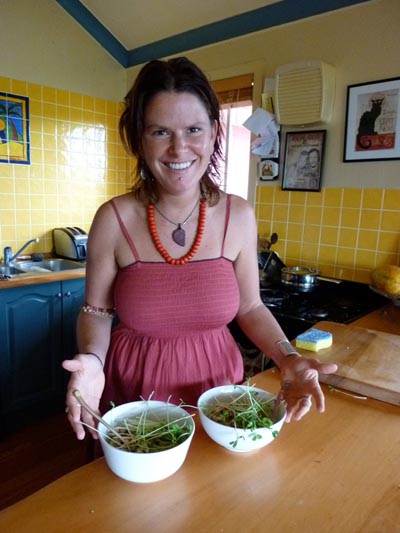
10th May – Sonja ‘Yummy in my Tummy’ Kovachevich

Here we have someone that is as passionate about eating as the Bellysisters!

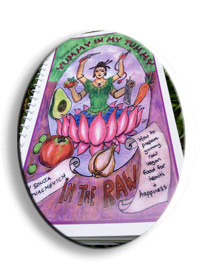
Sonja is the author of the delightfully illustrated and personally handwritten ‘Yummy In My Tummy’ cookbook series… although ‘cook’ book may not be the appropriate description for them as her latest one is called ‘In The Raw’.

Australian Yogi, international wanderer – mother nature’s grateful child, admirer and supporter and of all happy tummies.

Enthusiastic  explorer in the realm of taste, spirit and radical well being, seasoned experimenter in the art of creating extreme yumminess from simple wholesome home-made concoctions, here to provide practical know how for your sweet enjoyment.
Sonja has a big passion for food, health and spirit.  Her books combine an emphasis on all three. They are the fruits of continual experimentation with different wholesome foods in the search for that perfect combination of good simple taste, minimal cost, time and effort and good sustenance.

Sonja has traveled the world and sampled many flavors along the way which seem to be evident in this simple introduction to doing it ‘healthy style in the raw’ at home, if it tickles your fancy.

Raw food has so many wonderful benefits as it retains all of it’s nutritional value and by soaking and sprouting certain foods we literally bring it to life. Adding more food that is alive in your diet can bring YOU more to life and provide great energy and sustenance if you combine it correctly and if it suits your constitution.

Sonja says that  ‘In The Raw’ has been created from the heart and it aims to inspire and encourage you to love your food and love yourself and to make food preparation and enjoyment a conscious and joyful experience.

“May All Beings Have Happy Bellies”

If you would like to make your Belly smile perhaps you can try one of Sonja’s latest favorite raw recipes.

Magic Mousse

(feeds 2… or 1 greedy Belly)

Blend up : 1 banana, 1 avocado, handful of cacoa nibs (ground or blended or raw cacao powder), 2 tbsp or carob powder and some soaked juicy dates OR 1/2 tsp stevia powder or a few drops of liquid stevia (natural sweetener, go easy as it is extremely sweet!)

and EAT… YUM!

3rd May – Annie Evans the Dig Cook

Annie Evans is a DIG COOK…


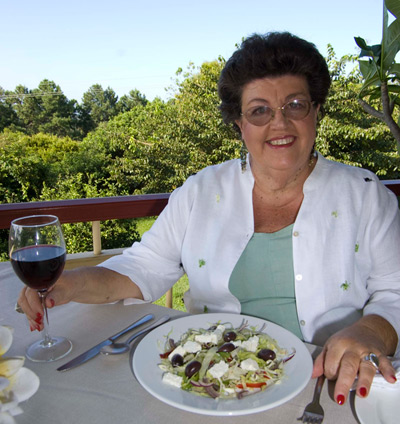
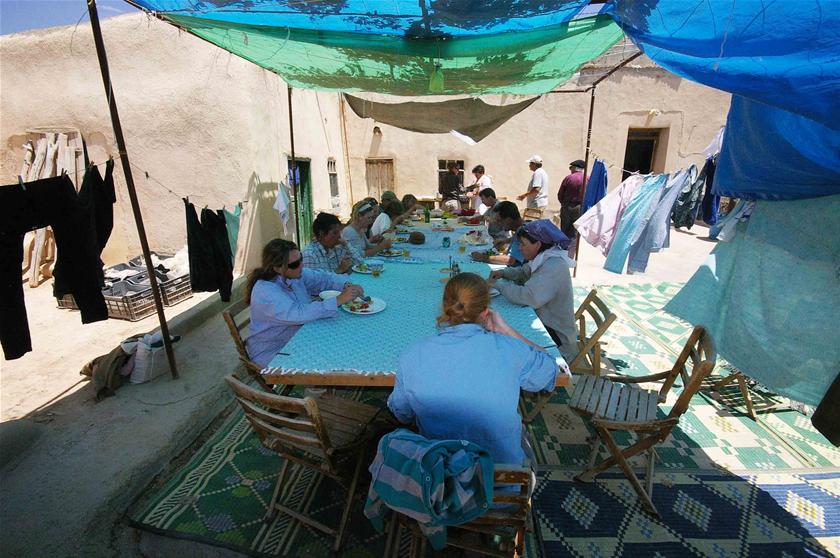
… if you are wondering exactly what this entails (and so was i until i met Annie) it is someone who travels the world on archaeological digs, cooking for the whole party for the entire duration of the dig. This has taken Annie to faraway places and to countries where food is difficult to purchase and even harder to prepare.

Annie spoke of the most unusual circumstances to cook in, from a mud brick house in the Troodos mountains of Cyprus, to small villages perched high in the Greek mountains . The immense amount of planning and preparation that goes into each trip is quite extraordinary and having to adapt menus and recipes to fit the culture and country and availability of produce could be hard work if you are not Annie Evans!

Our local wonder chef has encountered obscure supermarkets packed to the rafters and bursting with bizarre and unrecognizable objects and foods and has bought more than her fair share of highly unusual items , like an octopus that was sold to her by a local in Cyprus on the side of the road, after which came the job of knowing how to turn it into something tasty and edible.

We heard all of this along with the joys of discovering her ‘talent’ as a traveling cook at, shall we say, a more mature time in her life.

This lady is full of delicious inspiration and her infectiously cheerful manner was delightfully tasty and something you would certainly look forward to coming in from a dig for.

Annie left us with one of her favorite recipes, a Moroccan Spiced Vegetable Dish (which can also be adapted to you meat eaters out there).  You can discover it and many more on Annie’s website. www.digcook.com

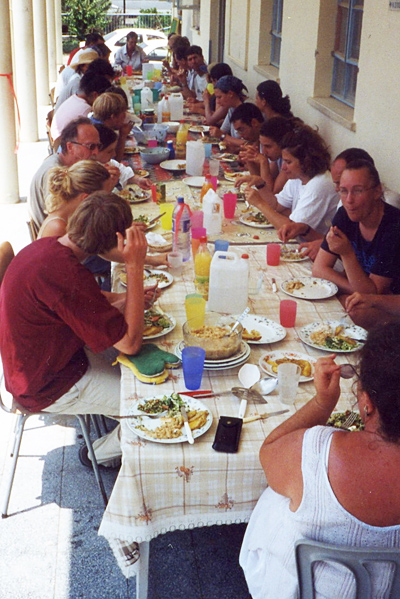
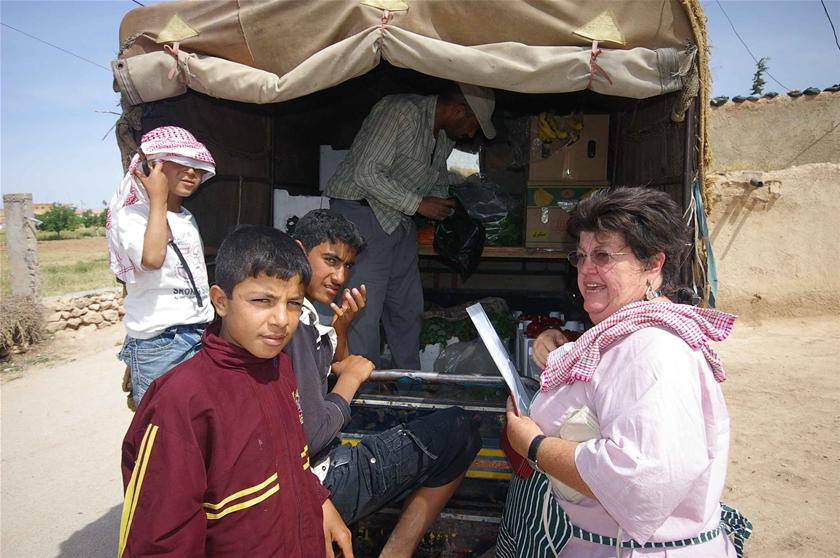
Annie’s 12th expedition took her from her home in Myocum to the lands of Syria and beyond.

I can’t wait to catch up with Annie to hear more stories of food adventure and tasty tales  to go with the images below. This is certainly a very colourful time in Annie’s life and i hope that it serves as an inspiration to all of those out there who think that life slows down when you reach a certain place in it. Well, Annie is here to remind you that it doesn’t!

Syrian Dig

Annie shopping for fruit and veges from locals in Syria