Monthly Archives: June 2010

The Slow Show… Snails, Sloe Berries and The Slow Food Movement

MONDAY 28th JUNE

All aboard!! Sister Rasela is taking your Bellies for a ride in the slow lane.

Cruising off at breakshell speed from the starting gate, we ventured into the world of the Escargot (otherwise known as those slimy little backpackers living in your garden beds)

'Johnathon'

Meet ‘John’.

John has aspirations of becoming a wicked camper van when he speeds up. Unfortunately he didn’t make it into the studio on time for the arranged interview but i was still able to bring you the life of the snail, from the garden to the plate… or in some cases – the Belly.

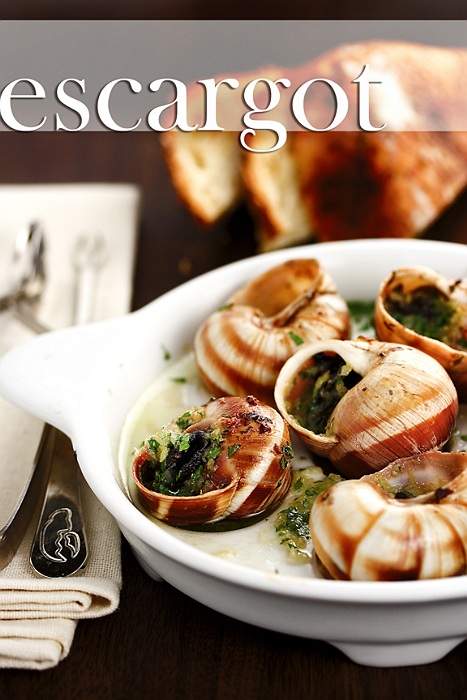
The garden snail “Helix Aspersa” first arrived in Britain with the Romans who loved to eat them. It is this type of snail that is most cultivated for gourmet food known as ‘Petit Gris’. Roasted snail shells have been found in archaeological excavations, an indication that snails have been eaten since pre-historic times.

Apparently there are approximately 300,000 tonnes of snail meat consumed around the world per year. France being the leader followed by the emerging markets of Japan and USA.

Edible snails range in size from 1mm long to the giant Africal snail which occasionally grows up to 1 foot long! mmmmmmm…? Escargot most commonly refers to either ‘Helix Aspersa’ or ‘Helix Promotia’ but beware, the ‘Achantina Fulica’, the giant African snail, is sliced and canned and passed off to some overseas consumers as escargot.

Heliculture is the process of farming or raising snails. In ancient Rome, snails were fattened up in ‘cochlear’ gardens before they were eaten. Anyone wishing to raise snails at home should first experiment until you find what works best in your situation. They must be kept in a cool, moist and shady environment, supplying artificial dew if necessary, supplying vegetation as feed and fattening them on a variety of mixtures which could include such things as cornmeal.

If you don’t care to raise a family yourself, easier ways to get them are to gather them from farms of artichokes, kiwifruit, avocado and citrus growers in certain areas. Be careful though that they haven’t eaten poisoned bait or agricultural toxins.

Favorite snail foods

Apples, artichoke (favorite), barley, beans, cabbage, carrot, cucumbers (favorite), lettuce (makes good clean snails), tomatoes (well liked).

They prefer juicy leaves as apposed to over dry ones and their diet is a combination of 20% wheat bran and 80% fruit.

Snails are mature when a lip forms at the opening of their shell. Before they are mature their shells are more easily broken making them undesirable. For Helix Aspersa, commercial weight is 8 grams or larger.

Before murdering… ooops, i mean cooking your little friends, you will need to purge their digestive systems of previously eaten foods which usually takes about 3-4 days and a diet of cornmeal or bran will suffice due to it’s fiber content. It’s basically a ‘fast’ and you will need to make sure that they are in a pen that does not touch the ground otherwise they will eat the dirt and dust. Be sure they don’t escape!

Nutrient composition of Raw Snail – (per 100g of edible portion) according to information from nutrient database in France is:

Energy (kcal) 80.5
Water (g) 79g

Protein (g) 16g

Avail Carb (g) 2g

No Fibre

Fat (g) 1g

Magnesium mg  250g

Calcium 170g

Iron 3.5g

To prepare live snails for cooking

  • Remove membrane, if any, over shell opening
  • Soak snails in enough water to cover. Add 1/2 cup salt or 1/4 cup vinegar for every 30 snails
  • Mucus will turn water white so change the water several times in 3-4 hour soaking period
  • Put snails in cold water and bring to boil. Boil for 8 minutes, drain, plunge into cold water.
  • Drain and then with a needle or fork, prick snails from their shells.
  • Remove intestine (yum), cut off black parts and prepare according to recipe.
  • Being the only vegetarian/vegan bellysister, i can’t find it in my heart or my taste buds to bring you a delicious recipe but i assure you if you are truly keen on swallowing these slippery little suckers, google snail recipes and there you will find them in abundance!

Next we moved onto something for those of you that like a Sloe tipple or three.
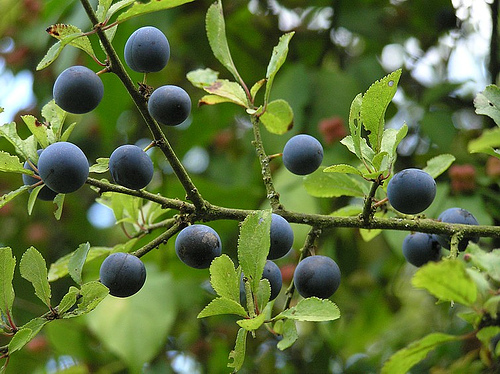

PRUNUS SPINOSA – The Blackthorn or SLOE

This is a species of Prunus, native to Europe, Western Asia and North West Africa.

The beautiful berries are the ancestors of the cultivated plum. The Sloe or Blackthorn is best known for the excellent liqueur ‘Sloe Gin’, a wonderfully pink coloured drink much favoured at Christmas time when the Berries will have infused sufficiently well with the gin and sugar.

In the British Isles, it’s shrub is most commonly found in woodlands or hedgegrows and can easily groe up to 12 foot high. Look out for flowers from March to May and pick the fruit from September to October.
When making the gin, it is important for the gin to permeate the skin of the fruit so it is worth waiting for the ‘first frosts’ to soften the skin, although ‘pricking’ the fruit is still advisible.

Folklore has it that when making Sloe gin, one should not prick the berries with a metal fork unless it is made of silver. The traditional method is to prick the berries with a thorn taken from the Blackthorn bush on which they grow.

How to make Sloe Gin

Warning – this has an alcoholic content of between 15-30% by volume.

  • Berries must be ripe. In the northern hemisphere they are traditionally picked in late October or early November after the first frost of winter.
  • You will need a wide necked jar that can be sealed. Each berry is pricked and the jar is filled 1/2 way with the pricked berries.
  • For each imperial pint (570ml) of Sloes, 4oz (110g) of sugar is used, then the jar is filled with gin, adding a few cloves, a smaill stick of cinnamon and almond essence to taste.
  • Seal the jar and turn it several times to mix then store in a cool dark place. It is turnes everyday for the first 2 weeks and then each week until at least 3 months have passed.
  • The gin will now be a deep ruby colour.
  • Pour the liqueur off and if you want to re use the leftover berries you may do so by infusing them in cider, making a jam or they may be used as a basis for chutney or even as a filling for liqueur chocolates.
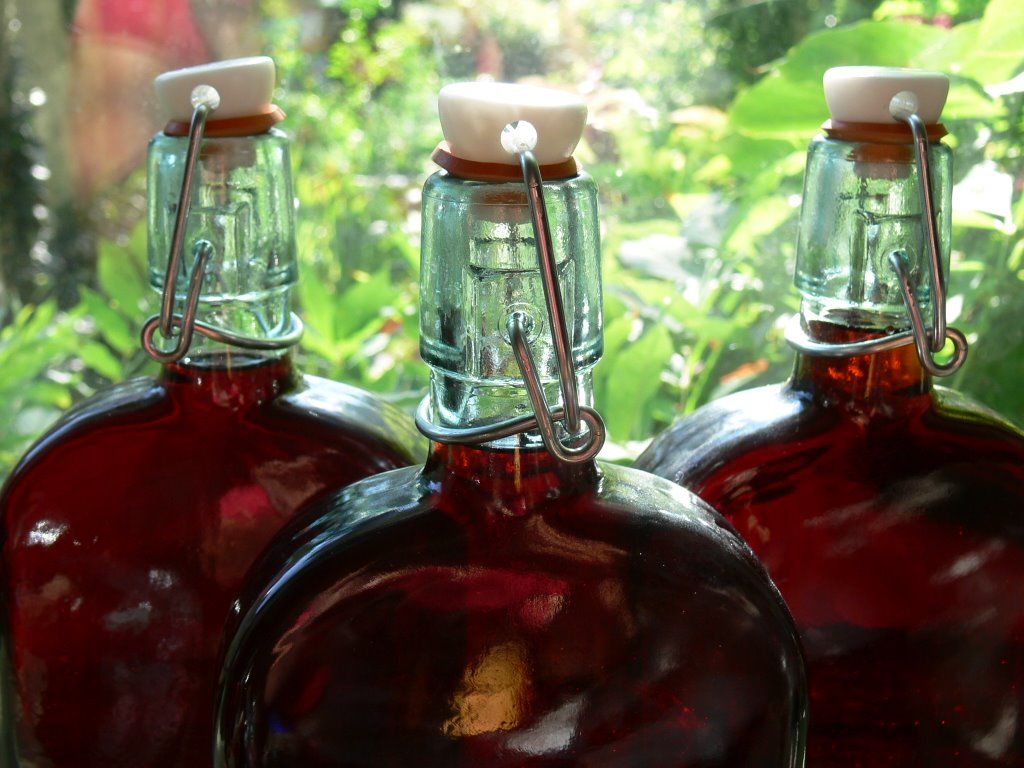
Homemade Sloe gin is a much more complex and subtle drink than that produced commercially.

All this talk of Sloe gin is making me thirsty but before i can indulge in such pleasures, i must first finish with the chatter from my studio guest this week from…
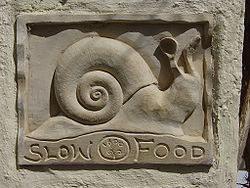
THE SLOW FOOD MOVEMENT

My guest was Vic Cossford, leader of the the Slow Food Movement in our lovely Shire, who spoke to us about philosophies, bio-diversity in this area and how SFM involves local growers and producers, progress on the petition for Raw Milk products and their (non) availability, events throughout the year, and a general clearing up of any misconception as to what exactly the SFM is all about.

Slow Food was featured on the Belly show a few years ago and you will find a link to the website on our home page, so my main aim this week was to ask about the raw milk and cheese petition and it’s subsequent progress.. or lack of it.

In Australia we are still unable to purchase raw milk or make specialty cheeses from raw milk products, although we are allowed to import other countries raw cheeses into Australia. People who are interested in purchasing, making or supplying any raw milk and cheese products may wish to sign the current petition by going to the slowfood website and showing your support.

On a separate and final slow note

Geir Berthelsen and his creation of ‘The World Institute of Slowness’ presented a vision in 1999 for an entire ‘Slow Planet’ and a need to teach the world “The Way of the Slow”

Professor Guttorm Floistad summarizes the philosophy stating:

“The only thing for certain is that everything changes. The rate of change increases. If you want to hang on, you better speed up, that is the message of today. It could however be useful to remind everyone that our basic needs never change. The need to be seen and appreciated. It is the need to belong. The need for nearness and care and a little love. This is given only through slowness in human relations. In order to master changes, we have to recover slowness, reflection and togetherness – there we will find real renewal”


21st June – Digging deep in this months seasonal fresh report

Sister Rasela getting fresh with you today by bringing you the seasonal monthly report to let you know the best produce this Earth has to offer right now.

Vegetables and fruits are grown throughout the year at precisely the times we need them most and an in depth look at them will reveal exactly what they do for your body.

Here we touch on a few select vegetables:

Jerusalem Artichoke: “Sunchoke”

Nourishes the lungs. It’s sunflower related tubers are indigenous to North America and were a staple in the Native American diet. Excellent raw or lightly cooked. *Rubbery if cooked more than 10-15 mins.

Avocado:

Natural source of Lecithin which protects cells from oxidation and largely comprises the protective sheaths surrounding the brain. Also an arterial cleanser as it is an emulsifier. More than 80% of an avocado’s caloric content is easily digestible fat. It is rich in copper which aids red blood cell formation.

Beetroot: This silicon rich vegetable promotes strength in connective tissue = skin. Strengthens the heart, improves circulation, purifies the blood. *The greens on top contain abundant oxalic acid which if eaten excessively, inhibit calcium metabolism.

Broccoli and Cabbage: Both contain more Vitamin C than citrus!

Garlic: Promotes circulation, inhibits common cold virus. A degree of potency is lost with any kind of cooking but due to it’s fiery nature it can be difficult to eat raw. Try placing it between 2 apple slices to eat. *Extremely warming and not for the already hot (ruddy complexion, night sweats)

Ginger: Combines well with bean dishes to diminish problems of flatulence. Cleansing as a tea in the morning. Simply add a few slices to boiling water.

Kale: Warming. Exceptional source of chlorophyll, calcium, iron, vitamin A (good for night blindness)

Parsnip: Warming vegetable but beware *Leaves are poisonous!

Potato: *Green potato’s and those with sprouts on top are toxic! Remove the eye of the sprout if you are using them this way.

Pumpkin: Who doesn’t love a bowl of pumpkin soup in the winter? Promotes discharge from the lungs, bronchi and throat.

Shallots: All members of the onion family share certain key qualities. The pungent flavour ‘enters’ the lungs and promotes warmth and thus moves energy in the body and expels coldness. One of the richest foods in sulphur- a warming element that purifies the blood. In spite of their medicinal virtue, these plants are thought to foster excessive emotional desire and therefore are not recommended in the major Eastern traditions for those seeking mental and spiritual refinement.

Spinach: Builds the blood. Rich iron and chlorophyll content.

Sweet potato: *Overeating causes indigestion and abdominal swelling/bloating.

Turnip: Member of the mustard family. Good source of sulphur which makes it warming. Mildly pungent qualities are easily destroyed through cooking. Turnip greens are exceptionally rich in vitamin A.

RAW BEETROOT SALAD RECIPE

The bursting BEETROOT with all it’s goodness makes a scrumptious raw salad

Two medium beetroots, peeled and grated

1/4 red salad onion finely sliced

6 baby tomatoes chopped (if tomatoes are out of season this dish is a delight as an alternative to a bruschetta mix)

1/2 lebanese cucumber chopped

3 dessert spoons of lemon juice

1 tbsp flax seed oil

2 tbsp extra virgin olive oil

2 tbsp capers in their juice

1 handful chopped mint

Ground pepper to taste

Fresh chilli to taste

Mix all the ingredients together and serve as a salad, a side dish or on toast rubbed with garlic. All ingredients can be varied to taste. As beetroot is quite sweet, a slightly tangy and salty balance is quite desirable. This dish is also tasty on top of tsatziki dip on toast or with cream cheese (soy or dairy) or blended as a dip.

Top tip for those of you wanting naturally red lips… Raw Beetroot. Not quite as elegant as carrying lipstick around with you but equally effective!

Synthetics – sneak a peak at what you might be eating

MONDAY 21st JUNE

This morning I inquired as to what you might have had in the way breakfast or a mid morning snack… perhaps a blueberry muffin, some carton orange juice or a coffee? I then proceeded to tell you exactly what each item contained synthetically and the impact on the Earth these products have if they were not grown organically. You know, the main stream stuff. Not wanting to put you off your favorite pleasures, I merely want to inform you so that you, the intelligent listener and reader, can make up your own mind.

Let’s just focus on the blueberry muffin and the synthetic chemicals it contains.

We can assume that it is made from flour ground from grain that has been genetically altered. It is also reasonable to assume it has been sprayed with various chemicals both in the field and in storage to keep the bugs out. The flour was almost certainly mixed with aluminum-based baking powder and chemically processed sugar, then treated with a preservative for longer shelf life. Who’s to know if the blueberries are clean, they’ve usually been sprayed. You’ll never know. The oil that is used would be barely food grade and also extracted from genetically altered seeds and to top it all off it’s probably wrapped in plastic packaging.

This is just an example of 1 single item in a day where EVERY key ingredient has been tampered with.

What is your body supposed to do with all these chemicals? Don’t despair… You have a choice!

I encourage you to buy your own ingredients and try to make your own. It can be as simple or as experimental as you like. There are few things i find more satisfying  than eating food I’ve prepared myself or that has been made by someone i know and love. It’s a way of loving yourself from the inside out rather than the other way around. Just think about how much money people spend on making the outside look good!

“Being aware of your choices and of the power those choices have to help you achieve a desired goal is what is called living with intent. If your wish is to live a life that does as little harm to the environment, for example, you must first become aware of all the ways your lifestyle has an impact on the Earth – and make choices and changes based on what you learn. However, intentions, no matter how worthy, are meaningless if they are not backed by appropriate action. Building a system of integrity and honor, where each action matters, reflects living with intent. Taking just any road won’t do”.

This we know,

all things are connected.

Like the blood which unites one family,

All things are connected.

Whatever befalls the Earth,

befalls the sons of the Earth.

Man did not weave the web of life;

he is merely a strand in it.

Whatever he does to the web,

he does to himself.

Taken from the book ‘The Angelica Home Kitchen, recipes and rabble rousings’. An award winning organic vegan restaurant in New York that built it’s foundations on supporting it’s local growers and runs a socially conscious business preparing food seasonally and sensationally.

Sister Rasela


Safety of plastic food packaging

MONDAY 21st JUNE

My intention is not to scare you into thinking you shouldn’t eat anything that comes in plastic packaging but simply to raise your awareness as to the many forms it comes in and reasons why to minimize your intake where possible.

Soft drinks come in plastic lined cans, mineral water comes in plastic bottles, babies are given milk in plastic bottles; cheese, meat, fruit and vegetables are sealed in plastic wrap, fast foods are served in plastic containers, the metal lids of jars are coated with plastic, and takeaway hot drinks often still come in polystyrene cups… think about it.

A spokesman for Food Science Australia (part of the CSIRO) explains that we have no way of knowing that packaging is perfectly safe. The Australian standard for food-grade plastic states that food manufactures must use plastics that are safe for their purpose. Therefore, says Food Standards Australia New Zealand, all plastic packaging properly used for it’s intended purpose should be quite safe. Interesting use of words there.

The point is you are never going to know if the plastic your food is wrapped, stored, served and packaged in is suitable. Because almost all plastics migrate into food and some of these migrating substances could disrupt our hormones or cause cancer, the standard requires that any potentially harmful ones are at low levels. Take into consideration the variety of ways they can enter your system and think again whether this amounts to ‘low levels’.

There are three monomers (the building blocks of plastic) for which the Code sets maximum migration levels because of their potential toxicity. They are vinyl chloride, acrylonitrile and vinylidene chloride. The different kinds of plastic are identified by the numbers shown in the recycling triangle.

Here’s a brief comment on the safety of each type as given by The Green Guide, produced by The Green Guide Institute:

1. Polyethylene terephthalate (PETE or PET). No known hazards. eg Glad oven bags

2. High density polyethylene (HDPE). No known hazards. eg Glad Go-Between bags

3. Polyvinyl chloride (PVC). PVC cling wrap was originally used for wrapping food but was found to leach out into cheese and was suspected of interfering with our hormones. It is now used to wrap newspapers and can be identified by it’s green tinge. Interestingly, during the manufacture or burning of PVC, dioxin is produced, dioxin being one of THE most toxic man-made chemicals in existence.

4. Low Density Polyethylene (LDPE). No known hazards. eg Glad Wrap, Glad Snaplock bags, Glad ice cube bags.

5. Polypropylene (PP). No known hazards. eg Clear plastic takeaway containers. Gladware.

6. Polystyrene (PS or Styrophoam). Made from styrene, suspected of causing cancer and also contains p-nonylphenol. Both chemicals are suspected of disrupting hormones.  The
Green Guide advises against consuming fatty foods and alcoholic beverages in polystyrene containers because the styrene can leach into these foods
.

7. Polycarbonate (PC) and other resins. Large 20 litre bottles are made from PC because it is incredibly strong. A key building block of PC is bisphenol A (BPA) which is a fairly toxic substance. Dietary intake is estimated to be 4000 times less than the permitted level so it’s use is considered to pose no risk to human health.

It appears that the different types of plastics are reasonably ‘safe’ if used for their intended purposes but are we just ingesting too much plastic altogether?

I’ll leave you to consider it.

All of this serves as yet another reminder to get down to your local weekly growers market and buy some of that beautifully grown, wild and free produce that jumps off the tables into your loving arms and nourishes your body and your spirit with it’s goodness.

See you there!

Sister Rasela

Monday 14th June – Belly’s On Tour

Sister Tess is still away taking her Belly on tour throughout Europe, sister Bernadette is touring around the Shire having just brought her Belly back from Melbourne and sister Rasela has taken her Belly to The Dreaming festival in Woodfordia this week so a big thanks to the lovely sister Andy for continuing with an extra hour of his Inspirational “Belly” Lounge on this particular Monday.

Rare as it is, we do try our very best not to leave you starving when we can avoid it and we promise to make it up to you with full fat chat and content upon our return…

Belly Off Air June 7th

Apologies for no Belly on Monday 7th June. A wee problem with the BayFM transmitter meant that we missed filling your Bellies with the June’s seasonal fresh report along with the rest of the belly rumbling show. Rest assured though, sister Rasela will be getting fresh with you and re-telling tales on the next show – June 21st .

food labelling review

food labelling review

The Council of Australian Governments and the Australia and New Zealand Food Regulation Ministerial Council are undertaking a comprehensive review of food labelling law and policy.  They are looking at a lot of issues, from confusing country of origin labelling, to health claims on labels, health warnings, disclosure of ingredients of concern to customers, such as genetically modified components, legibility, enforcement of rules.  Pretty much anything to do with food labelling.
Public consultation has just started, and will be open until the 14th of May for written comments. There are also some public meetings in capital cities.

This is the official site of the review, with a lot of information about what they are considering and contact details.

Please leave a comment with your opinion on anything to do with this topic, if you wish we will forward them to the people making decisions by the May 2010 deadline, or post it to this page, or discuss it on air – up to you.

UPDATE – this is a media release sent to bayfm on May 21,2010, on a related topic

Food Allergy Awareness is everybody’s business
The NSW Food Authority has thrown its support behind Food Allergy Awareness Week, 16-22 May, in an effort to remind consumers and industry of the importance of understanding the role of food labels in protecting against allergic reaction.
NSW Food Authority CEO Mr Alan Coutts said the State Government’s food safety body works tirelessly in an effort to protect the consumers of NSW.
“The NSW Food Authority has an important role in trying to make sure food labels comply with national standards so consumers can safely choose products that will not impact their health,” Mr Coutts said.
“Knowledge is power and the consumers of NSW have every right to make their food choices safe in the knowledge they are labelled truthfully and correctly.
“The Food Act and Food Standards Code also requires all food businesses in NSW, including cafes and restaurants, to provide information about the ingredients contained in their food.”
Food businesses are required to display information about allergens next to food provided for sale or provide information about food allergens contained in food if requested by a customer.
“While many people are aware of food allergies, they may not have an understanding of just how devastating and far reaching the impact of food allergies can be,” Mr Coutts said.
“Allergic reactions can range from mild to extreme, and in the worst instance can lead to death. It is vital for people living with food allergies to be able to rely on food labels to accurately assess the risk.”
There are eight food groups that account for up to 90 per cent of all allergic reactions to food, these include:
•       Peanuts and peanut products
•       Tree nuts and tree nut products
•       Egg and egg products
•       Milk and milk products
•       Fish and fish products
•       Crustacea and their products
•       Sesame seeds and their products
•       Soybeans and their products
Mr Coutts said NSW food businesses needed to understand that mislabelling of food would not be tolerated.

“Just last month the NSW Food Authority fined a company almost $10,000 for falsely labelling food that contained peanuts,” Mr Coutts said.
“The law requires the main eight food allergens be declared on the food label and we will continue to enforce that requirement.”
Anyone with a concern about food labelling is urged to contact the NSW Food Authority Helpline on 1300 552 406.
Media contact: Rebecca Bowman 0400 400 859