Monthly Archives: September 2010

Mushy tunnels… To soy or not to soy… Lilith sways a Libran way…

Talofa, this is Sister Rasela checking into the Belly House.

What better way to spend another rainy day than to catch up on housework. Time to tidy up in the online Belly kitchen by letting you know what we munched on today.

I started by tracking down a highly unusual yet perfectly suitable place to grow mushrooms… beneath a hillside near Mt Gibraltar (a small mountain between Baurel and Mittagong) in Southern NSW. Now, when I say ‘beneath’ the hillside I mean that literally, for there is a gentleman by the name of Neil Arrold who has converted a disused train tunnel into his very own mushroom farm. Unusual? Maybe. Appropriate? Absolutely!

The mushroom tunnel on the left, originally built in 1886 before being replaced by the double track tunnel on the right

The single-track tunnel along the Sydney to Canberra route was built back in 1886 but only used until 1919 when another track was built beside it. In the post World War II years alot of abandoned tunnels and bomb shelters were transformed into underground growing houses. Back in the 1930’s the incomplete Circular Quay to St James line was also used for these wild and fun gi’s to grow.
Here in his controlled, damp and dark dungeon-like mushy abode Dr Arrold culitvates a true treasure trove of exotic species – Shitake, Golden Enoki, Shimeji, King Brown, Oyster and many more. (Cut to mad scientist wringing his hairy hands.)
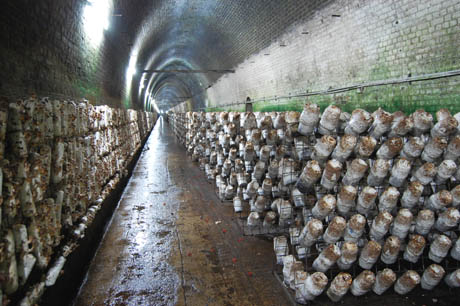
Shitake logs on racks in the Mittagong tunnel

In Australia more than 67,000 tonnes of mushrooms are consumed each year with a growing proportion of these being the more exotic types as the Ozzie palate becomes a touch more sofisticated. In fact consumption has lept from 0.6 kg’s per capita in 1974 to 3.1 kg’s last year… that’s about a five-fold leap!

Apparently customers are very keen on shitake and chestnut mushrooms mostly, but the fluorescent pink, blue and yellow oyster are gaining in popularity too, especially amongst old psychedelic hippies.

Down there in the Southern Highlands this grower produces 1.5 tonnes per week in the 1km long tunnel which keeps a constant temperature and humidity allowing the mushrooms to grow organically in a country that is not normally renowned for these dollops of delight.

Expand your tunnel vision and make the natural choice to buy local, organic mushrooms from a man with a different kind of tunnel vision.

Tour the tunnel. For information call 4871 2524 or go to siff.com.au.

To soy or not to soy… Soy is the question!
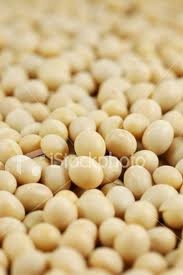
I’ve noticed a fair bit of talk going round recently in the circles I frequent regarding the ever confusing barrage of information around Soy and Soy products. Now, being a vegetarian/vegan for many many years, I have been presented with alternatives to meat, cheese, eggs, chicken, fish, milk, yogurt and a mammoth amount of other goods which I don’t care to eat. You see the reason behind my vegetarianism is that I don’t actually LIKE this stuff in it’s natural form so why would I go and eat a replication of it in a soy form? Further to that, having studied Nutrition it is my opinion that commercial, supermarket Soy products aint all that great for you.

There is good and bad in everyone and everything… the test we face is recognizing the difference.

The Good The Bad and umm.. The Ugly?

I share information that may or may not be of interest to you. My main aim is to bring awareness to certain things that I feel are not all that beneficial to your wellbeing.  All I ask is that you consider what you hear or read and if you choose to research it further then great, if you don’t then that’s fine too… as long as you make your own choices. I feel that it is important to be able to make informed and educated decisions regarding what you consume in order to become aware of the health repercussions of that consumption.

I’m not going to bombard you with information in technical terms, I’m going to keep it as simple and sweet as possible and leave the rest to you.

Taken from –

Menopausal Years – The Wise Woman Way by Susan S. Weed

Healing with Wholefoods by Paul Pitchford

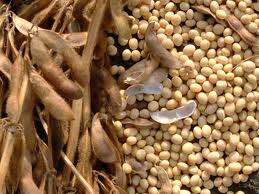
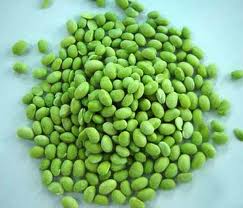
Soy is a member of the bean family.  They have many health benefits when used correctly including being a natural source of Lecithin – a brain food, they are also high in protein and very alkalizing to the body.

There are certain substances that are contained within most beans called ‘Anti Nutritional Factors’ and what this means is that these substances interfere with our ability to use, create or liberate certain key nutrients such as Calcium, Zinc, vit B12 and Trypsin (an important substance produced in the pancreas and secreted into the small intestine to assist in the breakdown of proteins.)

In MOST instances soaking and cooking are sufficient to remove the Anti Nutritional Factors making the beans generally safe to eat but this is not always the case. Some beans retain their Anti  Nutritional Factors unless they are treated in severe ways. SOY IS ONE SUCH BEAN.

Unless well cooked or fermented, soy beans inhibit the digestive enzyme Trypsin, making them very difficult to digest. Fermentation also destroy’s soy’s anti nutritional factors and increases it’s mineral availablity.

Fermented and recommended Soy products are L-R Miso, Natto and Tempeh.
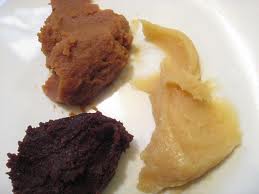
Three types of Miso paste varying in flavour. Darkest is srtongest and saltiest. Lightest is sweeter and more subtle.
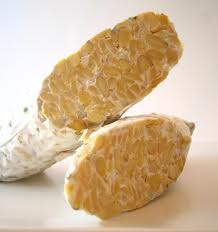
Raw Tempeh. It is far more apitising when cooked but if i show it to you cooked, you won't know what to buy!
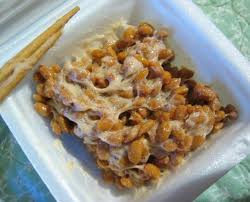
Natto... a traditional Japanese food. Soy beans that have been left to ferment. Haven't tried it personally... yet!

Not recommended are – Tofu*, soy nuts, soy beverages, soy granules and fake soy foods (soy burgers, soy dogs, soy cheese… and so on)
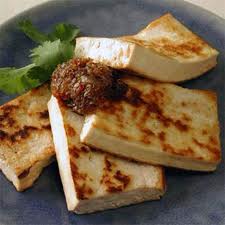
Fried tofu. Wait a minute... is that a meatball?!

*A note on Tofu – Traditionally it is eaten with seaweed to offset it’s thyroid damaging effects and miso to offset it’s B12 disrupting effests and whenever possible fish and meat to offset it’s mineral depleting effects (although this is usually unlikely seeing as most people that eat tofu are vegetarians!)

When unfermented soy is eaten frequently in a diet low or lacking in animal protein (as in the case for many vegetarians and vegans) the anti nutritional factors can wreak havoc: brittle bones, thyroid problems, memory loss, vision impairment, irregular heartbeat, depression and vulnerability to infections.

Unfermented soy is also high in haemoglutin – clumping of red blood cells which may increase the risk of stroke.

Soy milk has it’s own story… Here’s a brief comparison between human milk, cow’s milk and soy milk that may be enlightening especially if you are considering it’s place in your infant or child’s diet. It’s important to note that I am NOT advocating cow’s milk here. Although it appears to resemble human breast milk in these particular components, it is way out of whack with what your body needs in many other areas, including being excessively high in casein which is used in high quality wood glue (ever wondered why many kids who consume lots of dairy are so congested and phlegm filled?) … but that’s a whole topic of it’s own that I will go into at a later date!
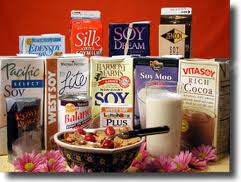
Q. Eeeny meeeny miny mo, on which one of these shall i spend my dough? A. None!

Taken from The Vegetarian Guide to Diet and Salad by Dr. N.W.Walker, D.Sc.

Human milk is composed of about 87% organic water, cow’s milk almost as much, while soy bean only contains little more than 10%.

Human milk contains a little more than 1 1/2% protein, cow’s milk a little more than 3 1/2% where as soy bean milk is composed of more than 33% protein.

Human milk contains a little more than 6% carbohydrates in the form of natural sugars, cow’s milk nearly 5%, while soy milk is composed of more than 33% starchy carbohydrates.

Human milk contains nearly 4% fat, cow’s milk a little more than 3 1/2%, while soy milk contains 17% fat.

In relation to the chemical composition of human milk and soy milk, we find that soy contains about 175% more phosphorous and about 400% more sulphur than does human milk, both these elements being acid forming.

Human milk contains 3,500% more chlorine, the cleansing element, than does soy milk.

These factors are of extreme importance when we consider that many cases of disturbances to the nervous system are due chiefly to the unbalanced proportion of these elements in our diet.

…And now on a much lighter note. Dreamy rather than creamy…

The ever lovely Lilith and her hula hips came a swayin’ our way to talk of Libran chefs and the characteristics of these well balanced (?) people in the world of food, with her “Cooking with the Stars” regular segment

I am currently awaiting an email to post her wonderful words and wisdom’s so you shall have to wait with me if you wish to gaze upon them.

Fine tunes that were played throughout the show were –

1. Oka Love – OKA – Oka Love Album

2. Element – Fyah Walk – Ocean Sounds Album

3. New People – Hemitude – Threads Album

4. Come Listen – Kooii – In This Life Album

5. Ancient Spirit – Fyah Walk – Ocean Sounds Album

6. Weaving Changes – Kooii – In This Life Album

7. The Dreaming – Oka – Oka Love Album

I shall be back floating on the airwaves on Monday 18th October while Sister Tess has her halo cleaned and Sister Bernadette repairs a feathered wing… Look forward to it!

Sister Rasela xxx

belly show 20.09.2010 : eat me – food writing at the 2010 Byron Bay Writers Festival

bucolic brain food at the writers festival

This was a special belly dedicated to a session on food writing at the Byron Bay Writers Festival.  The session was called “Eat me : writing food glorious food” – chaired by Joanna Savill, with authors Victoria Cosford ,Luke Nguyen, and Ramona Koval.

Giorgio Conte – Cannelloni

Joanna Savill

Joanna Savill is inaugural director of the Sydney International Food Festival. She presented one of the best ever food series on Australian TV – The Food Lovers’ Guide to Australia  – and she is co-editor of the Sydney Morning Herald Good Food Guide. She also writes for many newspapers and magazines on food and hosts events like the Melbourne Food and Wine Festival and a Taste of Slow.  And she laughs – a lot.  At least during this session, which was full of funny stories about childhood and families.  Audio of this and other sessions is being uploaded to the Byron Bay Writers Festival site.

All their books sound great, full of stories and a lot more than basic recipes.
Victoria Cosford :

Amore and Amaretti, Wakefield Press
a memoir of cooking and loving in Italy.

“Amore and Amaretti is a little different from the usual tale of people who travel aboard to find love and a      farmhouse that needs renovating in Tuscany or some other beautiful part of the world. For starters, it has great       descriptions of restaurant life and the dishes Cosford experiences – so enticingly described that you can           almost  taste them.”
Christine Salins  www.foodwinetravel.com.au

Ramona Koval
:

Jewish Cooking Jewish Cooks

Published by New Holland

“Jewish Cooking Jewish Cooks is a collection of delicious, well loved, tried and true Jewish recipes from around the world            particularly Europe. It is also a collection of stories – all of which revolve, like much of Jewish life and tradition, around the subject of food.

From the most simple to the most celebratory of Jewish dishes, Ramona Koval presents a thriving, contemporary food culture founded on ancient tradition and laws that stretches beyond centuries and continents. Recipes range from latkes to lox, borscht, blintzes,  and kugel to cabbage rolls, and compote as well as many vegetarian dishes.”
http://www.jewishaustralia.com/jewishcooking.htm

Luke Nguyen :
Secrets Of The Red Lantern: Stories And Vietnamese Recipes From The Heart
by Mark Jensen, Pauline Nguyen and Luke Nguyen

“If this book may be classified as a food memoir, it also rises above genre by virtue of the elegant prose used to relate the moving story, as well as through the recipes that feel part of the creators’ hearts.  Either aspect of the book can stand alone: the saga of this family is compelling reading on its own, and the recipes (more than 275 of them) are all enticing. ”
Diana Farrell Serbe, here

The Songs of Sapa by  Luke Nguyen,  Murdoch Books

“As with many food tomes these days, this as much a travel book as a cookbook, each destination evoked by the dishes of the region…full of warmth and enthusiasm for the people, the food and the places. There’s also the occasional toe-curling account of experiences like swallowing whole a still-beating snake heart…”
Kerry Boyne, http://www.eatstreets.com.au/articles/book_reviews/the_songs_of_sapa

Thanks to the northern rivers writers centre for bringing all wonderful writers to town and allowing belly to record this session – thanks to sound guy Phil from SCU for his assistance – and if you’d like some more Monday 4 October Victoria Cosford is coming on belly with me to talk Italian food.  And thanks to Marina and Lesley at Red Ginger for the abacus won by lucky subscriber Jenny.

And to finish all those great stories about food and families, a refreshingly sour EDIBLE QUOTE by the wonderful American food writer M.F.K. Fisher, from ‘An alphabet of gourmets’.

“F is for family…

The cold truth is that family dinners are more often than not an ordeal of nervous indigestion, preceded by hidden resentment and ennui and accompanied by psychosomatic jitters.”

But hei, even that would make a good story.  If you have a good (or bad) food story to tell, get in touch with the bellysisters.  You don’t have to have written a book or a blog, but if you have, especially if it is something not for mainstream publication, we’d love to hear your stories and share your flavours with the bayfm listeners.
Sister Tess

Apricot Rail – Pouring milk out the window

d.i.g. – Hot cakes

Spring has Sprung… Tis the season to get fresh… plus Raw Chocolate mmmmm say no more!

As always your taste buds can be tuned to the beautiful BayFM on a Monday morning where we serve up an hour of mouthwatering radio. Sister Rasela cooking up a storm for you today in the Belly kitchen and springing into action with talk of how this beautiful season allows us to connect with nature, our bodies and our taste buds.

SPRING… It’s a new beginning – the time of the year to rise early with the sun. You can’t help but notice plant life pushing upwards after winter slumber, just like many of us who feel the colour come back to our cheeks, having been hidden during these past cooler months.

Have you noticed the green colour of tender young shoots, the sight of which nourishes the soul through the eyes. The appetite for food decreases as the body naturally cleanses itself, not only of food residues but also of excessive desire and the accompanying emotions of dissatisfaction, impatience and anger.

The metaphorical membrane over the eyes and mind disappears and vision becomes clearer. Things are seen in new ways.This is a time for contacting your true nature and giving attention to self awareness and self expression.

Living in sync with nature is an incredible experience. When you buy local, seasonal, organic produce from farmers, growers and shops within your community, there is an energy which is quite pure and carried through all the stages of your foods life and into your life. You’ll know more what i mean if you grow and eat your own produce already.

Think about what you want to put in your mouth to nourish not only your body but your soul. It is not just a solid mass that lands in your stomach (well, sometimes it is) processed beyond all recognition and sealed in a plastic bag and ‘preserved’ (although goodness only knows what they are trying to ‘preserve’ as there is no goodness in it!)

Food that is natural, whole, fresh and seasonal is what you should be aiming for, then you may be able to experience the oneness with nature, the  s i m p l i c i t y.

Don’t deny yourself ‘treats’ just think about what a ‘treat’ is. Are you really ‘treating’ your body when you put something into it that is a chemical concoction of synthetic flavour and colour…. i mean, why would you bother?

Mimicking the colours and flavours of fruit... synthetic chemicals wrapped in processed sugar. Yum?

So… back to SPRING FOODS

This is the season to attend to the liver and gall bladder.

In spring we naturally eat less to cleanse the body of the fats and the heavy foods of winter. The diet should be the lightest of the year and should contain foods that emphasize the ascending and expansive qualities of spring (like a bloom about to blossom).

Young plants, fresh greens, sprouts and wheat or cereal grasses are ideal. Salty foods such as soy sauce, tamari, miso and sodium rich meats all have a strong component of sinking energy and are best limited during springtime.

EAT ME, EAT ME!

The expansive rising quality of sweet and pungent flavoured food is recommended as a means of creating a ‘personal spring within’. You could use a little concentrated sweetener with pungent herbs such as honey and mint tea.

The pungent cooking herbs : Basil, fennel, marjoram, rosemary, caraway, dill and bay leaf are all quite desirable at this time.

Most of the complex carbohydrates such as grains, legumes (beans) and seeds have a primarily sweet flavour which increases with sprouting.

Young beets, carrots and other sweet, starchy veges such as sweet potatoes are good too.

Try to get out of  the ‘habit’ of having the same thing for the same meal everyday. Our bodies change daily, monthly, seasonally, like the weather so we require different foods to maintain overall good health at different times in our lives and most certainly on different days..

RENEWAL AND RAW FOOD

Food preparation becomes simpler in spring and let’s face it, who doesn’t want more simplicity in life?

Raw and sprouted foods can be emphasized more… now I’m not suggesting that you give up eating what you are currently eating to live off a couple of lettuce leaves and a bag of sprouts (although that may well suit some people), it’s just a great time to add these to your diet if you haven’t already and maybe replace one winter vegetable with something more fresh and alive. Gradually adapt, like the changing of the leaves on a tree… slowly, slowly but surely.

Sprouts and raw foods are cleansing and cooling.

Meet Eric, owner of the first raw food business in town

Spring represents youth and raw foods are thought to bring about renewal by reminding the body of the earlier more youthful states of human development. A time before the use of fire when man was extremely active, physically generating abundant heat; so early people found balance in the cooling effects of raw foods.

All the stages of our evolution are still encoded within us; going back through the layers of our evolution to more primal biological states is necessary if renewal is to be complete.

Raw food consumption should increase with signs of heat in the individual. If you are frail and cold then take it easy and don’t go too hardcore on the raw food, please!

It is both better and easier in warmer climates and during times of great physical activity although most people do well eating at least a little raw food in their diet each day, with greater amounts in the spring and summer.

Remember there are always limitations. Uncooked foods can weaken digestion in some people and even sometimes trigger excessive cleansing reactions. Not recommended for people with bowel inflammation or for people who are frail with signs of weakness. (Although you would have to try it yourself and see what suits you as an individual)

Intuitive eating… is listening to your body and is far easier to do when you are not changing your thoughts and emotions with chemicals and stimulants. Get real and discover life!

SPRING COOKING

If you live somewhere that is cold, it’s pretty much a necessity to cook your food. Winter time also calls for the need for warmth within.

In spring, food is best cooked for a shorter time but at higher temperatures. In this way food is not as thoroughly cooked – especially the inner part, retaining vital nutrients.

If oil is used (coconut is recommended as it can reach high temperatures without destroying it’s goodness), make sure it’s quick and at a high temperature – sautee method is good.

When cooking with water, light steaming or minimal simmering is ideal

When making Raw Chocolate it is always essential to ensure that the bowl and fingers are well licked and none is left to waste…. which brings me to our next topic for today and that is talking to the lovely Robin Jackson about Raw Chocolate, Cacao vs Cocoa and what happens in a raw chocolate preparation class… amongst other things.

RAW CHOCOLATE = RAW ECSTASY

From nibs....

Chocolate has been enjoyed for thousands of years as a way of connecting to the divine Love of the Universe. No food symbolizes Love more than chocolate.

We would like to reveal the ancient mystery the has been uncovered… here on the Belly Show, lerned after years of searching…..

….. the secret ingredient in EVERY recipe is L O V E!

Now we’re talking Raw Chocolate here and into the studio enters Robin Jackson, a woman full of Love for many things but today we are focussing on Raw ‘Chocolate’ – RAW cacaoa (ka-cow) and the inevitable temptations accompanying this superfood.

.... to this!

CACAO vs COCOA

A slight change in the lettering represents a major difference. Cocoa (co-co) powder has been treated with alkaline salts, is mixed with a number of chemicals during processing and has powdered milk added to it which blocks the bodies absorption of the healing nutrients of RAW cacao.

Knowing the nutritional benefits of RAW cacao helps to act as an important reminder that when we eat food in it’s natural state, we are able to harness the magic of the food, it’s healing powers, it’s full life force and health benefits.

cacao pods

Cacao pods

Raw cacao contains Magnesium, Chromium, Antioxidants, Vitamins B1, B2, B5, B6, C, and E which are all present in significant quantities. It also contains fiber, iron, niacin, phosphorus, as well as containing ‘happy brain chemicals’ such as Theobromine, Phenylethylamine, Anandamide an Tryptophan the details of which are lengthy and interesting and can be googled at you own leisure. All you have to know is that it makes you feel GOOD.

The importance of RAW cacao in chocolate is emphasized in the fact that it remains caffeine free due to the natural state it remains in, unlike other chocolate where the theobromine is converted into caffeine when heated. This makes RAW cacao and raw chocolate a natural stimulant that is caffeine and comedown free 🙂

It is crucial that you think about where your chocolate comes from. 80% of cacao used by large companies in your average everyday chocolate bar is made with cacao that comes from West Africa, where horrible working conditions, including child slavery, degrade humanity on a daily basis (not to mention the pesticides!) So next time you reach for a mars bar or a packet of those chocolate biscuits you love so much, think about what it took to make. Some poor child’s life is hardly worth living just so you can get fat on a chocolate bar you don’t need anyway. Please, enjoy the good things in life, but not at the expense of others. Make your own or buy fair-trade, organic, RAW chocolate and be happy to eat it, guilt free in every way!

Look for the 'good stuff' when buying chocolate.

I was fascinated to hear Robin talk about the different forms Raw cacao comes in. It can be found in Beans/Nibs/Powder and Butter. Until today i thought each one was created for it’s own individual purpose but i learned that it starts as the bean, is blasted into the nibs, ground into powder and finally extracted into butter. Each form is just a step along the way and each form can also be tranformed into the most incredible chocolate delights you will ever have. Part of the enjoyment is knowing that this is GOOD for you!

Robin was lovely enough to offer a free place in her next Raw chocolate creation class which will be held on Sunday 26th September. If you wish to find out more info about anything to do with raw food, you can contact Robin from the info below. There is also a monthly newsletter that is released in conjunction with Raw Ecstasy so if you would like to be on the mailing list for that feel free to mention that in your email. Alternatively you can find the stand at the farmers markets on Thurs Byron, Fri Mullumbimby, Sat Bangalow and all of the Sunday/Weekend markets dotted around this wonderful Shire of ours.

Robin Jackson – robin.rawecstasy@gmail.com

Phone – 0449 133 418

See you at the markets!

P.S. This show featured the Album ‘Jiggy Jiggy’ by Shoebox… “it don’t take much to make me HAPPY” … lalalala 🙂

belly 6 September 2010 – springing into asparagus, TV chefs and happy pets

From today I will try taking the radio show posts straight from the show running sheet, so you can see something closer to what went to air.

It’s the  first belly of spring, also the first belly of the month when we usually have a look at what’s in season around Oz,then today’s guest  tells us all about allergies and elimination diets you can try in order to diagnose allergy – no not for you, for your cat,dog,cow,canary,chook,ferret – Matt the Vet will discuss the food allergies that your beloved companion animals may have,  + food news, and a great recipe from Luke Nguyen’s new cookbook

[the belly cat has decided to sit on the laptop to supervise this one, and the belly dog on my feet-screen getting very hairy]

Cheeseburger in Paradise by Jimmy Buffett

DRAW for our lovely subscribers – Lentilicious 2 packs of lentil mixes(thanks Sharna and Anthea)

Right now there are so many TV food shows, so many, old ones dug up, and from all over the world – well mostly the UK but I saw one from New Zealand last week,had a very pretty lake view in it. And Kids Masterchef is starting next Sunday – Anyone with kids knows it should be really fun to watch, they are so passionate about food. One of the best is ‘cheese slices’ which reflects the cheesy obsession of Will Studd, cheese providore to many of Australia’s best restaurants and Qantas business and first class. One of my cheese spies – we’ll call him “deep cheddar” – tells me Will gave the program to the ABC very very cheap, just to improve our cheese knowledge presumably. A true cheese evangelist. And more importantly, Will has bought into our North Coast paradise, so hopefully there will soon be even more wonderful cheese all around us. Cheese slices is on ABC1 on Wednesdays. And Luke Nguyen’s Vietnamese food show has come back very quickly to SBS, so have a look if you missed it first time round. I’ve got  Luke’s recipe – caramelised mackerel with pineapple to share with you.

CARAMELISED MACKEREL WITH PINEAPPLE – KA THU KO KHOM

This recipe is a marriage of many different elements, balanced together
perfectly. It is a lighter version of the popular traditional dish of caramelised fish,
ca kho. I have balanced the salt with the pineapple, the fish sauce with sugar and added
dark soy sauce for colour. If you don’t often use pineapple in cooking, give this a try; you’ll
be pleasantly surprised.
When using a clay pot for the first time, make sure you immerse it in cold water for a few
hours. This will ensure that it does not crack over intense heat. Clay pots release earthy,
smoky flavours into your food and they maintain their heat well.

2 garlic cloves, finely chopped
4 spring onions (scallions), white
part only, bruised
2 tablespoons fish sauce
1/4 teaspoon dark soy sauce
1 teaspoon oyster sauce
2 tablespoons sugar
3 mackerel cutlets (600 g/1 lb
5 oz in total)
2 tablespoons vegetable oil
300 g (101/2 oz) pineapple, cut into
bite-sized pieces
200 ml (7 fl oz) chicken stock
(page 328)
1 tablespoon fried garlic
(page 329)
1 tablespoon garlic oil (page 329)
2 spring onions (scallions), green
part only, sliced
1 small handful coriander (cilantro)
leaves
1 bird’s eye chilli, finely chopped
1 Lebanese (short) cucumber,
sliced

In a bowl, combine half the garlic, the white spring onion, the fish sauce,
dark soy sauce, oyster sauce, sugar and 1/2 teaspoon salt. Coat the fish with
the mixture, then cover and place in the fridge to marinate for 15 minutes,
reserving any leftover marinade.
Place a frying pan over medium heat with 1 tablespoon of the vegetable
oil. Add the pineapple and stir-fry for 1 minute, then remove from the pan
and set aside. Add the remaining oil and heat over medium heat, then
brown the fish cutlets on both sides.
Remove the pan from the heat and transfer the fish to a chopping board.
Chop each fish cutlet into four pieces with a heavy cleaver. Transfer the fish
and pineapple to a clay pot and pour in the reserved marinade. Place the
clay pot on the stovetop, turn the heat to high and bring to the boil. Add
the chicken stock and bring back to the boil, skimming any impurities off
the surface. Reduce the heat to low and simmer for 20 minutes, or until the
liquid has reduced by half.
Add the remaining chopped garlic to the pot along with the fried garlic,
garlic oil and 1/2 teaspoon freshly ground black pepper, and stir to combine.
Spoon the sauce over the fish. Remove the clay pot from the heat, garnish
with the spring onion, coriander and chilli, and serve with a side bowl of
cucumber and jasmine rice.

serves 4–6 as part of a shared meal

Caramelised Mackerel with Pineapple

Recipe and image from The Songs of Sapa by Luke Nguyen, published by
Murdoch Books, photography by Alan Benson.

I played the belly interview with Luke  last week, and the last few minutes this week, where he suggests using any firm fish as substitute for the mackerel.  If you don’t have a clay pot, I think you can try using any deep heavy bottomed pot.  Also maybe just add more fresh garlic to the recipe if you don’t have a big bottle of garlic oil handy. The crispy (but not burned) fried garlic would definitely add lovely texture to the dish.  And make sure you use beautiful ripe fresh local pineapple.
Luke and his partner/photographer Susanna Boyd also mentioned the Little Lantern foundation they are setting up to help kids in Vietnam.

And straight on to the watermelon man and what’s in season in Oz in September.

Asparagus – in season from now to December, some Australian growers go til march.  The season a bit slow this year. It has been cold,wet where most asparagus is grown, a lot comes all the way from Peru right now. According to the Australian Asparagus Council, 93% comes from around a small town called Koo Wee Rup, S-E of Melbourne. Yes there is an Australian  Asparagus Council, the website is asparagus.com.au, lots of facts and recipes, though a lot of their recipes look a bit dodgy. Asparagus is very easy and quick to prepare, it is the shoot of a feathery plant in the lily family. The Roman Emperor Augustus had a saying “faster than cooking asparagus ” for doing something very very fast. The worst thing you can do is boil the hell out of it, but you can bbq it or put it with rich flavours like eggs and cheese, baked in the oven, or use in cold or hot soups, usually reserving the tips to add whole at the end. Or stir fry or very quickly steam. The ancients thought it is so good for you that it deserves ‘officinalis’ in its name, meaning medicinal. It does have a lot of folate, vitamins b and c and anti-oxidants. Unfortunately it doesn’t grow easily around here. I’ve tried in the veggie patch and mine gave a few spears then went to asparagus heaven. I’ve now found out that you shouldn’t pick every spear that pokes up, just the first few from now to November, maybe December, then let the plant form leaves and grow strong, especially the first couple of years.
– some other veg and fruit : artichokes, choose heavy and not wilted looking, they are the flower bud of a big thistle, you don’t want to eat wilted buds.
avocados – one more recipe, from farmer Chris Casagrande in the Byron Shire Echo : a chocolate dip for bananas, to freeze or use as cake icing. Mash avocados with cocoa and a little lemon – he swears it’s great.  Also broad beans, young garlic, spring cabbages,lots of greens, pinapple,lots of citruses including blood oranges and cumquats. locally I’ve seen good rhubarb, papayas,lots of strawberries, new season pecans and rice.

Grapefruit,juicy fruit by Jimmy Buffett

The Meat Lovers song from Dr Siggy, aka Greetings from Switzerland

– Matt Allworth aka Matt the Vet gave us some great information about food allergies in pets and elimination diets we can try at home if our favourite animals start to have symptoms like itchy feet, intestinal disturbances or rashes.  Some of the most common allergens are beef for dogs and fish for cats. Vegetarian animals can also develop allergies.  Oh and we discovered that it’s a bad idea to try to turn your ferret into a vegetarian.  For lots more info see http://communityvet.net/2010/03/diy-elimination-diet-for-the-dog-an-cat/

And Matt was a great barrel girl

Lena Horne – I want a little doggie

The BELLY BULLETIN

Imitation is the sincerest form of flattery – enterprising Chinese have been making fake Australian wine, from small Boutique labels to Penfolds. Investigators have found wine labelled Benfolds, or Penfolds bin 888, which is a lucky number in China. The copies have very similar bottles and labels to the originals. China is Australia’s fastest growing export wine market.
And global champagne sales have risen by about 40% in the first half of this year, so you can stop worrying about those poor champagne makers who were doing it tough in the GFC. And the bonuses that are again flowing into the pockets of investment bankers are obviously being put to good use.
In local news, Tweed tourism have just launched a seafood discovery tour, that you can download or pick up at a tourism office, and follow your fishy way from Cabarita to Corrumbin. Restaurants, fish shops, picnic spots,oyster farms and even crab catching tours.
seafooddiscoverytrail.com
Or go to sustainfood.com.au for lots of local food stories and links, including right now an initiative you can join called the Grow your own food challenge, which over 12 weeks encourages as many people as possible to register the amount of garden space they are devoting to food production. At the same time gardening expert Phil Dudman will give a week by week guide to establishing your own food garden. The challenge has already started, but you can join at any time, and there are already gardening videos online.
And congratulations to The Byron Beach Cafe which has won “Best Tourism Restaurant & Catering Service” at the inaugural North
Coast Tourism Awards

EDIBLE QUOTE – As for butter versus margarine, I trust cows more than chemists.  Joan Gussow

Seaman Dan – Follow the sun

Love and chocolate cake, sister T