Monthly Archives: April 2011

sustainable agriculture

on air April 25, 2011 on bayfm99.9


Yes it was all about new, or sometimes the old becoming new again, on the farms of the Northern Rivers on belly today.  I spoke with Jane Laverty,  Regional Project Officer at Northern Rivers Food Links, about the upcoming Sustainable Agriculture Forums.  They are free and open to everyone, but you do need to book in.


Dig For Victory, 1942, IWM PST 0059 © Imperial War Museum The Dig For Victory campaign was launched in October 1939 in the UK.

Forum dates and venues:

Murwillumbah Tuesday May 3 (Murwillumbah Golf Club, 9-11:30am)
Ballina Tuesday May 3 (Ballina Beach Resort, 3:30-6pm)
Casino Wednesday May 4 (Windara Function Centre, 9-11:30am)
Maclean Wednesday May 4 (Maclean Services Club, 3:30-6pm).

Forum Presentations

a.. Softer Farming Methods – Stuart Larsson (Mara Seeds)
b.. Sustainable Farm Planning – Greg Reid (Industry & Investment, NSW)
c.. Improved Greenhouse Production Practices – Stephanie Alt (Industry & Investment, NSW)
d.. Biological Farming Methods – Bob Jarman (Northern Landcare Support Services)
e.. Soil Health for Commercial Food Production – Claire Masters (Tweed Landcare)
f.. Sustainable Grazing – Clarence Valley Project – Julie Mousley (Clarence Landcare)
For more information, or to register: visit www.northernriversfoodlinks.com.au

or email events@northernriversfoodlinks.com.au

You need to book because the forums will include some delicious local food, as well as lots of sharing of information by farmers and scientists getting down and dirty and sharing their knowledge.  I love that the polite term for poo, if it is applied to your field, is ‘input’.

There will also be plenty of opportunities to ask questions and share information on anything to do with    sustainable agriculture.


We also mentioned the Sustain Food website, a very good and growing portal with lots of information about food in the Northern Rivers.

And Jan Barham’s Tofu stir-fry with seasonal vegetables and locally grown brown rice recipe. This is the link, also check out the other Majors’ recipes.


EDIBLE QUOTE

Our edible quote today comes from an unfinished short story by Jon, one of our bayfm front desk volunteers.

I experiment with food.  It’s a relationship I’m wary of, food can do things to you.”

Please call him up on a Wednesday or Thursday afternoon and ask him to finish the story – I’d like to know what happens.

Love and sustainable chocolate bilbies, Sister T


MUSIC


Robert Childs, Sugar Addict

Slow Train, Naturally

The Mighty Imperials, Thunder Chicken and Chiko’s Barnyard

Abbie Cardwell and her Leading men, Down

David Lindley and Wally Ingram, Cat Food Sandwiches


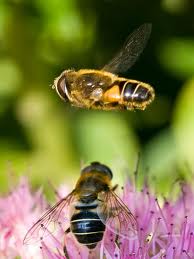
The Bees Knees … Drizzling your ears with sweet stories of Honey

“Well” said Pooh, “what i like best” – and then he had to stop and think. Because although eating honey was a very good thing to do, there was a moment  just before you began to eat it which was better than when you were, but he didn’t know what it was called … 


Honey headed anticipation...


Talofa and welcome to the sweetest show on the airwaves, the tastiest radio in the Shire, where this week your ears will be drizzled with sticky stories of honey love.

The word honey along with variations like ‘hunny-bun’ ‘honey-pot’ and the abbreviated ‘hun’ have all become terms of endearment in most of the English speaking world. In some places it’s used for loved ones yet in others such as in Southern USA it can be used when addressing casual acquaintances… or even strangers !

In 2005 China, Argentina, Turkey and USA were the top produces of natural honey, according to reports from the Food and Agriculture Organisation of the United Nations (FAO). Significant regional producers include Turkey (ranked 3rd worldwide) and Ukraine (ranked 5th). Mexico is also an important producer of honey, providing  10% of the worlds supply. Production began there in the early 20th century and on the Yuctan Peninsular most producers are small family operations who still use traditional techniques such as moving hives to take advantage of various tropical and sub tropical flowers.

Do bees really have knees ???

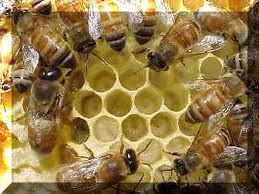
Honey is made by the honey bee – a subset of the genus APIS. Honey bees represent only a small fraction of the approximately 20,000 known species of bees. In the hive or in a wild nest, there are 3 types of honey bee. A single female queen bee, a seasonal but variable number of male drone bees to fertilize new queens and some 20,000 to 40,000 female worker bees. The worker bees gather sugar rich flower nectar which they carry in the pollen baskets on their back legs. They take 28 days to grow from a larvae to a worker bee and will then spend their entire life working … (no fun !!) They do not lay eggs or mate, no, no, no … instead  they build the comb from wax extruded from glands under their abdomen, they clean, defend and repair the hive as well as feed the queen, the larvae and the drones. They constantly gather nectar, pollen, water and propolis. They ventilate, cool and heat the hive to help maintain the constant ideal temperature of 34.4*C. They do this by depositing water to cool warm areas and fanning their wings for water evaporation. They also huddle together in other areas where warmth is needed.

Honey is created by the bees as their food source for energy. The nectar is regurgitated in the bees ‘honey belly’  a number of times until it is partially digested. The bees all work together with the digestion and regurgitation until the product reaches it’s desired consistency and quality. This is when it is stored in honeycomb cells.

Do not attempt to comb hair with this !!

After the final regurgitation the honeycomb is left unsealed, however the nectar is still high in both water content and natural yeasts, which if left unchecked would cause the sugars in the nectar to ferment and spoil.  The incredible process continues therefore, to protect the honey and create a seal … but how you may well ask ??  The bees inside the hive fan their wings, creating a strong draft across the honeycomb which enhances evaporation of much of the water from the nectar. The reduction in water content raises the sugar concentration and prevents fermentation.

num num num

“When late morning rolls around and you’re feeling a bit out of sorts, don’t worry, you’re probably just feeling a little eleven o’clockish”  Winnie the Pooh

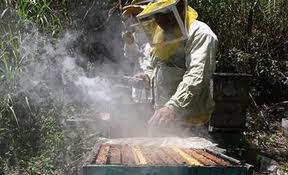
Removal and collection of the honey is typically achieved by using smoke from a bee smoker to pacify the bees. The smoke causes the bees to attempt to save the hive from a possible forest fire and they become far less agressive. The honeycomb is removed from the hive and honey is extracted from the comb and usually filtered … keep reading to discover the many differences in extracted honey.

Schmokin'

Sweet as bro –

Honey gets it’s sweetness from monosaccharides fructose and glucose and is about as sweet as granulated sugar. The benefits over sugar are that it contains trace amounts of vitamins and minerals and in it’s raw form is less processed than most other sweetners. Honey also contains tiny amounts of several compounds thought to function as antioxidants, including vitamin C. The specific composition of any batch of honey though, depends on the flowers available to the bees that produce the honey.

What am i buying ??

Generally honey is bottled in it’s familiar liquid form but it is also sold in other forms and can be subject to a variety of processing methods which produce any of the following – What’s your choice ???

Crystalized Honey – Where some of the glucose content had spontaneously crystalized. Also called ‘granulated honey’. Honey that has crystalized over time in the home can be returned to it’s liquid state if stirred in a container sitting in fairly warm water.

Pasturized Honey –  Has been heated in the pasturization process. Pasturization destroys yeast cells. It also liquifies any micro-crystals in honey, which destroys the onset of visible crystalization. However !!! Excessive heat exposure also results in product deterioration as it reduces enzyme activity thus reducing it’s therapeutic benefits. Heat also affects it’s appearance (darkens natural colour), taste and natural fragrance.

Raw Honey – Pure Honey as it exisits in the beehive or as obtained by extraction, settling or straining, without adding heat. Raw honey contains some pollen and may contain small particles of wax. Local honey is sought after by allergy sufferers as the pollen impurities are thought to lessen sensitivity to hayfever.

*NOTE ON ALLERGIES AND HEALTH HAZARDS*

Because of the natural presence of BOTULINUM ENDOSPORES in honey, children under the age of 1 year should not be given honey. The more developed digestive system of older children and adults in general destoys the spores. Infants however can contract BOTULISM from honey

Strained Honey –  Sounds a bit uptight but it is what it says. Passed through a mesh material to remove peices of wax, propolis and other defects without removing pollen, minerals or other valuable enzymes.

Ultrafiltered Honey – Heats honey to 65-77*C so it more easily passes through a fine filter to remove all extraneous solids and pollen granules. Prefered by supermarket trade as it is clear and has a long shelf life. It’s pretty much lost all it’s natural goodness.

Ultrasonicated Honey – Processed by form of ultrasonification … yes yes, but what does that mean exactly ?? It’s a non-thermal processing alternative that destroys most yeast cells but the ones that do survive usually loose their ability to grow. Hmmm, sounds suss to me. It reduces the fermentation process substantially (for longer shelf life) and works at around 35*C. It is still processed and tampered with.

Whipped Honey – I’m sure there have been many a kinky thing done with honey but this type is also known as creamed, spun, churned or candied and has all been processed to control crystalisation and produces something for those of you that like it smooth with a spreadable consistency.

Dried Honey – Has moisture extracted from liquid honey but not by the bees flapping their little wings ten to the dozen. The process may or may not include the use of drying and anti-binding agents and produces a completely solid, non-sticky honey. Well where’s the fun in that ??? It is commonly used to garnish deserts. Oh, yummy, there’s the fun.

Comb Honey – Not a new kind of hair product. This is honey still in the hardworking honey bees wax comb, which is traditionally collected by using standard wooden frames and the comb cut out in chunks before packaging. In India, honey is harvested from forests in the bees natural habitat. It is said that the honey will be consumed by the bees on the new moon day so it is cultivated the day before.

Chunk Honey – Is this what you’ll be called if you eat too much ?? … No. This is infact honey that is packed in wide mouth containers consisting of one or more  peices of honeycomb immersed in extracted liquid honey, mmmmmm sounds delightfully delicious does it not ?

Too much of a good thing is as bad as too much of a bad thing (unfortunately) ...

“It is more fun to talk with someone who doesn’t use long difficult words but rather short, easy words like, ‘what about lunch ?’ ” Winnie the Pooh

Once you have chosen the honey of your dreams, you might like to know how best to preserve it. Because of it’s unique composition and chemical properties, both honey and objects immersed in honey have been preserved for decades or even centuries !! The key to preservation is limiting access to humidity. If exposed to moist air, it’s chemical structure means that it is able to pull moisture into the honey, eventually diluting it to the point where fermentation can take place. Sealed in honeycomb cells is ideal but at home it generally should not be kept in metal containers because the acids in the honey promote oxidation of the vessel. Traditionally it was stored in ceramic or wooden containers but today glass or plastic (yuk) is favoured.

WARNING - Honey addiction can lead to sticky situations like 'dry cupboard syndrome'

Excessive heat has detrimental effects on the nutritional value of honey. Heating up to 37*c causes loss of nearly 200 components, some of which are antibacterial. Heating up to 40*C destroys invertase – an important enzyme that helps in the breakdown of sugars. At 50*C the honey sugars caramalize. Sounds heavenly … but you’ve killed it !!

Regardless of preservation, crystalization may naturally occur over time. This does not affect the flavour, quality or nutritional content of the honey, though it does affect the colour and texture.

Indicators of Quality

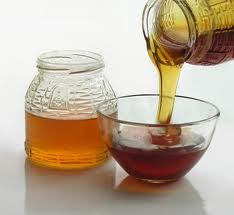
High quality honey can be distinguished by fragrance, taste and consistency. Ripe, freshly collected honey should flow from a knife in a straight stream, without breaking into seperate drops. Honey should form temporary layers when poured, layers that dissapear fairly quickly indicating high viscosity (thickness). If not, it indicates high water content and is not suitable for long term preservation. In jars it should appear as pure, consistent fluid and should not set in layers.

Go with the flow

History in Medicine

For the last 2,700 years honey has been used by humans to treat a variety of ailments through topical application but only recently have their antiseptic and antibacterial properties been chemically explained. Some wound gels which contain antibacterial raw honey and have regulatory approval are now available to help treat drug resistant strains of MRSA – METHICILLIN RESISTANT STAPHYLOCOCCUS AURES – which is a bacterium responsible for several difficult to treat infections in humans. It had developed a resistance to some anti-biotics which include Penicillin. MRSA is eapecially troublesome in hospitals where patients with open wounds, invasive devises and weakened immune systems are at a greater risk of infection than the general public.

A quick buzz on ‘MANUKA HONEY’ (Leptospermum Scoparium)

Manuka collector

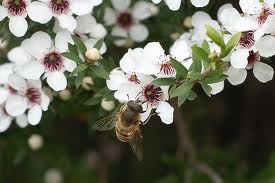
For the past 28 years, honey researchers at the university of Waikato in NZ have been investigating what many local New Zealanders have long accepted as common wisdom … that their local Manuka honey is a  superior treatment for wound infections (amongst other things). Manuka honey is gathered from the Manuka bush which grows uncultivated throughout NZ. A honey with the same properties has more recently been discovered right here in Australia. Leptospermum Polygalifolium, better known as JELLYBUSH HONEY also grows uncultivated in certain parts of this country but has not been around for long enough that we are able to bring investigative facts to you yet … and being a Kiwi i am always going to sway the Maunka way !! Both of these honeys contain high levels of additional non-peroxide antibacterial components that make them very unique. Incredibly, after 28 years of study on Manuka honey at the Waikato University,  researchers are still unable  to identify the specific synergistic component that is responsible for more than doubling the antibacterial activity within Manuka and Jellybush honey.

I encourage you to delve furtherand stick your nose into the honey pot of natural food products to enhance your health and wellbeing. I hope that the information i provide inspires you to learn more about what it is you eat, where it comes from and  ultimately what is best for YOU as an individual because it’s important to remember that we are all individual and so are our dietary needs.

Time to buzz off now ...

Thanks once again for listening, reading and keeping the fire in the belly burning as we enter into the cooler months. So much more to come so stay tuned !!

Honey dripping love,

Sister Rasela

Ronit’s Morocco

On air on bayfm99.9 on Monday 11 April, 2011

Sister B and brother Andrew (A & B!) had a wonderful talk with Ronit Robbaz-Franco about the  country and food of Morocco.  A big thank you to everyone for keeping the belly show on the road when I could not go on air at the last minute.  I am sorry to report the belly cat is now chasing mice in cat heaven, but we had some lovely last few hours together – and some hard ones.   A and B tell me Ronit brought all the colours of Morocco into the bayfm studio.  Sister T


Ronit setting the scene for a Moroccan banquet


*Ronit’s Story*

My parents were born in Morocco. My mother is from Casablanca and my father
from Marrakech. Both grew up in Morocco but left for Israel in 1950s, where
I was born. My mother was a chef, specializing in pastry, so my upbringing
evolved around food. My Great Grandfather was an Ambassador in Morocco,
that’s how they landed in Morocco initially. I come from a large, colourful
family, where all our family affairs happened around a Moroccan feast. There
was always a hearty celebration taking place, a passionate and dramatic
affair with family & friends. My brother’s wedding lasted for 3-5 days. The
Moroccan women are known to be feisty, colorful and vibrant. I have 5
sisters & 1 brother, so I grew up with many women around me, listening to
their stories.

Growing up in Israel in a Moroccan household, it was infused with Moroccan
culture, heritage and social ethics. When I visited Morocco I felt I had
arrived home.

My mother’s family is scattered all over the world, basically the wandering
Jew. I decided to leave Israel after my military service at 20 years of age.
I lived in South East Asia, India, Japan, South America, mainly Brazil,
where I lived for 5 years, then Central America and finally I arrived on
these shores about 14 years ago. Travelling around the globe, I gained a
wealth of experience in middle eastern, primarily Moroccan cuisine, Indian
and Gourmet Wholefood. I set up my business called Open Table Catering in
Byron Bay and it’s been operating successfully for 7 years.

Moroccan cuisine is extremely diverse, due to Morocco’s interaction with
other cultures and nations over the centuries. Moroccan cuisine has been
subject to Berber, Moorish, Mediterranean and Arab influences. The cooks in
the royal kitchens of Fez, Meknes, Marrakesh, Rabat and Tetouan refined it
over the centuries and created the basis for what is known as Moroccan
cuisine today.


A very traditional Moroccan Recipe by Ronit:

HARIRA SOUP

Harira is a tomato based soup with chick peas, meat, lentils and small
noodles.

It is the most important soup in Morocco as it serves to break the fast
during the whole month of Ramadan. During this month, at the break of the
fast, harira is accompanied by dates, warm milk, juices, bread and
traditional Moroccan pancakes. At the moment of the call to prayer,
Moroccans all over the country utter ‘bismillah’ (in the name of God), bite
into a date and sip a spoonful of harira – their first taste of food after a
long day of fasting.

For 2-3 people

200 grams of meat (lamb or beef) chopped into cubes

150-200g of chickpeas soaked overnight

80g of vermicelli

5 tomatoes

1 cup of chopped celery (krafs)

1/2 cup of chopped coriander

1/2 cup of chopped fresh parsley

2 teaspoons of tomato paste

1 tsp of powdered ginger

1 pinch of saffron (strands or powdered)

1/2 cup of cornflour

1 liter of water

salt

pepper

1 tablespoon of butter

Boil the tomatoes and blend to a puree. In a large pan place the chickpeas,
herbs (parsley and celery but not the coriander), the onions, meat, spices
and butter. Add the tomato puree and 1 litre of water and bring to the boil.
Simmer for 45 minutes or until the chickpeas are soft. Stir in the tomato
paste and thicken by adding water to the cornflour and slowly stirring in.
Add the vermicelli and cook for a further 10 minutes. Take off the heat and
add the fresh coriander. Serve with a wedge of lemon.

Clock tip – for a special treat (especially at Ramadan) serve with dates and
sticky, sweet shebbakiya.


Open Table is running cooking workshops  and  introducing a new food line: Gourmet Raw Foods called Raw Buzz (from Ronit’s surname ‘Robbaz’)


THE BELLY BULLETIN

Local screenings of the new film “The Economics of Happiness” are on this week.

This is a film on solutions to the problems of unemployment, waste and unhappiness that we see flowing from our current system of trade and production, including things like shipping food across the world just to package it. The film is by Helena Norberg-Hodge, Steven Gorelick & John Page. They say: ‘Going local’ is a powerful strategy to help repair our fractured world – our ecosystems, our societies and our selves. Far from the old institutions of power, people are starting to forge a very different future…

check out “The economics of Happiness” at:

Mullumbimby Civic Hall ,Wednesday, 13th April, 6.30pm

Southern Cross University, Lismore (Main D Block concert space), Thursday 14th April, 6pm

Byron Community Centre, Sunday, 17th April, 6.00pm

more info www.theeconomicsofhappiness.org/

Our local food producers, agricultural industry and community will reap big benefits when some of the Northern River’s most groundbreaking sustainable agriculture projects are showcased in forums across the region in May.

With the focus on sharing knowledge and making food production profitable in a changing climate, the Sustainable Agriculture Forums are scheduled for Murwillumbah and Ballina on May 3 and Casino and Maclean on May 4. They will showcase projects that focus on sustainable greenhouse production, biological farming methods, sustainable grazing and soil health for commercial food production.

The forums are free and open to the public, in particular, representatives from the Northern Rivers agricultural industry, local food producers and community members interested in sustainable agriculture and food security.

For more information, or to register: visit www.northernriversfoodlinks.com.au

or email events@northernriversfoodlinks.com.au

citruses, choko cake and a farmers market in the volcano

ON AIR ON BYRON BAY’S BAYFM 99.9 ON MONDAY APRIL 4, 2011

Today on belly our seasonal bellysister Alison was talking about the good things of April, even a choko cake if you want a very different birthday.  Also a new farmers market is starting up in Murwillumbah, so we had an interview with the new market manger Deborah Fuller about all the tasty produce of the Murwillumbah/Tweed area, and lots of local news.  So grab a snack to stop the belly rumbles and stay right here with sister Tess.

THE FRESH REPORT – IN SEASON IN APRIL

April is the month of conserving and preserving what’s left over as it is a little bit of an in between time as it is not late enough for the winter vegetables the brassicas broccoli, kale and cabbages yet its evening cardigan time so we need something a little heavier on our plates.

Pumpkins are abundant and especially in my garden. Warm salads are great for April. There is some rocket around and new lettuces coming up with the cooler weather.

It is a good time to buy citrus fruits on the side of the road limes and lemons so make marmalade or on your trees or neighbours. Marmalade is a great was to glaze meat and ensures that you are not using sauces with added chemicals and additives and your saving money.

Seasons

It is important to note that seasonal guides really vary from region to region and within a region so that as an immediate start you need to look to buying and cooking with what is in your area.

This is our wrap up of what is in season around NSW and then for the Northern Rivers.

April is the season for:

Apples
Beans
Capsicum
Dragonfruit
Eggplant
Grapes
Lettuce
Persimmon
Pumpkin
Quince
Tomatoes

Northern Rivers

Pumpkins
Rocket
Shallot
Silverbeet
Snowpeas
Beans
Eggplant – still around
Sweet potato
Pineapples
Chokos of course
Bananas

CHOKOS

Chokos are like tripes they can be really amazing if cooked well. Yes it is amazing but true.
Whatever you do don’t boil them

Contain fibre, vitamin C, they’re low in fat and they can even taste good!

CHOKO CHIPS

Peel the chokos. Cut in halves lengthwise.
Pop out the seeds.
Cut into chip shapes.
Pan fry or deep fry until crispy on the outside.
Serve with salt and pepper to taste.

Choko vines everywhere are bearing now (Autumn) – when other veggies are a bit scarce (This veggie is technically a fruit). The choko originated in South America and was still ‘new’ in Australia in the 1880’s.

Recipes by Alison Drover www.thealisonprinciple.com

CHOKO AND PECAN CAKE WITH LIME MARMALADE AND SOUR CREAM FROSTING

CHOKO CAKE

•    2 cups plain flour
•    1 teaspoon bicarb soda
•    2 teaspoons ground ginger
•    1 cup brown sugar 100g butter melted (careful to do so slowly so your butter does not split)
•    2 eggs lightly beaten
•    1⁄2 cup chopped walnuts
•    2 cups grated pecans
•    (about 2 chokos)

Combine flour, soda, ginger and sugar in bowl, add butter & eggs, and mix well. Stir in choko and pecans. Put into greased 14cm x 21cm loaf tin. Bake at 190 degrees for 80 minutes or until cook

This is great served alone however if it is a special occasion it is great with icing.

LIME SOUR CREAM ICING

11/2 cups icing sugar mixture
¼ cup sour cream
1 tablespoon of lime marmalade – see recipe

Other ideas

Chokos are great in pear crumble they take on the flavour of the pears and caramelize if you add brown sugar, & add cinnamon – very good.

ROASTED PUMPKIN, RED CAPSICUM, DUKKA SALAD WITH LOCAL GOATS CHEESE

•    ½ Pumpkin or more depending on how many you have to feed
•     a small bunch Oregano
•    2 teaspoons Paprika
•    2 teaspoon Cinnamon
•    Salt
•    1 tablespoon brown sugar
•    200grams Goats curd – this region has great cheeses try Tweed Valley Whey, Nimbin, Bangalow
•    3 tablespoons of Dukka – buy a local one made from macadamias
•    4 tablespoons Olive oil or macadamia oil
•    1 -2 capsicums

Cut up pumpkin and slice it wedges. Try not to make these too thin they should be about 5 cm diameter. Mix up your spices and rub pumpkin with salt, paprika, cinnamon, and oregano

Place pumpkins flat in a deep oven proof baking tray.

Slice capsicums in half remove seeds and then slice capsicums in strips and then place alongside pumpkin.

Place tray in the pre heated 220 oven and roast for 15 -20 minutes
Hint: the pumpkin needs to caramelize as it will sweeten and should hold its shape but not break up.

Take pumpkin out of the oven and place on a platter. Sprinkle Dukka mix over the pumpkin and arrange roasted capsicums. Arrange cheese over the pumpkin and some fresh oregano leaves.

LIME AND LEMONGRASS MARMALADE CHICKEN

Organic chicken is widely available from supermarkets and farmers’ markets, so there is no excuse.
•    1 unwaxed organic lime– hopefully off your or a friend’s lime tree
•    4 cloves of local garlic, chopped
•    1 x 1.6 whole, organic chicken
•    125g butter, room temperature
•    2 tablespoons lime marmalade
•    Lemon grass
•    pinch of sea salt
•    black pepper, to taste
Pre-heat oven to 190° Celsius fan-forced (slightly less for a regular oven).
Zest the lime and chop the zest finely. Set aside the rest of the lime for later.
In a medium bowl place your butter, lemongrass all of the garlic, the lime zest, salt and pepper. Mix together with a spoon.
Place your chicken on a baking tray. If you have a wire rack, place the chicken on top of this and then in the tray.
Carefully lift the skin on the top of the chicken and push your butter mix under the skin on both sides. Using a wooden spoon or spatula helps.
Warm your marmalade a little by placing it out of the fridge on very low heat for few minutes and then taking it off.
Take a pastry brush and then brush over the chicken
Cut the lime in half. Squeeze over the chicken. Rub the salt and pepper over the outside of the chicken.
Place in the oven and cook for approximately 60 minutes.
Place a skewer or knife into the chicken. Juice will run from the chicken. This should be clear. If you notice the skin is pink or there seems to be colour in the juice return to the oven for another 10 minutes and check again.
Remove the chicken from the oven and serve.

LIME & KAFFIR LIME MARMALADE

•    12 limes
•    6 Kaffir Limes
•    White granulated sugar

Makes about 2.5kg (5lb 8oz)
12 limes,
6 kaffir lime leaves, bruised
about 1.75kg (5lb) white granulated sugar, warmed in a low oven
Wash the limes. Cut them in half and juice them (reserve the juice). Cover the skins in cold water and refrigerate overnight. The next day drain the skins, cut into quarters and scrape out the flesh and membrane. Put this on to a 40cm (16in) square of muslin and tie into a bag with string. Slice the skins into fine shreds lengthways. Place a small plate in the fridge to chill.
Put the shredded limes into a preserving pan with the muslin bag, lime leaves, 2 litres (3½ pints) water and the juice, cover tightly and cook gently for an hour and a half or until the fruit is soft. Limes have tough skins; so make sure you are happy with the softness – once the sugar is added the skins will harden slightly. You don’t want to lose too much water, so cook it gently. Remove the lime leaves and the bag, squeezing out as much pectin-filled juice as you can; squeeze it between two plates for maximum efficiency.

To sterilise your jars wash them and the lids in warm soapy water and place in an oven preheated to 110°C/225°F/gas mark ¼ for half an hour. It’s easier to lift them in and out if you put them in a large roasting tin. Leave them in the oven while you finish the jam. The jam has to be potted in warm sterilised jars. You should also sterillise the ladle you use and any jam funnel in boiling water.

Weigh the fruit and liquid, then put it back in the pan and add the same weight of sugar. Gently heat the mixture until the sugar has dissolved, then turn up the heat and bring to the boil. Once it has reached boiling point, test for a set. This jam has a very high pectin level so setting point is reached quickly. Jams set at 105°C on a sugar thermometer, but if you use the ‘wrinkle test’ you can manage without a thermometer: put a teaspoonful of the mixture on the cold plate, leave it to cool for a minute then see if it wrinkles when pushed with your finger. Take the pan off the heat while you do the test, so you don’t overcook the jam. If it hasn’t reached setting point, put it back on the heat for four minutes and try again.
Stir and remove any scum from the top of the marmalade while it is still warm. Once the marmalade has reached setting point leave it to cool for about 12 minutes (this helps distribute the rind more evenly in the jars) then pot in the warm, sterilized jars and seal.

The April Fresh report and all recipes by Miss April herself, Alison Drover


Australia's groovy chestnut mascot : Mr Chesty!

CHESTNUTS

Absolute comfort and nostalgia food for sister Tess.  Like many foods, they are a poor people’s staple which is now a bit of a luxury.  In season briefly now in Australia.  You must always slit the skin before cooking to avoid exploding chestnuts. The easiest way to cook them is in boiling water with dill or fennel tops or seeds.  Taste, ready when soft.  You can eat them hot or cold, or use them in recipes after boiling.
Or put holes in an old thin, definitely not non-stick coated frypan, and roast over coals. Eat hot.  mmm


THE NEW CALDERA (MURWILLUMBAH) FARMERS MARKET

From this Wednesday April 6, the Caldera Farmers’ Market will be held every Wednesday from 7am to 11am in

The Dairy Pavilion (enter via the Harry Williams Gate),
Murwillumbah Showground
Queensland Road, Murwillumbah NSW

It will focus on the wide variety of fruits and vegetables grown in the surrounding Tweed Valley.  And it is called caldera in honour of the beautiful huge volcanic formation that Murwillumbah sits in, and of the Caldera Institute that has championed the market.

Thank you to Deb Fuller, market manager, for speaking to belly.  She can be reached on 0401 306 818.

“As we are starting as a growers market, only farmers who already provide
value added products such as relishes & jams from their farms will be
permitted to sell them.
One of main objectives is to strengthen the local economy by providing a regular income for farm businesses therefore keeping the money within the local community as well as shorten the food supply chain within the area which hopefully will lead to reduced  food miles and fuel costs. The primary driver is to assist the area in
becoming self sustainable longer term. Our preference has be given to
farmers within the Murwillumbah area. Our growers must reside within a 50km
radius of Murwillumbah. Whilst we have selected our first round of growers
we would love to hear from others in the area.”  Deb Fuller

Deb also told belly that the market is particularly looking for a breadmaker, and that hopefully at a later stage the range of food on offer will be broader, especially if they get lots of customer support, so get thee to the market, bellysister!

BELLY BULLETIN

Lots of local happenings in the belly bulletin this week.

The Byron Bay Slow Food group is closing.  It used to be one of the largest Australian rural groups for the international group that fights for good, clean and fair food.  Secretary Janene Jervis believes other local groups have now taken up the fight.  And they have a bit of spare cash to give away to a suitable local group, maybe a community or school food garden.  Contact janene via email, janenejarvis@bigpond.com

If you make, bake or grow something delicious, and you like in Byron, Ballina. Lismore or Tweed councils, you may want to take it along to a special Easter beachside market on saturday 23 April, in Byron Bay.  Contact the Byron Community centre or www.byronmarkets.com.au

And the Echo reports that people living near the Myocum tip are suffering severely from stinky fumes at the moment, identified as mostly methane, carbon dioxide and rotten egg gas.  Which all sounds very much like the gases produced by food and garden refuse, so wouldn’t it be good if we had a separate organics rubbish collection in Byron Shire.  Meantime, I strongly recommend the composting and waste course run cheaply by Byron Community College.

And if you are involved in a sustainable local food business, contact Byron council.  They are producing a sustainable food guide to distribute at tourist and council outlets, also an online version will be available.

Another good council initiative is the Foodlinks Project – a regional sustainable food initiative of  the 7 Northern Rivers Councils and Rous Water.

Last week, Foodlinks facilitator Sharon Gibson delivered a workshop for YAC students to learn about growing organic food and they helped build a beautiful vegetable garden to feed young people attending courses at the YAC.  Local businesses donated goods and skills for the project.

Composting workshops will be held at the City Centre Produce Market on Thursday 7th April.  Many short free demonstrations will be conducted from 4.30 to 6.30 in Magellan St Lismore. Sharon Gibson will be demonstrating how to turn your kitchen scraps and garden weeds into soil building compost. Bring your questions and get inspired!

And Leah Roland of the Bangalow Cooking School is running several kids cooking workshops starting next week, and welcoming kids accompanied by an adult to her adult classes.  If you’d like your kids to be as talented in the kitchen as those at the Bangalow Public school, check out the bangalow cooking school website.  Then lend me your children so they can make me dinner.

Finally, if you enjoyed our Thai belly with Thome, the Thai New year celebration, Songkran, is on this Sunday april 10 from 9.30 to 5 at the Bodhi Tree Forest Monastery.  There will be chanting, offerings to the monks, Thai dancers, and most importantly lots of free delicious Thai food.  Everyone welcome.  See www.buddhanet.net

EDIBLE QUOTE

from the Godfather movie : “Leave the gun; take the cannoli.”
Which obviously is good advice – if you point  delicious ricotta filled, chocolate covered cannoli at someone, they will do anything you ask and you can’t shoot yourself in the foot.

Love and chocolate cannoli, sister T

MUSIC

Yma Sumac – gopha mambo

Abbie Cardwell and her leading men –  future’s so bright

Harry Belafonte – the banana boat song

Arrow Tour – mahalo hotel, from Fish smell like cat

Nina Simone – here comes the sun

Juryman mix of felicidade- from Suba Tributo

And our regularly played tracks are:

The Mighty Imperials, Thunder Chicken