Monthly Archives: August 2011

belly rumblings heard across the Shire

Talofa Lava – it’s another beeeaaautiful day in paradise. Spring is coming and it’s time to awaken and reach up out of that winter slumber. Rise and shine sleepyheads, there’s a world out there waiting for you.
booooiiiing booooiiiing


Please excuse the random placing of the photos … learning curves don’t always bend where you hope !

Sister Rasela donning the apron and headphones today, an unusual yet exciting combination mixing music, interviews and other unique ingredients together to bring you radio you can taste … just use your imagination. 

 Track 1 : Bob Marley ~ Is this Love  http://www.youtube.com/watch?v=CHekNnySAfM

We start with a little story i found in the in flight magazine en route to Samoa a few (too many) weeks ago. It’s about the latest food movement known as the ‘Food Rave’ http://www.nytimes.com/2011/04/15/us/15rave.html  which is basically where locavores and food fetishists gather under the cover of night to cook, sell and eat foodstuffs from pop-up market stalls. Just like the illegal rave/dance party explosion that took off in London the late 80’s, no-one knows where it is, when it’s going to happen or in fact if it even did, for the next day there is not so much as a paper napkin as evidence of a midnight meandering munch.
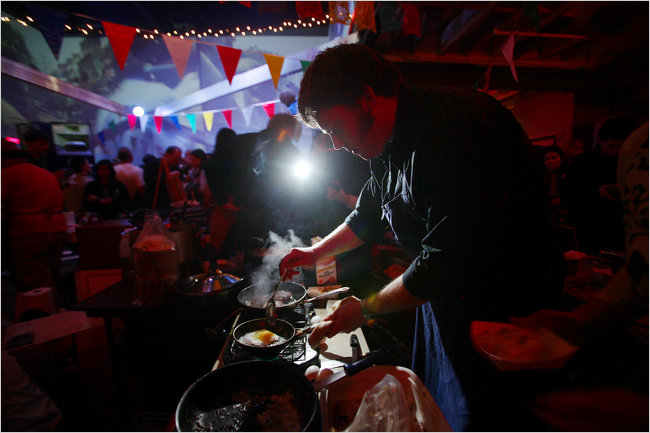
 

All night binging on wholesome goodness ... now that's a turn around !

It began in San Francisco as a way for food geeks to gather and sell their wares without paying high vendor fees, health permits or liability insurance and it seems to be growing into a form of underground indie movement that can be found as far afield as London and Amsterdam. I wonder how long it will be until it hits the star strewn back alleys of Australia. Soon i hope. It’s a movement similar to guerrilla gardening, knit-graffiti and pop-up food trucks. It’s a very hipster response to economic downturn and the fast food generation. Most of what is sold is homegrown, homemade and gives buyers a taste of something fresh amongst the dimly lit streets of these ‘invisible’ markets. It’s an urban phenomenon fuelled by social media, conscience and never ending hunger.

 It’s fast gaining momentum as markets grow in size gathering memerships from thousands of willing participants with huge appetites and the passion for creativity in all areas of food supply. In the words of Chef Christopher Lee who started up a pop-up food market in California – “It’s about stripping away … the externalities and artificial things. It’s about getting rid of the wall that separates the kitchen and the dining room” uummm if you live in a house big enough to have a wall between the two of course !

So keep an ear out for talk of such a movement in cities around Australia and be sure to let us know here in the belly kitchen won’t you ?? ssssshhhhh secret squirrel like .. ya know ?

 

A bellysister raving illegally til daybreak


 Track 2: Give a little Love ~ Aswad http://youtu.be/X_0mlZIW1_0 


Over these past few weeks of August during our annual Major Subscriber Drive we have pleaded with you in so many ways to subscribe to your “Community Radio Station” – ” The Voice of the People” so i thought OK, lets hear from some of those voices, the people that make up a part of our food loving community, the ones you might live up the road from, stand behind in the cue at the post office or sit in front of at the movies, the ones you smile at as you pass on the streets of the Shire, you know, people just like YOU.

Both of my guests today share a passion for good food akin to that of a first crush … and perhaps food is the first thing we fall in love with and the one emotion that stays in our hearts every day from the moment we are born. Whatever your tastes, whatever fills your shopping bag, pantry shelves, fridges, fruitbaskets, mouths and belly’s LOVE and GOOD FOOD should go hand in hand and it’s something we can never get our fill of here on belly.

Pepa and Oliver are two passionate belly’s of the Shire and they each shared stories about their fondness for food with mouthwatering mumblings and a recipe or two all stirred simmeringly into your marvellous Monday morning.


Track 3 : Piece of my heart ~ Barry Briggs from Reggae Love Songs. Can’t find it on you tube so heres the live Janis Joplin original http://youtu.be/-7JVxE2SYxo 


**WARNING – THIS SHOW MAY MAKE YOUR BELLY RUMBLE**


The lovely PEPA and a story or two …

As you will all know inside out and back to front by now, our major subscriber drive ended on 21st August and on that particular Sunday we all had a bit of a knees up at the station. Well, we did make it to 21yrs so we had good reason to celebrate … i mean with a cake like this how could you not ??

Our birthday cake … lasted about half and hour before it dissapeared into thin air … errr … make that happy belly’s

 

The 100 or so volunteers who all help to make this station move and groove have all been acknowledged along with supporters and subscribers near and far but i thought in particular Pepa should be thanked for she lovingly fed all of our hungry belly’s throughout the afternoon and evening helping us to soak up all that bubbly mineral water we were all drinking.

When i arrived, i instantly gravitated towards the food table (a habit of mine) and was in awe of the display of vibrant, wholesome food that was layed out like a family feast. Actually. it’s not all that uncommon to turn up to a BayFM gathering of some description to discover that the person who has volunteered to organise the food has made it themselves, sometimes even grown it !! Many a BayFM management meeting has been encouragingly enhanced by the tasty treats for tea from Carrie D (The Cowboy Sweetheart) and the succulent sweets brought in by Quentin (Q’s Jazz and Blues) Watts courtesy of her talented sister, are almost reason enough to join the committee and stay for a very long time … mmmmm management meetings never tasted so good.

 

a i r w a v e s o f l o v e


So a huge thanks to Pepa for all the love, energy, time and thought that went into what could easily have been a few plastic containers from the supermarket full of fast machine produced junkfood. Alot of people thanked her on the night as we each stood in front of the table for long periods chatting and munching and mmmmmmming and ooooooohing trying to pretend that we were  there to talk to each other which was actually physically impossible due to the fact that our mouths were so full we couldn’t !!

 

A wanna be presenter for next season getting a taste for it


Track 4: Last war ~ Berres Hammond http://youtu.be/tS70kgpWbH8 


Pepa shopped locally from markets and local grocers, noticing that one of the hardest things was to obtain any form of receipt for the petty cash records as it’s not a market thing to ask or recieve dockets for purchases. She ended up getting intials and signatures instead. Great, another way to help save this planet, the trees and the amount of uncecesary packaged waste and rubbish that usually comes with a shop at a big chain supermarket.

We talked about taking the time to think about what it is you are going to make a few days before you invite guests over or before you prepare for a gathering. Allow yourself a day or two for purchasing, soaking, preperation and creativity. Make sure you have the time to put a little (or alot) of loving energy into what you make. The place that you prepare the food should be chilled and calm and you shouldn’t be rushed and hurried with anxious energy flying around. Whatever we touch carries our energy and that energy in the food we make is part of what is used to fuel our bodies. It’s going inside your precious body so it makes sense to prepare food with love and care if that’s what you wish for your body. Think about the reason you are inviting your friends and lovers over or volunteering to feed people in any situation, even if you eat alone. It’s a chance to spread some real good lovin and what better way to spread it than in a dip ?!

Three of the easy to make dips that Pepa prepared for us all were Guacamole, Blackeyed Bean Dip and Tabouli and she has very graciously provided us with the mouthwatering recipes. I highly recommend all three … although i must say i think the Blackeyed Bean Dip won me over if i had to choose my favorite.

Quantities of ingreients depend on the amount you want to make and what is readily and closely available. Of course it’s going to taste different to the last one, keep food entertainingly varied. It should be stimulating and sustainable, calming and comforting. A smooth ride through the day. Eat intuitively and when your body tells you to. Keep it fresh and alive. If your food is then you will be too. Believe me, i’m living it here in Byron snd i’m  feeling more alive than i ever have. Gotta find the balance that suits your own body. You, me and everyone else are all uniquely beautiful individuals and what suits you might not suit me right now Learn what your body needs not just what it wants. Big difference. Honor your own needs. Make it your own way.


Track 5: Baby I Love your way ~ Big Mountain http://youtu.be/iT6Uc-dYKyg


MEXICAN GUACAMOLE – Garlic Free. Cool, sweet, smooth and juicy.
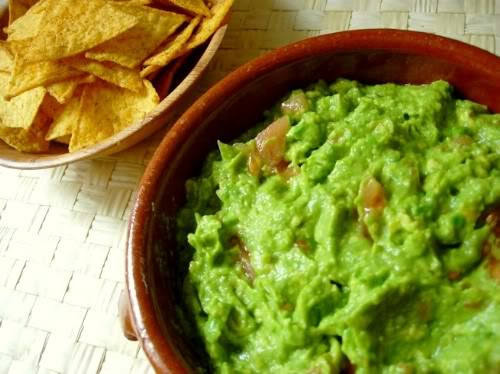
Guacamole

  • Avocados
  • Red onion
  • Corriander
  • Green  Chilli
  • Red Chilli
  • Lemon Juice
  • Olive Oil
  • Tomatoes

Chop tomatoes, salad onion, chillies and corriander. Cream the avocados then add to the rest of the ingredients. Add lemon juice and olive oil. Season with salt and pepper.


BLACKEYED BEAN DIP
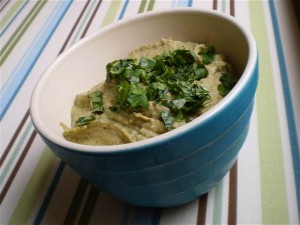
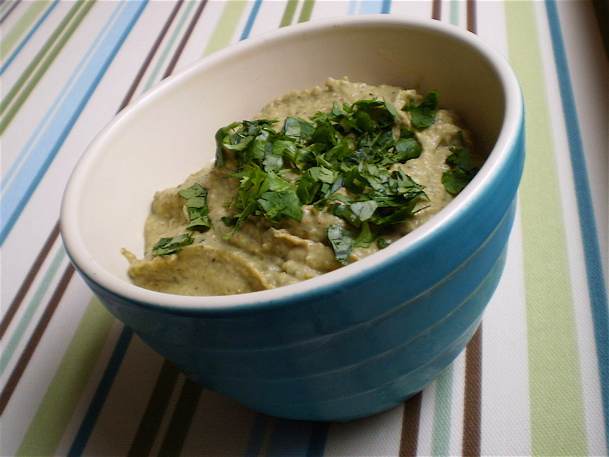
Blackeyed bean dip
  • 1 cup blackeyed beans
  • Garlic peeled and quatered
  • Olive oil
  • Lemon Juice
  • Cumin pinches

Soak beans overnight. Boil until cooked. When nearly ready add salt. Strain and place into small bowl. Add garlic, cummin, lemon and olive oil. Blend to your desired smoothness, Season to taste.


  Fresh an’ wild TABOULI … can’t ya just taste it ?

Tabouli
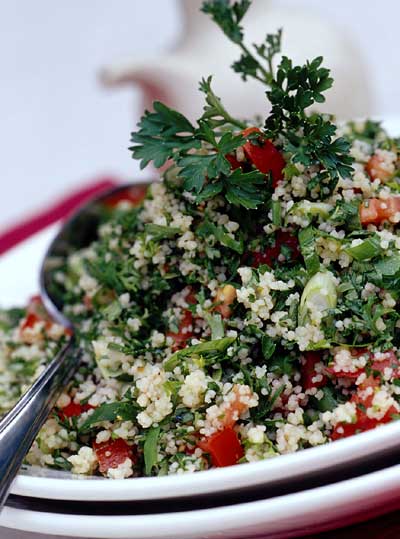
  • Parsley x 1 bunch flat or curly
  • Tomatoes x2
  • Spring Onions
  • Burgal 
  • Lemon Juice

Soak Burgal/Buckwheat overnight. Drain then place in a clean cloth and wring out any excess water. Finely chop tomatoes, spring onions and parsley. Combine all ingredients then dress with lemon juice, salt pepper and olive oil.

Might i suggest you make all three of these dishes, get some fresh seeded bread, fresh leaves of rocket or lettuce, switch on a sunny Spring day and get some picnic tunes going. Find somewhere as beautiful as you can find that day and share all of that loveliness with others. Bring back the lazy days of feasts in the gentle warming rays of Spring. Ignite flames of awareness …  back into the light.


Track 6: Dedicated to the One I Love ~ Bitty McLean http://youtu.be/VMTLDKbmlEs 


Remember to love yourself on the inside and the outside will take care of it’self. Think about how much money and time is spent on maintaining and decorating the outside of your body and then tell me again that you can’t really afford to eat unsprayed organic food instead of chemical ridden poison.

 

Happy Springtime shennanigans ...

My next guest Oliver filled the studio, airwaves and our souls with gentle words and thought provoking philosophies of his journey with food. He has promised to send me something in his own words that i can post for you to salivate over. At this stage though i must remove myself from the computer as i have just had to re-enter half of this post after a little gremlin came in and ate it. He is still in here messin’ with things so before i go loop de freakin loop i shall bid you a happy Springtime and will be back to finish this post at a not too later date.
Keep those belly’s full of good loving … xo Sister R


Judy’s citrus tales

SEVILLE ORANGE MARMALADE RECIPE – by Judy McDonald

7 Seville Oranges
10 cups of water [2.5 litres]
cc 8 cups of sugar [1.6 kg]

1.Wash oranges, scrub clean if necessary, cut out any imperfections in the skin.
2. Cut oranges into quarters and remove and save the central membranes and all pips [the source of pectin needed for a good set].
3.Slice oranges finely and put in a large ceramic or glass bowl and cover with the water.
4.Collect all the pips & membrane in a muslin bag [with string attached] and leave to soak with the fruit and water over night [24 hrs].
-soaking overnight will help tenderise the skins and reduce the cooking time in the first stage.
5.Next day, put the fruit, pips etc  [in the muslin bag tied to jam pan handle] into a large cooking container /preserving pan.
6.Bring to the boil slowly and simmer for around 45 minutes until the skins are tender.
7.Use a metal spoon to press all the pectin out of the muslin bag and into the fruit mix.
8.In the meantime it is recommended that you warm the sugar [reduces the time taken to bring the fruit pulp back to the boil in stage two] and thoroughly clean and prepare your jars and lids.
9.Measure the fruit pulp by the cup and then put back into the preserving pan with the equivalent cups of sugar [ie one cup of pulp =one cup of warmed sugar].
10.Stir and dissolve in the sugar with a wooden spoon and bring the mixture back to the boil quickly on a high flame and boil for up to 40 minutes.
12.Stir with a wooden spoon pretty constantly to prevent the marmalade sticking to the bottom of the pan and burning.
13.Whilst it is boiling skim off the scum with a metal spoon.
14.Start testing from about 20 minutes after it has boiled, to see if the marmalade has set [see note below].
15.Leave the jam rest for 5-10 minutes before putting into hot jars [ pre-heated in the oven to sterilise them] to ensure that the fruit sits evenly in the jars rather than rising to the top.
16.Wait for the jam to cool before putting on the lids to avoid condensation forming which can cause mould to form on the top of the marmalade. Cut rounds of baking paper inserted in the lid can help.

Setting point
-you will notice the mixture becoming more viscous, wrinkly skin will begin to form on the sides of the pan, sticky drops will fall from your wooden spoon when it is held up on its side.
-another test is to have a cold plate [put in freezer before etc] and when you think the marmalade[or jam] is beginning to set, put some ‘drops’ onto the plate.
It is set when the the skin wrinkles,or you when you can run your finger cleanly through the centre dividing the drop.

-freshly picked fruit will reach setting point more quickly, sometimes only 20 minutes of boiling is required.
-the longer you boil in the second stage,the darker the marmalade [or jam] will become and you’ll lose the fresh fruit flavour[as well as possibly ending up with over dense /hard set marmalade].

-don’t pick your citrus for marmalade in wet weather [it can adversely affect the process].
-don’t try and reduce the sugar ratio it will affect the setting process and the marmalade will not ‘keep’: it will not be ‘preserved’ …

Seville Orange Marmalade

7 Seville Oranges 
10 cups of water [2.5 litres]
cc 8 cups of sugar [1.6 kg]

1.Wash oranges, scrub clean if necessary, cut out any imperfections in the skin.
2. Cut oranges into quarters and remove and save the central membranes and all pips [the source of pectin needed for a good set].
3.Slice oranges finely and put in a large ceramic or glass bowl and cover with the water.
4.Collect all the pips & membrane in a muslin bag [with string attached] and leave to soak with the fruit and water over night [24 hrs].
  -soaking overnight will help tenderise the skins and reduce the cooking time in the first stage.
5.Next day, put the fruit, pips etc  [in the muslin bag tied to jam pan handle] into a large cooking container /preserving pan.
6.Bring to the boil slowly and simmer for around 45 minutes until the skins are tender.
7.Use a metal spoon to press all the pectin out of the muslin bag and into the fruit mix. 
8.In the meantime it is recommended that you warm the sugar [reduces the time taken to bring the fruit pulp back to the boil in stage two] and thoroughly clean and prepare your jars and lids.  
9.Measure the fruit pulp by the cup and then put back into the preserving pan with the equivalent cups of sugar [ie one cup of pulp =one cup of warmed sugar].
10.Stir and dissolve in the sugar with a wooden spoon and bring the mixture back to the boil quickly on a high flame and boil for up to 40 minutes.
12.Stir with a wooden spoon pretty constantly to prevent the marmalade sticking to the bottom of the pan and burning.  
13.Whilst it is boiling skim off the scum with a metal spoon.
14.Start testing from about 20 minutes after it has boiled, to see if the marmalade has set [see note below].
15.Leave the jam rest for 5-10 minutes before putting into hot jars [ pre-heated in the oven to sterilise them] to ensure that the fruit sits evenly in the jars rather than rising to the top.
16.Wait for the jam to cool before putting on the lids to avoid condensation forming which can cause mould to form on the top of the marmalade. Cut rounds of baking paper inserted in the lid can help.

Setting point
-you will notice the mixture becoming more viscous, wrinkly skin will begin to form on the sides of the pan, sticky drops will fall from your wooden spoon when it is held up on its side.
-another test is to have a cold plate [put in freezer before etc] and when you think the marmalade[or jam] is beginning to set, put some 'drops' onto the plate.
 It is set when the the skin wrinkles,or you when you can run your finger cleanly through the centre dividing the drop.

-freshly picked fruit will reach setting point more quickly, sometimes only 20 minutes of boiling is required. 
-the longer you boil in the second stage,the darker the marmalade [or jam] will become and you'll lose the fresh fruit flavour[as well as possibly ending up with over dense /hard set marmalade].

-don't pick your citrus for marmalade in wet weather [it can adversely affect the process].
-don't try and reduce the sugar ratio it will affect the setting process and the marmalade will not 'keep': it will not be 'preserved' ...

reverse cooking, positively strawberry & the art of the sponge

on air on bayfm’s 99.9 on August 1, 2011


MORE COMING!


By Khiara Brown (11 years old)

Miss August – Alison Drover

The sun is shining and the strawberries are putting smiles on everyone’s’ lips. Spring is on the way and it is the time for kissing goodbye the cold.   Take time to savour the winter vegetable soups – conserve and preserve surplus so that you can enjoy them in the months to come.
Asian greens are high in magnesium and so easy to cook.
Look for Choy sum, wombok, bok choy and use finely chopped cabbages with
Root vegetables – turmeric,  galangal, ginger and spring onions.
Eat locally and waste not, enjoy August

X Alison Drover

What’s in season around Australia in August

Beetroot
Mushrooms
Brussel sprouts
Broccoli
Cabbage green and red
Carrots
Cauliflower
Celeriac
Kohlrabi
Leeks
Onions
Parsnips
Potatoes
Pumpkins
Silver beet
Sweet potato
Witloaf
Rhubarb
Oranges Navel and Seville
Tangelo
Mandarins
Lemons

ASIAN ROOT FAST CONFIT – perfect for vegetables and for basting chicken

Typically when we make a sauce or stirfry we add our ingredients to the oil.
This technique is the opposite as the hot oil is poured over the ingredients.  The benefit is that you have a concentrated flavour and infusion.
This is one recommendation however you can vary this according to individual preference and what is in season

•    3 stalks fresh lemon grass peeled and chopped
•    1 tablespoon ginger  – peeled and grated finely
•    1 tablespoon galangal root – peeled and grated
•    ½ tablespoon turmeric root – peeled and grated
•    2 shallot – peeled and sliced finely
•    1 clove of fresh local garlic peeled and chopped

½ cup of Sesame oil or vegetable cooking oil

*Variations – add 1 piece of lemon zest or orange approximately 5cm x 5cm piece,  palm sugar, coriander roots chopped

Put all the ingredients into a heatproof bowl  – ceramic style bowl is great.
Heat  oil in a saucepan until it is spluttering but not burning or smoking.
Pour the oil over the mix and combine. It will splutter and crackle which is the idea as all the ingredients are cooking.

Ideas

Vegetables

Cook up some a mix of Asian greens whatever is in season and available. Add your root oil mix and then serve.

Chicken

Take a pastry brush and brush the chicken with the oil and then roast in the oven. Alternatively for a stronger more intense flavour pour over the oil and leave to marinate overnight before cooking.

THE PERFECT SPONGE – made even more perfect with strawberries

Alison writes for Sprout Magazine  and these are her thoughts on baking the perfect sponge.

Sponges look easy but really test  our baking skills yet they are well worth the patience and can be enjoyed all year around filled with jam in summer, lemon butter in winter as it gets really cold with marmalade and some real custard.
The test is following the instructions and understanding the principles of baking as you go step by step. The proof is my confession that one of the first sponges I made for this article failed, which further highlighted for me the difficulty in baking and the art of the sponge. It was actually a blessing though, as it made me provide much more detail in the method so you can get the perfect sponge every time.
The following recipe seems to be the one that works. Duck eggs are best but if you can’t get these, go for the freshest eggs you can get. If your oven is not fan-forced or has a fan-forced function that can be switched off, preheat oven to 190°C and move the oven rack to about one-third of the way up from the base of the oven. If you are using a fan-forced oven or are not able to turn the fan off, preheat oven to 170°C.
You will need two 20cm diameter cake pans that are at least 5cm deep. Grease the inside of the pans and line the bases with a circle of non-stick baking paper, then grease the baking paper (this will make it easier to pull the baking paper off the cake when removed from the oven)

100g (2/3 cup) self-raising flour
50g (1/3 cup) cornflour (cornstarch)
1/8 teaspoon fine salt
5g (1 teaspoon) butter, at room temperature
60ml (3 tablespoons) boiling water
4 large eggs, at room temperature (I used eggs with a minimum weight of 59g)
150g (2/3 cup) caster sugar

Sift the self-raising flour, cornflour and salt together three times to remove lumps, aerate, and thoroughly combine the ingredients.
Once the ingredients have been thoroughly sifted, place the sifter over a bowl or on a piece of greaseproof paper to catch any flour that might escape from the sifter and return the flours to the sifter. Set aside.
Place the butter and boiling water in a small heatproof jug. The water needs to be hot so that the butter will completely melt.
Break the eggs into a large bowl. Using an electric mixer beat on medium-high speed for about 10 seconds to combine the yolks and whites. With the beaters running, add the sugar and continue beating on medium-high speed for about 6 minutes When you lift the beaters, the mixture that falls from the beaters should sit on top of the egg mixture (rather than sinking in).
Sift about one third of the flour mixture over the egg mixture, and using a large deep spoon, gently but quickly fold the flour into the egg mixture until nearly combined. Sift half the remaining flour over the egg mixture and gently fold until nearly combined.
Sift the remaining flour over the egg mixture and pour the water/butter mixture around the edges of the bowl. Fold the ingredients together, making sure you scrape the bottom of the bowl as you fold so the water combines with the other ingredients and doesn’t remain in a pool at the base of the bowl. Don’t mix any more than is necessary to combine the ingredients—if you knock too much air out of the mixture the resulting cakes will be flat and tough.
Divide the mixture evenly between the prepared pans.
If your oven has any hot spots, try to avoid placing the cake pans in the hottest areas of the oven. Bake for 20–24 minutes or until the cakes are lightly golden and spring back when gently pressed in the centre. Don’t use a knife/skewer to test the cakes in case they deflate.
Place a piece of non-stick baking paper on a wire rack, and turn the cakes out onto the baking paper. The baking paper helps prevent the tops of the cakes from being marked by, or sticking to, the wire rack. Gently peel the baking paper off the cakes.
Turn the cakes over so they are top-side up. Place a piece of greaseproof paper loosely over the cakes while they are cooling to help prevent them from drying out.
Spread a thin layer of strawberry or raspberry jam on one of the cakes—the least attractive side as it won’t be visible—top with a layer of fresh whipped real cream, gently place the other sponge on top.
Make a real pot of leaf tea, gather around and enjoy immediately.

CAKE MAKING TIPS

•    Use eggs at room temperature—and for goodness sake use organic or free-range.
•    To ensure good volume, use a metal spoon with a cutting and sweeping action when mixing in the flour—any grease in the bowl, even a small amount of yolk with the egg whites, will prevent the sponge from rising.

Principles of cake baking
•    Beating introduces air into the mixture, therefore, beat butter, sugar and eggs well together in some varieties, and eggs thoroughly in all cases.
•    Beating the mixture after adding the flour and any fruit forces out the air; therefore never beat mixtures after the flour and fruit are added.
•    Air expands with heat, thus raising and lightening mixtures, so a hot oven is necessary.
•    Large cakes, if baked quickly, brown on the outside before being baked through. Small cakes baked slowly lose their moisture through evaporation and become dry and hard, therefore, bake large cakes slowly and small cakes quickly.
•    Lay one or two layers of paper over the top of large cakes, to prevent them over-colouring.

Other reasons cakes can fail

•    Ingredients. Bad or damp flour, rancid butter, cheap, dirty, or dry fruit, doubtful eggs, inferior sugar.
•    Methods. Rubbing the butter into the flour badly, or creaming the butter and sugar together insufficiently.
•    Moving cakes before they are set, this causes them to sink, and sometimes form holes in the centre. Banging the oven door during baking produces the same effects.
•    Not testing cakes with a skewer to ascertain if they’re thoroughly baked before removing from the oven.
•    Placing cakes when baked in such positions that the steam is unable to escape, with the result that it condenses inside the cake, and causes it to become heavy.

STRAWBERRY MUFFINS – made with buttermilk
small is beautiful and no need for a muffin top – quality over quantity
Recipe Alison Drover

Makes 10 muffins

•    380g flour plain
•    150g sugar
•    1tsp baking powder
•    pinch of salt
.        150 grams butter
•    2 eggs organic or free range please
•    300ml buttermilk
•    ½ vanilla bean
*   1 punnet local strawberries – rinsed, hulled (green bit removed from the top) and then chopped roughly but taking care not to squash   the fruit or bruise it.
*  ½ cup approx Demerara sugar

Weigh flour, sugar, salt, and baking powder into a large bowl. Stir don’t  beat several times with a whisk.
Melt butter – take care not to split the butter so melt slowly on the stove on low. Break eggs into a separate bowl and stir in the buttermilk and vanilla.
Pour the eggs over the melted butter and then place the bowl over the gas flame.
Stir continuously and until it is about 38 degrees blood temperature. (If you use a temperature once you will know what this should be for the future)
Gently fold the wet and dry ingredients. Don’t worry if there are a few lumps as it is more important that your dough is not overworked, as this will make your muffins heavy.
Add chopped strawberries halfway through this process.
Take a metal spoon and knife and transfer to patty tins.
Sprinkle carefully so as not to spill on the tin as this will burn the top the sugar on each individual muffin. This will give the muffins the crunchy top, which is delicious and also compliments the strawberries by creating a toffee like top.
and bake for 150 degrees Celsius for 20-25 mins.


BELLY BULLETIN

The Sydney Morning Herald this week is investigating sales of rural land in NSW.
Mining and energy companies have bought up more than 35 000 hectares .  Foreign investors in agriculture have bought 225 000 hectares – both just in the last year.  The dominance of overseas buyers is being put down to Australia’s openness to foreign investment, and recent difficulties in getting credit within Australia.  There is growing worldwide demand for agricultural produce, as well as rising prices for mineral resources, especially coal and natural gas in NSW.  Many farming communities are concerned about agricultural land being used for mining.  Mining companies say some land is being bought as environmental offsets, and will not be lost to farming.

Do you remember all the rain we had in the first half of this year?  Unfortunately it also fell in most of Australia’s wine regions.  Wine grapes really don’t like rain just before and at harvest time, it dilutes the flavours and tends to cause rot.  So when you see the 2011 vintage on a bottle, maybe look for wines from Western Australia, which had very little rain.  The NSW hunter Valley was also ok.  You should expect very cheap prices though, as it was a big harvest.  Experts are concerned that many winemakers added concentrated grape juice to low quality wine to boost alcohol levels and richness, which is legal but doesn’t lead to a fabulous wine.  Concentrate has little flavour and can also be made from rot affected grapes.  Former Winemakers association of Australia president Alister Purbrick says as much as a quarter million tonnes of grapes may have been made into concentrate this year.

In local news, the Byron Bay Writers’ Festival starts this week, with workshops from today and festival events all over the region.  The main event is back at the old beach resort aka North Byron.  Festival director Candy Baker told me on the weekend she is predicting a mini draught for the rest of the week.  No cooking workshops this year unfortunately, but plenty of lunches and dinners.  Food obsessed festival guests include locals Belinda Jeffery and Janella Purcell, last year’s Masterchef winner Adam Liaw, and Victoria Alexander.  The very first session on Friday, at 9am, is called ‘eat my words, why we love foodbooks’, so make sure you get there for that one.  There’s also a new event, called Writers at the Lakehouse, where you can have a nice cuppa tea or coffee, and hopefully a biscuit, with your favourite writer.  This is a separately ticketed event, with tickets available at the Box Office on the day, so you could go along just for that.  15 people per writer, five writers in the Lakehouse at any one time.

It’s a good time for cookbook writers.  At the Australian Book Industry awards last year, 5 out of 6 finalists in the illustrated book category were food books. And the first Masterchef winner, Julie Goodwin, won with “Our family table”, beating books by 3 well known food professionals.  The  Award for outstanding service to the Australian book industry went to the first lady of Australian cooking teachers, Margaret Fulton. She is the first woman in six years to win the award and the first cookbook writer.