Monthly Archives: March 2012

Straight from the mouths of babes

Talofa lava and welcome to another episode of tasty talk. I have officially been a part of belly for almost 2 years now and as we near the beginning of the Winter season at BayFM i thought it an interesting time to take a listen back to when i started and therefore realise how far i have come.

When i first decided to start on belly, i had no experience in a magazine radio show … you know, talking to people and putting together interesting and informative radio. I had plenty of experience as a music DJ and still love that ‘other side’ of my radio personality, but life aint nothin’ without a challenge, so i approached Sister Tess and somehow convinced her to take me on as a bellysister. I hear the words “You’re in !!” Now all i have to do is make it happen.

The first live interview i did took me to Ocean Shores Public School where i was eager to delve deeper into the Nutrition Programme that headmaster Chris Horitz has set up as part of the school curriculum. I had read about it in the local paper and decided that this was a major part of my passion surrounding Nutrition – to help educate children, the next generation, about the importance of good, healthy and nutritious foods in their lives and that of their families.

Each week, a different class from the school boards a bus early in the morning and heads down to the New Brighton Farmers Market where they have a set budget to spend on creating an amazing lunch. The lists and ingredients are all worked out in a classroom activity prior to the children attending the markets, so by the time they have their purchasing jobs completed and the goods in their hot little hands, all that’s left to do is sample the free delights that the generous stall holders provide for the ever hungry and eager children.

I talk to all of them all one by one and ask them various questions about their specific role in the preparation of the meal and their opinions on some of the interesting and unusual foods they may be tasting for the first time here today. Finger limes are popular, as are the dried bananas they get to chew amongst the fresh morning dew.

Once all of the buying, tasting and gathering is completed, the kids jump back on the bus and head back to school, a mere five minute journey away. A gentle ambiance is restored to the marketplace once again and the birdsong replaces the chatter of excited children, happy to be in a different kind of classroom environment than one they are used to on any other school morning.

Once back at school, i interviewed Chris Horitz the headmaster and was impressed by his level of enthusiasm and dedication for teaching these lucky children how to prepare and put together a nutritious meal.  He’s thrilled with the support he has received from the parents, marketeers and organizers of the programme but even happier with the response from the children themselves, who are over the moon to be involved so hands on, in this lesson of love.

I leave his office (it’s not been often that i’ve left a headmaster’s office without being in trouble) and eventually rejoin the children in class and think about the words of the headmaster. He is a positivly influential man and his passion for teaching grows far out of the confinements of the classroom walls, and deep into the land surrounding his school and the children, as they explore the humble beginnings of food and not just accept that it comes from the fridge at home or the supermarket shelf. He hopes that they will go home and teach the rest of their family what they may be learning here for the first time and also that they will be inspired to plant their own little patch of food somewhere, at some point in their lives, whether it be now or sometime in the future.

There is also a garden up and running on the school grounds, to further the experience of eating locally and knowing where that food comes from and how it is grown. Future plans are to plant seedlings from the market, and eventually sell them back from a stall at the very market they started from to raise money for other great school projects.

Meanwhile lunch is being prepared back in the classroom as the produce is being arranged and preparation begins. The aroma of passion fruit is making my mouth water so much i’m afraid you’ll be able to hear me dribbling into the mic when i record the kids talking about this next stage of the game.

Knives are slicing, dicing and impressively chopping as voices echo excitedly around the compact space. Tables that are usually reserved for ordered work and neat book keeping are covered in breadcrumbs and sharp knives. All around i see vibrant colours; star fruits gleaming like they belong in the sky, apples crisp and juicy, plump pears, bananas ripe and tasty, salad leaves fresh from the farmers garden glow in all their shades of green, tomatoes red as the rosy cheeks of the children cutting them, cheeses and yogurt, fresh and fragrant, mingle with the smell of fruits opening in front of me and baring their innermost gloriousness.

The whole scene is one of pleasure and joy, enthusiasm and effort, hunger and mouthwatering patience and i myself feel that at least once, in each child’s life, they should have the right to experience something as wonderfully sharing and natural as the preparation and consumption of a meal bursting with as much wholesome and vibrant pureness as the children themselves.

Ocean Shores Public School has great initiatives in place to encourage sustainable living and learning and if i could choose a school that I’d want to go to then this would be it … hhhmmm, pity i have already completed my primary education. Good to see the next generation with so much opportunity to learn the things that a lot of us grew up taking for granted but that are so important in these times that we are now living.

Here’s to educating the children of the world and guiding them into the healthiest life possible. From school life to home life, for the rest of their lives, let’s hope that opportunity’s like this one at school plant the seeds of wholesomeness that grow into love for themselves and the planet we live on.

As for me, I’m happy to have been able to have shared this interview with you a second time and am planning to go back to OSPS and see how the structure of Nutritional learning is holding up. I also plan to have less uuuummmm’s than my first interview and a variety of questions for the children that enable them to open up and really share with us their thoughts and views on food and how it affects their lives.

I’ll be back with more conversations, straight from the mouths of babes.


xx sister R


Underwater LOVE

Aloha and goooood day to your beautiful belly’s. Sister Rasela simmering in the belly pot today where it’s going to get very wet and a little wild – and I’m not talkin’ bout the weather. I’m actually talking SEAWEEDS and i will be for the next wave of interesting and informative belly-liciousness.

Hmmmm … What are the different types of seaweed you may ask ? What are their nutritional benefits and healing properties ? … and how the heck do you use them ?

Staying in the water, we  swam amongst a few favorite foods and recipes provided by some of the worlds greatest surfers, who might have come across a bit of seaweed in their time. Then we drenched ourselves in a few water logged food facts you might not already know. For example, are you aware that  …

  • The largest modern fishing trawler drags a net twice the size of the Millennium Dome in London ??
  • It takes 5,000 litres of water to make 1kg of cheese, 20,000 litres to grow 1kg of coffee and 100,000 litres to produce 1kg of hamburger beef ??

To help you stay afloat in a sea of belly love, all the music tracks i chose today were from Sunny Coast boys, OKA who released their eighth beautiful album titled “Milk and Honey” so i featured this through out the show.  Trouble is though, i was so busy yapping away in the depths of a wonderous water world that i only got to play about three. I suggest you go buy it and listen to it yourself as they are my favorite flavoured band in the history of  Australian music. Delicious. http://www.okamusic.com/HOME.html

Back in the world of coloured fronds and ocean grace, we get down to salty sultry business as we descend to the land of mermaids and starfish.

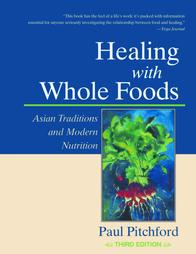
All of the information about seaweed is taken from my ‘bible’ and all time favorite nutrition book called “Healing with Wholefoods” – Asian Traditions and Modern Nutrition by Paul Pitchford.

Seaweeds are powerful sea vegetables which have been used for thousands of years, thanks to their ability to enhance health and heal many ailments. Their properties have enabled people of all nationalities over the years, to live happier and longer lives when used correctly in a balanced diet.

Our unique and beautiful human bodies begin their development in the womb, surrounded by saline solution where we are nourished and cleansed by blood that fascinatingly consists of almost the same composition as sea water.

The seaweeds can be classified by their colours, with a selection of reds, browns, greens, blue-greens and yellow-greens. Photosynthesis is responsible for their specific and individual colours and various conditions in which they grow determine their nutritional content and structure.

Sea plants contain up to ten to twenty times the minerals of land plants as well as a huge vareity of vitamins and other elements which make them an amazing source of both food and medicine.

Some healing and medicinal properties of seaweeds are – salty flavour; detoxify; soften hardened masses; act as lymphatic cleansers; alkalize the blood; lower cholesterol; remove residues from radiation in the body; improve water metabolism; treat swellings; reduce inflammation and other heat conditions affecting the heart and lungs; treat hemorrhoids; promote digestion; remedy for sea sickness; the list goes as deep as the ocean itself.  Make sure you get advice on what is best for you depending on what you need at the time.

They are also used in general to treat swelling, nodules, lumps, goiter, swollen lymph glands and chronic coughs where heat signs and yellow or green phlegm is present.

The nutrients in seaweeds are absorbed and assimilated easily partly due to the fact that our own blood is made up of all one hundred or so trace elements in the ocean.

You don’t need much to get you started. Paul Pitchford recommends 5-15 grams a day. Introducing new foods into the body can sometimes take time and you may notice a few strange smells, in certain situations, that you haven’t previously encountered. Start slowly and add new foods gently. Combining them with foods such as adzuki beans works well as this both softens the fibre of the bean if you cook them with a strip of Wakame or Kombu, and also adds to the flavour of the dish.

When i first started eating seaweeds most of them were from Japan and as we know in recent times, our divine oceans have been used and abused and are sometimes so heavy in toxic pollutions and commercial waste that what comes out of them needs to be more thought about than ever. I would recommend exercising caution when selecting anything from the ocean. Make sure you know where it came from and the quality of the bed of water in which it grew. Then you are able to make your own informed and educated decision as to what you place on the tongue of your gorgeous body.

Here’s a few seaweeds and their high source of nutrients for a light lowdown from the book ‘Healing with Wholefoods’ –

“Hijiki, arame, and wakame each contain more than ten times the calcium of milk; sea lettuce contains twenty-five times the iron, hijiki eight times the iron, and wakame and kelp about four times the iron of beef; depending on when they are harvested, kelp, kombu and arame contain one hundred to five hundred more times iodine than shellfish, and six hundred to three thousand times the iodine average of other marine fish.”

As well as being harvested in Japanese waters, an increasing number are also being wild crafted on the shores of America and now Europe.

You may like to find out more about AGAR-AGAR which can be substitued for gelatin in jelly’s and to set certain dishes. Be careful of the highly processed forms though that have been bleached and transformed into something more toxic than nutritional. Do some research !!

DULSE is popular in flake form and can be sprinkled over veges or added to soups to give them an earthy purple colour and an oceanic flavour. Exceptionally high in iodine, it’s a good substitute for salt.

HIJIKI and ARAME grow over rocks or the sea bottom and once cut and dried in the sun, they are boiled til soft then dried again until it emerges black and ready to eat. These are both excellent sources of calcium, iron and iodine and full of B2 and niacin.

KOMBU and KELP have yellow-brown pigmentation and are known to be the longest and largest of all sea plants (up to 1500 feet). They can greatly improve the value of all food they are prepared with. Both of these seaweeds are fantastic when added to bean dishes, as their mineral content helps to balance the protein and oils in the beans, making them easier to digest. They are great because they also break down the tough fibres in foods they are cooked with.

NORI is probably the most commonly known and used form of seaweed in the western world now days with the explosion of sushi bars in recent years. It is a beautiful dusky-jade colour and the fronds are hollow-like tubes that flutter away in the currents, like ruffled fans. Nori has the highest protein content and is the most easily digested sea vegetable of all. It can be useful in conditions such as high cholesterol, high blood pressure, fatty cysts under the skin, warts and rickets; aids digestion especially when eaten with friend foods.

WAKAME is olive coloured and is one of the highest in calcium (hijiki is first), rich in niacin and thiamine and has been used traditionally in Japan to purify mothers blood after childbirth. It also softens beans and other hard fibres cooked with it.

IRISH MOSS fronds grow like broad forked fans in colours from reddish-purple to reddish-green. It is a superb and nutritional thickening agent for stews, gravies, salad dressings, aspics and gels. Better and less processed than agar-agar. Some of the benefits of Irish Moss are it’s ability to inhibit arteriosclerosis, guards against fat and cholesterol buildup and had a mild anti-coagulant effect on the blood. It also contains a gelatinous substance that treats peptic and duodenal ulcers. Traditional Irish used it as a food; they also extracted carrageenan as a remedy for respiratory diseases.

That’s all folks !


Hope you digest this information gently and learn something you didn’t already know. I urge you to look into seaweeds more if you are interested in diving into the world of underwater goodness. Remember we are all different and what you need is not what your neighbour or your lover needs. Learn about yourself and your bodies needs. Treat it well. Respect it and love it from the inside. You are beautiful.

Oceanic love and mermaidian magic

sister R xx

Hot March, cool lychees, seeds & lemon tarts

On air on bayfm 99.9 in Byron Bay on March 5, 2012


Today two of our regular guests visited the belly kitchen, Alison Drover of Fork in the Field, a.k.a. Miss March, and our baking bellysister Deanna.  Miss March gave us lots of ideas on using luscious lychees, and talked about the importance of seeds.  More from her soon.


In Part 2 of our “Easy as Pie” series with Deanna Sudmals,  shortcrust pastry and some variations you may like to try.


You will find Part 1 and the basic shortcrust pastry recipe here.  If you would like to try the vodka variation, just substitute water in basic recipe with vodka.  Deanna warns that she got a lot of shrinkage with the vodka shortcrust (maybe too much raw dough tasting?).  The alcohol evaporates during the cooking process.


Maggie Beer’s Sour Cream Shortcrust pastry – recipe here


Sweet Shortcrust Pastry with Egg


250g plain flour

2 tbsp icing sugar

125g cold butter, chopped coarsely

2 egg yolks

2 tbsp ice water or milk

Process flour, sugar and butter until crumbly. Add egg yolks and enough of the water to process until ingredients come together. Knead on a floured surface until smooth. Enclose in plastic wrap and chill for 30 minutes. Note: for savoury version omit icing sugar, add a pinch of salt, and use water not milk.


Deanna's Lemon Tart


LEMON TART – by Deanna Sudmals


1/12 cups (185g) plain flour

1/3 cup icing sugar

¼ cup almond meal

125g cold butter, chopped coarsely

1 egg yolk

Filling:

1 tbsp finely grated lemon rind

½ cup (125ml) lemon juice

5 eggs

¾ cup (165g) caster sugar

1 cup cream


Blend or process flour, icing sugar, almond meal and butter until crumbly. Add egg yolk; process until ingredients come together. Knead dough on floured surface until smooth. Enclose in plastic wrap; refrigerate 30 minutes.

Roll pastry between sheets of baking paper until large enough to line 24 cm round loose-based flan tin. Lift pastry into tin, ease into base and side; trim edge. Refrigerate 30 minutes.

Meanwhile, preheat oven to 200 C/180 fan forced.

Place flan tin on oven tray. Line pastry case with baking paper. Fill with dried beans or rice. Bake 15 minutes. Remove paper and beans; bake further 10 minutes or until browned lightly.

Meanwhile, whisk ingredients for lemon filling in a medium bowl; stand 5 minutes.

Reduce oven to 180 C/160 fan forced.

Strain lemon filling into pastry case; bake about 30 minutes or until filling has set slightly. Refrigerate until cold.


Optional: Dust with icing sugar and/or decorate with fresh berries. If you are really feeling fancy, you can coat with icing or caster sugar and using a crème brulee torch, create a brulee crust topping.