Author Archives: sister T

the economics of happiness

on air on bayfm 99.9 on May 16, 2011


Today on belly I had the great pleasure to talk with Helena Norberg-Hodge.  She is an occasional Byron bay local, and full time fighter for a better world.  She is currently talking about her new movie, the Economics of Happiness.  For lots of information and other interviews about the movie, as well as upcoming screenings and a way to buy the dvd, go to http://www.theeconomicsofhappiness.org/

And check out the trailer below.


You can also find one of Helena’s other movies, Ancient Futures, on Youtube or to buy online.  It shows the beautiful people of Ladakh, in the Himalayas, who have inspired a lot of her work.  Beautiful and interesting story.  Here

And Helena also shared one of her favourite recipes with us, a warm vegetable salad of potatoes and beans.  She dresses it with a vinaigrette  that has boiled egg yolk added to make an easy mayonnaise type dressing.  A bit safer than the classic raw egg mayo in many places.

BELLY BULLETIN

Amnesty International, the organisation that fights for human rights, is 50 years old this year and is celebrating by inviting you to hold or attend a candlelit dinner.  The candle wrapped in barbed wire is Amnesty’s symbol.  If you want to show your support, hold a dinner at your place or go to a participating restaurant on Saturday 28th of May and raise a glass to toast freedom.  Amnesty isn’t necessarily looking for donations, although they will be gratefully received.  They are mainly interested in a show of support on their birthday.  There is still plenty of time to register your private dinner or restaurant on the Amnesty website.  By registering , hosts get access to a free online supporter pack including email invites, menu and recipe suggestions, and a script for their toast.

The Byron shire Echo is celebrating 25 years with its Community Awards, recognising some of the wonderful people in our area.    In this week’s paper some great locals were listed in the ‘battles as an environmental warrior’ category.  The belly vote goes to Judy McDonald, who as well as fighting for locally produced food and landcare has taught so many locals to grow their own food in our sub-tropical climate.  See the paper for details.

May is also Biggest Morning Tea month, fundraisers for the Cancer Council.  There’s one in Ewingsdale this Wednesday May 18th at 10 am at the Fig Tree restaurant.  One at the Mullumbimby Uniting church hall on Friday 20th at 9.30 am.  Plenty more around, check your local papers or the bayfm community service announcements.

Backpackers doing good.  Yes it happens.  Eco-tourism consultant Angie Wilton got donations of 6000 dollars in 4 months from backpackers staying at Byron’s Arts factory, to set up a permaculture community garden there, to grow food and educate visitors about sustainable living practices.  It will rely on volunteer work once estabilished.

Love and happy chocolate, sister T

MUSIC

Yungchen Lhamo, Happiness is…, from Putumayo presents : gardens of Eden

Tony Bennett and k.d. Lang, What a wonderful world

Ludwig van Beethoven, ‘the hymn to joy” , with the Roman Philarmonic Academy choir and the “Alessandro Scarlatti’ orchestra from Naples

Shubha Mudgal, the Awakening

Al Green, Happy Days

music and stories from the Pratten sisters, and fresh peppercorns

on air on bayfm99.9 on May 9, 2011

This was a 4 – sister belly: sister T and sister B with 2 of the 3 Pratten sisters, now Joan Ajala and Ruth MacIntosh, but once girls growing up in Lismore, just before and after WW2, with their other sister and 3 brothers.  Joan and Ruth told us great stories about the beautiful fish their father caught when they stayed at the family beach house in Brunswick Heads, the mud crabs from the river (who tried to climb out of the pot – no fridge or freezer in those days to put them to sleep), the fruit and veg man who came along with his horse and cart, the oysters bought by the hessian sackful.  Mmmm.  And mum’s tea parties, with song performances and proper ladies with proper manners, as the girls giggled under the house.  And a little espionage when one woman would not divulge her wonderful teacake recipe.  Then mother in law’s ever expandable recipes, like the popular Swedish meatballs.  They had a clever signal.   When one of the 7 kids brought home an extra mouth to feed, he or she would loudly call hello from the garden gate and a little extra was in the pot by the time they got inside. And thanks to sister Robert, who regularly listens to belly on www.bayfm.org from Sydney, for explaining that their regular childhood breakfast of home smoked fish and rice is the colonial English classic “kedgeree”.
Now Ruth has put all the recipes from her mother and aunt (another great cook), and mother in law, from scruffy bits of paper onto a digital cookbook.  Her own recipes and experiments end up there too, and she has shared a few with the belly listeners.


Kedgeree-photo by justinc


BELLY BULLETIN

Djanbung Gardens, Nimbin

Would you like to grow your own taro, make cassava flour or process arrowroot? It is harvest time again at Djanbung Gardens near Nimbin, where there is a diverse range of subtropical vegetables, making self-reliance so much easier in our culture. Starting this week, so be quick, Permaculture College Australia will  host a series of short courses at Djanbung Gardens . They will teach all aspects of planning, growing, harvesting, storing and preserving your own food for year-round abundance from the garden. For more information please contact the office on 6689 1755 or visit http://permaculture.com.au

The Sustainable Agriculture forums

The free forums held last week were very good and informative.  More about them on belly soon or see

http://www.northernriversfoodlinks.com.au/sustainable-agriculture-projects/


RUTH’S RECIPES


DIP: BASIL PESTO DIP (delicious!)

Place in food processor 1 cup fresh basil leaves, 1/4 cup each pine nuts (lightly toasted), parmesan cheese, olive oil, Greek yoghurt & mayonnaise, 1 tbsp garlic, salt & pepper. Process until mixed. Thickens in fridge.

NOTE: quantities are approximate – vary and check taste – probably fine in a blender.

Excellent made with frozen basil – food process fresh basil with oil and freeze in small containers – fresh dip in the depths of winter!

DIP: OLIVE DIP

1/2 small bottle of pitted green or black olives

1/4 cup good quality mayonnaise

small quantity of Greek yoghurt (too much makes the dip yummy but runny)

Process in food processor until mixed. Don’t over-process or olives pieces will be too small.

NOTE: a variety of ingredients can be used in place of olives – a blender is probably just as effective


BASIL – how to enjoy basil fresh from the garden all year round!

Pick basil and place in food processor. Process, adding enough olive oil to ensure that all the basil is coated (this preserves the rich colour). Freeze in small containers. During the depths of winter use to make all your favourite pesto recipes, or to flavour soups and casseroles.  It will taste as wonderful as it did when you harvested it!


BEEF: SWEDISH MEATBALLS – absolutely scrumptious

A great meal for visitors which they all seem to enjoy – the family always love the leftovers

750g low fat mince (500gr mince + 250gr sausage mince)
1 1/2  cups soft bread, 1/2 cup light sour cream, 1/4 cup milk
1/2 cup chopped onion
1 teas salt, 1 tables butter, pinch ginger, pepper, nutmeg, 1/4 cup chopped parsley
1 tables butter
1 egg

Soak breadcrumbs in cream & milk – cook onion in butter till tender NOT brown
Combine meat, crumbs, egg, onion, parsley & seasonings, beat until fluffy, chill and form into balls.
Brown in butter – half cook (in electric frypan setting 7-8).

Sauce
1 can tomatoes
1-2 sticks chopped celery
1pkt Maggi Spring Vegetable Soup
1 shredded carrot

Remove meatballs from pan – add soup and about 2 cups of water.
In casserole, layer meatballs and other vegetables, pour sauce over.
Bake in moderate oven for 45min – 1 hour – serve over spaghetti or cous cous, with salad and garlic bread.


CAKE: CHOCOLATE CAKE – FLOURLESS

[We did not talk about this on the show, but the world always needs more chocolate cake recipes – and I am doing my best to be adopted as a Pratten sister so we can share the teacake recipe]

110g dark chocolate
110g unsalted butter

Melt in microwave and cool

1/2 cup castor sugar
4 eggs, separated
1 packed cup almond meal (110g)

Combine all ingredients except egg whites and mix wel.l
Whip egg whites until soft peaks form; fold in gently.
Place in 20cm greased, lined springform tin; bake at 190ºC for 35-40 mins (170ºC fan-forced).
Cool in tin; run knife around edge; slide onto plate; dust with sifted icing sugar.

Delicious served with a coulis made from frozen berries simmered with a little sugar – mash or blend.

Ruth does really good roasts too, she has promised to come back to belly with her top roast tips on her next trip to visit Joan.


FRESH PEPPER – GREEN, BLACK, WHITE AND RED


green pepper taken by the photographer, Devadaskrishnan at his farm in Kerala.

Pepper is native to Kerala, southern India and is extensively cultivated there and  in other tropical regions. Currently Vietnam is by far the world’s largest producer and exporter of pepper, producing about a third of the world’s Piper nigrum.  There’s one commercial large pepper farm in Australia, in north Queensland, near Innisfail, that supplies many of our top restaurants. According to the Innisfail pepper grower, “The imported stuff does lose some of the volatile oils, as it has to be steam-sterilised to get it into Australia,’’ But you can now get fresh pepper at Byron and New Brighton farmers markets, locally grown, so you may want to try your luck growing it too.  It’s only available for another month.  Or do taste it, really interesting, and the flavours change as it ripens week by week.  A little like the picked green, minus the strong vinegar taste of course.

The pepper plant is a perennial woody vine growing to four metres in height on supporting trees, poles, or trellises. It  roots readily where trailing stems touch the ground.
To grow – from seed or cutting, 3-4 years to fruit
– on strong trellis, full sun, mulched (roots like staying cool)
– plenty of food and water
In the wild, pepper flowers are pollinated by rain, so it’s important to irrigate plants so the water flows over them.  Or wait a few minutes for the rain to start, if you live in the Northern Rivers.
Berries that are picked when they’re fat and green can be dried to make black pepper. If you allow the berries to mature and turn red, then peel them to reveal the seed, you’ll get white pepper.

Fresh pepper is very popular in Thai cooking, so try adding it to your favourite red or green curry, or use in a stir fry or Thai salad.

PEPPER SQUID – adapted from www.thai menu.net

Serves 4

In a bowl combine 500 g cleaned squid , 2 tablespoons of oil  and 1 tablespoon of
roughly crushed green peppercorns; allow to stand for 15 minutes.

Heat a large wok or heavy based frying pan until very hot. Add 2 teaspoons of oil from the marinating squid. Add 4 chopped cloves of garlic and 1 teaspoon of chopped red chillies to the pan and cook for 5 seconds.
Add squid to the pan in batches and stir-fry, tossing constantly, for 2 minutes each batch. Transfer each batch to a plate.
Reheat wok between each batch. Add 2 tablespoons of fish sauce and 2 teaspoons of soy sauce to wok. When it is bubbling, pour it over the squid and serve immediately, garnished with 1/2 cup of fresh basil leaves.
Accompany with rice.


MUSIC


Today all the music on belly was chosen by Joan Ajala, aka the middle Pratten sister.  Joan shared some of the music she has come to love in her many years as a music teacher.

Give me the simple life, sung by Sharny Russell, with George Galla on guitar, from “Velvet Jazz”
Allegro from Vivaldi’s concerto in C, Genevieve Lacey on recorder with the Australian Brandeburg Orchestra, from : “Vivaldi – il flauto dolce”
Va tacito e nascosto Cesare, from the opera ‘Julius Caesar’, by Handel, sung by Margreta Elkins
Concerto for flautino in C major RV443, Largo, by Antonio Vivaldi
Gavotta, allegro, from Arcangelo Corelli’s Concerto for flauto no.10 in F major, Maurice Steger , from the CD “Mr Corelli in London”


let us know if you enjoyed Joan’s music as much as we did!

Love and peppered chocolate, and remember we’d love to hear your food stories too, call bayfm on 6680 7999, or email belly at belly dot net dot au, or comment below

sister T


May: mushrooms, mandarins and mystery sounds

on air on Bayfm 99.9 on May 2, 2011


It’s the first belly of May, so as usual we talked about some of the delicious foods in season this month.  Ms May (aka Alison Drover) brought some  cooler weather recipes, she’s been all over Australia to see what’s in season.
It’s also the first belly of a new bayfm 6 month programming season, so I marked the occasion with our first ever mystery sound – so mysterious that nobody rang in – I would have been very surprised if anybody had recognised it in fact.

MMMMMMISS MAY’S MONTHLY ROUNDUP

Seasonal Fruit And Vegetables in Australia in May

Fruits:

apples : bonza – braeburn – cox’s orange pippins – fuji – gala – golden delicious – granny smith – jonagold – jonathan – mutso – pink lady – red delicious – snow – sundowner
bananas, cumquat, custard apple, feijoa,
grapes : purple cornichon – waltham cross,
kiwifruit, lemons, limes,
mandarins, champagne melons,
nuts : chestnut – hazelnut – peanut – walnut,
pears : howell – josephine – packham – red sensation – williams,
persimmon, quince, rhubarb.

Vegetables:

asian greens – bok choy, – choy sum – gai laan – wonga bok,
avocados : fuerte – sharwill,
beetroot, broccoli, brussels sprout, cabbage, carrots, cauliflower, celeriac, celery, daikon, eggplant, fennel, garlic, ginger, horseradish, leeks, lettuce,
mushrooms : wild – field – pine – slippery jacks,
okra, olives,
onions : brown – spring,
parsnip, peas, potato, pumpkin, shallots, silverbeet, spinach, squash, swede, sweet potato, taro, tomato, turnip, witlof, zucchini.

MANDARIN CAKE

makes one 24 cm cake, serves 10 – 12

3 mandarins
250g (1 cup) caster sugar
6 eggs
230g (2 cups) ground almonds
to serve
60g (¼ cup) caster sugar
zest of 2 oranges

This is a great cake and ideal for all those that  need gluten and wheat free. It is a cake that not only tastes good but the vibrancy of the orange mandarins  that make it look so good. I often decorate it with nasturtium flowers and serve yogurt with it.

Put the mandarins in a medium saucepan and cover with water. Bring to the boil and simmer for 2 hours, adding water when necessary to keep the mandarins covered at all times.
Preheat the oven to 160°C (325°F/Gas 3).  Grease a 24 cm (9 inch) springform cake tin well.
Drain the mandarins and cool to room temperature.  Once cooled, split them open with your hands and remove any seeds.  Puree the mandarins, including the skins, in a food processor.  Add the sugar and eggs and mix together until combined.  Add the ground almonds to the mandarin purée and stir thoroughly.
Pour the mixture into prepared tin and bake for 1 hour 10 minutes, or until the cake looks set in the middle, springs back when touched and comes away from the edges.  Remove from the oven and allow to cool in the tin.
While the cake is cooling, put the extra sugar in a saucepan with 60 ml (¼ cup) of water over a low heat and stir until the sugar dissolves.  Add the orange zest and boil the mixture until it just starts to caramelise.  Lift the zest out with a fork and cool it on a plate.
Serve the cake with caramelised citrus zest and a sprinkling of icing sugar.

MUSHROOM BREAD SOUP

This is an easy mushroom soup. May is a time that mushrooms grow well as the temperature is cooling down. Visit your local farmer market and see what is growing and be adventurous. With your mushroom types.

500g mushrooms – try to buy from Farmers Market as you will taste the difference in flavor and be sure to find varieties that provide all the wonderful textures.
4 cups chicken stock
2 slices sourdough bread, crusts removed

Simmer sliced mushrooms in stock with bread for 10 minutes, or until mushrooms are tender. Blend soup and season to taste. Garnish with chives and creme fraiche.

VEGETABLE STOCK

Celery stalks, coarsely chopped
Carrots coarsely chopped
Leeks white parts only, coarsely chopped
Onion coarsely chopped
Garlic cloves bruised
White peppercorns
Bouquet garni – this is a mixture of herbs used to flavour the stock. You can make this easily by using parsley stalks, thyme sprigs, rosemary, bay leaf, clove of garlic and tying them together so they are enclosed in a piece of muslin. The bag of herbs is placed in the stock and removed afterwards.

For vegetable stock, combine ingredients in a saucepan and add bouquet garni. Cover with cold water, bring to the boil over medium heat, then reduce to low and lightly simmer, skimming occasionally until stock is flavoured (30-40 minutes). Remove from heat, strain through a muslin-lined fine sieve (discard solids). Cool to room temperature then refrigerate stock until chilled (2-4 hours). Makes about 2 litres. Stock will keep refrigerated for up to 3 days and frozen for up to several months

PLANTING IN MAY

Miss May says time is running out so get out in the garden and start planting so that you will have the abundance of vegetables through to winter.
Now is the time to plant broccoli, broad beans, beetroot, coriander, cabbages and Asian greens. Visit the Sustain Food website for a local regional planting guide. http://sustainfood.com.au/index.php?page=grow-what-s-in-season-vegetables.

This is also the time to save seeds from your summer crops so that you have them for the next year. Saving seeds helps safeguard the food security of the plant and is also a great way to ensure that the seeds you sow grow.
I have some heritage tomato seeds that my neighbour gave to me in Sydney and she has had them for over 30years. They grow and are so resistant and produce the juiciest tomatoes.

Alison Drover a.k.a. Miss May


THE MANDARIN POEM

Yes the beautiful mandarin, loved in China for many centuries as much for its scent as for its taste.  This is a poem about the first mandarin of the season being presented at the imperial palace.

LIU HSUN  – AD 462 -521

On the morning of the first frost,

the gardener plucks and presents it;

its perfume extends to all the seats of the guests,

when opened, its fragrant mist spurts upon the people.


THE MYSTERY SOUND

Apologies to anyone who thought their radio was broken – the mystery sound was very odd

If you’d like to listen, go to

http://austringer.net/wp/index.php/2010/06/25/listening-to-snapping-shrimp/

and for sound + good explanation

http://www.ieee-uffc.org/ultrasonics/symposia/2003/hawaii03/plenary_session.html

The loudest sound under the sea, would you believe, is prawns, or shrimp – usually called snapping shrimp.  They make a sound that can be over 200 decibels, louder than a jumbo taking off.  They use the sound for hunting, to stun their prey.  They are very common in sub-tropical waters, and they are spreading with warming seas, so don’t be surprised if your bucket of prawns makes strange noises.

If you know of any other edible animals (or plants!) that make odd noises, or you have a good cooking sound that doesn’t just sound like static and would be good for a guessing game, please send it to the bellysisters.  Next time I will try to organise a prize for the first correct guess.  Of course the glory is probably enough.

Love and chocolate covered prawns,  sister T

MUSIC

Bellydance, Undercover (with ya lover)

James Grehan, Miss Mayhem

the Sydney Symphony Orchestra, a bunch of whales and dolphins, Jean-Pierre Jacquillat conducting, Danse Lente, from Trois Danses by Durufle’

Burt Bacharach, Another spring will rise

Keren Ann, the end of May

Bianca Meier, Walk the earth


sustainable agriculture

on air April 25, 2011 on bayfm99.9


Yes it was all about new, or sometimes the old becoming new again, on the farms of the Northern Rivers on belly today.  I spoke with Jane Laverty,  Regional Project Officer at Northern Rivers Food Links, about the upcoming Sustainable Agriculture Forums.  They are free and open to everyone, but you do need to book in.


Dig For Victory, 1942, IWM PST 0059 © Imperial War Museum The Dig For Victory campaign was launched in October 1939 in the UK.

Forum dates and venues:

Murwillumbah Tuesday May 3 (Murwillumbah Golf Club, 9-11:30am)
Ballina Tuesday May 3 (Ballina Beach Resort, 3:30-6pm)
Casino Wednesday May 4 (Windara Function Centre, 9-11:30am)
Maclean Wednesday May 4 (Maclean Services Club, 3:30-6pm).

Forum Presentations

a.. Softer Farming Methods – Stuart Larsson (Mara Seeds)
b.. Sustainable Farm Planning – Greg Reid (Industry & Investment, NSW)
c.. Improved Greenhouse Production Practices – Stephanie Alt (Industry & Investment, NSW)
d.. Biological Farming Methods – Bob Jarman (Northern Landcare Support Services)
e.. Soil Health for Commercial Food Production – Claire Masters (Tweed Landcare)
f.. Sustainable Grazing – Clarence Valley Project – Julie Mousley (Clarence Landcare)
For more information, or to register: visit www.northernriversfoodlinks.com.au

or email events@northernriversfoodlinks.com.au

You need to book because the forums will include some delicious local food, as well as lots of sharing of information by farmers and scientists getting down and dirty and sharing their knowledge.  I love that the polite term for poo, if it is applied to your field, is ‘input’.

There will also be plenty of opportunities to ask questions and share information on anything to do with    sustainable agriculture.


We also mentioned the Sustain Food website, a very good and growing portal with lots of information about food in the Northern Rivers.

And Jan Barham’s Tofu stir-fry with seasonal vegetables and locally grown brown rice recipe. This is the link, also check out the other Majors’ recipes.


EDIBLE QUOTE

Our edible quote today comes from an unfinished short story by Jon, one of our bayfm front desk volunteers.

I experiment with food.  It’s a relationship I’m wary of, food can do things to you.”

Please call him up on a Wednesday or Thursday afternoon and ask him to finish the story – I’d like to know what happens.

Love and sustainable chocolate bilbies, Sister T


MUSIC


Robert Childs, Sugar Addict

Slow Train, Naturally

The Mighty Imperials, Thunder Chicken and Chiko’s Barnyard

Abbie Cardwell and her Leading men, Down

David Lindley and Wally Ingram, Cat Food Sandwiches


Ronit’s Morocco

On air on bayfm99.9 on Monday 11 April, 2011

Sister B and brother Andrew (A & B!) had a wonderful talk with Ronit Robbaz-Franco about the  country and food of Morocco.  A big thank you to everyone for keeping the belly show on the road when I could not go on air at the last minute.  I am sorry to report the belly cat is now chasing mice in cat heaven, but we had some lovely last few hours together – and some hard ones.   A and B tell me Ronit brought all the colours of Morocco into the bayfm studio.  Sister T


Ronit setting the scene for a Moroccan banquet


*Ronit’s Story*

My parents were born in Morocco. My mother is from Casablanca and my father
from Marrakech. Both grew up in Morocco but left for Israel in 1950s, where
I was born. My mother was a chef, specializing in pastry, so my upbringing
evolved around food. My Great Grandfather was an Ambassador in Morocco,
that’s how they landed in Morocco initially. I come from a large, colourful
family, where all our family affairs happened around a Moroccan feast. There
was always a hearty celebration taking place, a passionate and dramatic
affair with family & friends. My brother’s wedding lasted for 3-5 days. The
Moroccan women are known to be feisty, colorful and vibrant. I have 5
sisters & 1 brother, so I grew up with many women around me, listening to
their stories.

Growing up in Israel in a Moroccan household, it was infused with Moroccan
culture, heritage and social ethics. When I visited Morocco I felt I had
arrived home.

My mother’s family is scattered all over the world, basically the wandering
Jew. I decided to leave Israel after my military service at 20 years of age.
I lived in South East Asia, India, Japan, South America, mainly Brazil,
where I lived for 5 years, then Central America and finally I arrived on
these shores about 14 years ago. Travelling around the globe, I gained a
wealth of experience in middle eastern, primarily Moroccan cuisine, Indian
and Gourmet Wholefood. I set up my business called Open Table Catering in
Byron Bay and it’s been operating successfully for 7 years.

Moroccan cuisine is extremely diverse, due to Morocco’s interaction with
other cultures and nations over the centuries. Moroccan cuisine has been
subject to Berber, Moorish, Mediterranean and Arab influences. The cooks in
the royal kitchens of Fez, Meknes, Marrakesh, Rabat and Tetouan refined it
over the centuries and created the basis for what is known as Moroccan
cuisine today.


A very traditional Moroccan Recipe by Ronit:

HARIRA SOUP

Harira is a tomato based soup with chick peas, meat, lentils and small
noodles.

It is the most important soup in Morocco as it serves to break the fast
during the whole month of Ramadan. During this month, at the break of the
fast, harira is accompanied by dates, warm milk, juices, bread and
traditional Moroccan pancakes. At the moment of the call to prayer,
Moroccans all over the country utter ‘bismillah’ (in the name of God), bite
into a date and sip a spoonful of harira – their first taste of food after a
long day of fasting.

For 2-3 people

200 grams of meat (lamb or beef) chopped into cubes

150-200g of chickpeas soaked overnight

80g of vermicelli

5 tomatoes

1 cup of chopped celery (krafs)

1/2 cup of chopped coriander

1/2 cup of chopped fresh parsley

2 teaspoons of tomato paste

1 tsp of powdered ginger

1 pinch of saffron (strands or powdered)

1/2 cup of cornflour

1 liter of water

salt

pepper

1 tablespoon of butter

Boil the tomatoes and blend to a puree. In a large pan place the chickpeas,
herbs (parsley and celery but not the coriander), the onions, meat, spices
and butter. Add the tomato puree and 1 litre of water and bring to the boil.
Simmer for 45 minutes or until the chickpeas are soft. Stir in the tomato
paste and thicken by adding water to the cornflour and slowly stirring in.
Add the vermicelli and cook for a further 10 minutes. Take off the heat and
add the fresh coriander. Serve with a wedge of lemon.

Clock tip – for a special treat (especially at Ramadan) serve with dates and
sticky, sweet shebbakiya.


Open Table is running cooking workshops  and  introducing a new food line: Gourmet Raw Foods called Raw Buzz (from Ronit’s surname ‘Robbaz’)


THE BELLY BULLETIN

Local screenings of the new film “The Economics of Happiness” are on this week.

This is a film on solutions to the problems of unemployment, waste and unhappiness that we see flowing from our current system of trade and production, including things like shipping food across the world just to package it. The film is by Helena Norberg-Hodge, Steven Gorelick & John Page. They say: ‘Going local’ is a powerful strategy to help repair our fractured world – our ecosystems, our societies and our selves. Far from the old institutions of power, people are starting to forge a very different future…

check out “The economics of Happiness” at:

Mullumbimby Civic Hall ,Wednesday, 13th April, 6.30pm

Southern Cross University, Lismore (Main D Block concert space), Thursday 14th April, 6pm

Byron Community Centre, Sunday, 17th April, 6.00pm

more info www.theeconomicsofhappiness.org/

Our local food producers, agricultural industry and community will reap big benefits when some of the Northern River’s most groundbreaking sustainable agriculture projects are showcased in forums across the region in May.

With the focus on sharing knowledge and making food production profitable in a changing climate, the Sustainable Agriculture Forums are scheduled for Murwillumbah and Ballina on May 3 and Casino and Maclean on May 4. They will showcase projects that focus on sustainable greenhouse production, biological farming methods, sustainable grazing and soil health for commercial food production.

The forums are free and open to the public, in particular, representatives from the Northern Rivers agricultural industry, local food producers and community members interested in sustainable agriculture and food security.

For more information, or to register: visit www.northernriversfoodlinks.com.au

or email events@northernriversfoodlinks.com.au

citruses, choko cake and a farmers market in the volcano

ON AIR ON BYRON BAY’S BAYFM 99.9 ON MONDAY APRIL 4, 2011

Today on belly our seasonal bellysister Alison was talking about the good things of April, even a choko cake if you want a very different birthday.  Also a new farmers market is starting up in Murwillumbah, so we had an interview with the new market manger Deborah Fuller about all the tasty produce of the Murwillumbah/Tweed area, and lots of local news.  So grab a snack to stop the belly rumbles and stay right here with sister Tess.

THE FRESH REPORT – IN SEASON IN APRIL

April is the month of conserving and preserving what’s left over as it is a little bit of an in between time as it is not late enough for the winter vegetables the brassicas broccoli, kale and cabbages yet its evening cardigan time so we need something a little heavier on our plates.

Pumpkins are abundant and especially in my garden. Warm salads are great for April. There is some rocket around and new lettuces coming up with the cooler weather.

It is a good time to buy citrus fruits on the side of the road limes and lemons so make marmalade or on your trees or neighbours. Marmalade is a great was to glaze meat and ensures that you are not using sauces with added chemicals and additives and your saving money.

Seasons

It is important to note that seasonal guides really vary from region to region and within a region so that as an immediate start you need to look to buying and cooking with what is in your area.

This is our wrap up of what is in season around NSW and then for the Northern Rivers.

April is the season for:

Apples
Beans
Capsicum
Dragonfruit
Eggplant
Grapes
Lettuce
Persimmon
Pumpkin
Quince
Tomatoes

Northern Rivers

Pumpkins
Rocket
Shallot
Silverbeet
Snowpeas
Beans
Eggplant – still around
Sweet potato
Pineapples
Chokos of course
Bananas

CHOKOS

Chokos are like tripes they can be really amazing if cooked well. Yes it is amazing but true.
Whatever you do don’t boil them

Contain fibre, vitamin C, they’re low in fat and they can even taste good!

CHOKO CHIPS

Peel the chokos. Cut in halves lengthwise.
Pop out the seeds.
Cut into chip shapes.
Pan fry or deep fry until crispy on the outside.
Serve with salt and pepper to taste.

Choko vines everywhere are bearing now (Autumn) – when other veggies are a bit scarce (This veggie is technically a fruit). The choko originated in South America and was still ‘new’ in Australia in the 1880’s.

Recipes by Alison Drover www.thealisonprinciple.com

CHOKO AND PECAN CAKE WITH LIME MARMALADE AND SOUR CREAM FROSTING

CHOKO CAKE

•    2 cups plain flour
•    1 teaspoon bicarb soda
•    2 teaspoons ground ginger
•    1 cup brown sugar 100g butter melted (careful to do so slowly so your butter does not split)
•    2 eggs lightly beaten
•    1⁄2 cup chopped walnuts
•    2 cups grated pecans
•    (about 2 chokos)

Combine flour, soda, ginger and sugar in bowl, add butter & eggs, and mix well. Stir in choko and pecans. Put into greased 14cm x 21cm loaf tin. Bake at 190 degrees for 80 minutes or until cook

This is great served alone however if it is a special occasion it is great with icing.

LIME SOUR CREAM ICING

11/2 cups icing sugar mixture
¼ cup sour cream
1 tablespoon of lime marmalade – see recipe

Other ideas

Chokos are great in pear crumble they take on the flavour of the pears and caramelize if you add brown sugar, & add cinnamon – very good.

ROASTED PUMPKIN, RED CAPSICUM, DUKKA SALAD WITH LOCAL GOATS CHEESE

•    ½ Pumpkin or more depending on how many you have to feed
•     a small bunch Oregano
•    2 teaspoons Paprika
•    2 teaspoon Cinnamon
•    Salt
•    1 tablespoon brown sugar
•    200grams Goats curd – this region has great cheeses try Tweed Valley Whey, Nimbin, Bangalow
•    3 tablespoons of Dukka – buy a local one made from macadamias
•    4 tablespoons Olive oil or macadamia oil
•    1 -2 capsicums

Cut up pumpkin and slice it wedges. Try not to make these too thin they should be about 5 cm diameter. Mix up your spices and rub pumpkin with salt, paprika, cinnamon, and oregano

Place pumpkins flat in a deep oven proof baking tray.

Slice capsicums in half remove seeds and then slice capsicums in strips and then place alongside pumpkin.

Place tray in the pre heated 220 oven and roast for 15 -20 minutes
Hint: the pumpkin needs to caramelize as it will sweeten and should hold its shape but not break up.

Take pumpkin out of the oven and place on a platter. Sprinkle Dukka mix over the pumpkin and arrange roasted capsicums. Arrange cheese over the pumpkin and some fresh oregano leaves.

LIME AND LEMONGRASS MARMALADE CHICKEN

Organic chicken is widely available from supermarkets and farmers’ markets, so there is no excuse.
•    1 unwaxed organic lime– hopefully off your or a friend’s lime tree
•    4 cloves of local garlic, chopped
•    1 x 1.6 whole, organic chicken
•    125g butter, room temperature
•    2 tablespoons lime marmalade
•    Lemon grass
•    pinch of sea salt
•    black pepper, to taste
Pre-heat oven to 190° Celsius fan-forced (slightly less for a regular oven).
Zest the lime and chop the zest finely. Set aside the rest of the lime for later.
In a medium bowl place your butter, lemongrass all of the garlic, the lime zest, salt and pepper. Mix together with a spoon.
Place your chicken on a baking tray. If you have a wire rack, place the chicken on top of this and then in the tray.
Carefully lift the skin on the top of the chicken and push your butter mix under the skin on both sides. Using a wooden spoon or spatula helps.
Warm your marmalade a little by placing it out of the fridge on very low heat for few minutes and then taking it off.
Take a pastry brush and then brush over the chicken
Cut the lime in half. Squeeze over the chicken. Rub the salt and pepper over the outside of the chicken.
Place in the oven and cook for approximately 60 minutes.
Place a skewer or knife into the chicken. Juice will run from the chicken. This should be clear. If you notice the skin is pink or there seems to be colour in the juice return to the oven for another 10 minutes and check again.
Remove the chicken from the oven and serve.

LIME & KAFFIR LIME MARMALADE

•    12 limes
•    6 Kaffir Limes
•    White granulated sugar

Makes about 2.5kg (5lb 8oz)
12 limes,
6 kaffir lime leaves, bruised
about 1.75kg (5lb) white granulated sugar, warmed in a low oven
Wash the limes. Cut them in half and juice them (reserve the juice). Cover the skins in cold water and refrigerate overnight. The next day drain the skins, cut into quarters and scrape out the flesh and membrane. Put this on to a 40cm (16in) square of muslin and tie into a bag with string. Slice the skins into fine shreds lengthways. Place a small plate in the fridge to chill.
Put the shredded limes into a preserving pan with the muslin bag, lime leaves, 2 litres (3½ pints) water and the juice, cover tightly and cook gently for an hour and a half or until the fruit is soft. Limes have tough skins; so make sure you are happy with the softness – once the sugar is added the skins will harden slightly. You don’t want to lose too much water, so cook it gently. Remove the lime leaves and the bag, squeezing out as much pectin-filled juice as you can; squeeze it between two plates for maximum efficiency.

To sterilise your jars wash them and the lids in warm soapy water and place in an oven preheated to 110°C/225°F/gas mark ¼ for half an hour. It’s easier to lift them in and out if you put them in a large roasting tin. Leave them in the oven while you finish the jam. The jam has to be potted in warm sterilised jars. You should also sterillise the ladle you use and any jam funnel in boiling water.

Weigh the fruit and liquid, then put it back in the pan and add the same weight of sugar. Gently heat the mixture until the sugar has dissolved, then turn up the heat and bring to the boil. Once it has reached boiling point, test for a set. This jam has a very high pectin level so setting point is reached quickly. Jams set at 105°C on a sugar thermometer, but if you use the ‘wrinkle test’ you can manage without a thermometer: put a teaspoonful of the mixture on the cold plate, leave it to cool for a minute then see if it wrinkles when pushed with your finger. Take the pan off the heat while you do the test, so you don’t overcook the jam. If it hasn’t reached setting point, put it back on the heat for four minutes and try again.
Stir and remove any scum from the top of the marmalade while it is still warm. Once the marmalade has reached setting point leave it to cool for about 12 minutes (this helps distribute the rind more evenly in the jars) then pot in the warm, sterilized jars and seal.

The April Fresh report and all recipes by Miss April herself, Alison Drover


Australia's groovy chestnut mascot : Mr Chesty!

CHESTNUTS

Absolute comfort and nostalgia food for sister Tess.  Like many foods, they are a poor people’s staple which is now a bit of a luxury.  In season briefly now in Australia.  You must always slit the skin before cooking to avoid exploding chestnuts. The easiest way to cook them is in boiling water with dill or fennel tops or seeds.  Taste, ready when soft.  You can eat them hot or cold, or use them in recipes after boiling.
Or put holes in an old thin, definitely not non-stick coated frypan, and roast over coals. Eat hot.  mmm


THE NEW CALDERA (MURWILLUMBAH) FARMERS MARKET

From this Wednesday April 6, the Caldera Farmers’ Market will be held every Wednesday from 7am to 11am in

The Dairy Pavilion (enter via the Harry Williams Gate),
Murwillumbah Showground
Queensland Road, Murwillumbah NSW

It will focus on the wide variety of fruits and vegetables grown in the surrounding Tweed Valley.  And it is called caldera in honour of the beautiful huge volcanic formation that Murwillumbah sits in, and of the Caldera Institute that has championed the market.

Thank you to Deb Fuller, market manager, for speaking to belly.  She can be reached on 0401 306 818.

“As we are starting as a growers market, only farmers who already provide
value added products such as relishes & jams from their farms will be
permitted to sell them.
One of main objectives is to strengthen the local economy by providing a regular income for farm businesses therefore keeping the money within the local community as well as shorten the food supply chain within the area which hopefully will lead to reduced  food miles and fuel costs. The primary driver is to assist the area in
becoming self sustainable longer term. Our preference has be given to
farmers within the Murwillumbah area. Our growers must reside within a 50km
radius of Murwillumbah. Whilst we have selected our first round of growers
we would love to hear from others in the area.”  Deb Fuller

Deb also told belly that the market is particularly looking for a breadmaker, and that hopefully at a later stage the range of food on offer will be broader, especially if they get lots of customer support, so get thee to the market, bellysister!

BELLY BULLETIN

Lots of local happenings in the belly bulletin this week.

The Byron Bay Slow Food group is closing.  It used to be one of the largest Australian rural groups for the international group that fights for good, clean and fair food.  Secretary Janene Jervis believes other local groups have now taken up the fight.  And they have a bit of spare cash to give away to a suitable local group, maybe a community or school food garden.  Contact janene via email, janenejarvis@bigpond.com

If you make, bake or grow something delicious, and you like in Byron, Ballina. Lismore or Tweed councils, you may want to take it along to a special Easter beachside market on saturday 23 April, in Byron Bay.  Contact the Byron Community centre or www.byronmarkets.com.au

And the Echo reports that people living near the Myocum tip are suffering severely from stinky fumes at the moment, identified as mostly methane, carbon dioxide and rotten egg gas.  Which all sounds very much like the gases produced by food and garden refuse, so wouldn’t it be good if we had a separate organics rubbish collection in Byron Shire.  Meantime, I strongly recommend the composting and waste course run cheaply by Byron Community College.

And if you are involved in a sustainable local food business, contact Byron council.  They are producing a sustainable food guide to distribute at tourist and council outlets, also an online version will be available.

Another good council initiative is the Foodlinks Project – a regional sustainable food initiative of  the 7 Northern Rivers Councils and Rous Water.

Last week, Foodlinks facilitator Sharon Gibson delivered a workshop for YAC students to learn about growing organic food and they helped build a beautiful vegetable garden to feed young people attending courses at the YAC.  Local businesses donated goods and skills for the project.

Composting workshops will be held at the City Centre Produce Market on Thursday 7th April.  Many short free demonstrations will be conducted from 4.30 to 6.30 in Magellan St Lismore. Sharon Gibson will be demonstrating how to turn your kitchen scraps and garden weeds into soil building compost. Bring your questions and get inspired!

And Leah Roland of the Bangalow Cooking School is running several kids cooking workshops starting next week, and welcoming kids accompanied by an adult to her adult classes.  If you’d like your kids to be as talented in the kitchen as those at the Bangalow Public school, check out the bangalow cooking school website.  Then lend me your children so they can make me dinner.

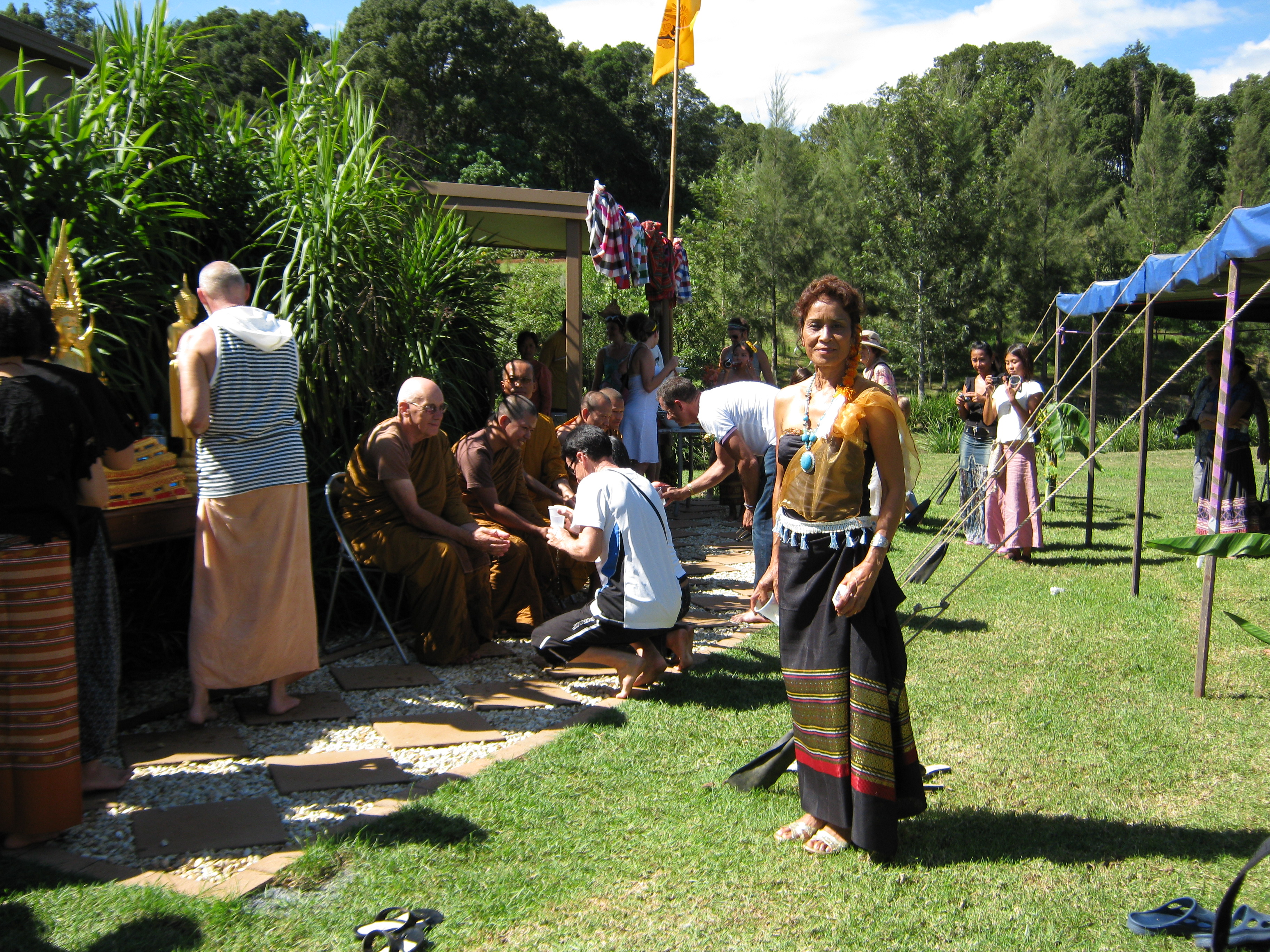
Finally, if you enjoyed our Thai belly with Thome, the Thai New year celebration, Songkran, is on this Sunday april 10 from 9.30 to 5 at the Bodhi Tree Forest Monastery.  There will be chanting, offerings to the monks, Thai dancers, and most importantly lots of free delicious Thai food.  Everyone welcome.  See www.buddhanet.net

EDIBLE QUOTE

from the Godfather movie : “Leave the gun; take the cannoli.”
Which obviously is good advice – if you point  delicious ricotta filled, chocolate covered cannoli at someone, they will do anything you ask and you can’t shoot yourself in the foot.

Love and chocolate cannoli, sister T

MUSIC

Yma Sumac – gopha mambo

Abbie Cardwell and her leading men –  future’s so bright

Harry Belafonte – the banana boat song

Arrow Tour – mahalo hotel, from Fish smell like cat

Nina Simone – here comes the sun

Juryman mix of felicidade- from Suba Tributo

And our regularly played tracks are:

The Mighty Imperials, Thunder Chicken

Belly street food special

ON AIR ON BYRON BAY’S BAYFM 99.9 ON MARCH 21, 2011

On belly today we hit the streets to check out fast and fabulous street food from around the world.  I was lucky enough to be in the great city of San Francisco recently, & recorded a talk about the street food revolution that has hit San Fran & many US cities recently.

But street food is on the rise around the world, as it gets faster and more urbanised, and is also seen as a way to preserve local food traditions.

According to  www.streetfood.org:

“From Akume in Togo to Pho in Vietnam, street food constitutes up to 40% of the daily diet of urban consumers in the developing world.

Yet, the rich cultural importance of street food is fragile.  Globalisation and urban development threaten these age-old traditions and, despite street food’s vital importance to local communities, there are serious health issues to contend with.

Consumers International (CI) is working to preserve street food life, so that local consumers, street food sellers and inquisitive travellers can enjoy these great dishes safely.

CI is campaigning for safe access to street food.

CI aims to:

Achieve recognition that street vending is a legitimate activity.

Persuade local authorities to improve access to sanitation and waste disposal for vendors.

Persuade local authorities to provide basic, accessible and affordable hygiene courses for vendors.”

So check out the website to find out more about their campaigns, and street food around the world.  They are looking for more content, and encourage schools and community groups to use their information.

And they have recipes!  (well only 3 so far).  I chose this one from Benin in West Africa because it is the first cooked one ingredient recipe I’ve ever seen, and it is vegan yet can’t possibly be good for you – but it sounds pretty delicious.


KLUI-KLUI : DEEP FRIED PEANUT BUTTER STICKS

Blend roasted unsalted peanuts until you get peanut butter.

Let it sit at room temperature for a day or until the solids settle to the bottom and the oil rises to the top.

Drain off the oil to use for frying or cooking.

Take the peanut solids and roll into stick shapes and fry in oil.


Yum!!!  Probably enough to give you a peanut allergy in a single hit, but it sounds dlish.


Tamara Palmer,Olivia Ongpin,Roger Feely and Brian Kimbell at Noise Pop in San Francisco - on belly candid and crappy cam, good camera died


CREATIVE STREET FOOD IN SAN FRANCISCO

Is going through a huge boom.  In the last 2 years all sorts of interesting entrepreneurs, cooks, chefs and food lovers have set up anything from a wok on wheels to massive specialised trucks – the food truck builders are going through a boom thanks to specially adapted gourmet fast food trucks costing anything up to US$250,000.

“We’re seeing demand for customization based on specific menus or food concepts, which may mean installing a pizza oven or a baking oven for cupcakes,” said Richard Gomez, customer sales engineer and plant controller at AA Cater Truck, the largest food truck manufacturer in the country. “There’s also a lot more emphasis on marketing and graphics. Trucks used to be just white, but now customers want to make their trucks look like celebrities.”

The people who were nice enough to let me record their talk this February come from a very different perspective.  They are involved with the underground, do it yourself, independent music and art scene.  Tamara writes about it on sfoodie and the feast.  Olivia has a gallery called Fabric8, where she shelters not-quite-fully-legal food vendors, at the same time as providing her punters with food that is vastly superior to the usual gallery opening nibbles.  Roger has a cart business called Soul Cocina,  is a trained chef, and also holds regular parties called Inside Out.  Brian is a curry vendor, his magic curry kart has even been all the way to the desert for Burning Man.

a man, a bike, woks and much mobile curry

To see a few of the characters involved with the street food scene in the US, check out www.roaminghunger.com

or this episode of a really entertaining web food series by 2 phat boys, that also includes things like the farmers market rapper


And what did I eat from all this feast of interesting stuff? Not much unfortunately, it was a quick visit, but I did have the best coffee I’ve ever had in the States from Curbside Coffee, and a deep fried chicken sandwich from this lot, parked outside the Noise Pop culture club – it was the only meal I needed all day really, lucky SF is a great walking city, but very tasty.


I wasn’t sure if this topic would be of interest locally, then a few days after I got back Sue Bennett in the Sydney Morning Herald wrote a story called ‘Sydney’s ready for street food’.  Both the story and the more than 80 comments talked about how much we need more street food, how great it would be to have outdoor good food vendors or markets.  And the barriers to it like regulations, hygiene concerns, traffic, complaints from restaurants and residents.

I’ve just talked to a friend who heard the show.  She’d love to see an evening outdoor market of stalls, a venue for all the creative locals with tasty ideas, we certainly have plenty.  San Francisco is a  city and we are a collection of villages, but in many ways we are similar – lots of artists, musicians, people from all sorts of backgrounds used to thinking outside the square, lots of wild and woolly diy, lots of good cooks too.  But I think one link that really makes it work in SF and could help here is the use of new(ish) technology, the twitter and yelp and facebook that helps the public find and recommend (or not)their favourite food vendors.  I was looking for food and found a whole music/art/underground festival with a few mouse clicks, they go together well.

a taste of the SF street food scene on belly Believe it or not, finally some belly audio on the belly site!  Well I’m excited… Learning all the time

and if you’ve only got a minute, listen to the cookie story sf_streetfood_cookie_story

get a string and start baking now – only problem is, we don’t have any tall buildings.

if you look for food carts or trucks, you may also get live, written to order poems


STREETSAFE SNACKING

A bit of  advice from various government and travel websites on tasting street food without ending up confined to the smallest room.

Where local tap water is not safe:
* only use bottled water to drink and brush your teeth and always check the seal
* do not put ice in drinks – freezing preserves germs, rather than kills them
* avoid uncooked food, including salads and fruit that you cannot peel

* in Africa they say to look for a neatly dressed, clean vendor
* wash your hands before you eat
* go with busy clean, organised places, look & smell
* eat food that is freshly and thoroughly cooked and served hot, not sitting around
* seafood dishes are notorious for causing intestinal problems. Smaller fish tend to be safer.

Obviously all this advice goes for restaurants too, I think sometimes more so as you can’t see the kitchen.  My only bad bug overseas was from  hotel room service.  According to the Australian government, you should also think about immunising against hepatitis A before going to countries where it is prevalent.

Love and chocolate klui-klui, sister T

MUSIC

Mo Horizons, Hit the road Jack/Pa ma estrada

Elvis, Hot Dog

Apricot Rail, Pouring milk out the window

Claude Hay, Get me some

Faux Pas, Chasing waterfalls


on air 14.3.11: Ocean Shores garden, dolce vita, white food and fab bread

Today on belly we welcomed the opening of  a new community garden, enjoyed a bit of opera, heard some of Susi Papi‘s many food stories, and shared our mutual love for fabulous no-knead bread.  And we heard Herbie Hancock tell how  listening to watermelon vendors as a kid resulted in his great hit “The watermelon Man”, that we play whenever we talk fresh fruit and veg.

Thank you very much to Susanne from the Byron Bay Community markets for sharing this clip.  The bellysisters will not rest until we convince the farmers marketeers to break into passionate song.  Great idea for getting people to go to the markets!


There is another video of this event here – wobblier, but you see how very beautiful the Valencia market is.


THE LAUNCH OF SHARA GARDENS

David Hall was on the show to talk about the brand new Ocean Shores community garden, to be called Shara Gardens.  It will be officially be launched on April 2, when all the paperwork is signed and ‘i’s duly dotted.  Speaking of which, they were lucky to have the support of the Mullumbimby Community garden, which made even the regulatory requirements a bit easier.

The garden is planned as an educational space (partly because they haven’t got enough land for everyone to have a plot on site), fully organic shared garden, and meeting place.

The launch will be Saturday April 2, from 1 to 3 pm, at the Ocean Shores Public School, at the very end of Shara Boulevard.  The Major will be there to entertain the adults, there will be stuff on for the kids too, everyone welcome including people from other areas interested in sharing information.  Check the local press for more details.

Whatever your skills or interests, you are needed: green thumbs, tradies, school kids, retired professionals to help in areas like grants and book keeping, and anyone who’d like to learn.  Call David on 6680 4728 for more details.


SUSI’S FOOD STORIES

Well just a few spoonfuls of what has obviously been a fascinating life.  I have known Susi since 1977, but by that time she had probably settled down a bit, and was importing her handsome Roman husband Luciano and 2 kids to the family farm in Camden NSW.  But before that she had quite a few adventures.  So often I discover great stuff about old (and new) friends by dragging them into the studio and turning on the mike.

Susi shared stories of being a kid in Australia after WW2,  when food shortages were still common.  Growing up with a dairying family she wasn’t hungry, but the diet wasn’t very varied.  Then her mother remarried and the family she was off  to Long Island, in the USA, where there was abundance, especially among the very wealthy Long Islanders, but the food was still very far from exciting “All the meals were white”.  But Susi still remembers fondly the revelation of her first artichoke.

Back to Australia and uni in the early 60s, and a fair bit of socialising in pubs with the infamous Sydney Push.  When everyone was thrown out at 6pm after the ‘6 o’clock swill’, food was the next best option.  Finally some colour and flavour, whether the choice was ‘the good Greek’ or ‘the bad Greek’.  And food that was ‘intentionally slow cooked’, as  opposed to cooked to death.

Then Dolce Vita Rome in 1963, the years depicted in the famous Fellini film, when the wild and beautiful people gravitated to Rome.  We only really managed to touch on that, and on the beautiful flavours of Roman food.  We detoured to Susi’s wonderful tomatoes for a few growing tips, and managed to squeeze in a mention of the one recipe she always tells friends to try, and my addiction ever since a belly guest, Nirava, put me on to it : the New York Times no knead bread.

Reasons this bread rules:

. It is very easy to make – takes longer to explain than to prepare

. It is slow risen so it is healthier, more digestible, very little yeast used, kind of a semi-sourdough

. No knead means no work

. You get crust, flavour and big air pockets

. It also works full of nuts and dried fruit, or seeds, or other flours

Original New York Times recipe.


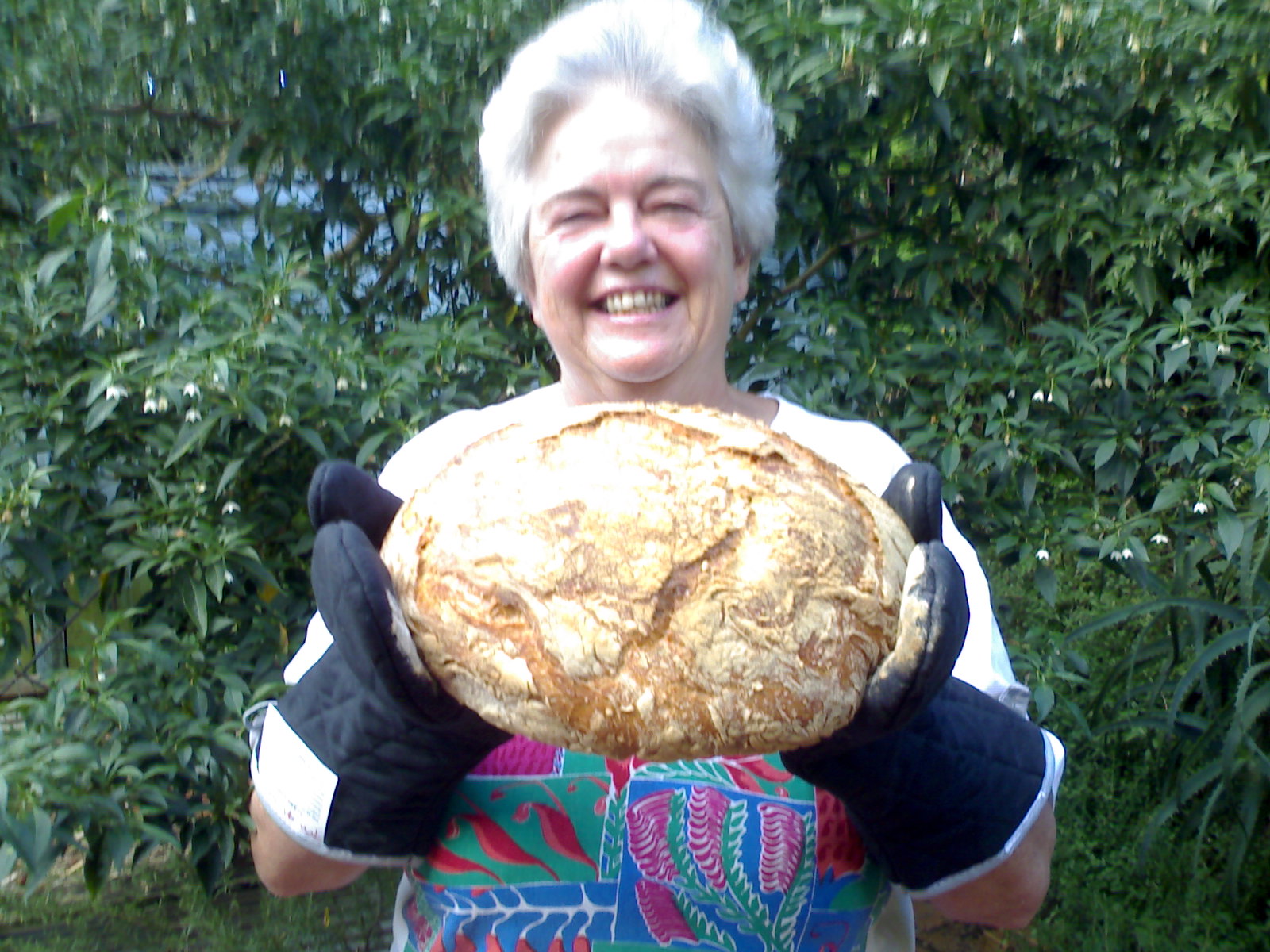
Susi Papi with a beautiful double size loaf of no knead bread - about 3 days supply for Sister T


THE BELLY HOUSE NO-KNEAD BREAD

Having found and tried and adapted this recipe, I now leave it to my partner who EVERY TIME turns out a better bread than I can.  I think the secret is being very absent minded and forgetting it at every step, especially while it is cooking.  It probably helps that we have a really good, solid cast iron pot that holds the heat, and a standard electric oven that can’t get too hot.  Also making it twice a week (because I cry when there is none left), means much practice and no need to worry about quantities any more.  But even the first time, when I miscounted the cups of water and ended up with a ridiculous liquid mess,  still cooked to a fine tasting (though flat and funny looking) crusty loaf.  Yes, crusty bread in Byron Bay is possible!

3 cups bread flour; more for work surface [1]
1/4 tsp instant yeast
1 1/4 tsp salt
cornmeal or wheat bran or more white flour

note : we now double the quantities because it keeps so well and I eat so much, to save work and electricity.  But try this size until you have mastered the only tricky bit, getting it into a heated pot without getting  burned.

In a large bowl, combine flour, yeast, and salt. Add 1 5/8 cups water, [=1 and 1/2 cups, then keep another spoonful or 2 ready, see if it needs the extra water to come together – usually yes]
And stir until just blended; dough will be shaggy and sticky. Cover bowl with a plate. Let dough rest at least 12 hours, but preferably up to
18 [even 24], at room temperature. When surface is dotted with bubbles, dough is ready.

Lightly flour work surface. Place dough on work surface and sprinkle with more flour. Fold the dough over on itself once or twice.  Cover with bowl and let rest about 15 minutes.

Sprinkle just enough flour over work surface and your fingers to keep dough from sticking; quickly and gently shape dough into a ball.

Generously flour the bowl with plain flour, cornmeal/polenta flour, or wheat bran; place dough seam side down in bowl and dust with more flour. Cover with a  towel and let rise  until it has more than doubled in size and does not readily spring back when poked with a finger, about 2 hours.   The original recipe calls for rising bread in between floured tea-towels, but we now have got tired of cleaning bread dough from tea towels and find this works just as well.

After about 1 1/2 hours, preheat oven to 220-230°C.  Place a large heavy covered pot, such as cast iron or Pyrex, in oven as it heats (for 20 to 30 minutes).  When dough has fully risen, carefully remove pot from oven.  Sprinkle some flour on the bottom of the pot.  Gently put dough into VERY HOT pot. Shake pot once or twice if dough looks unevenly distributed;  it will straighten out as it bakes. Cover, and bake 30 minutes. [40 in our oven]

Uncover, and continue baking until browned, about 30 minutes. [tap to see if it feels crusty and hollow] Cool on a wire rack. In our climate it’s better to get it very crusty at this stage, anything else will lose the crust in a few hours.  If baked long enough, this is the only bread we have found here that will stay crusty – and not mouldy (!) for days.

[1] We use bakers’ white flour  (5 kg bags) or organic white as the base usually, sometimes 1 cup of wholemeal/kamut/semolina etc

Depending on the oven and the pot used, you may not need to leave the oven on so long before baking – but at least 10 minutes after it reaches 220-230 is good.


this bread is so crusty it should have dreadlocks


Susi has promised more stories in the near future – it seems she was in London when it was called Swinging, too – if I can find a vague food link, we’ll be there.

Love and chocolate sandwiches,

Sister T


MUSIC

Herbie Hancock’s story of “the Watermelon Man” is on the album “Watermelon Man, the ultimate Hancock!”

Sapore di Sale by Gino Paoli, 1963

On the sunny side of the street by Kermit Ruffins, from Putamayo presents kermit Ruffins

Cantiam, facciamo brindisi (Let’s sing, let’s toast) from the opera L’elisir d’amore (the elixir of love), by Donizetti

Les Moissoneurs (the haymakers) by Couperin, performed by John Williams on guitar, from  “the baroque album”

on air March 7: Italian in season flavours, women’s voices & Danish Mardi Gras

It was a March hare’s mad tea party of a show today. Alison Drover was our guest fresh reporter and she was in an Italian mood, she prepared a whole lot of info on fruit and veg in season in March, especially zucchini eggplant and figs, then she couldn’t get to the studio so sister T has to pretend to be much blonder and nicer and better dressed (you can tell in the voice) and read out all Alison’s info and recipes. On the first belly in April though, she will be live on air in person. Also, straight from the belly lab, a wonderful new discovery, lychee choc tops, the belly bulletin featuring breast milk ice cream, stories from fabulous community radio food shows, lots of women’s voices to celebrate 100 years of International Women’s day, Danish mardi gras, and this week’s markets as usual.

ALISON’S GUEST FRESH REPORT : IN SEASON AROUND AUSTRALIA IN MARCH

This month March and I tend to think I am very Italian because it is the season for many fruits and vegetables, which characterize a lot of Italian cooking…  The fig, the zucchini flower, the eggplant, the zucchini, pumpkins and basil.

It is about using the seasons in abundance having a lot of something like eggplant and adding something special to it like an artisan cheese or some prosciutto but taking time to prepare the vegetables well. The Italians are inherently sustainable in the kitchen and supplement vegetables, which are low carbon footprint with small amounts of meat or often than not any meat and also make flavorsome cheeses, curds and intense pestos.

Zucchini Flowers – are at the markets however they disappear. Harris Farm and other groceries stock them however it is worth talking to your grower and even asking to reserve some. They are fragile and therefore you need to consider this with regards to price. They price can vary from anything to $4.00 a punnet upwards. The best incentive to grow food is to taste it.  The recipe that I have provided is for zucchini flowers and is a little “special” however worthwhile and then another that can be whipped up easily.

Corn …is ready and its arrival was celebrated in Corndale at the Chicken and Corn night in a few weeks ago at the Community Hall.

March is the month of figs. This is a time to seek them out and dedicate meals to them. I love figs grilled with cheese, salad, balsamic and roasted macadamias however they are good in so many ways especially on top of cakes.  Finding the Fig – figs are not going to be everywhere like the custard apple or the lime however this makes them more treasured. Look for them at local stores ie Bexhill Store has some great ones bought in by locals or the markets.  They have only a very short window at their peak so check out the local market now to see if you can get them. Figs grow quite well on the North Coast, despite coming from a more Mediterranean climate. The delicious plump fruits are highly perishable and can only be stored in the fridge for a few days. You can poach, grill and bake figs and add them to salads.

Custard Apples – love to grow in this region and are plentiful and often found on the side of the road at stalls as well as at the markets. More and more recipes for using them http://www.custardapple.com.au Peter Gilmore from the Quay restaurant in Sydney made them famous with the Custard Apple ice cream which is great.

Eggplants are glossy purple and in abundance. Many people overlook this vegetable however it is such diversity. The recipe I have included is for an eggplant stack with roasted tomato sauce, feta and basil. Whole eggplants can stored for two weeks in the fridge but once cut, they quickly discolour. Eggplant can be sliced and fried for use in lasagna but this method soaks up a lot of oil. Whole eggplants can be sliced lengthways and roasted for half an hour or so in a moderate oven until they collapse. The skin can be easily peeled off and the flesh pureed with tahini, lemon juice, a hint of crushed garlic, a teaspoon of cumin and a little olive oil and salt to make a brilliant dip – Baba Ganoush.  Of course you can mix eggplant with other ‘in season’ vegies such as tomatoes and zucchini to make a  ratatouille, which is basically a mixed, or roasted vegetables and onion in a tomato sauce. I take out all the tomatoes that I harvested in December from the freezer and mix them with the zucchini and eggplant.

Zucchini are robust and will keep in the fridge for a while and can be grated to make fritters with, chargrilled and layered like the eggplant, diced and fried with pasta or can be oven roasted with oil and garlic and rosemary make a great salad for a bbq.

March is the month for harvesting and eating beans, beetroot and Bok Choy. Beans of all sizes and shapes including green (or French), butter beans (yellow), scarlet (actually purple) and runner beans are in season now. One idea is steamed with basil, chopped boiled egg, macadamia oil and some red onion.

Baby beetroot should also be ready now and available at your local market. If you grow your own, you have the added bonus of using the tops – the smaller leaves in salads or the larger leaves in cooking, as you would use spinach. The roots are good sources of vitamins B1; B2 and the leaves are high in Vitamin C.

March is the month for:

• Making lime cordial so that you can top up your vitamin C in winter when limes are going to be very expensive

• Celebrating the fig – bake a cake, roast them poach them grill them

• Eating eggplant every which way and how

• Enjoying berries blueberries and strawberries before they disappear.

• Eating plums the last of the stoned fruit although in this area look for the sugar plums as they grow better here

Fruits in season this month:

• Apples – galas and red delicious have been in the shops for a few weeks, while Jonathons are coming off the trees at the moment

• Avocadoes – Hass are finishing up, but Shephards are coming into season

• Bananas

• Berries – this is the end of the season, but blueberries and blackberries are still very good

• Figs

• Fuji fruit

• Guava

• Mangoes – Kensington Prides have finished but the end of season Palmer mangoes are beautiful

• Pears – William, Sensation and Bosc

• Pineapples – Bethongas are still great

• Plums are gorgeous at the moment – particularly radiance and I’ve seen the first of the tiny sugar plums

• Pomegranates – mostly still fruit from the US, but the local supply will start later in March

• Quinces

• Rhubarb

Vegetables in season this month:

• Asian greens

• Beans

• Broccoli

• Brussels sprouts – the season is just starting

• Capsicums are good and cheap

• Cucumbers

• Chestnuts should be coming in later in the month

• Chillies

• Eggplant – the long thin Italian eggplants are particularly good

• Lettuce – although they’ve been small recently

• Mushrooms

• Okra

• Potatoes – Dutch cream and Sebagoes are the best

• Snow peas

• Sugar snap peas

• Sweetcorn

• Sweet potato

. Zucchini – excellent small zucchini available at the moment

ZUCCHINI FLOWERS STUFFED WITH FETA AND WHITE WINE BATTER – by Alison

Tips – If you open a bottle of wine mid week and don’t finish it take a freeze bag and freeze it and write across it “White White” . This is a great way of ensuring you have wine for cooking when you need it without opening a bottle especially

Ingredients:

Vegetable oil, to deep fry

140g feta  (try to go to the Farmers Market and get a local feta as it has so much flavor and you are supporting farmers who we rely on for the skills of traditional cheesemaking)

¼ cup parmesan, grated

2 Tbs thickened cream

6 zucchini flowers

1 cup plain flour

1/3 cup white wine

½ cup corn flour

Method:

Fill a saucepan half full with oil and place over a medium heat until hot enough to deep fry.

Combine the feta, parmesan and cream in a small bowl, season with salt and pepper. Spoon into a piping bag, pipe the mixture into the zucchini flowers and twist the flowers closed.

Place the flour, and white wine in a bowl, add a cup of water and using a whisk, whisk to make a batter.

Coat the zucchini flowers in corn flour, then carefully place in the hot oil. Cook for 2-3 minutes or until golden and crispy. Drain onto a plate lined with kitchen paper.   Sprinkle with salt to serve.

ALISON’S RAT (ATUILLE)

If you have some left over bread make it into breadcrumbs lay them on a tray with some olive oil on low heat to crunch them up and you can use this as a topping.  I also add some finely chopped rosemary and thyme from the garden which I have hung to dry.

5 red capsicum

70 ml olive oil

4 garlic cloves, thinly sliced –(please use local garlic)

1 onion, finely chopped

4 cups peeled and diced tomatoes -passata

800 gm eggplant (about 2), cut widthways into 5mm-thick slices

400 gm green zucchini, cut widthways into 5mm-thick slices

6 Roma tomatoes, thinly sliced horizontally

140 gm (2 cups) fresh coarse breadcrumbs or leftover bread finely chopped

100 gm finely grated cheddar or your choice hard cheese

2 tsp thyme leaves

Preheat oven to 180C. Place capsicum in a roasting pan, drizzle with 2 tsp olive oil and roast until skin is blistered (10-15 minutes). Transfer to a bowl, cover with plastic wrap and cool.  When cool, peel and remove seeds (discarding peel and seeds), thinly slice lengthways and set aside.

Meanwhile, heat 2 tbsp olive oil in a large saucepan over medium heat. Add garlic and onion and sauté until soft (5-7 minutes). Add tomatoes, season to taste and simmer, stirring occasionally to combine (4-5 minutes), then pour evenly into the base of a 3 litre-capacity deep baking dish.

Layer eggplant, overlapping slightly, over prepared base. Season to taste and repeat with zucchini and roast capsicum. Scatter anchovies over and finish with a layer of Roma tomatoes.

Combine breadcrumbs, cheddar or your choice of hard cheese and thyme in a bowl. Season to taste, then scatter over vegetables and drizzle with remaining olive oil. Pop in the oven and bake until top is golden about 55 minutes.

Alison Drover


FROM THE BELLY LAB

One other delicious thing in season this month is lychees, a bit of an odd up and down season this year, but there are quite a lot around at the moment.  Look out for small stone ones, a whole lot more flesh in even the small looking ones.   I had a lovely lychee martini in Brisbane recently, the best part was 3 frozen lychees on a stick as decoration/swizzle stick.  I took the idea back to the belly lab, and after much product testing, highly recommend to you…

LYCHEE CHOC TOPS

Peel and remove the stone from lychees, trying not to open them up too much.

Soak in a white spirit – white rum works well, vodka is drier and lets you taste the fruit more.  Skip for kids of course.

Freeze.  When frozen, coat in warm tempered chocolate and re-freeze.

Eat straight from freezer with great delight.

You could also experiment with filling the centre of the lychees with nuts, chocolate ganache, another fruit….too much is always good!


DANISH MARDI GRAS

Yes they are dancing in the streets in the biggest Carnival in the world today, in Rio, and all over Brazil and the Catholic world, celebrating life and love and rich food before we all get very serious and give up all animal products and sugar until Easter.

Most of us have heard of the Rio mardi gras, and the Sydney one, but have you heard about Danish mardi gras, or fastelavn?  It evolved out of the Catholic tradition, but as Denmark became mostly Protestant, it turned into “a time for children’s fun and family games” like whipping your parents.  It is celebrated the Sunday or Monday before Ash wednesday.

Some towns in Denmark hold  large Fastelavn  parades and festivities , including hitting a wooden effigy of a cat filled with sweets – which once used to contain an actual cat.

Of course there is a special food associated with Danish carnival, a sweet bun sometimes filled with cream.  It is made with potatoes, flour, egg, sugar and butter and deep fried.  Typical carnival food, sweet fried dough seems to be popular all over the world for mardi gras.

The other typical Danish tradition is a good flogging, now done mostly by children to wake up parents on the Sunday of fastelavn.  They use bunches of twigs or willow, decorated with sweets or feathers, egg-shells, storks and little figures of babies.  Apparently it started as a fertility ritual, when it was mainly the young women and the infertile who were flogged.  Then very pious parents would flog their kids to remind them of Christ’s suffering.  Now the kids get their revenge.  But the flogged ones always get a sweet bun in return.  If you are living at home with mum and dad, you could just go multicultural and be Danish for a day.

FASTELAVN BUNS – from this unadorned but great collection of Danish recipes, a lot from his mum, bless him.

* ½ pound potatoes

* 1 cup potato water

* 1 package dry yeast

* ½ cup water

* 2 cups flour — sifted

* 2 tablespoons soft butter

* 1 egg — beaten

* ¾ cup sugar

* ½ cup warm water

* 1 teaspoon salt

* 5 cups flour

Cook potatoes. Drain and reserve potato water. Mash potatoes. Mix mashed potatoes, potato water, yeast cake soaked in the 1/2 cup water, and the 2 cups flour. Let stand overnight.

In the morning add the butter, the egg and the sugar, and cream well. Add the lukewarm water, salt and the 5 cups flour. Beat well. Let rise in a warm place until doubled in size.

Punch down and roll ½ inch thick. Cut into rounds with a cookie cutter and drop each round into hot fat, browning on both sides. Remove and drain on paper towels.  Roll in sugar while still warm.

AND TO CELEBRATE 100 YEARS OF INTERNATIONAL WOMEN’S DAY

I played a few minutes from a couple of my favourite community radio food shows.  Because on community radio you can be involved no matter your gender, colour, sexual orientation or fanciability.

This is a story from the American network NPR, by those other fabulous sisters, the Kitchen Sisters, about an indomitable woman who fed and helped the black civil rights campaigners, including ML King.

And this is from the Melbourne station 3CR, a piece from their long running food show ‘Food Fight’.  If you are chasing up info on all the benefits of coffee grounds for your garden, or you are thinking of starting up a coffee grounds recycling system where you are, the website is http://groundtoground.org/


AND FINALLY …. sometimes it’s hard to believe belly only goes for one hour:

THE BELLY BULLETIN

CARE Australia is  launching the Walk In Her Shoes challenge  in celebration of the 100th year of International Women’s Day.  Women and girls make up 60 per cent of the 1.4 billion people currently living in poverty. Millions walk over six kilometres a day in search of food, water and firewood. This leaves little time for anything else.  So if you want to Help break this cycle of poverty, Walk 10,000 steps per day for one week and get sponsored – the week is Monday 28 March to Sunday 3 April 2011.
You can raise money towards firewood, water, food, health care, safety or education to reduce the burden.  Go to www.careaustralia.org.au for details.

In other news, the 2 big supermarkets are fighting over milk, Mallams has closed down in Mullum, but I’d rather tell you about life-saving honey, soggy pizza and breast milk ice cream.

Honey made from an Australian native myrtle tree has been found to have the most powerful anti-bacterial properties of any honey in the world and could be used to treat antibiotic-resistant bacterial infections that commonly occur in hospitals and nursing homes.   The myrtle is (leptospermum polygalifolium), which grows along the Australian eastern seaboard from the south coast of NSW to Cape York.  The honey is being tested by a Brisbane-based research group.  Meantime cover yourself in honey, it can’t hurt, just watch out for ants.

What does it take to break the  the record for the world’s longest pizza?   One-and-a-half tonnes of flour, 650 kilos of mozzarella, 1,500 litres of water, 30 or 40 kilos of salt and about 15 kilos of yeast, also one-and-a-half kilometres of chicken wire, and a special oven that can cook one-and-a-half metres of pizza per minute.
And no rain.  So maybe they never should have tried this in Melbourne, especially this year.
More than 40 chefs from Melbourne pizza restaurants were working since midnight last weekend on Lygon street, to make the 1.2-kilometre long pizza and were halfway through when rain-affected soggy dough brought the attempt to an end.
The pizza was going to be distributed to charities across Melbourne.
Judges from the Guinness World Records Association were there to decide if the pizza broke the previous record which is held by Poland.
Organisers say they might try again next year.

On my last belly show I told you about how popular baby food is with many adults.  Now you can go straight for the ultimate baby food.  A cafe in London has started selling ice cream made from women’s breast milk.  It is called Baby Gaga, and it’s made with milk expressed by 15 women who replied to an ad on an online mothers’ forum.  One of the milk donors, Victoria Hiley,  said that if adults realised how tasty breast milk was then more new mothers would feel happier about breastfeeding.  She expressed the milk at the cafe and it was pasteurised before lemon zest and vanilla pods were added as it was churned. Ms Hiley, is paid $23 for every 10 ounces of milk.
The man behind Baby Gaga icecream, Matt O’Connor, said he could not understand people being squeamish about the product. “If it’s good enough for our children, it’s good enough for the rest of us,” he said.  “Some people will hear about it and go yuck – but actually it’s pure organic, free-range and totally natural.”
Already a pretty good story, but now it’s much better because singer Lady Gaga has had her lawyer send a stern legal letter telling the ice-cream makers to : “cease and desist from in any other way associating with Lady Gaga any ice-cream you are offering,” .  The letter accuses The cafe of “taking unfair advantage of, and riding on the coat-tails of” Lady Gaga’s trademarks in a manner that is “deliberately provocative and, to many people, nausea-inducing”.
The ice-cream was a big hit. One serve costs $22.50 and it’s brought out by waitresses wearing flamboyant outfits, a bit of a  Lady Gaga trademark.  But breast milk icecream is now off the menu because Westminster City Council seized it for health and safety checks.  “We are taking the ice-cream away for samples,” a spokeswoman said.  “It’s not a ban. The owner has voluntarily agreed not to make any more or sell any more until we’ve got all the results.”  Breast milk could carry viral infections, including hepatitis, she explained.
The manufacturers have said they use the same screening procedures as blood donation centres or milk banks in London.


MUSIC

Still celebrating wonderful crazy community radio,  the tracks I played today were from a compilation done to support a Sydney community radio licence aspirant station that unfortunately never became permanent, Out Fm.

From “Inside Out”, Warner records 1999

authority over the fish –  by artificial

flowers in the sky – by boo boo and mace

miss del ray – by jo jo smith


love and chocolate cake, sister T


on air 21.2.11: Thome’s Thai secrets, finger limes and baby food

Thome with a few of her magical dishes

Yes, what a mix on today’s show!

It was a big bouncing belly today – 2 hours, as Anna & Nicole couldn’t bring you their show birth pregnancy & beyond, so belly spread out.  But  I collected several stories about baby food,  & the kids of all ages who are getting into it, Leah Roland from the Bangalow  Cooking School came on to talk about getting kids to eat a varied diet, & we  started a new belly series on cooking with local native ingredients – finger limes today. For much of this first hour on belly we explored one of Australia’s most popular cuisines, Thai, with the woman who first brought the food of Thailand to Byron Bay, Thome Evans. And Sister Nancy Jo, who brought Thome to the belly kitchen.  NJ used to beg to work with Thome, offering to work for free, for the sake of getting access to her delicious food.  Apparently Thome’s employees were all very faithful, because they were all addicted to the flavours.

She grew up on the family farm near the ancient city of Lopburi, about 150 k north of Bangkok, with her 13 sisters and 1 brother.  They used to grow everything that they ate, plus rice to sell.  As they were along way from doctors and hospitals, like many Thais they also used food plants as medicine, and to avoid getting sick in the first place. The rice fields also provided frogs and little snails that were healthy and delicious as they only eat the tops of the rice.  Healthy and delicious seems a good way to sum up her cooking.  Thome came to Australia in 1975 with her husband.  Her restaurant in Byron Bay was called the Lotus.  She always used to add lots of extra herbs, and go out to the dining room to explain to customers why they should eat the various dishes, and why various ingredients would keep them young and healthy.  I can’t imagine anyone being able to resist, disobey or fail to return.

A few things we learned from Thome:

* Prepare Thai ingredients in a mortar, not a food processor.  The food processor makes the liquid come out, it will change the texture and the taste.
To make it easier, get the largest possible mortar and pestle.  The exercise is good for you, it will give you good arm muscles.  And if there is chilli in there, cover the mortar with your hand so you don’t get chilli flying up into your eyes

* You can use olive oil in Thai food, both Thome and Nancy Jo use only that

* A 15 minute bath in turmeric and tamarind (the jar paste is ok) will give you lovely soft skin and keep you young

* Small green Thai eggplants grow easily in our area.  They look just like tobacco.  You can get the seeds by mail order easily.

* Coriander keeps you young too, and you should always use the roots as well.

Actually most of Thome’s ingredients keep you young, especially everything in this lovely recipe.


WILD CURRY By Thome Evans

Wild Curry is a combination of fresh ingredients that can be accessed found at farmers markets or specialty Asian grocery shops. This curry is said to be healing as it contains ingredients that keep the blood pressure and sugar levels down as well as many other benefits to health. Therefore a kind of ‘cleansing tonic” food.

For 4 people

THE PASTE

1 x long red chilli (Big Jim) chopped
6 x dried chilles (first soaked in water for 20 min then chopped)
1 or more birdseye chilli finely chopped (optional if you want it hotter)
6 x slices of fresh galangal root
5 x cloves of fresh garlic chopped
6 x slices of fresh ginger
2 x bulbs (not leaves) lemongrass sliced fine
1 x teaspoon cumin powder (fresh can be obtained at Indian or Asian grocers)
6 x slices fresh turmeric root (or 1  tsp powder)
1 x large red onion chopped (brown onion optional)
1 x large coriander root chopped
Pinch of Krachai (optional)
2 x tbs olive/veg oil (not peanut)

Other Ingredients

500 g thinly sliced chicken, beef, pork or prawns
1 tsp Thai fish sauce, or soy sauce if you prefer
vegetables of your choice, e.g.:
1/2 cup Pea eggplants or 1 regular purple eggplant angle sliced in strips
250 grams green beans
1 medium capsicum sliced
1 cup bamboo shoots sliced. (Can be bought fresh in sealed bags at Asian grocery)

fresh basil

Pound all paste ingredients in a mortar and pestle until roughly blended. Do not use a food processor as it will make the curry too thin.

Sauté paste in a wok with enough oil to cover the bottom of the pan to release fragrance. Add your chosen meat.
Add tsp of Thai fish sauce to taste. Then add vegetables
Stir fry until all veg are soft but not over cooked.
Add sprigs of fresh basil to taste just before the veggies are done, to wilt briefly.

Serve with steamed rice

Songkran stalls

Thome at Songkran

If you would like to enjoy a whole lot of FREE Thai food, along with performances of traditional Thai music, and lovely chanting by Buddhist monks, traditional alms giving and pouring water for the Songkran New

Year celebration, get along to:
the Bodhi Tree Forest Monastery
78 Bentley road, Tullera (via Lismore)
call 6628 2426 or www.buddhanet.net/bodhi-tree

It looks like a gorgeous way to get to know real Thai culture.  Everyone is welcome.
And you can meet the lovely Thome!

Hopefully one day we can get her back on belly to share her recipe for the best fishcakes in the universe (according to NancyJ0)


BELLY BULLETIN

A new Farmers Market is starting up in Murwillumbah, from April 6 at the usual market time of 8 to 11am.  It will be held in the Dairy Pavilion at the Murwillumbah Showground, and will be called the Caldera Farmers Market.
The name ‘caldera’ comes from the huge volcanic formation in the Tweed region, and from the Caldera Institute, which is attempting to assist sustainable development in the region.  All sellers must be growers, within 50 km. of Murwillumbah.   To contact the new manager,  Deborah Fuller, please call o401 306 818 or email deborah.fuller@bigpond.com

And in more good news, a great English concept has just been launched in Australia.  It is called ‘Landshare‘, and is all about getting together people with land who for one reason or another can’t work it productively, or just feel like sharing  it, people with time and energy but no land, and lovely helpful people who can contribute skills or tools or knowledge.  It is part of the great movement back to the veggie patch, which is hampered by the fact that many of us, even out here in regional Australia, don’t have any room to plant veggies or keep chooks or bees, and we’ve also never learned how to do it properly.  Go to the website to see who has already joined up in our area and to find out more about it: www.landshareaustralia.com.au It has only been going for a week in Australia and more than 400 people have already joined up.  Including 3 in our area so far.


Melon Skiing, Melon Bungy, Melon Bullseye, Melon Ironman, Melon Chariot, Pip Spitting, Melon Eating races, and of course Melon Head Smashing (cracking open the watermelon with the head only – no hands or assistance).  Yes it can only be the Biennale of the big red fruit, the Chinchilla watermelon festival in Queensland.  We love it on belly, but this year we really thought it would be cancelled with all the talk of destroyed watermelons.  But you can’t keep a good Queensland melon farmer down.  Two floods, 85% of the crop lost, homes destroyed, and they still held the festival over the weekend.  Normally Chincilla produces 1/4 of Australia’s watermelons.  But it makes sense that it went ahead, as it was introduced in 1994 to cheer people up after terrible drought.  No news yet if the head only melon smashing record of 47 melons in 1 minute has been broken.   But we can tell you that there are more than 1,200 known varieties of watermelons , they can have red, yellowish or white flesh and take 3 months to grow.  Lots more info and a very dubious chicken watermelon pasta recipe at melonfest.com.au


FINGER LIMES


On the outside they look like stretched cumquats, on the inside like translucent caviar – little citrus bliss balls.  They are in season right now and they are the first delicious local native featured in this new series, I’m thinking of calling it Leah’s local legends.  Leah Roland from the Bangalow Cooking School will be in about every 4-6 weeks to talk about using a great Northern Rivers ingredient.

Keeping finger limes : squeeze out balls and freeze them in a shallow container.  Use straight from freezer.

Season – high summer!  This year they have been around for about a month and should stay to at least end of March.

Using zest – forget it, it is very very bitter and thin.

A few recommendations from Leah:

In kids’ lunchboxes to just split and suck or to add to lunch, well packaged portion size citrus seasoning.

As delicate highlights, or they will get lost (although sister B enjoyed them at a friend’s in mashed potato)

On raw seafood and beef, on oysters.

In chocolate truffles…mmm

More info: www.wildfingerlime.com


KIDS FOOD PREFERENCES

We thought we’d better talk about kids and food since we were replacing the pregnancy show.  If your kids don’t like something, don’t despair, Leah says you may have to present a new food up to 15 times before they like it.  And we all agree the old way of forcing kids to finish everything weren’t so good, and may turn them off particular foods for life.   Maybe start working on their taste buds while they are still in your belly.  Have a look at this paper by Gwen Dewar.

It looks like a baby’s food preferences for both healthy food  and alcohol can be affected by what mum is having, both while pregnant and breastfeeding.  But don’t worry – one hamburger and a beer will not turn bub into an obese alcoholic.

Lots of great info on preparing baby food at home, and what is worth spending money on as far as products marketed for babies, like special milks and yogurts, on the consumer website choice.  They also publish a book on this.

And for bub’s first curry:


According to choice, you shouldn’t salt food for baby though.  Lots more Indian baby food videos on youtube.


And then there were all those


ADULTS EATING BABY FOOD!


Most of this is from an article in the English Guardian newspaper of March 2010.

The world’s largest baby food manufacturer, Hipp, has said an increasing number of adults are turning to its pre-cooked, pureed meals because they find them easier to swallow and digest.  About a quarter of those who eat the German firm’s 100 varieties of pulped meals – from apple and cranberry breakfast to vegetable and beef hotpot – are adults, it says.  Claus Hipp said in recent years his firm’s products had grown in popularity, particularly among elderly people,  stewed apple is a favourite.   He said the 50-year-old company – the world’s largest producer of baby food, with 46% of the market – was increasingly turning its attention to the adult market rather than babies as Europe’s population ages.
As well as the elderly, users include calorie-conscious new mothers and Sportsmen and women looking for a light meal.  Baby food is also a bit of a diet craze in Hollywood apparently.
Eileen Steinbock, of the British Dietetic Association, said pureed food could benefit people whose ability to swallow had been greatly reduced through old age, dementia or a stroke, and is already in widespread use in care homes.  But people who can still chew and swallow should continue to do so for as long as possible, she added.  Pureed food contains fewer proteins and calories because it needs added water, and could leave some people malnourished.


The wonderful Joni, bayfm front desk volunteer most Mondays, has lent belly:

The Kitchen Sink Cookbook: offbeat recipes from unusual ingredients, by Carolyn Wyman.

According to Carolyn, pureed baby food carrots are often used in carrot cakes, and some people use baby formula to make white sauce.  Yum!  And so convenient.  She gives a recipe for pasta with prawns and infant formula (first prize in the Fremont, Michigan National Baby Food Cookoff of 1994), but you ain’t getting it here!

I’ve got to show you one of my favourite web cooks though, the magnificent trailer park Nigella, Joelene Sugarbaker.


Sister Joelene has many more delicious recipes available.


EDIBLE QUOTES

We finished this double size belly with some Thai proverbs that give a little of the flavours of the country.

crying like a turtle being grilled = crying your eyes out

take coconuts to sell in the orchard = take coals to Newcastle

eat nam prik pao (chilli sauce) only from one cup =  be always faithful to your wife.

Make nam prik  and pour it away in the river = to be  extravagant or wasteful.

Get overripe before partly ripe = doing something before the appropriate time (usually means unmarried sex.)


MUSIC

“half a coconut shell with some strings” – was most of the lovely traditional Thai music we played in the first hour, according to Thome Evans
for more, go along to the Songkran Festival at the Bodhi Tree

Gotan Project, Triptico, from Gotan Project

Muddy Waters, Baby please don’t go

Nina Simone, My baby just cares for me

Frederic Chopin, Trois nouvelles etudes, Vladimir Ashkenazy, piano

Diesel, My baby likes to boogaloo, from Project blues Saturday suffering fools