Category Archives: RADIO SHOW POSTS

June temptations: apples, silverbeet, truffles and farmers

On air on bayfm 99.9 on June 6, 2011

A belly full of temptations – Ms June  tempted us with apples and silverbeet and the other good things in season in June, I dreamt of Australian  truffles, and found out how to get a truffle dog, and we found out what sustainably grown food really means.

COMMUNITY GARDENS SURVEY BY TARA BAKER AT SOUTHERN CROSS UNI

https://scuau.qualtrics.com/SE/?SID=SV_9ubtlzfLcBV57ms

An invitation to participate in important research!  Do you support the establishment of community food gardens within the
Northern Rivers?   You are invited to participate in a region wide online survey taking no more  than 5 – 10 minutes of your time.

Southern Cross University Bachelor of Environmental Science with Honours  candidate, Kara Baker, is currently seeking input from community members, regarding the attitudes towards the establishment of community food gardens.
She is interested in hearing from local community members from the Northern   Rivers region in order to determine the likely community support for new  garden establishment throughout the region.   The survey is anonymous and you do not have to answer all questions if you do  not want to or can’t.   The survey closes 5pm, Thursday 30th June 2011.
The results of this research will form a part of Kara’s Honours thesis and  may also be published.
If you have any questions   Kara Baker, k.baker.11@scu.edu.au


MISS JUNE’S RECIPES (BY Alison Drover)


Silverbeet, sweetpotato and goats fetta pies

Serves 6
Cooking Time Prep time 45 mins, cook 1 hr 20 mins (plus resting, cooling)

120 ml  olive oil
4  onions, thinly sliced
8 oregano sprigs
2 tbsp  Vinegar
2  sweet potatoes (about 480gm each), coarsely chopped
2  fresh bay leaves
2  garlic cloves, finely chopped
1 bunch  silverbeet, trimmed, coarsely chopped
150 gm  goat’s feta – look for Nimbin orange feta at the market as this adds great flavor

For brushing:  Eggwash

To serve:  green salad

Cream cheese pastry
400 gm (2¾ cup)  plain flour, sieved
170 gm  cold unsalted butter, coarsely chopped
140 gm  cold cream cheese, coarsely chopped
30 ml  white vinegar
¼ tsp  baking powder

Place all the ingredients for pastry into the food processor, pulse ingredients adding 30ml iced water in a food processor until coarse crumbs form. Turn onto a work surface and push dough with the heel of your hand to bring together. Shape into a disc, wrap in plastic wrap, refrigerate to rest (1-2 hours).

Meanwhile, heat half the oil in a large saucepan over low-medium heat, add onion and four thyme sprigs and sauté, stirring occasionally, until onion is very tender and light golden (30-45 minutes). Add vinegar and stir until evaporated (30 seconds-1 minute), season to taste and set aside.

Meanwhile, combine sweet potato, bay leaves and remaining thyme sprigs in a large saucepan, cover with cold water, bring to the boil over medium-high heat, then simmer until tender (30-40 minutes). Drain well (discard herbs), then process in a food processor until smooth, season to taste and set aside.

Heat remaining oil in a large saucepan over medium heat, add garlic and sauté until beginning to soften (1-2 minutes), then add silverbeet and 2 tbsp water, cover with a lid and toss occasionally until wilted (1-2 minutes). Drain well, squeeze out excess water, season to taste and spread on a tray to cool to room temperature.

Preheat oven to 190C. Divide pastry into 6 pieces. Working with one piece at a time, roll out on a sheet of baking paper into 3mm-thick rounds. Spread each circle with sweet potato purée, leaving a 1.5cm border. Top with onion mixture, scatter with silverbeet and feta. Brush edges of pastry with eggwash, then fold and pleat to create an open pie. Transfer pies to oven trays lined with baking paper, brush pastry with eggwash and bake, swapping trays halfway through baking, until golden and cooked through (15-25 minutes). Rest for 5 minutes, then serve with a green salad.


Baked Apples with honey, pecans – homemade real egg custard

4 (or 1 for each person)  large apples
1 cup of water
2 tablespoons of honey
2 tablespoons brown sugar
2 tablespoons lemon juice – zest first
2 tablespoons butter
1/2 cup of pecans

Preheat oven to 350ºF.

Wash all apples. Core apple to within a 1/2 or 1/4 inch from the bottom of the apple.
Peel and remove skin from top one fourth of apple.
Half way down apple, thinly score through the skin. Make score completely around entire outside of apple to help keep apples from spliting.
Place apples in baking dish.
Mix water and lemon juice together. Fill each apple with approximately 1 tablespoon of this mixture. Pour remaining mixture into baking dish.
Place 1/4 of butter in each apple.
Mix pecans, brown sugar, and cinnamon, butter together. Fill the center of each apple with a portion of the mixed ingredients.
Prior to baking, spoon liquid from bottom of  baking dish into each apple.
Bake uncovered 45 minutes or until apples are soft. Every so often open the oven and pour  juices over  while baking.

Fresh Organic Egg Custard

Ingredients

1 fresh vanilla pod

500ml full-fat milk

5 organic free-range egg yolks

80g caster sugar

Make sure you use the best milk possible which makes sense as this is the basis of custard. Look for Country Valley at your Farmers Market and read all about how happy their cows are.

Pour full-fat milk into a heavy-based saucepan. Split a vanilla pod, scrape out the seeds and add the seeds and pod to the pan. Bring just to the boil, then remove from the heat. Set aside until required.

2. Put egg yolks into a large bowl with golden caster sugar. Using a hand whisk, whisk until thick and pale.

3. Pour the vanilla-infused milk through a sieve onto the whisked egg yolk and sugar mixture, stirring well. Discard the pod (the seeds will fall through into the custard). Quickly wash out the pan and return the mixture to the clean, dry pan.

4. Return the pan to a low heat and cook slowly, do not let it boil or raise the heat, stirring continuously with a wooden spoon until the custard is thick enough to coat the back of the spoon. This will take about 10 minutes.

Use a finger and drag it through through the custard on the spoon: if it leaves a straight, clear line, it’s ready.

Custard requires patience and cooking slowy over low heat stirring at the same speed until it thickens and it coats the back of a wooden spoon. Boiling point is the enemy once you have added the eggs, so always keep the temperature of the custard just below the boil.

If it boils, the eggs will begin to separate, much as they would if you were making scrambled eggs. If this happens, you may be able to save the custard by quickly straining the egg mixture through a sieve into a blender and whizzing it until smooth. You may then reheat it with a little blended cornflour and milk to help it stabilise, but all this will depend on how far it has curdled in the first place. It will only take about 8 minutes to cook, and remember: a fresh egg custard thickens only to something akin to fresh pouring double cream.

She’ ll be apples or pears cake ­
80 g unsalted butter
190g sugar
1 organic free range egg
Zest from one large lemon
185ml cream liquid
1 1/3 cups plain flour
2 teaspoons baking powder
2 pears 2 apples or all apples or all pears
1 tsp cinnamon

20 g melted butter
60 raw sugar

Preheat oven to around 350 F

Cream butter and sugar together ­ making sure it is white and fluffy not
greasy. Add the egg, lemon zest, cinnamon beat for few minutes ­ do not
over beat as you are making a batter mixture for the cake.Add the cream and
mix. Note to cook ­ sometimes it looks like it is curdling do not worry it all
comes together at the end.
Sift in the flour, baking powder and salt and the beat until smooth.

Peel and core apples and pears ­ cut them into thin wedges like you see in
the pastry shops on the top of tarts. Brush the fruit with melted butter and
sprinkle with sugar and arrnage in a fan like pattern around the top of the
cake. Sprinkle with remaining sugar.

Bake for around 1 hour ­ check on it by inserting a skewer into the cake and
it should come out clean. The fruit will brown and caramelise with the
sugar.

This is a great winter cake for dessert and even better surrounded by warm
organic custard.


SUSTAINABLE FARMS

I played part of a talk by Greg Reid from Industry and Investment NSW, given at the recent Sustainable Agriculture forums.

Here is a whole lot more from his talk.


TRUFFLES

If you have a very special friend with a birthday coming up, or several deserving friends, this may be the year to spoil them with Australian truffles. Truffles, the vegetable not the chocolate, look like  potatoes with a really bad skin condition and smell and taste like sex and garlic and roses and fallen autumn leaves. The season is just starting and goes until early August, and it looks like a very good year.  We have been growing truffles in Oz for about 15 years.  There are now growers in every state except the Northern Territory – even in Queensland, which is surprising because they need cold winters.  There is a good website,  www.trufflegrowers.com.au/
that can tell you everything about growing and using truffles.  You can even find out where to buy Australian truffle dogs.  You can get fresh truffles by mail order, a 50 gram one the size of a large chook egg will cost you about 150 dollars, but that is enough to make 10 to 15 main courses for those deserving friends.
There are more and more countries trying to grow truffles, from China, to the UK, New Zealand and Chile.  They are grown by infecting trees with truffle spores, which are a type of fungus.  Scientists have just discovered that there are boy truffles and girl truffles, which may explain why many attempts to grow them failed.  Maybe with truffles you need both.  In Europe truffles were traditionally found in secret patches under oak and hazelnut groves, but apparently a lot of the people who knew where to find them were killed in WW2, or moved to the cities after the war.  Pity they didn’t leave a treasure map.
If you ate out in the 90s you would have tasted truffle oil, it was everywhere, but almost all of it is made with artificial truffle flavour, real truffles are both more delicate and more intense.

According to the Australian Truffle Growers Association:

Truffles go with anything as they are a flavour enhancer (they contain glutamic acid!  like msg but natural I suppose) and have the ‘umami’, or savoury taste.
Truffles go best with simple dishes involving eggs, mushrooms, chicken, pasta, potatoes,risotto, Jerusalem artichokes, celeriac.
They have a great affinity for fats, any fats, which retain the aroma.

In Australia we only grow black truffles, which can be cooked.  I think white Alba truffles from Northern Italy are much better, but I am a bit biased as I was born in Alba.  White truffles are best just sliced very thinly, raw on top of quite plain dishes to enjoy the true truffle scent, but I think if you are using truffles for the first time that is the best thing to do with the black ones too.  They are great on scrambled eggs or egg pasta with an egg and parmesan sauce, or in the ultimate mashed potatoes.

I have just found this recipe for Italian style dumplings with ricotta and pea shoots, which looks delicious with or without lots of truffles.  And unlike truffles, there were fresh pea tips at the Byron farmers market today. And of course beautiful local ricotta.  Yum.


EDIBLE QUOTES

There are looots of quotes about truffles!  The French writers Colette and Alexandre Dumas were certainly fans.

“The most learned men have been questioned as to the nature of this tuber, and after two thousand years of argument and discussion their answer is the same as it was on the first day: we do not know. The truffles themselves have been interrogated, and have answered simply: eat us and praise the Lord.”
Alexandre Dumas

“[Truffles] can, on certain occasions, make women more tender and men more lovable.”
Alexandre Dumas

If I can’t have too many truffles, I’ll do without truffles.
Sidonie Gabrielle Colette


MUSIC

Manteca : Dizzy Gillespie, Funky Lowlives remix

Juke Box : Fred Buscaglione

Hearts and Minds : Pigram Brothers

Interlude : Pigram Brothers

The truffle song : Johann Strauss II and Panforte

The Truffle shuffle : Million Dolla Records

Home on the Wave : Love Connection and Pets with Pets


Love and chocolate truffles, sister T

The Story of Jory…

Once upon a time in the small Northern NSW village of Byron Bay, there lived a golden man who was gratefully known for his dealings in little golden pellets of pollen. Now these were not just your average pellets of gold, no no no … this particular gold carried with it stories of miraculous life saving qualities and nutritious benefits that far outweighed the average claims from a bottle of multi vitamins or even any food source on the market now days. The story of Jory goes a little something like this …

Jory was born in the U.S.A under the shadow of the Pentagon and spent the first part of his life witnessing his parents consume deadly cocktails of prescribed drugs that were washed down with litres of alcohol behind clouds of nicotine smoke, in what was considered ‘the norm’ … back then. The ‘norm’ for Jory went on to be the loss of both his parents due to toxic overload in their early/mid 30’s but before their passing they managed to instill in Jory the need to find a better way to live.  

This took Jory around the world and back again on his own discovery of life, food, nutrition, facts, fasts, dietary information and some ‘Waui Maui’ cultivation to name but a few mind altering adventures.  Saving Australia til last because he felt that it was the safest and best place to be (before the government sold us out and allowed the coal stream gas miners to invade us) and having come to his own conclusions that “Jarrah” Bee Pollen was the best food source in the world to live on, he decided he wanted to spread this golden magical message across our fair shores. This decision was coupled with the fact that West Australian Pollens, in his opinion, were the world’s most vibrant in terms of  ‘aura’ as seen and tested in his own extensive research and through “Kiruan Photography” (photographs of the aura). He eventually settled in Byron Bay some 27 years ago and has survived on a healthy income from moccasin making, bee pollen dealing and various other creative and captivating hobbies.

But besides all this, you may be wondering … “What is Bee Pollen” and “How can i get my hands on the gold ??” Well me hearty’s … look no further for all is about to be revealed !!

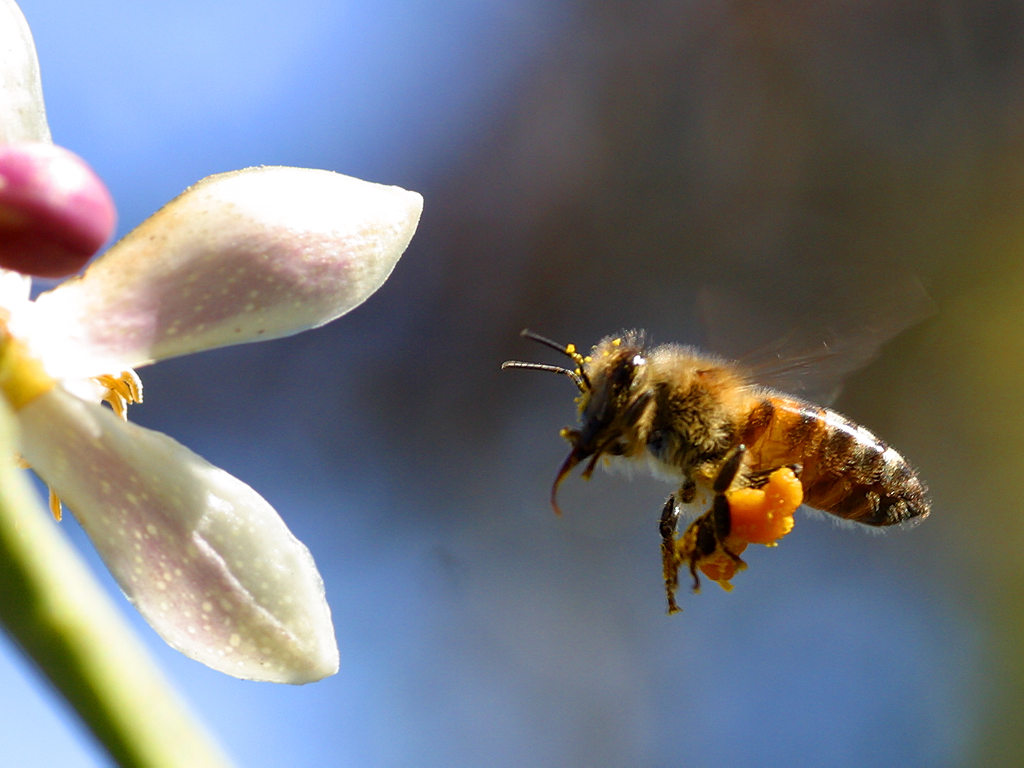
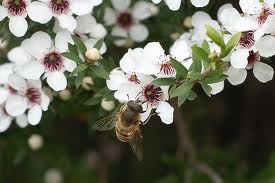
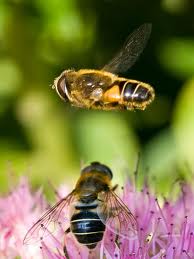
Jory did explain one thing to me that i was unsure of up until this interview and that is that the pollen that is collected by the bees is the sperm and the ova of the flowers about to be brought to life. It is carried on the back legs of the ‘bees knees’  as seen in the stunning picture above. Incredible isn’t it?

So energetically, which is where alot of Jory’s descriptions came from as i spoke to him, it carries the mammoth potential to become a life … alive !! Be it a plant, a flower, a tree, a bush, it’s all there in the pollen, captured in it’s purest essence and delivered to us by this charmingly sweet man.

The following is copied from Jory’s handout but hearing him talk about it in the studio was far more exciting and believable, especially when i had to remind myself that this was a man about to turn 60 sitting across from me who seemed as young and energetic as a boy half his age or less. A beautiful thing to witness in this world is the retainment of a youthful soul.

From Jory –

BEE POLLEN – THE WORLDS RICHEST SOURCE OF AMINO ACIDS

Amino acids are the building blocks of protein. Bee pollen has been found to be one of the world’s richest sources of amino acids with ‘Rare Australian Super Pollen’ being the most nutritionally potent and bio-available form of the product yet discovered. Instantly absorbable, clinicians have detected Bee Pollen in patients spinal fluid within thirty minutes of sub lingual (under the tongue) application !! Incredibly, bee pollen is richer in proteins than any animal source available.

Bee pollen contains more amino acids than beef, eggs or cheese of equivalent weight. It is important to know that bees recognize and select pollens which are rich in nitrogenous matter (amino acids) and leave poor quality proteins behind.

Not only does bee pollen contain a complete compliment of nutrients, it’s glucoside content helps transport these nutrients into the bloodstream.

Bee pollen contains folic acid along with an impressive vitamin array which cannot be artificially duplicated in the laboratory. It’s chemical make up is so complex that synthesising it artificially has eluded even the best modern day technology.

Bee pollen is so impressive that it contains many nutrients not found in animal products.

Linolenic acid is the only fatty acid essential for human nutrition that cannot be manufactured by the human body. Bee pollen contains linolenic acid in relative abundance.

A chemical analysis of Bee Pollen reveals it contains every nutrient required to sustain life.

Bee Pollen contains an unbelievable concentration of vital elements. It seems to be the most complete food found in nature. Some experts believe it could be the answer to world hunger !!

The story of Jory draws to it’s conclusion now with the invitation to sample some pollen and decide for yourself if it resonates with you.

!!! NB: IF YOU HAVE ALLERGIES WHEN IT COMES TO BEES AND THEIR PRODUCTS – SEEK ADVISE FIRST !!!

The golden man is contactable on 0421 509 291 and is so well known around town that if you ask anyone that sit’s outside one of our many fabulous organic cafe’s in town, they will be sure to point you in the right direction.  Join the buzz of the bay today and say g’day. Don’t be afraid to ask about what you don’t know about, we are all here to guide and teach one another.

With Love and Pollenation,

Sister Rasela

 Remember to take care of your own amazing planet – YOU !!

sustainable farms and the growing local food network

On air on bayfm 99.9 on May 23, 2011

There’s a cliche at the moment that at home or in restaurants its good to know all about our food “from paddock to plate” – we’re spending a lot of time in the paddock today on belly.  I’m playing some talks recorded at the Northern Rivers Sustainable agriculture forum 2 weeks ago.  Jane Laverty from N R food links joined me in the studio to talk about how the events were received (very well!).  My favourite speaker was gorgeous Stuart Larssen, who looks and sounds like a farmer from central casting, has a dry Aussie wit, but has been a  thinker and innovator on his large farm for 20 years.  Another very interesting speaker was Greg Reed, from the department of Primary Industries, who is running a project to improve farm planning so local farms are as sustainable as possible with the advent of climate change.  And we found out, thanks to POAMA, a predictive tool that Greg highly recommends (and I hope you can understand, because I don’t, but you can find it here), that we will be swinging into a El Nino weather system by springtime, so it will be very dry soon.

For more information on the talks, see http://www.northernriversfoodlinks.com.au/sustainable-agriculture-projects/

For lots of information on local food, go to http://www.sustainfood.com.au/

BELLY BULLETIN

Oh yes, make mine a double espresso.
More is better when it comes to drinking coffee to ward off the risk of deadly prostate cancer, according to a major US study just released by researchers at  Harvard.  Men who drink six or more cups per day have a 60 percent lower risk of developing the most lethal type of prostate cancer and a 20 percent lower risk of  any type of prostate cancer compared to men who don’t drink coffee.
Even just one to three cups per day was linked to a 30 percent lower risk of developing prostate cancer.  “Our study is the largest to date to examine whether coffee could lower the risk of lethal prostate cancer,” said Harvard associate professor  Lorelei Mucci.
The effects were the same whether the coffee was caffeinated or decaffeinated, so researchers  believe the lower risk could be linked to the antioxidant and anti-inflammatory properties of coffee.  A study last year also found that drinking coffee may protect against mouth and throat cancers.  If you are a tea drinker, sorry, no such link was discovered.

The whole of Casino is in a beefy buzz, it’s Beef Week.  The beef queen was elected last Saturday, there’s beefy fun all week, including a farmers market on Thursday, a free bbq breakfast with the butchers, cow pat lotto and milking competition on Friday, a parade, a mr beef week comp, bush poets, the lot.  See www.casinobeefweek.com.au

And if you’d like to see this region on one of the most popular TV programs in Australia, tune in to Masterchef this Thursday.  The contestants will visit  Season restaurant in Kingscliff, where the chef is cooking with some lovely local produce.  Hopefully they will show our area for more than a few seconds.
Bangalow pork belly braised in tamarind and rock sugar, crispy skinned Cudgen reef snapper fillet and coconut pannacotta is the meal they will enjoy…mmm
If you’d like to try one of chef Reuben Radonich’s dishes, clicking here will take you to a  Bangalow pork recipe.  He’s a local boy (actually born in Byron Bay, unbelievable), so he should know how to deal with the most famous local food product.

Also coming up, cooking demonstrations at the Byron Bay farmers market on Thursday June 2.

the economics of happiness

on air on bayfm 99.9 on May 16, 2011


Today on belly I had the great pleasure to talk with Helena Norberg-Hodge.  She is an occasional Byron bay local, and full time fighter for a better world.  She is currently talking about her new movie, the Economics of Happiness.  For lots of information and other interviews about the movie, as well as upcoming screenings and a way to buy the dvd, go to http://www.theeconomicsofhappiness.org/

And check out the trailer below.


You can also find one of Helena’s other movies, Ancient Futures, on Youtube or to buy online.  It shows the beautiful people of Ladakh, in the Himalayas, who have inspired a lot of her work.  Beautiful and interesting story.  Here

And Helena also shared one of her favourite recipes with us, a warm vegetable salad of potatoes and beans.  She dresses it with a vinaigrette  that has boiled egg yolk added to make an easy mayonnaise type dressing.  A bit safer than the classic raw egg mayo in many places.

BELLY BULLETIN

Amnesty International, the organisation that fights for human rights, is 50 years old this year and is celebrating by inviting you to hold or attend a candlelit dinner.  The candle wrapped in barbed wire is Amnesty’s symbol.  If you want to show your support, hold a dinner at your place or go to a participating restaurant on Saturday 28th of May and raise a glass to toast freedom.  Amnesty isn’t necessarily looking for donations, although they will be gratefully received.  They are mainly interested in a show of support on their birthday.  There is still plenty of time to register your private dinner or restaurant on the Amnesty website.  By registering , hosts get access to a free online supporter pack including email invites, menu and recipe suggestions, and a script for their toast.

The Byron shire Echo is celebrating 25 years with its Community Awards, recognising some of the wonderful people in our area.    In this week’s paper some great locals were listed in the ‘battles as an environmental warrior’ category.  The belly vote goes to Judy McDonald, who as well as fighting for locally produced food and landcare has taught so many locals to grow their own food in our sub-tropical climate.  See the paper for details.

May is also Biggest Morning Tea month, fundraisers for the Cancer Council.  There’s one in Ewingsdale this Wednesday May 18th at 10 am at the Fig Tree restaurant.  One at the Mullumbimby Uniting church hall on Friday 20th at 9.30 am.  Plenty more around, check your local papers or the bayfm community service announcements.

Backpackers doing good.  Yes it happens.  Eco-tourism consultant Angie Wilton got donations of 6000 dollars in 4 months from backpackers staying at Byron’s Arts factory, to set up a permaculture community garden there, to grow food and educate visitors about sustainable living practices.  It will rely on volunteer work once estabilished.

Love and happy chocolate, sister T

MUSIC

Yungchen Lhamo, Happiness is…, from Putumayo presents : gardens of Eden

Tony Bennett and k.d. Lang, What a wonderful world

Ludwig van Beethoven, ‘the hymn to joy” , with the Roman Philarmonic Academy choir and the “Alessandro Scarlatti’ orchestra from Naples

Shubha Mudgal, the Awakening

Al Green, Happy Days

music and stories from the Pratten sisters, and fresh peppercorns

on air on bayfm99.9 on May 9, 2011

This was a 4 – sister belly: sister T and sister B with 2 of the 3 Pratten sisters, now Joan Ajala and Ruth MacIntosh, but once girls growing up in Lismore, just before and after WW2, with their other sister and 3 brothers.  Joan and Ruth told us great stories about the beautiful fish their father caught when they stayed at the family beach house in Brunswick Heads, the mud crabs from the river (who tried to climb out of the pot – no fridge or freezer in those days to put them to sleep), the fruit and veg man who came along with his horse and cart, the oysters bought by the hessian sackful.  Mmmm.  And mum’s tea parties, with song performances and proper ladies with proper manners, as the girls giggled under the house.  And a little espionage when one woman would not divulge her wonderful teacake recipe.  Then mother in law’s ever expandable recipes, like the popular Swedish meatballs.  They had a clever signal.   When one of the 7 kids brought home an extra mouth to feed, he or she would loudly call hello from the garden gate and a little extra was in the pot by the time they got inside. And thanks to sister Robert, who regularly listens to belly on www.bayfm.org from Sydney, for explaining that their regular childhood breakfast of home smoked fish and rice is the colonial English classic “kedgeree”.
Now Ruth has put all the recipes from her mother and aunt (another great cook), and mother in law, from scruffy bits of paper onto a digital cookbook.  Her own recipes and experiments end up there too, and she has shared a few with the belly listeners.


Kedgeree-photo by justinc


BELLY BULLETIN

Djanbung Gardens, Nimbin

Would you like to grow your own taro, make cassava flour or process arrowroot? It is harvest time again at Djanbung Gardens near Nimbin, where there is a diverse range of subtropical vegetables, making self-reliance so much easier in our culture. Starting this week, so be quick, Permaculture College Australia will  host a series of short courses at Djanbung Gardens . They will teach all aspects of planning, growing, harvesting, storing and preserving your own food for year-round abundance from the garden. For more information please contact the office on 6689 1755 or visit http://permaculture.com.au

The Sustainable Agriculture forums

The free forums held last week were very good and informative.  More about them on belly soon or see

http://www.northernriversfoodlinks.com.au/sustainable-agriculture-projects/


RUTH’S RECIPES


DIP: BASIL PESTO DIP (delicious!)

Place in food processor 1 cup fresh basil leaves, 1/4 cup each pine nuts (lightly toasted), parmesan cheese, olive oil, Greek yoghurt & mayonnaise, 1 tbsp garlic, salt & pepper. Process until mixed. Thickens in fridge.

NOTE: quantities are approximate – vary and check taste – probably fine in a blender.

Excellent made with frozen basil – food process fresh basil with oil and freeze in small containers – fresh dip in the depths of winter!

DIP: OLIVE DIP

1/2 small bottle of pitted green or black olives

1/4 cup good quality mayonnaise

small quantity of Greek yoghurt (too much makes the dip yummy but runny)

Process in food processor until mixed. Don’t over-process or olives pieces will be too small.

NOTE: a variety of ingredients can be used in place of olives – a blender is probably just as effective


BASIL – how to enjoy basil fresh from the garden all year round!

Pick basil and place in food processor. Process, adding enough olive oil to ensure that all the basil is coated (this preserves the rich colour). Freeze in small containers. During the depths of winter use to make all your favourite pesto recipes, or to flavour soups and casseroles.  It will taste as wonderful as it did when you harvested it!


BEEF: SWEDISH MEATBALLS – absolutely scrumptious

A great meal for visitors which they all seem to enjoy – the family always love the leftovers

750g low fat mince (500gr mince + 250gr sausage mince)
1 1/2  cups soft bread, 1/2 cup light sour cream, 1/4 cup milk
1/2 cup chopped onion
1 teas salt, 1 tables butter, pinch ginger, pepper, nutmeg, 1/4 cup chopped parsley
1 tables butter
1 egg

Soak breadcrumbs in cream & milk – cook onion in butter till tender NOT brown
Combine meat, crumbs, egg, onion, parsley & seasonings, beat until fluffy, chill and form into balls.
Brown in butter – half cook (in electric frypan setting 7-8).

Sauce
1 can tomatoes
1-2 sticks chopped celery
1pkt Maggi Spring Vegetable Soup
1 shredded carrot

Remove meatballs from pan – add soup and about 2 cups of water.
In casserole, layer meatballs and other vegetables, pour sauce over.
Bake in moderate oven for 45min – 1 hour – serve over spaghetti or cous cous, with salad and garlic bread.


CAKE: CHOCOLATE CAKE – FLOURLESS

[We did not talk about this on the show, but the world always needs more chocolate cake recipes – and I am doing my best to be adopted as a Pratten sister so we can share the teacake recipe]

110g dark chocolate
110g unsalted butter

Melt in microwave and cool

1/2 cup castor sugar
4 eggs, separated
1 packed cup almond meal (110g)

Combine all ingredients except egg whites and mix wel.l
Whip egg whites until soft peaks form; fold in gently.
Place in 20cm greased, lined springform tin; bake at 190ºC for 35-40 mins (170ºC fan-forced).
Cool in tin; run knife around edge; slide onto plate; dust with sifted icing sugar.

Delicious served with a coulis made from frozen berries simmered with a little sugar – mash or blend.

Ruth does really good roasts too, she has promised to come back to belly with her top roast tips on her next trip to visit Joan.


FRESH PEPPER – GREEN, BLACK, WHITE AND RED


green pepper taken by the photographer, Devadaskrishnan at his farm in Kerala.

Pepper is native to Kerala, southern India and is extensively cultivated there and  in other tropical regions. Currently Vietnam is by far the world’s largest producer and exporter of pepper, producing about a third of the world’s Piper nigrum.  There’s one commercial large pepper farm in Australia, in north Queensland, near Innisfail, that supplies many of our top restaurants. According to the Innisfail pepper grower, “The imported stuff does lose some of the volatile oils, as it has to be steam-sterilised to get it into Australia,’’ But you can now get fresh pepper at Byron and New Brighton farmers markets, locally grown, so you may want to try your luck growing it too.  It’s only available for another month.  Or do taste it, really interesting, and the flavours change as it ripens week by week.  A little like the picked green, minus the strong vinegar taste of course.

The pepper plant is a perennial woody vine growing to four metres in height on supporting trees, poles, or trellises. It  roots readily where trailing stems touch the ground.
To grow – from seed or cutting, 3-4 years to fruit
– on strong trellis, full sun, mulched (roots like staying cool)
– plenty of food and water
In the wild, pepper flowers are pollinated by rain, so it’s important to irrigate plants so the water flows over them.  Or wait a few minutes for the rain to start, if you live in the Northern Rivers.
Berries that are picked when they’re fat and green can be dried to make black pepper. If you allow the berries to mature and turn red, then peel them to reveal the seed, you’ll get white pepper.

Fresh pepper is very popular in Thai cooking, so try adding it to your favourite red or green curry, or use in a stir fry or Thai salad.

PEPPER SQUID – adapted from www.thai menu.net

Serves 4

In a bowl combine 500 g cleaned squid , 2 tablespoons of oil  and 1 tablespoon of
roughly crushed green peppercorns; allow to stand for 15 minutes.

Heat a large wok or heavy based frying pan until very hot. Add 2 teaspoons of oil from the marinating squid. Add 4 chopped cloves of garlic and 1 teaspoon of chopped red chillies to the pan and cook for 5 seconds.
Add squid to the pan in batches and stir-fry, tossing constantly, for 2 minutes each batch. Transfer each batch to a plate.
Reheat wok between each batch. Add 2 tablespoons of fish sauce and 2 teaspoons of soy sauce to wok. When it is bubbling, pour it over the squid and serve immediately, garnished with 1/2 cup of fresh basil leaves.
Accompany with rice.


MUSIC


Today all the music on belly was chosen by Joan Ajala, aka the middle Pratten sister.  Joan shared some of the music she has come to love in her many years as a music teacher.

Give me the simple life, sung by Sharny Russell, with George Galla on guitar, from “Velvet Jazz”
Allegro from Vivaldi’s concerto in C, Genevieve Lacey on recorder with the Australian Brandeburg Orchestra, from : “Vivaldi – il flauto dolce”
Va tacito e nascosto Cesare, from the opera ‘Julius Caesar’, by Handel, sung by Margreta Elkins
Concerto for flautino in C major RV443, Largo, by Antonio Vivaldi
Gavotta, allegro, from Arcangelo Corelli’s Concerto for flauto no.10 in F major, Maurice Steger , from the CD “Mr Corelli in London”


let us know if you enjoyed Joan’s music as much as we did!

Love and peppered chocolate, and remember we’d love to hear your food stories too, call bayfm on 6680 7999, or email belly at belly dot net dot au, or comment below

sister T


May: mushrooms, mandarins and mystery sounds

on air on Bayfm 99.9 on May 2, 2011


It’s the first belly of May, so as usual we talked about some of the delicious foods in season this month.  Ms May (aka Alison Drover) brought some  cooler weather recipes, she’s been all over Australia to see what’s in season.
It’s also the first belly of a new bayfm 6 month programming season, so I marked the occasion with our first ever mystery sound – so mysterious that nobody rang in – I would have been very surprised if anybody had recognised it in fact.

MMMMMMISS MAY’S MONTHLY ROUNDUP

Seasonal Fruit And Vegetables in Australia in May

Fruits:

apples : bonza – braeburn – cox’s orange pippins – fuji – gala – golden delicious – granny smith – jonagold – jonathan – mutso – pink lady – red delicious – snow – sundowner
bananas, cumquat, custard apple, feijoa,
grapes : purple cornichon – waltham cross,
kiwifruit, lemons, limes,
mandarins, champagne melons,
nuts : chestnut – hazelnut – peanut – walnut,
pears : howell – josephine – packham – red sensation – williams,
persimmon, quince, rhubarb.

Vegetables:

asian greens – bok choy, – choy sum – gai laan – wonga bok,
avocados : fuerte – sharwill,
beetroot, broccoli, brussels sprout, cabbage, carrots, cauliflower, celeriac, celery, daikon, eggplant, fennel, garlic, ginger, horseradish, leeks, lettuce,
mushrooms : wild – field – pine – slippery jacks,
okra, olives,
onions : brown – spring,
parsnip, peas, potato, pumpkin, shallots, silverbeet, spinach, squash, swede, sweet potato, taro, tomato, turnip, witlof, zucchini.

MANDARIN CAKE

makes one 24 cm cake, serves 10 – 12

3 mandarins
250g (1 cup) caster sugar
6 eggs
230g (2 cups) ground almonds
to serve
60g (¼ cup) caster sugar
zest of 2 oranges

This is a great cake and ideal for all those that  need gluten and wheat free. It is a cake that not only tastes good but the vibrancy of the orange mandarins  that make it look so good. I often decorate it with nasturtium flowers and serve yogurt with it.

Put the mandarins in a medium saucepan and cover with water. Bring to the boil and simmer for 2 hours, adding water when necessary to keep the mandarins covered at all times.
Preheat the oven to 160°C (325°F/Gas 3).  Grease a 24 cm (9 inch) springform cake tin well.
Drain the mandarins and cool to room temperature.  Once cooled, split them open with your hands and remove any seeds.  Puree the mandarins, including the skins, in a food processor.  Add the sugar and eggs and mix together until combined.  Add the ground almonds to the mandarin purée and stir thoroughly.
Pour the mixture into prepared tin and bake for 1 hour 10 minutes, or until the cake looks set in the middle, springs back when touched and comes away from the edges.  Remove from the oven and allow to cool in the tin.
While the cake is cooling, put the extra sugar in a saucepan with 60 ml (¼ cup) of water over a low heat and stir until the sugar dissolves.  Add the orange zest and boil the mixture until it just starts to caramelise.  Lift the zest out with a fork and cool it on a plate.
Serve the cake with caramelised citrus zest and a sprinkling of icing sugar.

MUSHROOM BREAD SOUP

This is an easy mushroom soup. May is a time that mushrooms grow well as the temperature is cooling down. Visit your local farmer market and see what is growing and be adventurous. With your mushroom types.

500g mushrooms – try to buy from Farmers Market as you will taste the difference in flavor and be sure to find varieties that provide all the wonderful textures.
4 cups chicken stock
2 slices sourdough bread, crusts removed

Simmer sliced mushrooms in stock with bread for 10 minutes, or until mushrooms are tender. Blend soup and season to taste. Garnish with chives and creme fraiche.

VEGETABLE STOCK

Celery stalks, coarsely chopped
Carrots coarsely chopped
Leeks white parts only, coarsely chopped
Onion coarsely chopped
Garlic cloves bruised
White peppercorns
Bouquet garni – this is a mixture of herbs used to flavour the stock. You can make this easily by using parsley stalks, thyme sprigs, rosemary, bay leaf, clove of garlic and tying them together so they are enclosed in a piece of muslin. The bag of herbs is placed in the stock and removed afterwards.

For vegetable stock, combine ingredients in a saucepan and add bouquet garni. Cover with cold water, bring to the boil over medium heat, then reduce to low and lightly simmer, skimming occasionally until stock is flavoured (30-40 minutes). Remove from heat, strain through a muslin-lined fine sieve (discard solids). Cool to room temperature then refrigerate stock until chilled (2-4 hours). Makes about 2 litres. Stock will keep refrigerated for up to 3 days and frozen for up to several months

PLANTING IN MAY

Miss May says time is running out so get out in the garden and start planting so that you will have the abundance of vegetables through to winter.
Now is the time to plant broccoli, broad beans, beetroot, coriander, cabbages and Asian greens. Visit the Sustain Food website for a local regional planting guide. http://sustainfood.com.au/index.php?page=grow-what-s-in-season-vegetables.

This is also the time to save seeds from your summer crops so that you have them for the next year. Saving seeds helps safeguard the food security of the plant and is also a great way to ensure that the seeds you sow grow.
I have some heritage tomato seeds that my neighbour gave to me in Sydney and she has had them for over 30years. They grow and are so resistant and produce the juiciest tomatoes.

Alison Drover a.k.a. Miss May


THE MANDARIN POEM

Yes the beautiful mandarin, loved in China for many centuries as much for its scent as for its taste.  This is a poem about the first mandarin of the season being presented at the imperial palace.

LIU HSUN  – AD 462 -521

On the morning of the first frost,

the gardener plucks and presents it;

its perfume extends to all the seats of the guests,

when opened, its fragrant mist spurts upon the people.


THE MYSTERY SOUND

Apologies to anyone who thought their radio was broken – the mystery sound was very odd

If you’d like to listen, go to

http://austringer.net/wp/index.php/2010/06/25/listening-to-snapping-shrimp/

and for sound + good explanation

http://www.ieee-uffc.org/ultrasonics/symposia/2003/hawaii03/plenary_session.html

The loudest sound under the sea, would you believe, is prawns, or shrimp – usually called snapping shrimp.  They make a sound that can be over 200 decibels, louder than a jumbo taking off.  They use the sound for hunting, to stun their prey.  They are very common in sub-tropical waters, and they are spreading with warming seas, so don’t be surprised if your bucket of prawns makes strange noises.

If you know of any other edible animals (or plants!) that make odd noises, or you have a good cooking sound that doesn’t just sound like static and would be good for a guessing game, please send it to the bellysisters.  Next time I will try to organise a prize for the first correct guess.  Of course the glory is probably enough.

Love and chocolate covered prawns,  sister T

MUSIC

Bellydance, Undercover (with ya lover)

James Grehan, Miss Mayhem

the Sydney Symphony Orchestra, a bunch of whales and dolphins, Jean-Pierre Jacquillat conducting, Danse Lente, from Trois Danses by Durufle’

Burt Bacharach, Another spring will rise

Keren Ann, the end of May

Bianca Meier, Walk the earth


sustainable agriculture

on air April 25, 2011 on bayfm99.9


Yes it was all about new, or sometimes the old becoming new again, on the farms of the Northern Rivers on belly today.  I spoke with Jane Laverty,  Regional Project Officer at Northern Rivers Food Links, about the upcoming Sustainable Agriculture Forums.  They are free and open to everyone, but you do need to book in.


Dig For Victory, 1942, IWM PST 0059 © Imperial War Museum The Dig For Victory campaign was launched in October 1939 in the UK.

Forum dates and venues:

Murwillumbah Tuesday May 3 (Murwillumbah Golf Club, 9-11:30am)
Ballina Tuesday May 3 (Ballina Beach Resort, 3:30-6pm)
Casino Wednesday May 4 (Windara Function Centre, 9-11:30am)
Maclean Wednesday May 4 (Maclean Services Club, 3:30-6pm).

Forum Presentations

a.. Softer Farming Methods – Stuart Larsson (Mara Seeds)
b.. Sustainable Farm Planning – Greg Reid (Industry & Investment, NSW)
c.. Improved Greenhouse Production Practices – Stephanie Alt (Industry & Investment, NSW)
d.. Biological Farming Methods – Bob Jarman (Northern Landcare Support Services)
e.. Soil Health for Commercial Food Production – Claire Masters (Tweed Landcare)
f.. Sustainable Grazing – Clarence Valley Project – Julie Mousley (Clarence Landcare)
For more information, or to register: visit www.northernriversfoodlinks.com.au

or email events@northernriversfoodlinks.com.au

You need to book because the forums will include some delicious local food, as well as lots of sharing of information by farmers and scientists getting down and dirty and sharing their knowledge.  I love that the polite term for poo, if it is applied to your field, is ‘input’.

There will also be plenty of opportunities to ask questions and share information on anything to do with    sustainable agriculture.


We also mentioned the Sustain Food website, a very good and growing portal with lots of information about food in the Northern Rivers.

And Jan Barham’s Tofu stir-fry with seasonal vegetables and locally grown brown rice recipe. This is the link, also check out the other Majors’ recipes.


EDIBLE QUOTE

Our edible quote today comes from an unfinished short story by Jon, one of our bayfm front desk volunteers.

I experiment with food.  It’s a relationship I’m wary of, food can do things to you.”

Please call him up on a Wednesday or Thursday afternoon and ask him to finish the story – I’d like to know what happens.

Love and sustainable chocolate bilbies, Sister T


MUSIC


Robert Childs, Sugar Addict

Slow Train, Naturally

The Mighty Imperials, Thunder Chicken and Chiko’s Barnyard

Abbie Cardwell and her Leading men, Down

David Lindley and Wally Ingram, Cat Food Sandwiches


The Bees Knees … Drizzling your ears with sweet stories of Honey

“Well” said Pooh, “what i like best” – and then he had to stop and think. Because although eating honey was a very good thing to do, there was a moment  just before you began to eat it which was better than when you were, but he didn’t know what it was called … 


Honey headed anticipation...


Talofa and welcome to the sweetest show on the airwaves, the tastiest radio in the Shire, where this week your ears will be drizzled with sticky stories of honey love.

The word honey along with variations like ‘hunny-bun’ ‘honey-pot’ and the abbreviated ‘hun’ have all become terms of endearment in most of the English speaking world. In some places it’s used for loved ones yet in others such as in Southern USA it can be used when addressing casual acquaintances… or even strangers !

In 2005 China, Argentina, Turkey and USA were the top produces of natural honey, according to reports from the Food and Agriculture Organisation of the United Nations (FAO). Significant regional producers include Turkey (ranked 3rd worldwide) and Ukraine (ranked 5th). Mexico is also an important producer of honey, providing  10% of the worlds supply. Production began there in the early 20th century and on the Yuctan Peninsular most producers are small family operations who still use traditional techniques such as moving hives to take advantage of various tropical and sub tropical flowers.

Do bees really have knees ???

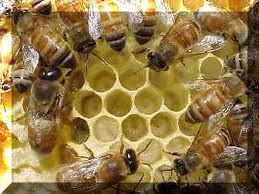
Honey is made by the honey bee – a subset of the genus APIS. Honey bees represent only a small fraction of the approximately 20,000 known species of bees. In the hive or in a wild nest, there are 3 types of honey bee. A single female queen bee, a seasonal but variable number of male drone bees to fertilize new queens and some 20,000 to 40,000 female worker bees. The worker bees gather sugar rich flower nectar which they carry in the pollen baskets on their back legs. They take 28 days to grow from a larvae to a worker bee and will then spend their entire life working … (no fun !!) They do not lay eggs or mate, no, no, no … instead  they build the comb from wax extruded from glands under their abdomen, they clean, defend and repair the hive as well as feed the queen, the larvae and the drones. They constantly gather nectar, pollen, water and propolis. They ventilate, cool and heat the hive to help maintain the constant ideal temperature of 34.4*C. They do this by depositing water to cool warm areas and fanning their wings for water evaporation. They also huddle together in other areas where warmth is needed.

Honey is created by the bees as their food source for energy. The nectar is regurgitated in the bees ‘honey belly’  a number of times until it is partially digested. The bees all work together with the digestion and regurgitation until the product reaches it’s desired consistency and quality. This is when it is stored in honeycomb cells.

Do not attempt to comb hair with this !!

After the final regurgitation the honeycomb is left unsealed, however the nectar is still high in both water content and natural yeasts, which if left unchecked would cause the sugars in the nectar to ferment and spoil.  The incredible process continues therefore, to protect the honey and create a seal … but how you may well ask ??  The bees inside the hive fan their wings, creating a strong draft across the honeycomb which enhances evaporation of much of the water from the nectar. The reduction in water content raises the sugar concentration and prevents fermentation.

num num num

“When late morning rolls around and you’re feeling a bit out of sorts, don’t worry, you’re probably just feeling a little eleven o’clockish”  Winnie the Pooh

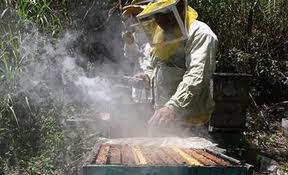
Removal and collection of the honey is typically achieved by using smoke from a bee smoker to pacify the bees. The smoke causes the bees to attempt to save the hive from a possible forest fire and they become far less agressive. The honeycomb is removed from the hive and honey is extracted from the comb and usually filtered … keep reading to discover the many differences in extracted honey.

Schmokin'

Sweet as bro –

Honey gets it’s sweetness from monosaccharides fructose and glucose and is about as sweet as granulated sugar. The benefits over sugar are that it contains trace amounts of vitamins and minerals and in it’s raw form is less processed than most other sweetners. Honey also contains tiny amounts of several compounds thought to function as antioxidants, including vitamin C. The specific composition of any batch of honey though, depends on the flowers available to the bees that produce the honey.

What am i buying ??

Generally honey is bottled in it’s familiar liquid form but it is also sold in other forms and can be subject to a variety of processing methods which produce any of the following – What’s your choice ???

Crystalized Honey – Where some of the glucose content had spontaneously crystalized. Also called ‘granulated honey’. Honey that has crystalized over time in the home can be returned to it’s liquid state if stirred in a container sitting in fairly warm water.

Pasturized Honey –  Has been heated in the pasturization process. Pasturization destroys yeast cells. It also liquifies any micro-crystals in honey, which destroys the onset of visible crystalization. However !!! Excessive heat exposure also results in product deterioration as it reduces enzyme activity thus reducing it’s therapeutic benefits. Heat also affects it’s appearance (darkens natural colour), taste and natural fragrance.

Raw Honey – Pure Honey as it exisits in the beehive or as obtained by extraction, settling or straining, without adding heat. Raw honey contains some pollen and may contain small particles of wax. Local honey is sought after by allergy sufferers as the pollen impurities are thought to lessen sensitivity to hayfever.

*NOTE ON ALLERGIES AND HEALTH HAZARDS*

Because of the natural presence of BOTULINUM ENDOSPORES in honey, children under the age of 1 year should not be given honey. The more developed digestive system of older children and adults in general destoys the spores. Infants however can contract BOTULISM from honey

Strained Honey –  Sounds a bit uptight but it is what it says. Passed through a mesh material to remove peices of wax, propolis and other defects without removing pollen, minerals or other valuable enzymes.

Ultrafiltered Honey – Heats honey to 65-77*C so it more easily passes through a fine filter to remove all extraneous solids and pollen granules. Prefered by supermarket trade as it is clear and has a long shelf life. It’s pretty much lost all it’s natural goodness.

Ultrasonicated Honey – Processed by form of ultrasonification … yes yes, but what does that mean exactly ?? It’s a non-thermal processing alternative that destroys most yeast cells but the ones that do survive usually loose their ability to grow. Hmmm, sounds suss to me. It reduces the fermentation process substantially (for longer shelf life) and works at around 35*C. It is still processed and tampered with.

Whipped Honey – I’m sure there have been many a kinky thing done with honey but this type is also known as creamed, spun, churned or candied and has all been processed to control crystalisation and produces something for those of you that like it smooth with a spreadable consistency.

Dried Honey – Has moisture extracted from liquid honey but not by the bees flapping their little wings ten to the dozen. The process may or may not include the use of drying and anti-binding agents and produces a completely solid, non-sticky honey. Well where’s the fun in that ??? It is commonly used to garnish deserts. Oh, yummy, there’s the fun.

Comb Honey – Not a new kind of hair product. This is honey still in the hardworking honey bees wax comb, which is traditionally collected by using standard wooden frames and the comb cut out in chunks before packaging. In India, honey is harvested from forests in the bees natural habitat. It is said that the honey will be consumed by the bees on the new moon day so it is cultivated the day before.

Chunk Honey – Is this what you’ll be called if you eat too much ?? … No. This is infact honey that is packed in wide mouth containers consisting of one or more  peices of honeycomb immersed in extracted liquid honey, mmmmmm sounds delightfully delicious does it not ?

Too much of a good thing is as bad as too much of a bad thing (unfortunately) ...

“It is more fun to talk with someone who doesn’t use long difficult words but rather short, easy words like, ‘what about lunch ?’ ” Winnie the Pooh

Once you have chosen the honey of your dreams, you might like to know how best to preserve it. Because of it’s unique composition and chemical properties, both honey and objects immersed in honey have been preserved for decades or even centuries !! The key to preservation is limiting access to humidity. If exposed to moist air, it’s chemical structure means that it is able to pull moisture into the honey, eventually diluting it to the point where fermentation can take place. Sealed in honeycomb cells is ideal but at home it generally should not be kept in metal containers because the acids in the honey promote oxidation of the vessel. Traditionally it was stored in ceramic or wooden containers but today glass or plastic (yuk) is favoured.

WARNING - Honey addiction can lead to sticky situations like 'dry cupboard syndrome'

Excessive heat has detrimental effects on the nutritional value of honey. Heating up to 37*c causes loss of nearly 200 components, some of which are antibacterial. Heating up to 40*C destroys invertase – an important enzyme that helps in the breakdown of sugars. At 50*C the honey sugars caramalize. Sounds heavenly … but you’ve killed it !!

Regardless of preservation, crystalization may naturally occur over time. This does not affect the flavour, quality or nutritional content of the honey, though it does affect the colour and texture.

Indicators of Quality

High quality honey can be distinguished by fragrance, taste and consistency. Ripe, freshly collected honey should flow from a knife in a straight stream, without breaking into seperate drops. Honey should form temporary layers when poured, layers that dissapear fairly quickly indicating high viscosity (thickness). If not, it indicates high water content and is not suitable for long term preservation. In jars it should appear as pure, consistent fluid and should not set in layers.

Go with the flow

History in Medicine

For the last 2,700 years honey has been used by humans to treat a variety of ailments through topical application but only recently have their antiseptic and antibacterial properties been chemically explained. Some wound gels which contain antibacterial raw honey and have regulatory approval are now available to help treat drug resistant strains of MRSA – METHICILLIN RESISTANT STAPHYLOCOCCUS AURES – which is a bacterium responsible for several difficult to treat infections in humans. It had developed a resistance to some anti-biotics which include Penicillin. MRSA is eapecially troublesome in hospitals where patients with open wounds, invasive devises and weakened immune systems are at a greater risk of infection than the general public.

A quick buzz on ‘MANUKA HONEY’ (Leptospermum Scoparium)

Manuka collector

For the past 28 years, honey researchers at the university of Waikato in NZ have been investigating what many local New Zealanders have long accepted as common wisdom … that their local Manuka honey is a  superior treatment for wound infections (amongst other things). Manuka honey is gathered from the Manuka bush which grows uncultivated throughout NZ. A honey with the same properties has more recently been discovered right here in Australia. Leptospermum Polygalifolium, better known as JELLYBUSH HONEY also grows uncultivated in certain parts of this country but has not been around for long enough that we are able to bring investigative facts to you yet … and being a Kiwi i am always going to sway the Maunka way !! Both of these honeys contain high levels of additional non-peroxide antibacterial components that make them very unique. Incredibly, after 28 years of study on Manuka honey at the Waikato University,  researchers are still unable  to identify the specific synergistic component that is responsible for more than doubling the antibacterial activity within Manuka and Jellybush honey.

I encourage you to delve furtherand stick your nose into the honey pot of natural food products to enhance your health and wellbeing. I hope that the information i provide inspires you to learn more about what it is you eat, where it comes from and  ultimately what is best for YOU as an individual because it’s important to remember that we are all individual and so are our dietary needs.

Time to buzz off now ...

Thanks once again for listening, reading and keeping the fire in the belly burning as we enter into the cooler months. So much more to come so stay tuned !!

Honey dripping love,

Sister Rasela

Ronit’s Morocco

On air on bayfm99.9 on Monday 11 April, 2011

Sister B and brother Andrew (A & B!) had a wonderful talk with Ronit Robbaz-Franco about the  country and food of Morocco.  A big thank you to everyone for keeping the belly show on the road when I could not go on air at the last minute.  I am sorry to report the belly cat is now chasing mice in cat heaven, but we had some lovely last few hours together – and some hard ones.   A and B tell me Ronit brought all the colours of Morocco into the bayfm studio.  Sister T


Ronit setting the scene for a Moroccan banquet


*Ronit’s Story*

My parents were born in Morocco. My mother is from Casablanca and my father
from Marrakech. Both grew up in Morocco but left for Israel in 1950s, where
I was born. My mother was a chef, specializing in pastry, so my upbringing
evolved around food. My Great Grandfather was an Ambassador in Morocco,
that’s how they landed in Morocco initially. I come from a large, colourful
family, where all our family affairs happened around a Moroccan feast. There
was always a hearty celebration taking place, a passionate and dramatic
affair with family & friends. My brother’s wedding lasted for 3-5 days. The
Moroccan women are known to be feisty, colorful and vibrant. I have 5
sisters & 1 brother, so I grew up with many women around me, listening to
their stories.

Growing up in Israel in a Moroccan household, it was infused with Moroccan
culture, heritage and social ethics. When I visited Morocco I felt I had
arrived home.

My mother’s family is scattered all over the world, basically the wandering
Jew. I decided to leave Israel after my military service at 20 years of age.
I lived in South East Asia, India, Japan, South America, mainly Brazil,
where I lived for 5 years, then Central America and finally I arrived on
these shores about 14 years ago. Travelling around the globe, I gained a
wealth of experience in middle eastern, primarily Moroccan cuisine, Indian
and Gourmet Wholefood. I set up my business called Open Table Catering in
Byron Bay and it’s been operating successfully for 7 years.

Moroccan cuisine is extremely diverse, due to Morocco’s interaction with
other cultures and nations over the centuries. Moroccan cuisine has been
subject to Berber, Moorish, Mediterranean and Arab influences. The cooks in
the royal kitchens of Fez, Meknes, Marrakesh, Rabat and Tetouan refined it
over the centuries and created the basis for what is known as Moroccan
cuisine today.


A very traditional Moroccan Recipe by Ronit:

HARIRA SOUP

Harira is a tomato based soup with chick peas, meat, lentils and small
noodles.

It is the most important soup in Morocco as it serves to break the fast
during the whole month of Ramadan. During this month, at the break of the
fast, harira is accompanied by dates, warm milk, juices, bread and
traditional Moroccan pancakes. At the moment of the call to prayer,
Moroccans all over the country utter ‘bismillah’ (in the name of God), bite
into a date and sip a spoonful of harira – their first taste of food after a
long day of fasting.

For 2-3 people

200 grams of meat (lamb or beef) chopped into cubes

150-200g of chickpeas soaked overnight

80g of vermicelli

5 tomatoes

1 cup of chopped celery (krafs)

1/2 cup of chopped coriander

1/2 cup of chopped fresh parsley

2 teaspoons of tomato paste

1 tsp of powdered ginger

1 pinch of saffron (strands or powdered)

1/2 cup of cornflour

1 liter of water

salt

pepper

1 tablespoon of butter

Boil the tomatoes and blend to a puree. In a large pan place the chickpeas,
herbs (parsley and celery but not the coriander), the onions, meat, spices
and butter. Add the tomato puree and 1 litre of water and bring to the boil.
Simmer for 45 minutes or until the chickpeas are soft. Stir in the tomato
paste and thicken by adding water to the cornflour and slowly stirring in.
Add the vermicelli and cook for a further 10 minutes. Take off the heat and
add the fresh coriander. Serve with a wedge of lemon.

Clock tip – for a special treat (especially at Ramadan) serve with dates and
sticky, sweet shebbakiya.


Open Table is running cooking workshops  and  introducing a new food line: Gourmet Raw Foods called Raw Buzz (from Ronit’s surname ‘Robbaz’)


THE BELLY BULLETIN

Local screenings of the new film “The Economics of Happiness” are on this week.

This is a film on solutions to the problems of unemployment, waste and unhappiness that we see flowing from our current system of trade and production, including things like shipping food across the world just to package it. The film is by Helena Norberg-Hodge, Steven Gorelick & John Page. They say: ‘Going local’ is a powerful strategy to help repair our fractured world – our ecosystems, our societies and our selves. Far from the old institutions of power, people are starting to forge a very different future…

check out “The economics of Happiness” at:

Mullumbimby Civic Hall ,Wednesday, 13th April, 6.30pm

Southern Cross University, Lismore (Main D Block concert space), Thursday 14th April, 6pm

Byron Community Centre, Sunday, 17th April, 6.00pm

more info www.theeconomicsofhappiness.org/

Our local food producers, agricultural industry and community will reap big benefits when some of the Northern River’s most groundbreaking sustainable agriculture projects are showcased in forums across the region in May.

With the focus on sharing knowledge and making food production profitable in a changing climate, the Sustainable Agriculture Forums are scheduled for Murwillumbah and Ballina on May 3 and Casino and Maclean on May 4. They will showcase projects that focus on sustainable greenhouse production, biological farming methods, sustainable grazing and soil health for commercial food production.

The forums are free and open to the public, in particular, representatives from the Northern Rivers agricultural industry, local food producers and community members interested in sustainable agriculture and food security.

For more information, or to register: visit www.northernriversfoodlinks.com.au

or email events@northernriversfoodlinks.com.au

citruses, choko cake and a farmers market in the volcano

ON AIR ON BYRON BAY’S BAYFM 99.9 ON MONDAY APRIL 4, 2011

Today on belly our seasonal bellysister Alison was talking about the good things of April, even a choko cake if you want a very different birthday.  Also a new farmers market is starting up in Murwillumbah, so we had an interview with the new market manger Deborah Fuller about all the tasty produce of the Murwillumbah/Tweed area, and lots of local news.  So grab a snack to stop the belly rumbles and stay right here with sister Tess.

THE FRESH REPORT – IN SEASON IN APRIL

April is the month of conserving and preserving what’s left over as it is a little bit of an in between time as it is not late enough for the winter vegetables the brassicas broccoli, kale and cabbages yet its evening cardigan time so we need something a little heavier on our plates.

Pumpkins are abundant and especially in my garden. Warm salads are great for April. There is some rocket around and new lettuces coming up with the cooler weather.

It is a good time to buy citrus fruits on the side of the road limes and lemons so make marmalade or on your trees or neighbours. Marmalade is a great was to glaze meat and ensures that you are not using sauces with added chemicals and additives and your saving money.

Seasons

It is important to note that seasonal guides really vary from region to region and within a region so that as an immediate start you need to look to buying and cooking with what is in your area.

This is our wrap up of what is in season around NSW and then for the Northern Rivers.

April is the season for:

Apples
Beans
Capsicum
Dragonfruit
Eggplant
Grapes
Lettuce
Persimmon
Pumpkin
Quince
Tomatoes

Northern Rivers

Pumpkins
Rocket
Shallot
Silverbeet
Snowpeas
Beans
Eggplant – still around
Sweet potato
Pineapples
Chokos of course
Bananas

CHOKOS

Chokos are like tripes they can be really amazing if cooked well. Yes it is amazing but true.
Whatever you do don’t boil them

Contain fibre, vitamin C, they’re low in fat and they can even taste good!

CHOKO CHIPS

Peel the chokos. Cut in halves lengthwise.
Pop out the seeds.
Cut into chip shapes.
Pan fry or deep fry until crispy on the outside.
Serve with salt and pepper to taste.

Choko vines everywhere are bearing now (Autumn) – when other veggies are a bit scarce (This veggie is technically a fruit). The choko originated in South America and was still ‘new’ in Australia in the 1880’s.

Recipes by Alison Drover www.thealisonprinciple.com

CHOKO AND PECAN CAKE WITH LIME MARMALADE AND SOUR CREAM FROSTING

CHOKO CAKE

•    2 cups plain flour
•    1 teaspoon bicarb soda
•    2 teaspoons ground ginger
•    1 cup brown sugar 100g butter melted (careful to do so slowly so your butter does not split)
•    2 eggs lightly beaten
•    1⁄2 cup chopped walnuts
•    2 cups grated pecans
•    (about 2 chokos)

Combine flour, soda, ginger and sugar in bowl, add butter & eggs, and mix well. Stir in choko and pecans. Put into greased 14cm x 21cm loaf tin. Bake at 190 degrees for 80 minutes or until cook

This is great served alone however if it is a special occasion it is great with icing.

LIME SOUR CREAM ICING

11/2 cups icing sugar mixture
¼ cup sour cream
1 tablespoon of lime marmalade – see recipe

Other ideas

Chokos are great in pear crumble they take on the flavour of the pears and caramelize if you add brown sugar, & add cinnamon – very good.

ROASTED PUMPKIN, RED CAPSICUM, DUKKA SALAD WITH LOCAL GOATS CHEESE

•    ½ Pumpkin or more depending on how many you have to feed
•     a small bunch Oregano
•    2 teaspoons Paprika
•    2 teaspoon Cinnamon
•    Salt
•    1 tablespoon brown sugar
•    200grams Goats curd – this region has great cheeses try Tweed Valley Whey, Nimbin, Bangalow
•    3 tablespoons of Dukka – buy a local one made from macadamias
•    4 tablespoons Olive oil or macadamia oil
•    1 -2 capsicums

Cut up pumpkin and slice it wedges. Try not to make these too thin they should be about 5 cm diameter. Mix up your spices and rub pumpkin with salt, paprika, cinnamon, and oregano

Place pumpkins flat in a deep oven proof baking tray.

Slice capsicums in half remove seeds and then slice capsicums in strips and then place alongside pumpkin.

Place tray in the pre heated 220 oven and roast for 15 -20 minutes
Hint: the pumpkin needs to caramelize as it will sweeten and should hold its shape but not break up.

Take pumpkin out of the oven and place on a platter. Sprinkle Dukka mix over the pumpkin and arrange roasted capsicums. Arrange cheese over the pumpkin and some fresh oregano leaves.

LIME AND LEMONGRASS MARMALADE CHICKEN

Organic chicken is widely available from supermarkets and farmers’ markets, so there is no excuse.
•    1 unwaxed organic lime– hopefully off your or a friend’s lime tree
•    4 cloves of local garlic, chopped
•    1 x 1.6 whole, organic chicken
•    125g butter, room temperature
•    2 tablespoons lime marmalade
•    Lemon grass
•    pinch of sea salt
•    black pepper, to taste
Pre-heat oven to 190° Celsius fan-forced (slightly less for a regular oven).
Zest the lime and chop the zest finely. Set aside the rest of the lime for later.
In a medium bowl place your butter, lemongrass all of the garlic, the lime zest, salt and pepper. Mix together with a spoon.
Place your chicken on a baking tray. If you have a wire rack, place the chicken on top of this and then in the tray.
Carefully lift the skin on the top of the chicken and push your butter mix under the skin on both sides. Using a wooden spoon or spatula helps.
Warm your marmalade a little by placing it out of the fridge on very low heat for few minutes and then taking it off.
Take a pastry brush and then brush over the chicken
Cut the lime in half. Squeeze over the chicken. Rub the salt and pepper over the outside of the chicken.
Place in the oven and cook for approximately 60 minutes.
Place a skewer or knife into the chicken. Juice will run from the chicken. This should be clear. If you notice the skin is pink or there seems to be colour in the juice return to the oven for another 10 minutes and check again.
Remove the chicken from the oven and serve.

LIME & KAFFIR LIME MARMALADE

•    12 limes
•    6 Kaffir Limes
•    White granulated sugar

Makes about 2.5kg (5lb 8oz)
12 limes,
6 kaffir lime leaves, bruised
about 1.75kg (5lb) white granulated sugar, warmed in a low oven
Wash the limes. Cut them in half and juice them (reserve the juice). Cover the skins in cold water and refrigerate overnight. The next day drain the skins, cut into quarters and scrape out the flesh and membrane. Put this on to a 40cm (16in) square of muslin and tie into a bag with string. Slice the skins into fine shreds lengthways. Place a small plate in the fridge to chill.
Put the shredded limes into a preserving pan with the muslin bag, lime leaves, 2 litres (3½ pints) water and the juice, cover tightly and cook gently for an hour and a half or until the fruit is soft. Limes have tough skins; so make sure you are happy with the softness – once the sugar is added the skins will harden slightly. You don’t want to lose too much water, so cook it gently. Remove the lime leaves and the bag, squeezing out as much pectin-filled juice as you can; squeeze it between two plates for maximum efficiency.

To sterilise your jars wash them and the lids in warm soapy water and place in an oven preheated to 110°C/225°F/gas mark ¼ for half an hour. It’s easier to lift them in and out if you put them in a large roasting tin. Leave them in the oven while you finish the jam. The jam has to be potted in warm sterilised jars. You should also sterillise the ladle you use and any jam funnel in boiling water.

Weigh the fruit and liquid, then put it back in the pan and add the same weight of sugar. Gently heat the mixture until the sugar has dissolved, then turn up the heat and bring to the boil. Once it has reached boiling point, test for a set. This jam has a very high pectin level so setting point is reached quickly. Jams set at 105°C on a sugar thermometer, but if you use the ‘wrinkle test’ you can manage without a thermometer: put a teaspoonful of the mixture on the cold plate, leave it to cool for a minute then see if it wrinkles when pushed with your finger. Take the pan off the heat while you do the test, so you don’t overcook the jam. If it hasn’t reached setting point, put it back on the heat for four minutes and try again.
Stir and remove any scum from the top of the marmalade while it is still warm. Once the marmalade has reached setting point leave it to cool for about 12 minutes (this helps distribute the rind more evenly in the jars) then pot in the warm, sterilized jars and seal.

The April Fresh report and all recipes by Miss April herself, Alison Drover


Australia's groovy chestnut mascot : Mr Chesty!

CHESTNUTS

Absolute comfort and nostalgia food for sister Tess.  Like many foods, they are a poor people’s staple which is now a bit of a luxury.  In season briefly now in Australia.  You must always slit the skin before cooking to avoid exploding chestnuts. The easiest way to cook them is in boiling water with dill or fennel tops or seeds.  Taste, ready when soft.  You can eat them hot or cold, or use them in recipes after boiling.
Or put holes in an old thin, definitely not non-stick coated frypan, and roast over coals. Eat hot.  mmm


THE NEW CALDERA (MURWILLUMBAH) FARMERS MARKET

From this Wednesday April 6, the Caldera Farmers’ Market will be held every Wednesday from 7am to 11am in

The Dairy Pavilion (enter via the Harry Williams Gate),
Murwillumbah Showground
Queensland Road, Murwillumbah NSW

It will focus on the wide variety of fruits and vegetables grown in the surrounding Tweed Valley.  And it is called caldera in honour of the beautiful huge volcanic formation that Murwillumbah sits in, and of the Caldera Institute that has championed the market.

Thank you to Deb Fuller, market manager, for speaking to belly.  She can be reached on 0401 306 818.

“As we are starting as a growers market, only farmers who already provide
value added products such as relishes & jams from their farms will be
permitted to sell them.
One of main objectives is to strengthen the local economy by providing a regular income for farm businesses therefore keeping the money within the local community as well as shorten the food supply chain within the area which hopefully will lead to reduced  food miles and fuel costs. The primary driver is to assist the area in
becoming self sustainable longer term. Our preference has be given to
farmers within the Murwillumbah area. Our growers must reside within a 50km
radius of Murwillumbah. Whilst we have selected our first round of growers
we would love to hear from others in the area.”  Deb Fuller

Deb also told belly that the market is particularly looking for a breadmaker, and that hopefully at a later stage the range of food on offer will be broader, especially if they get lots of customer support, so get thee to the market, bellysister!

BELLY BULLETIN

Lots of local happenings in the belly bulletin this week.

The Byron Bay Slow Food group is closing.  It used to be one of the largest Australian rural groups for the international group that fights for good, clean and fair food.  Secretary Janene Jervis believes other local groups have now taken up the fight.  And they have a bit of spare cash to give away to a suitable local group, maybe a community or school food garden.  Contact janene via email, janenejarvis@bigpond.com

If you make, bake or grow something delicious, and you like in Byron, Ballina. Lismore or Tweed councils, you may want to take it along to a special Easter beachside market on saturday 23 April, in Byron Bay.  Contact the Byron Community centre or www.byronmarkets.com.au

And the Echo reports that people living near the Myocum tip are suffering severely from stinky fumes at the moment, identified as mostly methane, carbon dioxide and rotten egg gas.  Which all sounds very much like the gases produced by food and garden refuse, so wouldn’t it be good if we had a separate organics rubbish collection in Byron Shire.  Meantime, I strongly recommend the composting and waste course run cheaply by Byron Community College.

And if you are involved in a sustainable local food business, contact Byron council.  They are producing a sustainable food guide to distribute at tourist and council outlets, also an online version will be available.

Another good council initiative is the Foodlinks Project – a regional sustainable food initiative of  the 7 Northern Rivers Councils and Rous Water.

Last week, Foodlinks facilitator Sharon Gibson delivered a workshop for YAC students to learn about growing organic food and they helped build a beautiful vegetable garden to feed young people attending courses at the YAC.  Local businesses donated goods and skills for the project.

Composting workshops will be held at the City Centre Produce Market on Thursday 7th April.  Many short free demonstrations will be conducted from 4.30 to 6.30 in Magellan St Lismore. Sharon Gibson will be demonstrating how to turn your kitchen scraps and garden weeds into soil building compost. Bring your questions and get inspired!

And Leah Roland of the Bangalow Cooking School is running several kids cooking workshops starting next week, and welcoming kids accompanied by an adult to her adult classes.  If you’d like your kids to be as talented in the kitchen as those at the Bangalow Public school, check out the bangalow cooking school website.  Then lend me your children so they can make me dinner.

Finally, if you enjoyed our Thai belly with Thome, the Thai New year celebration, Songkran, is on this Sunday april 10 from 9.30 to 5 at the Bodhi Tree Forest Monastery.  There will be chanting, offerings to the monks, Thai dancers, and most importantly lots of free delicious Thai food.  Everyone welcome.  See www.buddhanet.net

EDIBLE QUOTE

from the Godfather movie : “Leave the gun; take the cannoli.”
Which obviously is good advice – if you point  delicious ricotta filled, chocolate covered cannoli at someone, they will do anything you ask and you can’t shoot yourself in the foot.

Love and chocolate cannoli, sister T

MUSIC

Yma Sumac – gopha mambo

Abbie Cardwell and her leading men –  future’s so bright

Harry Belafonte – the banana boat song

Arrow Tour – mahalo hotel, from Fish smell like cat

Nina Simone – here comes the sun

Juryman mix of felicidade- from Suba Tributo

And our regularly played tracks are:

The Mighty Imperials, Thunder Chicken