Category Archives: RADIO SHOW POSTS

3rd May – Annie Evans the Dig Cook

Annie Evans is a DIG COOK…


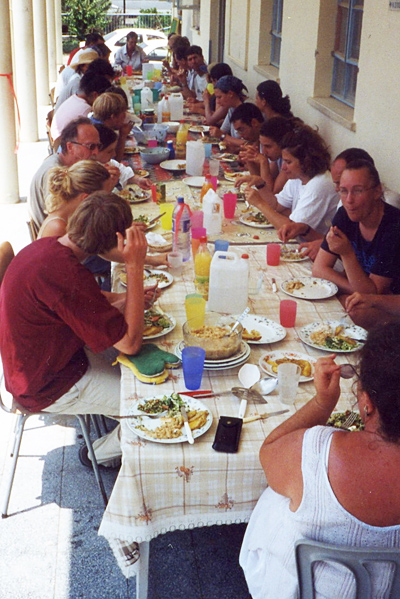
… if you are wondering exactly what this entails (and so was i until i met Annie) it is someone who travels the world on archaeological digs, cooking for the whole party for the entire duration of the dig. This has taken Annie to faraway places and to countries where food is difficult to purchase and even harder to prepare.

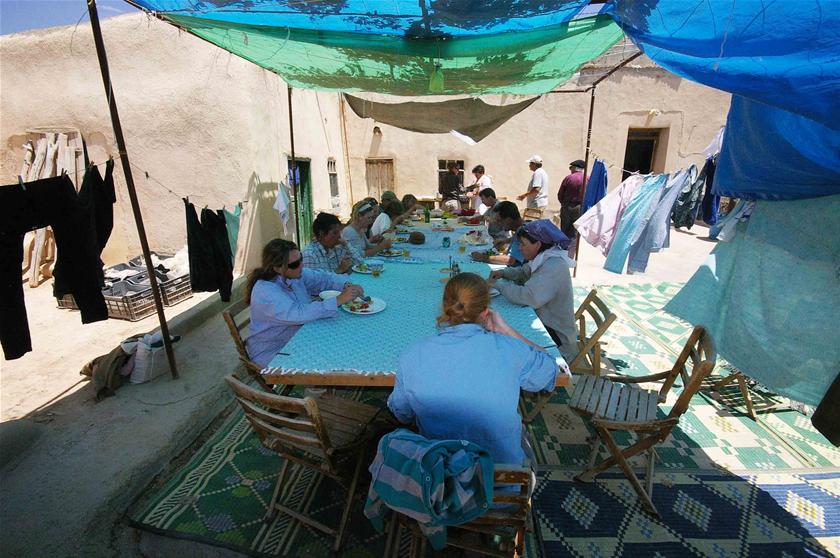
Annie spoke of the most unusual circumstances to cook in, from a mud brick house in the Troodos mountains of Cyprus, to small villages perched high in the Greek mountains . The immense amount of planning and preparation that goes into each trip is quite extraordinary and having to adapt menus and recipes to fit the culture and country and availability of produce could be hard work if you are not Annie Evans!

Our local wonder chef has encountered obscure supermarkets packed to the rafters and bursting with bizarre and unrecognizable objects and foods and has bought more than her fair share of highly unusual items , like an octopus that was sold to her by a local in Cyprus on the side of the road, after which came the job of knowing how to turn it into something tasty and edible.

We heard all of this along with the joys of discovering her ‘talent’ as a traveling cook at, shall we say, a more mature time in her life.

This lady is full of delicious inspiration and her infectiously cheerful manner was delightfully tasty and something you would certainly look forward to coming in from a dig for.

Annie left us with one of her favorite recipes, a Moroccan Spiced Vegetable Dish (which can also be adapted to you meat eaters out there).  You can discover it and many more on Annie’s website. www.digcook.com

Annie’s 12th expedition took her from her home in Myocum to the lands of Syria and beyond.

I can’t wait to catch up with Annie to hear more stories of food adventure and tasty tales  to go with the images below. This is certainly a very colourful time in Annie’s life and i hope that it serves as an inspiration to all of those out there who think that life slows down when you reach a certain place in it. Well, Annie is here to remind you that it doesn’t!

Syrian Dig

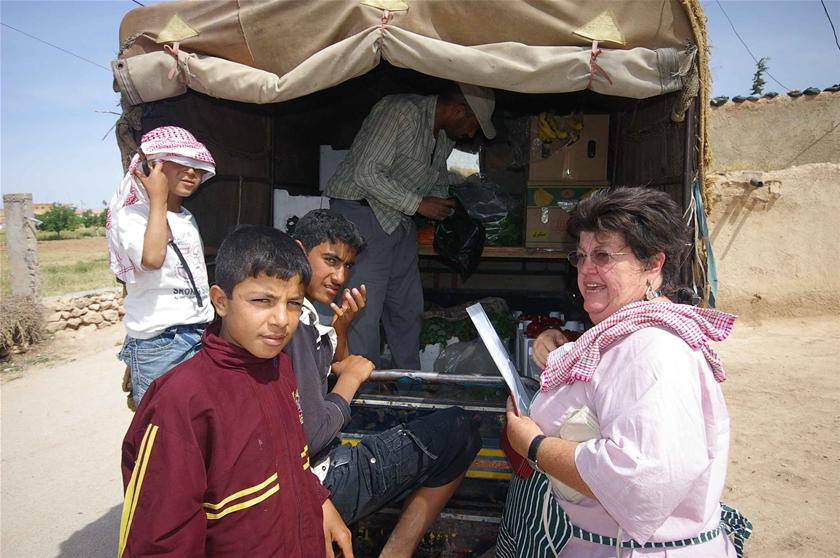
Annie shopping for fruit and veges from locals in Syria

belly radio show April 26 – war and food special and cooking with Taurus

a housewife takes aim - wall image from the Imperial War Museum, London, Ministry of Food exhibition

TOPICS

Lilith is cooking with the stars – this week : Taurus

Anzac day war and food special : internees, soldiers’ rations, rationing in Australia and UK, Napoleon’s favourite battle snack, spam sushi, victory gardens, expensive cooks and the downfall of the Roman Empire

GUEST : Lilith, belly astrogourmet and hula queen

GUEST RECIPE
:  by Lilith

BEEF WELLINGTON WITH MADEIRA AND BLACK TRUFFLE JUS

This special occasion dish was named for Arthur Wellesley, 1st Duke of
Wellington, created to satisfy his love of beef, truffles, mushrooms,
Madeira wine, and pâté – its time consuming, but most of it can be prepared
in advance.

INGREDIENTS to serve 8

1.35 kg of beef tenderloin fillet
2 tablespoons olive oil
30g unsalted butter
175g foie gras or whatever pate
you can afford
1 beaten egg
450g puff pastry

Mushroom Stuffing
55g unsalted butter
small onion, finely chopped
220g flat black mushrooms,
finely chopped
3 tablespoons heavy double cream
1 tablespoon chopped fresh parsley

Madeira and truffle jus
3/4 cup Madeira wine – you can use red if that’s what
you have
3/4 cup beef stock, knob of unsalted butter
2 tablespoons finely chopped black truffles (optional)
watercress to garnish

METHOD

First the stuffing: Heat butter in a frying pan, and saute chopped onion a
few minutes till soft and golden.  Add chopped mushrooms and sauté till
moisture evaporates.  Add cream, season with salt and fresh black pepper,
cook over a low heat till reduced to a thick pureé.  Remove from heat, mix
in chopped parsley, allow to cool and refrigerate till needed.

Then the beef:  Heat olive oil and butter in a large pan. Season beef with
salt and black pepper, brown on all sides over a high heat for a few
minutes. Remove from pan and let it cool, reserving any juices.  On a
floured surface, roll out the puff pastry 3mm thick to an oblong big enough
to fit your piece of beef.  Spread the pâté across centre of the pastry,
same width as the beef.  Spread the mushroom stuffing over the pâté.
Place the beef on top of the stuffing and gently settle it into the mix. Cut
away the middle of the pastry ends and brush all edges with beaten egg.
Carefully fold the pastry up to completely envelope the beef, tucking in the
ends and very carefully turn the parcel over onto a large buttered baking
tray. With a sharp knife make a few small incisions in the pastry, decorate
the top with pastry leaves cut out of the leftovers and refrigerate
uncovered for half an hour.

Preheat the oven to 450F/230C/gas mark 8.  Brush wellington all over with
beaten egg and bake at high heat for 10 minutes. Then turn it down to
375F/190C/gas mark 5 for a further 20-25 minutes till pastry¹s golden brown.
Remove from the oven and let it rest uncovered for 10 minutes.

While its baking, do the jus. Simmer reserved juices from the beef pan with
the wine and beef stock till reduced by half.  Add finely chopped truffles
(if using them), and simmer another 2 minutes.  Take pan off the heat, add a
knob of butter, let it melt to give a shine to the sauce and season to
taste.

TO SERVE
:  Cut wellington into thick slices and arrange on warm plates. Pour
over some Jus, garnish with fresh watercress.

This is a very rich complex recipe, so keep accompaniments simple: new
potatoes, green beans, an orange and watercress salad.

If this all sounds a bit too gouty, our local chef Nadine Abensur has a
gorgeous recipe for Mushroom Wellington which I personally prefer.

COOKING WITH TAURUS

Taurans, the earthiest earth sign, are often described as touchy, feely,
hungry and horny and it’s true they engage with life through their senses.
This is not the sign of dieting, lean cuisine, small portions or fussy
little canapes.   Taurans like big servings, especially smorgasbords where
they can graze at leisure and heap up their plates with their favorite nosh:
which tends to be solid, satisfying and usually fleshy.  Apologies to any
Tauran vegetarians out there, but a salad just won’t cut it for these hearty
eaters who love nothing better than a no-nonsense roast followed by a good
pud all washed down with a full-bodied red.

Tauran favourites may include the  Bullshot – beef consomme, tabasco, lemon juice, ice and vodka from the freezer, and robust, uncomplicated flavours like steak and kidney pie with garlic mash,roast beef with carrot and parsnip puree,and mixed grills with crumbed brains and spicy sausages.

SOME TAURUS CHEFS

Matt Moran of ARIA, one of Sydney’s premier restaurants overlooking the Opera House ­ a country boy from Tamworth who was told by a teacher he was a loser who’d never amount to anything, Matt left school at 15 to become an apprentice chef.  A true Tauran, he describes his kitchen style as hands on.

Gary Rhodes, English celebrity chef who  became famous reviving
British classics like braised oxtails, bread and butter pudding and faggots
–  meatballs made from leftovers.

these are faggots - photo taken by sister T at the Brixton farmers market, London

Anthony Worral-Thompson, whose godfather was Richard Burton, had his recipe for Snickers Pie nominated by an independent
food watchdog as one of the most unhealthy recipes ever invented – being
Snickers bars, marscapone, sugar and eggs in puff pastry, and weighing in at
1,250 calories a slice, its no mystery why the ever-charming Gordon Ramsay
once called Worral the Teletubby chef.  [in Adelaide right now for Taste Australia]

Epitomizing Taurans’ love of the good life, the Dean of American Cuisine
James Beard was a great big man of large appetites – an endearing teacher
who loved people, loved gossip, loved food and loved a good time.
Bedridden with malaria  at the age of three, he grew to love the food prepared by his mother and their Chinese cook, resulting in a life time mission to defend good cooking with fresh
ingredients against, quoting James: the assault of the Jell-O-mold and
domestic scientists. Expelled from college for being gay, Beard started his
own gourmet catering business and became star of the first American TV
cooking show titled, with typical Tauran subtlety: I Love To Eat. His legacy
lives on in twenty books, the Citymeals On Wheels he founded to feed New
York’s home-bound elderly and The James Beard Foundation which provides
scholarships, champions American fine dining and honours industry
professionals with annual awards for best chefs, restaurants, journalists
and cookbook authors.

Alice Louise Waters is another American restaurateur whose edible education
ideas have been introduced into the Berkeley school system to try and combat
the current crisis in childhood obesity.  Waters advocates seasonal local
produce, believing the international shipment of mass-produced food harms
the environment and gives consumers an inferior product.

In case I make them sound too boofy, Taurans are ruled by Venus so they’re
lovers of beauty and Taurus wild boy of art Salvador Dali published the
extraordinary cookbook Les Diners de Gala ­ a sumptuously illustrated
gastro-aethetic feast for eyes, mind and palate featuring exotic recipes for
frogs, snails and aphrodisiacs ­ things like ” Pierced Heart” and “Ox Snouts
in Pastry Shells” – all lavish, fattening and expensive, though to be fair
he does kick off with the Tauran warning: “Do not look for dietetic formulas
here.”  It’s a collector’s item now, but I once owned it and remember
attempting the Eels in Tequila recipe (what was I thinking).

Lilith

FROM THE BELLY LAB
:

CHICKEN MARENGO

adapted from the many versions of this historical recipe by sister Tess

Napoleon definitely won the battle of Marengo, a place in Italy near my grandmother’s hometown of Alessandria in southern Piemonte, Italy.  He beat the Austrian army and then he was hungry, so he ate a chicken dish which is said to have become a great favourite of his because either it reminded him of the victory, or he was like a sportsperson who always wears the lucky underpants on the day of a big match – it was his lucky dish.

He was separated from his food wagons (for a great fictional account of being Nap’s cook, read Jeannette Winterson’s “The Passion”), and either his French chef stole some chickens and a few bits and pieces to rustle up a quick meal (say the French texts), or they went to a simple local restaurant and ordered the cook to snap to it (say many Italian versions).  The only thing that is definitely in chicken Marengo is chicken – there may also be fried eggs, mushrooms, freshwater prawns, croutons, brandy, tomatoes, wine – or not.  I have translated and adapted one of the simplest versions, in an Italian cookbook that is well over 100 years old, by Pellegrino Artusi, called “Science in the Kitchen and the art of eating well”.

for 4 people (or 2 x 2)

1 small young free-range chicken, about 1kg or the smallest you can find – I used a size 13, which is a 1.3 Kg chook

flour
100 mL/1 glass white wine
flat leaf parsley, chopped, about 1/2 cup
stock (chicken or veg)
stale good bread, sliced
1 lemon
butter, olive oil
salt, pepper, nutmeg
opt. – 2-3 mushrooms per person

Rinse, dry and cut the chicken into large pieces, about 8-12 depending on size.  Dust with flour.
Lightly brown in a little oil and butter, a few pieces at a time, seasoning with salt, pepper and nutmeg as you go.  When all the chicken pieces are browned, put them together and add the wine, when it is absorbed add 1-2 cups of stock and cover to finish cooking over a gentle heat.  If you find that you’ve added too much stock, just leave the cover off towards the end.
Just before serving, brush the mushrooms with olive oil and cook in a dry pan.  Keep warm while you add a little more oil to the pan to toast the slices of bread.
Add the parsley to the chicken, and lemon juice to taste, stir and turn the heat off.
Serve surrounded by mushrooms and toast.

You could go the full I-just-conquered-another-great-big-piece-of-the-map and fry an egg each in oil, steam a few prawns in the white wine, and serve those too.

I tried making a thin plain omelette and serving it cut in strips with the chicken.  It was ok, but it didn’t really add anything.  But the chook/toast/mushroom combo was delicious and very simple to make.

We were only two eating this, so the next day I added fresh peeled, seeded, chopped tomatoes to the chicken while it was re-heating, as most recipes for chicken Marengo include tomato.  It was ok, but there are much better recipes for tomatoey chicken around, and probably not what Napoleon ate, as it took a long time for tomatoes to conquer Europe after they came from America.


EDIBLE QUOTE

Today’s quote is by the Roman historian Livy, he was writing about Roman soldiers in the days when Romans were rough and tough and simple people, going off to conquer the Greeks and other softer and more civilised people in Asia, and coming home with souvenirs and bad habits

“The beginnings of foreign luxury were brought to Rome by the army of Asia. .. Harp girls and other festive amusements became features of dinner parties. The feasts themselves began to be arranged with greater meticulousness and expense. The cook,cheapest and most despised of slaves in our fore father’s times, increased in price. His work, once seen as servile, was now considered an Art. These, scarcely noticed by contemporaries, were the seeds of corruption”  Livy writing about a time around 200 bc – and all downhill from there

THE MINISTRY OF FOOD EXHIBITION AT THE IMPERIAL WAR MUSEUM, LONDON

In the kitchen a housewife checks the size of a slice of bread against a chart supplied by the Wartime Social Survey, a government fact-finding organisation set up in April 1940. There was no bread rationing during the war, but it had to be introduced on 21st July 1946. It remained in force for exactly two years. © Imperial War Museum

I’ve got a sticker that says “make chocolate not war” on the car.  Us bellysisters are peace loving, sybaritic souls.  So I don’t normally visit museums dedicated to guns and co.  But I thoroughly enjoyed the current exhibition at the IWM.  It’s quite amazing how many of the preoccupations of wartime Britain are again very topical.

We Want Your Kitchen Waste, John M Gilroy, IWM PST 14742 © Imperial War Museum

From eat more veggies to grow your own, to avoiding food that needs long range transport (because of German subs not food miles), to recycling and using underused land for small scale food production.  The reasons may be different, but the messages are the same.  And often these days we are told to look to wartime methods and values to avoid environmental catastrophy, or just to have access to better, healthier food.  The first major Slow Food event in San Francisco last year, for example, included a temporary but very lush “Victory Garden” in the centre of the city.

So it makes sense to go along and see how the British Government, and people, very successfully not only increased  domestic food production war, but ended up with a healthier, better fed population – in the middle of a war!

Grow Your Own Food, Abram Games, 1942, IWM PST 2893 © Imperial War Museum

There are propaganda videos, songs and radio programs, lots of posters and

Use Spades Not Ships € Grow Your Own Food and Supply Your Own Cookhouse, Abram Games, IWM PST 2916 © Imperial War Museum

photos, and recreations of a kitchen, shop and greenhouse.  Design students would get a lot out of it too, such great posters they used to do.

And all sorts of media were used to communicate techniques and tips on all sorts of subjects from nutrition to cooking methods to gardening.

I particularly like this way of telling a good bug from a bad bug.

And while most of us are probably aware that rationing existed, this show explains some of the less obvious aspects.
Rationing was meant to ensure that both rich and poor had access to scarce food, and that as much as possible was left for the troops.  There was a big supply web between Britain and us colonials.  Many merchant sailors died transporting food, and many people in Australia endured rationing to supply food to Britain and the various armed forces.

IWM cafe food

The one thing that is really hard to take is the supposed recreation of wartime cooking in the Museum cafe.  One of the sponsors is responsible for this, and the whole museum smells pretty unappetising.  As one of the people serving it up said to me : “I think they had better food during the war”.

¨Food Chart Eat Something From Each Group Every Day, © Imperial War Museum In 1944, the Ministry of Food Public Relations Division spent £600,000 on posters and other forms of publicity.

However, see this wartime nutrition chart – we are all familiar with eating from all the food groups.  If you could get hold of them, you could follow this dietary advice by eating just butter, cheese, and potatoes.  Ahh, those were the days.  But then you could work it all off digging and dancing.

If you can’t get to London, check out the videos available on the net – I posted a list below.

Carrots Keep You Healthy and Help You See in the Blackout, IWM PST 6015 © Imperial War Museum

LINKS :

The Kitchen Sisters story on US public radio, about American Japanese internees during WW2 – anyone with 1/16th of Japanese blood – and the odd new foods they learned to love, like spam – recipes and audio, including that fab spam sushi recipe

http://www.youtube.com/watch?v=c_aldlRKzvQ&feature=related – the BBC US army ration story

http://www.youtube.com/watch?v=VKyO84pYy0c&feature=related – this one is silent, so not in the radio show, but lovely historical images of soldiers with those ever-present tins!

http://www.6thcorpsmusic.us/ – lots more music like the tracks I played on the show, thanks to the US IV Army Corps Combat Engineers

give us this day – the full version of the Australian rationing ad – this website is a wonderful archive of Australian film

http://london.iwm.org.uk/server/show/conEvent.3167 – the Ministry of Food exhibition at the Imperial War Museum, London

Dig for Victory ad

Dig For Victory, 1942, IWM PST 0059 © Imperial War Museum The Dig For Victory campaign was launched in October 1939 by the Minister of Agriculture Sir Reginald Dorman-Smith.

this is the one I call “Mrs White sees the Minister” – love a talking chicken!

and a couple of rationing films that I didn’t have time to play:

http://www.youtube.com/watch?v=TcaSJCtmt7c&feature=related – the announcement of rationing in the UK

http://www.youtube.com/watch?v=2evv45stEHw&feature=related – 2 cooks and a cabbage

but there are so many more great wartime clips on youtube! we just don’t do propaganda like we used to.  If you follow the links above you will find many more, including a whole heap of soldiers just opening up and heating army rations, to show exactly what they look like – no words usually, just preserved food bubbling away on camp stoves – very odd.

and for a dark, distopian and disturbingly  likely future of rationing, National Meat loaf and veggie gardens, read Fay Weldon’s 2009 novel “Chalcot Crescent”

belly radio show April 19,2010 – petty crime to head chef, with lamingtons

TOPICS :

young chef Matthew McKenzie aka Outback Mattie talks about turning his life around, from a tough childhood, to Jamie Oliver’s Fifteen Melbourne program, to a cooking and TV career, and reveals the origin of the lamington!
Mad cook Dr Siggi Fried gives a cooking demonstration as her family demands edible food.
The bellysisters tell stories of fish fondling, paying your restaurant bills by cycling, and the ash cloud that will soon keep asparagus and pre-packed lettuce mixes off British tables

GUEST RECIPE : from Matthew

Bruschetta of Grilled Honey Seeded Mustard Haloumi Cheese with Roasted Vine Ripened Cherry Tomatoes

This is the perfect recipe for a quick afternoon snack or for those unexpected guests. It only takes 15 minutes to prepare and cook. The best bit is you get that delicious sweet & salty flavour from the haloumi cheese, & those mouth watering bursts from the cherry tomatoes.

Ingredients:  for 2 people

100gr Haloumi Cheese
1 tbsp Honey
1 tbsp Seeded Mustard

12 Vine Ripened Cherry Tomatoes
1/4 Bunch of Basil

1 Loaf of Ciabatta bread
1 Garlic Clove

1 tbsp Good Olive Oil
Sea Salt & Cracked Black Pepper

1. Preheat oven to 180 degrees. In a oven tray place your cherry tomatoes, drizzle with good olive oil, season with sea salt & cracked black pepper. Cook for 10 to 15 minutes until skin starts to split away. Remove from oven.

2. Slice your haloumi cheese 1cm thick (4 pieces), spread a layer of seeded mustard, drizzle with honey. Now in a pan on a medium heat cook both sides for 1 minute until golden brown in colour.

3. Slice your ciabatta bread thinly and toast. Once toasted cut your garlic clove in half and rub the garlic clove hard against the crispy toasted bread (garlic bread).

4. To assemble the dish; tear some basil on the base of the toast, next lay the haloumi cheese, tear some more basil, finish by topping with roasted vine ripened cherry tomatoes and a drizzle of good olive oil. Enjoy!

RESTAURANTS
that Matthew recommends in Brisbane and the Gold Coast:

Old Government House, Aria, Restaurant Two, or for cheaper options The Thai Bar, or Italian or Asian restaurants in the South Bank area, and Absynthe on the Gold Coast

EDIBLE QUOTE :

By the Greek philosopher Diogenes the Cynic (I think he was the one who lived in a barrel) – If only it was as easy to banish hunger by rubbing the belly as it is to masturbate.

CONTACTS :

www.belly.net.au – please get in touch with the bellysisters

www.matthewmckenzie.com.au – see videos of Matthew, hear his life story, get lots of recipes

including:

http://www.matthewmckenzie.com.au/lamington.html
– the original lamington recipe

invented at Matthew’s restaurant, Old Government House in Brisbane – also a bit of history to settle the great lamington controversy, and the revelation that (shock horror) “the lamington was first whipped up in a hurry to disguise the staleness of the sponge”

radio show 12 April 2010 – market kids

This was the first time sister Rasela took the belly mike on excursion, and she had a wonderful time.

"The Ocean Shores Public School children and their headmaster Chris Horitz welcomed a bit of Belly along to their 
New Brighton Farmers Market excursion on a bright Tuesday morning in March. 

I met up with just one of the lucky classes from the school, recording and witnessing the excitement as they shopped 
happily amongst the stalls, sampling, tasting and purchasing fresh produce to take back to the school to prepare for 
lunch in a programme that teaches the children the nutritional benefits of fresh, locally grown, quality produce and 
how to budget and prepare a delicious and nutritious meal.

During the interview with the headmaster, he pointed out the growing relationship between the individual classes that 
attend the markets weekly and the generous growers who also provide seedlings for the school garden project. 

This was a wonderfully rewarding day for the school, the stallholders and myself alike as the true community spirit 
and good intention for the future generation shone brightly and was evident in the sparkle of the childrens eyes."

radio show 5 April 2010 – markets,fat ladies,Aries and pineapples

TOPICS : markets, in season April, cooking with the stars – Aries, choosing pineapples

GUEST : Lilith, astrogourmet and hula queen

PRESENTERS
: sister T and sister B

FARMER’S TIP : PINEAPPLE TRICKS

A second generation pineapple farmer at the local market told sister T that – shock horror – the famous pull-the-leaf-out-to-see-if-the-pineapple-is-ripe trick is all a lie.  He remembers a pineapple ad when he was a child recommending this, and his pineapple farmer father scoffing : “Rubbish!”.  Apparently they just come out when the pineapple has been picked for 1 to 2 weeks.  Or it gets sick of getting its leaves pulled I suppose, and lets go.
Pineapples should be picked ripe, they don’t ripen after picking as they have no starches to convert into sugars, they just soften.
So – smell your fruit, should smell ripe but not fermenting.
And look at the base, where it was cut from the plant : moist and clean means cut ripe within a day of getting to you, dark or mottled with a little fungal growth means cut ripe within 2-3 days.  Totally dry and clean means cut unripe.
Straight from the farmer’s mouth – may your pineapples be always sweet and juicy.

GUEST RECIPE : an Aries recommendation by Lilith

Speedy Aries are fond of no fuss meals they can whip up in minutes, but
fast needn’t mean nasty.  So in the spirit of their love for red, hot,
quick, raw and politically unpc food in this anti-cattle, semi-vegetarian
community, I have a recipe for Steak Tartare – raw beef – as taught to me by
a Belgian boyfriend.

TARTARE STEAK

Ingredients:

Best quality eye fillet beef
1 egg per person
red onion, finely chopped
capers
flat leaf parsley, very finely chopped
paprika, fine salt crystals, cracked black pepper
Worcester sauce, Tabasco, Dijon mustard, home made mayonnaise
Optional: anchovy fillets

Method:

Mince beef as finely as you can by hand, never in a mincer, and mound each
portion in centre of a plate.
Break an egg in half, separate whites and retain yolk in the half shell.
Place eggshell in centre of the meat mound.
Surround central mound with smaller mounds of red onion, capers, parsley,
paprika, black pepper, salt crystals (mortar and pestled if they’re too
coarse), mustard, mayo and if you like them, anchovy fillets.
Serve with Worcester, Tabasco, pommes frites with lashings more mayo ­ and
because there’s nothing like blood, heat and alcohol to excite an Aries,
plenty of chilled chili vodka.

FROM THE BELLY LAB

Sister T loves to play with raw meat too, but in the slightly more mellow form of carpaccios – an Italian classic that is easily adapted and improvised.

CLASSIC CARPACCIO

is just thinly sliced beef fillet or rump – as thin as you can get it, easier if the meat is slightly frozen.  You lay the slices on a plate and dress with salt, pepper, good olive oil and lemon juice at the last minute.  On top you can add slivers of Parmesan and/or some rocket leaves.

NEO-CLASSIC CARPACCIO

Carpaccios are popular in restaurants because they are so easy to do at the last minute, and to change. They can be a light and flavourful entree, or a light main with green leaves (or more of those pommes frites)

You can play with different herbs and dressings, but don’t let them sit on the meat and cook it.  Or you can use a slab of thinly sliced fish like tuna or salmon, or sear the meat or fish on the outside before slicing.

EDIBLE QUOTES
:

“Delicious, despite its vegetarian overtones”
“That’s what I like to see, a whole jug of double cream!”

both by Jennifer Paterson, of the Two Fat Ladies cooking show

CONTACTS
:

belly@belly.net.au – get in touch with the bellysisters

Renee Searles cd launch – at the Drill Hall, Mullum, April 16
tickets from bruns hds health foods…yummy homemade chai and cakes….7pm…$20
Renee Searles   PO Box 27  Brunswick Heads NSW 2483  Phone: 02 6685 0223
Email:  renee@divineshe.com  www.divineshe.com
farmers markets and weekend markets links and info – see markets page of
www.belly.net.au

http://www.youtube.com/watch?v=s9EwIRp-76U&feature=related – video of the “Two fat ladies” at the Cotswold pony club
lots more 2FL on youtube

belly 29 March 2010 – travels with seedsavers, wild harvest, easter chocolate

TOPICS : Seedsavers catch up – travels, wild harvesting, autumn recipes; chocolate and more chocolate

GUEST : Jude Fanton, director of the Seedsavers Foundation

PRESENTER : sister T

JUDE AND MICHEL’S LATEST TRAVELS:

August – we were three weeks in Vanuatu to film for Centre for
International Research into Agriculture and Development (CIRAD) based in
Montpelier, with a long term programme in Vanuatu. We filmed in remote villages
(one 70km from roads – went in by canoe) a film called “Our Roots” that will be
out in a month. It covers the re-diversification of root crops (yam, taro,
cassava and sweet potato) through seed reproduction.

October – a three week speaking and filming tour for Biodiversity Network
in Japan.

Mid November to mid January – in Rajasthan and then a month in Malaysia to
mid Feb. We were filming agricultural biodiversity and resilience and trialling
the running of Seed Savers from afar. Thanks to iPhone and excellent mobile
phone coverage and wifi connectivity in both countries we were constantly
connected and could field emails and update our website.

Autumn is a good time for fruit harvests; beginning of
citrus; acerola; guavas of all types, e.g., cherry and strawberry guavas; Ceylon
hill berry; bananas; pomegranate.

Wild harvesting

Guavas – we have found two types on side of road.
Mushrooms though it does not seem a big season this year.
Pecans – story of tree in neighbouring lane cut down.
Mangoes – story of huge old trees cut down in three public carparks. We have
several seedlings of each growing in our gardens here as a rescue operation.

During the show Jude and sister T were throwing around ideas for saving fruit trees and vines that are on public land, before they suddenly disappear due to development or old age.

Possibilities :
* a map/register of fruit bearing plants so they aren’t wasted/annoy landowners/council with fallen fruit
* a course as part of the ACE sustainability series on how to take cuttings/seeds/graft
* Jude will look at putting info on seedsavers site/through local seed network
* cuttings/fruit should be taken for propagation from plants that you know give great fruit, well before they are at risk
* us bellysisters would be happy to collate information on the www.belly.net.au site if you send it in, or link to any info
* please comment!

GUEST RECIPES
– from Jude

GUAVA JELLY

Cut up guavas roughly. Put them in a thick bottomed saucepan and add enough water to fill to one quarter the height of the guavas.
Boil twenty minutes to soften and bring out their juices.
Pour all this mush (don’t mush it) into a muslin bag or pillow case or bank bag and hang with a shoestring (!) over a bowl to allow juice to drip out overnight.
Do not squeeze, cajole or in any other way interfere with the dripping process, or the juice will go murky.
Weigh the juice and pour into the same saucepan as before. Add equal (or less, say two thirds) weight in sugar.
Boil slowly until setting point. Ah ha! How is that achieved? How judged? The jam and jelly makers’ dilemma!
It takes any time from 20 mins to an hour. It will take less time if you have put in a lot of sugar, and if you add pectin in the form of apple pips or Jamsetta.
It will take more time if you put in a lot of water in the first process, or little sugar in the second.
To test when you have reached setting point, take a cold plate and drip a bit of jelly on it. Let it cool and observe whether it is set by tipping it sideways.
Be careful at this point as setting point is reached fairly quickly.

VEGAN PALAK PANEER

Take any edible leaf that you normally use as spinach (i.e., cooked), such as
spinach, chicory (I used the prolific perennial spreading monk’s beard chicory),
dandelion, Brazilian spinach, farmers’ friends, other edible weeds – all called
horta in real Greek spanikopita. Boil in plenty of water for a few minutes,
drain and chop.
Fry chopped eschallots, or if you have to, onions in olive oil or similar. And
garlic if you like.
Add more oil and some flour to make a roux.
Add ground nuts (food processors do a good job) such as cashews, hazelnuts,
macadamias or almonds.
Add soya milk and/ or water, stirring til smooth and cook a few minutes.
Add salt and pepper and/ or nutmeg.  I then blend it all with a bamix.

Recipe, or rather a treatment, for NON-TRADITIONAL PESTO

Use any herb such as coriander, oregano (with others as it is a bit strong),
parsley or fennel.
Use any nut such as cashews, hazelnuts, macadamias or almonds ground in food
processor.
Use any tree oil, such as olive or macadamia.
No need for parmesan cheese, garlic optional.

CHOCOLATE FOR EASTER:

Easter is named after Eostre, a version of Astarte/Kali, the goddess of fertility and birth, worshipped  at the spring equinox.  Of course Easter is spring in the Northern Hemisphere. Christian missionaries often adopted pagan events as Christian holidays to increase acceptance of their god.

Eggs are ancient symbols of fertility.  In an Orphic myth, the goddess gave birth to a world egg – the 2 halves are heaven and earth, from the egg comes the god Eros – the bisexual god of love, the first ever surprise from an Easter egg – should keep everyone happy! The ancient Persians, the Chinese, many ancient cultures were also into eggs as a symbol of the new year starting in the spring.. And they were a forbidden food during Lent, so good reason to eat them when Lent is over. There are many Easter rituals associated with eggs, decorating, throwing, rolling or hiding them for kids to find.

The Easter bunny or rabbit comes from the hare, another ancient, pre-Christian symbol of fertility associated with spring & the goddess. In one story the goddess Eostara changed her pet bird into a rabbit to entertain a group of children, and the rabbit laid brightly coloured eggs for them.

And why are all these rabbits, eggs, chickens and bilbies now made of chocolate?  Well, if you can make something out of chocolate – why wouldn’t you?  This delicious development came much later though, in the 18th and 19th century when European confectionery geniuses were experimenting with their craft in many ways.

Easter is also a great time for chocoholics to stage their own war on drugs by converting all their addictions to chocolate.

Chocolate contains a variety of wonderful substances.  So if you are hooked on:

CAFFEINE – chocolate can provide theobromine, chemically similar to caffeine.
POT – chocolate has anandamide – a cannabinoid which is also naturally produced in the human brain.
ECSTASY – party happy with tryptophan, an essential amino acid that is a precursor to Serotonin, an important neurotransmitter involved in regulating moods.  This is the same way an E works.
SPEED – in chocolate there is phenylethylamine,a neurotransmitter from which amphetamine is derived. Often described as a ‘love chemical’.  The wonderful wikipedia, to which I owe the rigorous scientific research, says that “it is quickly metabolised by monoamine oxidase, so it has no effect on the central nervous system”.  Well we know the answer to that problem don’t we?  Eat more chocolate, faster.

And remember, dark chocolate good for you – especially your circulation.

The 12-step chocoholics program:
NEVER BE MORE THAN 12 STEPS AWAY FROM CHOCOLATE!
get the t-shirt if you like this motto, at virtualchocolate, you will find lots of chocolate dipped quotes there too – many of these seem to have been copy/pasted all over the chocoweb, but you’ll see why, they are delicious [maybe chocoholics can’t resist the instant gratification of grabbing these]:

Twill make Old Women Young and Fresh; Create New Motions of the Flesh. And cause them long for you know what, If they but taste of chocolate.
from “A History of the Nature and Quality of Chocolate”, James Wadworth (1768-1844)

Put “eat chocolate” at the top of your list of things to do today. That way, at least you’ll get one thing done.

Don’t wreck a sublime chocolate experience by feeling guilty. Chocolate isn’t like premarital sex. It will not make you pregnant. And it always feels good. Lora Brody, author of Growing Up on the Chocolate Diet

Life without chocolate is like a beach without water.

“Las cosas claras y el chocolate espeso.” (Ideas/things should be clear and chocolate thick.) Spanish proverb – and they should know, they have the best hot chocolate in the world – and churros, fried sugared dough to dip in bitter chocolate – perfect – good reason to visit the Spanish part of town

Forget love– I’d rather fall in chocolate!!!

If it ain’t chocolate, it ain’t breakfast!

Money talks. Chocolate sings!

If chocolate is the answer, the question is irrelevant.

Once you consume chocolate, chocolate will consume you.

“Exercise is a dirty word. Every time I hear it I wash my mouth out with chocolate.” ~ Charles M. Schultz peanuts cartoon

Save the Earth! (It’s the only planet with chocolate.)

CONTACTS :

your bellysisters would love to hear from you – please leave a comment or send an email to belly@belly.net.au

Seedsavers (also in the local phonebook) :

PO Box 975, Byron Bay, NSW 2481, Australia,Tel (61) 02 6685 7560. Mobile 0432 549 825
02 6685 6624 is no longer in use.
See Seed Savers’ extensive and interactive website: www.seedsavers.net

Michel Fanton receives emails at michel@seedsavers.net

General enquiries should be sent to  info@seedsavers.net

www.virtualchocolate.com
– chocolate quotes, and chocoholic t-shirt

belly 22 march 2010 – mullet, gotu kola, cucumbers

TOPICS : the mighty mullet, smokin’, eating your rampant pumpkin vine, healthy traditions – Sri Lanka (gotu kola), dr Siggi’s bad chef recipes – souffle’, Sister Rasela’s Morsels – odd uses for cucumbers

GUESTS/INTERVIEWS : Paul Van Reik, Sri Lankan born wonderful cook and food writer, and youthful father of many children
Dr Siggi Fried, bad cook freedom fighter
Sister Rasela – nutritionist and bellysister

PRESENTER : Sister T

FRESH REPORT

This week sr T is loving pineapples, sea mullet (extra fab to July as it goes North to spawn) and taming the pumpkin vines by shallow frying the flowers and marble size baby pumpkins (in a light flour and water batter).

The mighty Mullet

bake, pickle, smoke, bbq, make fish pastes and pate’, goes with tomatoes, oranges, fennel, mushrooms, onion, garlic, eggplant, all kinds of herbs, substitute for mackerel in Spanish and English recipes (much cheaper)

SMOKED MULLET OPEN SANDWICH – by Sr T

First, smoke yer mullet

1 wok, a metal cake rack, maybe foil, mullet fillets, skin on

Smoke mix :

1/2 cup each brown sugar, rice and tea leaves (I just used tea that was getting a bit old), a few leaves/sprigs of woody herbs, maybe a few fennel seeds, lemon myrtle – experiment

To smoke you need a wok, either an old one, or lined with foil, if you haven’t got a wok lid the foil has to be long enough to cover the fish.

Put the smoke mix in the wok, heaped in the middle.  Then the metal rack, high enough to not touch the mix, the fish skin down on the rack.  Cover with lid or crimp foil over so it seals the top but doesn’t touch the fish.

Cook on high until it starts to smoke, then 10 to 20 minutes on medium heat depending on size/your preference.  If the mix goes out and you need to cook the fish a bit more, finish in a dry frypan, skin down.

Then you can use the mullet in many ways (lovely for pate’)

or make a herby garlicky green sauce – I whizzed olive oil, lemon juice, salt , pepper, garlic, parsley, mint, chives and fennel tops in a food processor

Made sourdough toast, thinly sliced tomatoes on top, then flaked mullet, then drizzled bright green sauce….mmm

And pretty too.

GUEST RECIPES:

HEALTHY TRADITIONS :

* is there a dish in your tradition that is supposed to be extra good for you?  Please share it with the bellysisters, either on air or on the website.

In the Sri Lankan tradition, it is said that gotu kola keeps you youthful, and is good for your blood and rheumatism.

GOTU KOLA KANDA – from Paul

1 cup cooked rice (see below)

2 -3 tamped down cups of gotu kola leaves (1 bunch)

Boil rice in a lot of water until grains whole but mushy – a thick starchy soup/porridge consistency.

Pound leaves in a mortar, sieve out solids and  keep juice or puree
with a little water in a blender and sieve out solids.  Makes 2-4 tbs of bright green juice, add to cooked rice with a pinch of salt. It will have a minty/sharp/peppery flavour.  Add jaggery to taste (or honey/plain sugar).

Have a bowl each morning, you can re-cook any leftover dry rice until it is mushy to make this.

The following recipe is from Paul’s website,  where you will find many more delicious Sri Lankan recipes

LEAFY VEGETABLE MALLUNG

This is a standard preparation you can make with any leafy green  – spinach, silver beet, kankun, amaranth, chrysanthemum, radish and turnip leaves, chickweed and so on.  If you can get them, there are two Sri Lankan greens in particular that do well with this treatment – gotukola, also called pennywort,  and often available in the growing season from good South East Asian suppliers; mukunawena, a quite specific Sri Lankan herb which you may find at Sri Lankan grocers.

Ingredients:
1 bunch leafy green vegetables
1 tsp black mustard seed
1 tsp turmeric
pinch of salt
1 tbsp grated coconut (fresh is best, frozen is also fine, desiccated is a no-no)
1 tbsp Maldive fish ground fine (you can substitute dried prawns)
vegetable oil

Method:

Wash the leaves and shred them fine.

Heat the oil in a wok or frying pan big enough to hold all the shredded leaves.

Put in the mustard seeds and fry till your hear them pop. Immediately add the leafy vegetables and stir rapidly. You want to try and coat all the leaves with oil and seed.

Add the turmeric, salt and Maldive fish, stirring all the time to prevent the leaves burning, like in a Chinese stir fry.

When the leaves have darkened and gone limp,  add the coconut and mix it through for a minute or two at the most. You just want it to take on the colour of the turmeric and be thoroughly integrated with the leaves.

Taste, and adjust the seasoning. If you like, squeeze some lime juice over it. Take it off the stove. You don’t usually serve mallungs hot, so let it cool down a bit before eating.

(C) 2007 Paul van Reyk

DOKTOR SIGGI FRIED’S COOKBOOK FOR BAD COOKS

LEYTON’S SOUFFLE’

Look up any good cookbook for a souffle’ recipe.  Prepare as suggested but don’t worry about using precise amounts as all souffles will collapse in the end.   However, ther is a trick that Leyton Hewitt, the famous tennis player, uses to create perfect souffles (almost) every time…when the souffle is cooking, stare at it intensely and shout : ” Come On” at least 3 times.

(C) Dr Siggi Fried

EDIBLE QUOTES:

So much said about the poor cucumber (great for cleaning metal according to Sr Rasela – not sure if this is a compliment)

“A cucumber should be well sliced, and dressed with pepper and vinegar, and then thrown out, as good for nothing.”
Samuel Johnson (1709-1784) English writer

“Raw cucumber makes the churchyards prosperous” – English Proverb

“He had been eight years upon a project for extracting sunbeams out of cucumbers, which were to be put into vials hermetically sealed, and let out to warm the air in raw, inclement summer.” Jonathan Swift  (Irish writer)
“Cucumbers  are like virgins, they do not keep long” –  Dutch Proverb

CONTACTS/LINKS:

good mullet info :

http://www.sea-ex.com/fishphotos/seamullet.htm
http://www.australianseafood.com.au/species.php?f=78&v=f

wok smoking :

http://www.foodista.com/technique/CYZGZ2ZV/wok-smoking
http://www.abc.net.au/tv/pohskitchen/cooking_tips/

http://www.buthkuddeh.com.au/ – Paul Van Reyk

http://en.wikipedia.org/wiki/Centella_asiatica – lots of good gotu kola info and pictures

www.kopping.com – dr Siggi

belly 15.3.10 – kefir and fresh cheeses

TOPICS : The mighty KEFIR, the making of, health benefits, micro flora, dairy intolerances.

GUESTS : Debra Allard of Tweed Valley Farmhouse Cheeses, farmers wife, kefir/cheese lover/maker and effervescent being.

Sue’s husband Rob is a fourth generation dairy farmer, his cows graze the lush
pastures of Burringbar. As soon as the morning milking is completed Debra and Sue
pasteurise the milk and spend the day making creamy yoghurts, cottage cheese,
quark, various fetas, haloumi, labna, brie and camembert. They also make kefir
a live yeast, live bacteria health drink.

PRESENTER
: sister Rasela

RECIPES :

COOL KEFIR DRESSING – from sister Rasela

2 cups fresh Kefir
1 heaped Tbsp fresh parsley, chopped
1 heaped Tbsp fresh chives
1 heaped Tbsp lemon zest, finely chopped
1 heaped Tbsp fresh garlic, finely chopped
1 tsp sea salt
1/4 tsp Herbamare
1/2 tsp Xanthan gum

1. Combine all ingredients (except Xanthan Gum) and blend thoroughly.
2. Slowly add xanthan gum and continue to blend until mixture thickens.
3. Full flavour will develop after 6 to 8 hours.

GUEST RECIPES : from Debra

RICOTTA PIKELETS

2 eggs
4 tablespoons sugar
2 cups SR Flour
1 & ½ cups milk
½ teaspoon Bicarb Soda
250g TVWFC Ricotta

Beat egg & sugar. Add flour alternately with the milk in which the Bicarb Soda has been dissolved. Beat the ricotta into mix and leave for 30 mins. Gently fry in a slightly buttered pan, in small batches.

Top with Tweed Valley Whey Farmhouse Bondon (Cream Cheese) and honey.   YUM!


ZUCCHINI & HALOUMI FRITTERS WITH YOGHURT SAUCE

500g grated Zucchini (about 4 large ones)
½ teaspoon ground Sea salt
1 onion, finely chopped
125g TVWFC  Haloumi, grated
1 cup roughly chopped baby spinach
2 eggs. beaten
60g (1/4 cup) plain flour
½ cup olive oil or Rice Bran Oil for frying

Put the grated zucchini in a colander, sprinkle with ground
sea salt, toss lightly and set aside for 30 minutes. Squeeze out the excess liquid
from the zucchini and pat dry with paper towels.

Put the zucchini, finely chopped onion, grated Haloumi, baby
spinach & beaten eggs in a bowl and stir until combined. Stir in the flour
and add pepper if desired.

Heat the oil in a non stick fry pan until hot and drop batter
into fry pan flattening gently with the back of the spatula. Cook until well
browned on both sides. Drain on paper towel and serve with yoghurt sauce and
lime wedges.

Yoghurt Sauce

Place 1 finely minced garlic clove, 1 tablespoon extra virgin olive oil, 125g TVWFC  plain yoghurt, 2 tablespoons lemon juice, salt & pepper in a bowl and stir.

CONTACTS :

Tweed Valley Whey Farmhouse Cheeses (available at Byron farmers market)

p 0266771111
m 0404 812 011
e tweedcheese@bigpond.com

Also see the story at :
http://www.tweedecho.com.au/index.php?option=com_content&task=view&id=794&Itemid=538

belly 8.3.10 – glitter’s glorious grains and cooking with pisces

TOPICS : food labelling laws, tuna, website launch, quinoa, millet and buckwheat, autumn foods, cooking with the stars for pisces

GUESTS: Glitter Girl, bayfm presenter, poet and grain lover
Lilith, astrogourmet and hula dancer

PRESENTERS : Sister B and sister T

GUEST RECIPES:

MILLET AND MUSHROOM BAKE adapted by sister Glitter from: Food for the Seasons : Eat well and stay healthy the traditional Chinese way, by Professor Lun Wong and Kath Knapsey

Serves 4

Like all the grains, millet is fine for any season.  But it is particularly good for autumn as it gets rid of heat (that maybe a summer leftover), moistens dryness(the most  common autumn problem) and supports yin and kidneys for the upcoming winter.  Mushrooms ease coughs and get rid of phlegm as well as strengthening the lungs.  If you have a great deal of phlegm, swap the millet for rice.

3 cups millet
pinch of salt
1 tablespoon of olive oil/ or avocado oil
1/2 cup of flour (unrefined) can be millet, rice, buckwheat
1/2 onion, chopped
200 gm mushrooms, sliced
3 tablespoons tamari
bunch parsley

Soak millet in water overnight.  Drain.  Add millet, fresh water (8 cups) and salt to a pot and bring to a boil.  Reduce heat and simmer for 35 minutes.

While you prepare other ingredients, preheat the oven to 180 degrees.  Place millet in an oiled casserole dish.  In a frying pan, saute onions and mushrooms
until soft.  Then add flour, and stir in with the mushrooms and onions, before adding 1 1/2 cups of water.  Stirring continuously.  Bring almost to the boil, then
cover, reduce heat and simmer for five minutes.  Add tamari and simmer for a further ten minutes.  Pour contents of frying pan into the casserole dish and stir very lightly
with millet.  Bake for 20 minutes.  Cut into four slices, garnish with parsley and serve with lightly steamed spinach.

This could also  be accompanied with steamed carrots, pumpkin, and asparagus


BUCKWHEAT NUT LOAF
– a sister Glitter favourite from : The Australian and New Zealand Book of Wholemeals, by Marcea Weber

Serves 4-6

1 1/2 cups of buckwheat (roasted)
3 cups water
1/2 teaspoon of himalayan pink salt
2 cups sliced mushrooms
1 tbs minced ginger
2 teaspoons minced garlic
1 cup diced red onion
1/2 cup grated carrot
4 tablespoons of coconut oil/ avocado oil/ ricebran or olive oil (cold
pressed)
6 large cabbage leaves
1 cup roasted, ground almonds or walnuts
3 organic eggs, beaten
2 tbs miso (young)
1/2 teaspoon each thyme, basil, oregano (dried)
1/2 cup chopped parsley
3/4 cup of LSA (linseed sunflower and almond) or millet meal

Firstly bake buckwheat kernels in 200 degree C preheated oven until lightly
browned.
Then bring 3 cups of water to the boil.  Add buckwheat, salt, cover and lower
heat, simmer 15 minutes.  Meanwhile, cut the rest of the vegetables.  Heat the 2
tablespoons of chosen oil and saute mushrooms for 5 minutes.  Remove from skillet or wok, set aside and add the 2 remaining tablespoons of oil to wok.  Saute the rest of the vegetables in order listed above.  Cover and simmer for 5 minutes.

Now, bring a pot of salted water to the boil.  Add cabbage and blanch 1-2
minutes.  Drain and rinse under cold water.
Preheat oven to 190 degrees
Roast and grind nuts.
Oil bread tin.  Line tin with cabbage leaves, covering the bottom and sides.  Leave enough overhang to fold over and cover the top.

Combine half the buckwheat with the cooked vegetables and the roasted nuts.
Beat eggs and miso, combine with buckwheat mixture and add the rest of the ingredients.
Spoon into cabbage-lined loaf tin (9 1/2 cm x 23 cm) ( 4 x 9 inch), press down firmly and fold overhanging leaves over the mixture.  Cover the pan with a double layer of oiled paper.
Reserve other half of buckwheat for another recipe ( e.g. stewed fruit and buckwheat )

Place the loaf pan in a baking dish and pour enough water into the
baking dish, so that it reaches halfway up the sides of the loaf pan.  Bake for 45-60 minutes or until firm to the touch.
Cool before slicing.

Serve with steamed spinach, bokchoy or kale and  steamed squash and sliced
avocado..

LILITH’S COOKING WITH THE STARS – PISCES

Fish live in water and water sign PISCES more than any other sign need
to keep their fluids up, they’re notoriously fond of liquid refreshments ­
they drink like fish, and are usually partial to liquid rituals around food:
dipping chilled grapes in dessert wine in a pool strewn with rose petals,
sipping exotic liqueurs beside a moonlit sea or eating mangoes in the bath:
undeniably the most appropriate setting.

As you’d imagine they favour sensuous slithery food: oysters, rice noodles, the sexy texture of melting brie, the  perfume of lusciously succulent, juicy fruits.  Mood is as important as food to a Pisces. They need a feel-good ambience because romantic Pisces likes to feel the luuurve in the cooking,to eat with loved ones and yes, you can open that wine now.

Famous fish foodies include the exuberant “Dances with Saucepans” Ainsley
Harriott of the BBC cooking show More Nosh, Less Dosh among many others –
posh Swiss chef Anton Mossimann who runs his own exclusive private dining
club in London – and the photogenic Hell’s Kitchen gourmet spunk
Jean-Christophe Novelli who became personal chef to the Rothschilds at the
age of 20.

Other well known Fish are Mrs. Beeton, the most famous
cookery writer in British history, and the notorious and formidable Fanny
Craddock.  Even though her only claim to culinary fame appears to be the creation of the prawn cocktail she was billed as the Queen Of The Kitchen, probably because she presented her TV shows in ballgowns, big jewels and mega-make up when nineteen-fifties housewifes all wore aprons. One of the pitfalls of being a fabulous Piscean is a constitutional vulnerability to substance abuse,and Fanny had a major amphetamine habit which made her so explosive and rude to her guests the BBC had to sack her.

And another Pisces foodie was Adelle Davis, the American health author who
pioneered the fledgling field of nutrition  during the mid-20th century,
advocated whole unprocessed foods , recommended dietary supplements to prevent disease and was an outspoken critic of food additives, but also published in 1961,
under the pen name  Jane Dunlap, a classic of psychedelic  literature
called Exploring Inner Space: Personal Experiences Under LSD.

Being the sea creatures they are, Pisces are ruled by Neptune and I’ve
chosen one of my personal favorite recipes for the healthy protein of their
totems

GRAVLAX SALMON ­ A Scandinavian recipe for  raw salmon cold-cured with salt,
sugar, pepper, dill and alcohol.  No cooking is required, but it does take
2-3 days to cure.

Ingredients:
1 fresh salmon, and it must be fresh
3 tablespoons salt
2 tablespoons sugar
1 teaspoon freshly ground black pepper
1 good-size bunch dill, roughly chopped, stems and all
1 tablespoon spirits: aquavit, lemon vodka, your choice..

Method:
Fillet the salmon, or have the fishmonger do it for you; it needn’t be
scaled, but leave skin on.

Lay both halves, skin side down, on a plate. Sprinkle with the salt, sugar
and pepper, spread with all of the dill, splash over all of the spirits.
Sandwich the fillets together, tail to tail, then wrap tightly in plastic
wrap.  Cover with another plate and weigh down with something heavy on top.
Refrigerate.

Open the package every 6-12 hours and baste, inside and out, with the
accumulated juices.  On the second or third day, when the flesh has lost its
translucence, remove skin and slice thinly on the bias, and serve as you
would smoked salmon – with rye bread or pumpernickel, potatoes and home made
mayo, anything really.

BY Lilith

EDIBLE QUOTE

we ran out of time to tell you our Pisces icon Mrs Beeton quote – we would have had to interrupt Lilith’s hula dance, unthinkable!

but just so good for international women’s day, so here it is:

“The rank which a people occupy in the grand scale may be measured by their way of taking their meals, as well as by their way of treating their women. The nation which knows how to dine has learnt the leading lesson of progress.”

CONTACTS:

http://www.greenpeace.org/australia/issues/overfishing/our-work/save-our-tuna
to find out more about the best brands of tinned tuna and sign the Greenpeace petition

http://www.foodlabellingreview.gov.au/internet/foodlabelling/publishing.nsf/Content/pubconsult
to contribute to the government review of all food labelling issues – submissions due by May 14 – or go to the food label review page of this site

[I have to close comments on this page as it is generating a ridiculous amount of comment spam]

belly 1 march 2010 – autumn harvest

TOPICS: autumn fruit and vegetables, cooler weather salads, salad dressings, setting up as a  small food producer, danger dogs, grapes

PRESENTERS:   sister T & sister Bernadette of the miraculous muscatel

GUEST : Amanda Bannatyne, salad queen and proprietor of Mullumbimby Magic Foods

SISTER RASELA’S MORSELS

This weeks morsels  highlighted the DANGER of the DOG!!!… the hot dog that is.. and all other nitrite and nitrate containing cured and processed meats.. and root veges due to commercial fertilizer use. Also the connection between these toxins, linked diseases, and fast foods.

GUEST RECIPES : from Amanda

WARM POTATO SALAD

Ingredients:

Firm potatoes (my favourite are kipfler)

Red onion

Capers

Handful of Italian parsley

Hard-boiled free-range eggs (optional)

DRESSING

Good quality mayonnaise (I like Norganic)

Mullumbimby Magic Classic Salad Dressing

(Mix enough salad dressing with mayo to make it the consistency of thick cream).

1.    Scrub potatoes (peel if really dirty) and simmer until tender. Drain and cool slightly.

2.    Place finely sliced red onion, chopped parsley and some capers in the bottom of your salad bowl.

3.    Mix together several spoons of mayo and a good slug of Mullumbimby Magic Classic Salad Dressing and add to bowl.

4.    Slice (or quarter) warm potato into bite-sized pieces. Add to bowl and gently toss through dressing.

5.    Dice a couple of eggs if that’s your thing, and fold through gently.

6.    Garnish with a little extra chopped parsley.

ROAST BEETROOT, FETA AND ROCKET SALAD

Ingredients:

*Bunch of baby beets or 2 medium beetroot (scrubbed and trimmed)

Juice of 1 lemon

Olive oil

Salt and pepper

Feta (cow or goat milk)

Rocket (washed and dried)

1.   Quarter beets (if large) and put in a small baking dish.

2.    Squeeze over lemon and drizzle with olive oil.

3.    Season and mix around.

4.    Roast 30-45 minutes or until tender. Cool.

5.    Place warm beetroot and any juices in salad bowl.

6.    Toss through a handful of rocket for each person and crumble over some fetta.

7.    Drizzle with a little more olive oil.

*The beetroot can be replaced by sweet roast pumpkin chunks if you wish.

SISTER T’S SERMON – ‘THE GLORY OF THE GRAPE’

Sister B of the miraculous muscatel, sister Amanda, dearly beloved listener, let us celebrate the glory of the grape.  Grapes tend to turn up in our shops all year, as they are grown in every Australian state and harvested from October in Northern Queensland to May in Tasmania, but the local harvest is from January to March mostly, so now is the time to enjoy them.  Grapes are an ancient fruit.  The main cultivated grape ancestor was a wild vine from the southern shores of the Caspian and the Black sea, vitis vinifera, it has been grown for food and drink since ancient times.  There are paintings of fat grapes on trellises in Egyptian tombs from 4 and a half thousand years ago.  The Romans loved the grape and took it around their empire.  One big use of grapes was as a sweetener, before our modern sugars became available, They were concentrated to different degrees as syrups.The Turks and Arabs still make grape syrups, called pekmez or dibs.  They might be worth searching out if you are a fan of the Italian vin cotto, which is also a concentrated grape juice, currently trendy and very expensive.  Of course a lot of preserves and mixed juices still use grape juice as a sweetener.  Sour verjuice is also ancient, made from unripe grapes and  popular before the mass production of vinegars.
There are native grapevines in every continent except Australia and Antartica, and they have been interbred over the centuries so that now there are more than 8000 varieties of grapes, but less than 100 are commercially important,and many are wine grapes.  Which are delicious usually, intense in flavour, just more work to eat.  Most of our table grapes now have fat seedless raisins.
If you would like to enjoy 2 great fruits of autumn go to the Apple and Grape Harvest Festival in Stanthorpe,  just west of most of us, north of Tenterfield in the granite belt winemaking region.  It’s on this friday, Saturday and sunday, with a  Gala Ball, Wine Fiesta, Grand Parade, Queensland Grape Crushing Championships,  Fireworks,  Multicultural Music Festival, markets, an apple peeling competition, fruit packing competition and  lantern parade.

Apple & Grape Harvest Festival – Home

Or just enjoy grapes while they are at their peak – on a cheese platter of course
on tarts, in fruit salads, but there are many interesting grape recipes.  You can make a layer of grapes in a baking dish, top them with mascarpone, panna cotta or creme caramel mix, set then caramelise sugar on top for a grape brulee.  Or make grape jam or a savoury sauce to use with pork.  Stephanie Alexander and Maggie Beer have lots of grape recipes, like sago cooked with red grape juice, a traditional Barossa German dish; white gazpacho, with almonds and white grapes; chicken stuffed with grapes, roasted and served with a sauce of the pan juices and more grapes; grape bread, and upside down grape cake.  Grapes go well with liver and liver pates.  You can also preserve grapes in spirit,pickle or candy them. Try Israeli grape soup or Armenian grape paste. Or just toss them into a salad, they are great with sharp flavoured leaves.
Thus endeth sister T’s grape sermon.

* a lot of the historical information is from the wonderful (and huge) “The Oxford Companion to Food” Alan Davidson – ed

EDIBLE QUOTE:

One of the very nicest things about life is the way we must regularly stop whatever it is we are doing and devote our attention to eating.”
Luciano Pavarotti, My Own Story

CONTACTS:

www.belly.net.au – our new website, check it out

or email us on belly@belly.net.au

To get information if you are starting out as a local food producer, Amanda recommends:

Lois Kelly, Regional Coordinator, Northern Rivers Food

Regional Development Australia – Northern Rivers

Ph: +61 02 6622 4011      Mob: 0432 476 926        Fax: +61 02 6621 4609

Email: food@rdanorthernrivers.org.au

www.foodstandards.gov.au – for hygiene, packaging, etc.

www.mullumbimbymagicfoods.com.au – to contact Amanda