MONDAY 28th JUNE
All aboard!! Sister Rasela is taking your Bellies for a ride in the slow lane.
Cruising off at breakshell speed from the starting gate, we ventured into the world of the Escargot (otherwise known as those slimy little backpackers living in your garden beds)

Meet ‘John’.
John has aspirations of becoming a wicked camper van when he speeds up. Unfortunately he didn’t make it into the studio on time for the arranged interview but i was still able to bring you the life of the snail, from the garden to the plate… or in some cases – the Belly.
The garden snail “Helix Aspersa” first arrived in Britain with the Romans who loved to eat them. It is this type of snail that is most cultivated for gourmet food known as ‘Petit Gris’. Roasted snail shells have been found in archaeological excavations, an indication that snails have been eaten since pre-historic times.
Apparently there are approximately 300,000 tonnes of snail meat consumed around the world per year. France being the leader followed by the emerging markets of Japan and USA.

Edible snails range in size from 1mm long to the giant Africal snail which occasionally grows up to 1 foot long! mmmmmmm…? Escargot most commonly refers to either ‘Helix Aspersa’ or ‘Helix Promotia’ but beware, the ‘Achantina Fulica’, the giant African snail, is sliced and canned and passed off to some overseas consumers as escargot.
Heliculture is the process of farming or raising snails. In ancient Rome, snails were fattened up in ‘cochlear’ gardens before they were eaten. Anyone wishing to raise snails at home should first experiment until you find what works best in your situation. They must be kept in a cool, moist and shady environment, supplying artificial dew if necessary, supplying vegetation as feed and fattening them on a variety of mixtures which could include such things as cornmeal.
If you don’t care to raise a family yourself, easier ways to get them are to gather them from farms of artichokes, kiwifruit, avocado and citrus growers in certain areas. Be careful though that they haven’t eaten poisoned bait or agricultural toxins.

Favorite snail foods –
Apples, artichoke (favorite), barley, beans, cabbage, carrot, cucumbers (favorite), lettuce (makes good clean snails), tomatoes (well liked).
They prefer juicy leaves as apposed to over dry ones and their diet is a combination of 20% wheat bran and 80% fruit.
Snails are mature when a lip forms at the opening of their shell. Before they are mature their shells are more easily broken making them undesirable. For Helix Aspersa, commercial weight is 8 grams or larger.
Before murdering… ooops, i mean cooking your little friends, you will need to purge their digestive systems of previously eaten foods which usually takes about 3-4 days and a diet of cornmeal or bran will suffice due to it’s fiber content. It’s basically a ‘fast’ and you will need to make sure that they are in a pen that does not touch the ground otherwise they will eat the dirt and dust. Be sure they don’t escape!

Nutrient composition of Raw Snail – (per 100g of edible portion) according to information from nutrient database in France is:
Energy (kcal) 80.5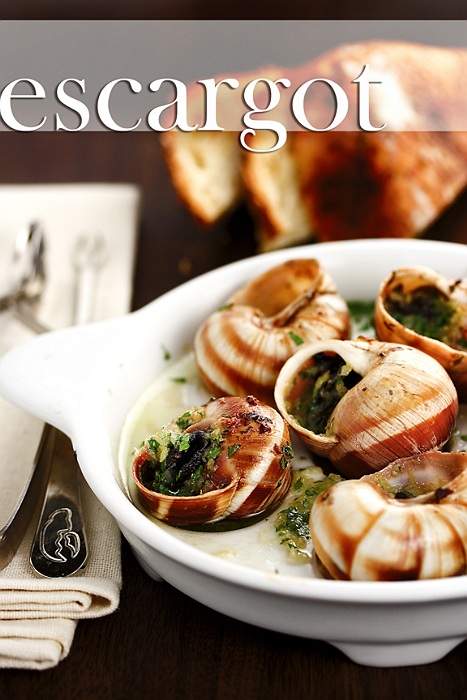
Water (g) 79g
Protein (g) 16g
Avail Carb (g) 2g
No Fibre
Fat (g) 1g
Magnesium mg 250g
Calcium 170g
Iron 3.5g
To prepare live snails for cooking –
- Remove membrane, if any, over shell opening
- Soak snails in enough water to cover. Add 1/2 cup salt or 1/4 cup vinegar for every 30 snails
- Mucus will turn water white so change the water several times in 3-4 hour soaking period
- Put snails in cold water and bring to boil. Boil for 8 minutes, drain, plunge into cold water.
- Drain and then with a needle or fork, prick snails from their shells.
- Remove intestine (yum), cut off black parts and prepare according to recipe.
- Being the only vegetarian/vegan bellysister, i can’t find it in my heart or my taste buds to bring you a delicious recipe but i assure you if you are truly keen on swallowing these slippery little suckers, google snail recipes and there you will find them in abundance!
Next we moved onto something for those of you that like a Sloe tipple or three.
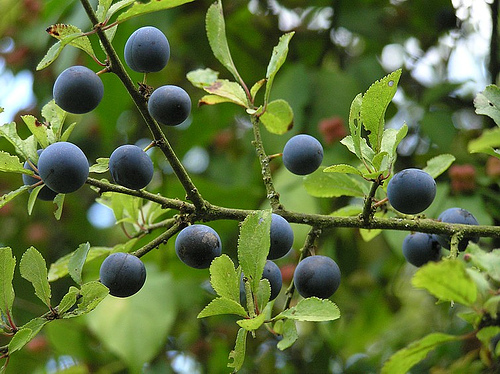
PRUNUS SPINOSA – The Blackthorn or SLOE
This is a species of Prunus, native to Europe, Western Asia and North West Africa.
The beautiful berries are the ancestors of the cultivated plum. The Sloe or Blackthorn is best known for the excellent liqueur ‘Sloe Gin’, a wonderfully pink coloured drink much favoured at Christmas time when the Berries will have infused sufficiently well with the gin and sugar.
In the British Isles, it’s shrub is most commonly found in woodlands or hedgegrows and can easily groe up to 12 foot high. Look out for flowers from March to May and pick the fruit from September to October.
When making the gin, it is important for the gin to permeate the skin of the fruit so it is worth waiting for the ‘first frosts’ to soften the skin, although ‘pricking’ the fruit is still advisible.
Folklore has it that when making Sloe gin, one should not prick the berries with a metal fork unless it is made of silver. The traditional method is to prick the berries with a thorn taken from the Blackthorn bush on which they grow.
How to make Sloe Gin
Warning – this has an alcoholic content of between 15-30% by volume.
- Berries must be ripe. In the northern hemisphere they are traditionally picked in late October or early November after the first frost of winter.
- You will need a wide necked jar that can be sealed. Each berry is pricked and the jar is filled 1/2 way with the pricked berries.
- For each imperial pint (570ml) of Sloes, 4oz (110g) of sugar is used, then the jar is filled with gin, adding a few cloves, a smaill stick of cinnamon and almond essence to taste.
- Seal the jar and turn it several times to mix then store in a cool dark place. It is turnes everyday for the first 2 weeks and then each week until at least 3 months have passed.
- The gin will now be a deep ruby colour.
- Pour the liqueur off and if you want to re use the leftover berries you may do so by infusing them in cider, making a jam or they may be used as a basis for chutney or even as a filling for liqueur chocolates.
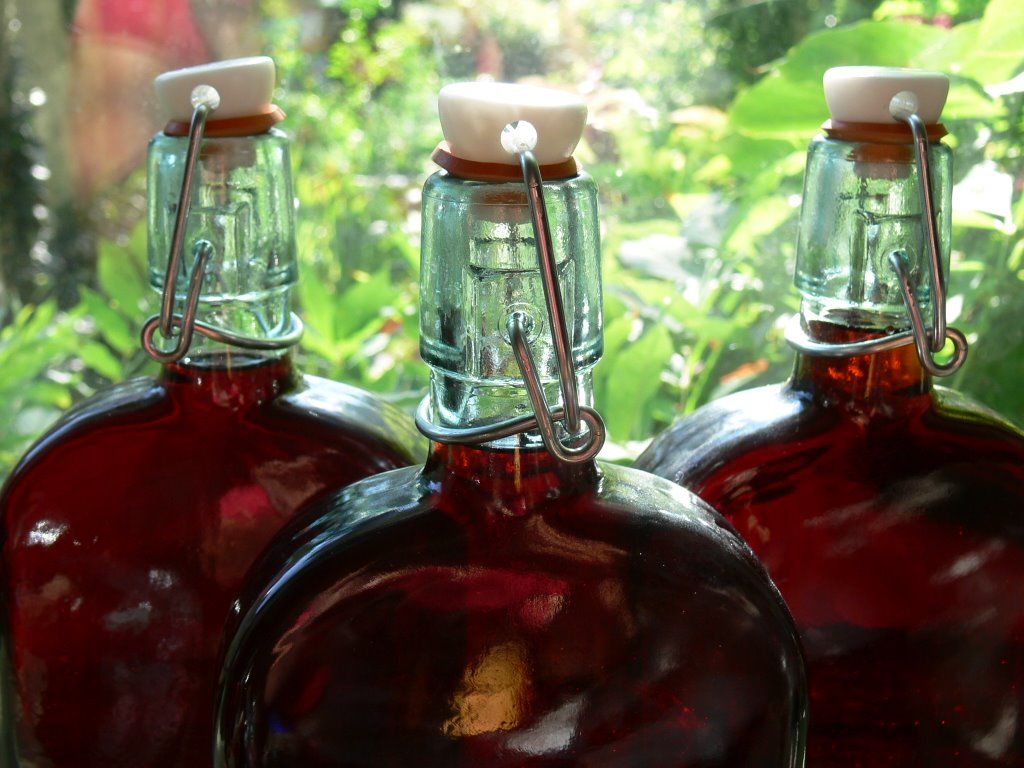
Homemade Sloe gin is a much more complex and subtle drink than that produced commercially.
All this talk of Sloe gin is making me thirsty but before i can indulge in such pleasures, i must first finish with the chatter from my studio guest this week from…
THE SLOW FOOD MOVEMENT
My guest was Vic Cossford, leader of the the Slow Food Movement in our lovely Shire, who spoke to us about philosophies, bio-diversity in this area and how SFM involves local growers and producers, progress on the petition for Raw Milk products and their (non) availability, events throughout the year, and a general clearing up of any misconception as to what exactly the SFM is all about.
Slow Food was featured on the Belly show a few years ago and you will find a link to the website on our home page, so my main aim this week was to ask about the raw milk and cheese petition and it’s subsequent progress.. or lack of it.
In Australia we are still unable to purchase raw milk or make specialty cheeses from raw milk products, although we are allowed to import other countries raw cheeses into Australia. People who are interested in purchasing, making or supplying any raw milk and cheese products may wish to sign the current petition by going to the slowfood website and showing your support.
On a separate and final slow note – 
Geir Berthelsen and his creation of ‘The World Institute of Slowness’ presented a vision in 1999 for an entire ‘Slow Planet’ and a need to teach the world “The Way of the Slow”
Professor Guttorm Floistad summarizes the philosophy stating:
“The only thing for certain is that everything changes. The rate of change increases. If you want to hang on, you better speed up, that is the message of today. It could however be useful to remind everyone that our basic needs never change. The need to be seen and appreciated. It is the need to belong. The need for nearness and care and a little love. This is given only through slowness in human relations. In order to master changes, we have to recover slowness, reflection and togetherness – there we will find real renewal”