Author Archives: sister Rasela

queenies b’day – high tea – mighty scone – miss yummy

Talofa, good morning and welcome to another edition of belly in words and pictures on this public holiday Monday. Yes, thanks to Her Majesty most of us have this slightly gloomy but still gloriously grey Monday off  because of course, it’s her birthday. Aaaahhhh ‘appy birthdee M’am. Actually her real birthday is 21st April but it’s celebrated on the second Monday of June and it got me thinking all queen like. Well, what could be more ra ra than a Cream Tea / High Tea / Devonshire Tea – whatever you want to call it, it all boils down to good old fashioned scones with jam and cream. Where did all this tomfoolery begin one may wonder ?? One shall find out if one continues to read on but just before one gets all jammed up and dreamily, creamily clotted, i must mention the live part of the show today.
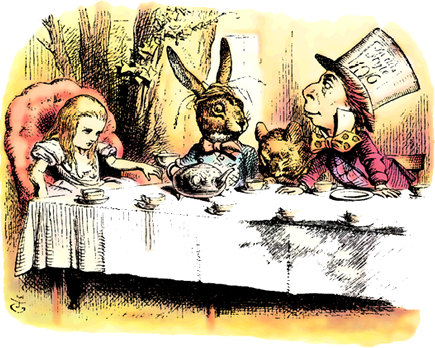
Mad belly tea party

In the studio i was blessed to be joined by a dancing spirit of heavenly gorgeousness … Miss Yummy herself Sonja Kovachevich. Already the proud, pretty and popular author of 3 ‘Yummy in my Tummy’ cook books, Sonja is in the midst of brewing up number 4 which she’s compiling with the help of some very lucky individuals all over the Shire and in fact the world. Sonja emails a new recipe each week for us to test out and give feedback on. All you need is an email address, an appetite, a passion for highly nutritious, look ma no hands easy and quick food and your belly could be reaping the scrumptious rewards.

But for now, put the kettle on, get your best china tea set out and let’s celebrate Queenies B’day with High Tea … as one does. 
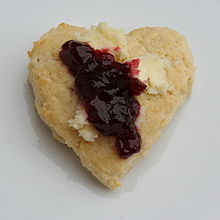
Scone Love

 I asked the maid in a dulcet tone

To order me a buttered scone

The silly girl had been and gone

And ordered me a buttered scone

Scone poetry by John Betjaman

 from “How to get on in Society”
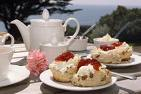
 

Sipping on High Tea would not be possible were it not for the creation of the scone, who’s pronunciation varies within the UK. According to one academic study (can you believe they do academic studies on such things ??) two-thirds of the British population pronounce it ‘scone’ to rhyme with ‘con’ and ‘John’ with the preference rising to 99% in the Scottish population. The rest pronounce it ‘scone’ to rhyme with ‘cone’ or ‘Joan’.

The scone is a small British quick bread of Scottish origin, which are popular all around the world but especially in countries of the commonwealth. It is usually made of wheat, barley or oatmeal with baking powder as a leavening agent and is a basic component of a ‘High Tea’ or ‘Cream Tea’.

The Oxford dictionary reports that the first mention of the word was in 1513 and is thought to perhaps derive from the middle Dutch dialect  ‘Schoonbrood’ (fine white bread). Schoon = pure clean and Brood = bread. It could also derive from the Gaelic term ‘Sgonn’ meaning shapeless mass or large mouthful or better still it could be based on the town of Scone in Scotland.

Terms such as ‘Rock-cakes’ ‘Fat Rascals’  and ‘Singing Hinnies’ can also be used when referring to the humble scone. You may come across triangular scones and this could be because the original scone back in the day was flat, round and about the size of a medium sized plate. After being baked on the ‘griddle’ it was then cut into triangle-like quadrants for serving. Once baking powder became available to the masses (and they started poisoning us with Aluminium) scones began to be oven baked and resemble more like what we see today.

!!! NOTE ON BAKING POWDER !!! CHOOSE ALUMINIUM FREE !!!
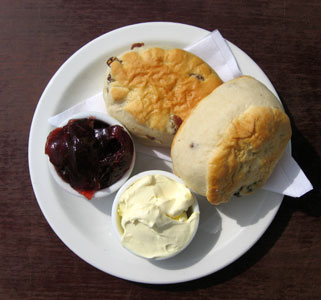
Scratch and Sniff ... Strawberry or Raspberry ??

 A 2005 report estimated the UK Scone Market to be worth 64 million pounds showing a 9% increase over the previous 5 years partly due to increasing consumer preference for impulse, convenient (and somewhat tasty) junk food !!

The baking of scones at home is often closely tied to heritage baking. They tend to be more from family recipes rather than recipe books since it is often a family member who holds the ‘best’ and ‘most treasured’ recipe.

Mummy say's "I only get half baked during the day"

Scones can be sweet or savoury and often include raisins, currants, cheese or dates. In Scotland and Ulster, savoury varieties include soda scones also known as ‘soda farls’ and potato scones known as ‘tattie scones’ which resemble small, thin, savoury pancakes made with potato flour. Potato scones are most commonly served in a full Scottish breakfast or Ulster fry.

But what’s happening in Oz … what are our scone preferences downunder ??

Well, it seems the pumpkin scone is the more well known variant here, made famous during the period when Florence Bjelke-Peterson was in the public eye … Who the heck is Flo i hear you say ?? She was an Australian politician and writer and a member of the Australian senate from 1981 to 1993 and is the widow of the longest serving premier of Queensland Sir Johannes Bjelke-Peterson. Does it sound like i know what I’m talking about ?? Well i don’t so let’s get back to scones … Flossie was born in Brisbane and apparently was partial to the odd scone or three, bringing this little dollop of dough into the mainstream and so began it’s glitzy life as the stodgy star it is today.

Gluten free, sugar free, fat free, scone free ...

 An old style of cooking scones (generally in the colder months) was to deep fry or pan fry them in dripping (???!!!) or oil. When they are cooked this way they are know as ‘Puftaloons’ … or ‘Artery Clogging Thingamijigs’

It is usually the sweet variety that you will find at an English Cream Tea Party such as the one HRH might be tucking into as we speak.

A cream tea, Devonshire tea or Cornish tea is taken with a combination of scones, clotted cream and jam. Cream Teas are offered for sale throughout Great Britain (especially South West England) and the rest of the Commonwealth or wherever someone wants to give the impression of British influence.
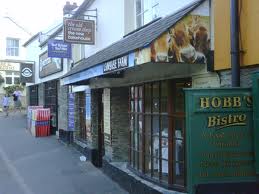
Chow down on the best scones in Town

 We’ve talked about how to pronounce them but how you eat your scone really depends on where you are …

The Devonshire method is to spilt the scone in two (very important business this is) cover each half with clotted cream and then add strawberry jam on top. Traditionally it is important that the scones be warm (ideally freshly baked) that clotted cream (not whipped) be used and that the jam be strawberry (sometimes raspberry can be used as an alternative) but butter should never be included and the tea should be served with milk. 
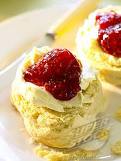
Will it be the Devilish Devonshire ...

 In Cornwall however The Cream Tea was traditionally served with a ‘Cornish Split’ a type of slightly sweet white bread roll rather than a scone. Rare to find commercially available nowdays apart from in many Cornish family homes. The warm roll is first buttered then spread with strawberry jam and finally topped with a spoonful of Cornish clotted cream.
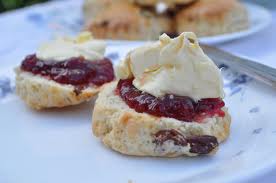
... or the Cholesterollish Cornish


 There is another variation … it’s called “Thunder and Lightening” which is a round of bread topped with clotted cream and golden syrup, honey or treacle.

Just to end the scone fiasco extravaganza, in May 2010 a campaign was launched at the Devon Country Show to have the name ‘Devon Cream Tea’ protected within European Union under “Protected Designation of Origin” (PDO) rules. The campaign was first launched following a discussion on BBC Radio Devon.

I hope you’re all mouthwateringly magnificent after that.

Speaking of mouthwatering temptations, our bellysister Sonja joined me in the studio and we proceeded to sprout into a bellylicious discussion bulging with excitement about fermentation, teaching, her books, self love, breakfasts, philosophical eating, recipes and a dance or two in the studio in between all of that. 

I love the positivity that pours out across the airwaves from Sonja. The gentle understanding we share about the relationship between what you choose to put in your mouth and what rewards those choices make. A clear and concious mind is more able to deal with the comings and goings in this life and we believe you are more attuned to your natural path in life, your goals and dreams becoming not only clearer but attainable, when your body is operating at it’s optimal peak. You will literally find yourself buzzing !! It’s such a joy to connect with Sonja and i hope this interview encouraged someone out there to make a small change that could ultimately lead to a healthier more aware exisitance.

Here is an AMAZING recipe from Sonja as promised and her contact details should you wish to further your exploration into this world of happy, harmonious, healthy and heartfelt self love, food and eating.

 Yummy Cashew and Macadamia Yoghurt

-Half fill a glass jar with equal parts raw cashews and macadamias (whole or crumbled).

-Pour in enough water to cover the nuts and a little more.

-Blend the mixture until smooth.

-Add ½ to 1 tsp acidophilus powder and any optional extras (for example stevia to sweeten) and stir.

-Cover the jar with a thin cotton cloth (muslin works best) and secure with a rubber band.

_Leave somewhere warm for 36 hours until ready to eat and then cover with lid and store in the refrigerator. Yum!!!!!


Contact Sonja – 

www.cookbooksfromtheheart.com

www.lotusyogamassage.com

miss yummy face book page

Thank you Miss Yummy for your delicious dancing, your openness and sharing, your recipes for food and for life and for joining us on belly. Also thank you to all the listeners, readers, teachers, learners, supporters and friends of BayFM. We are all here to learn from one another and our amazing community radio station is the vehicle in which we get to travel on this journey down succulent streets and aluminium-free alleys.

Here’s a bio of the yummy lady herself !!

Who is Miss yummy?

 I am an ardent culinary adventurer and tantric kitchen goddess and I am continually and deeply inspired by all things yummy and nourishing.

 Proudly gifted the title of ‘miss yummy’ by the fabulous sister Rachel of the ‘belly sisters’ I have been exploring the world of health, food and spirit for as long as I can remember.

I never stop learning and thriving and along with my own flourishing my desire to educate and support others into the wonders of a nourishing lifestyle grows and grows.

 I love life because I see the sacred in all things and feel a deep connection with all of life, i respect life as a precious gift and in this way I am able to access a deep feeling of contentment and purpose. I have noticed that having a lifestyle filled with practices and food choices that activate my life force and keep me in my centre is absolutely vital in ensuring that I can access my potential and this feeling of deep connection.

The art of living

 Living life is an art form; perhaps the most important one to master as if we get this piece of the puzzle down then everything else falls into place.

 There is very little guidance given within the modern educational framework as to how to connect to our own innate wisdom and body intelligence. As a result so many of us have not learnt the skills as to how to nourish ourselves on all levels and to find a connection to a inner source of strength, clarity and joy that we can rely on.

Many have come to accept feeling tired, stressed and uninspired as ‘normal’.

Yet it is anything but, if we feel low in our life force we create the conditions for these feelings of apathy, yet if we create the conditions for life force to circulate freely through our bodies and our awareness to be strong within our centre then our life experience is automatically transformed.

There are simple and effective ways to transform ourselves and our experience through simply activating our life force.

 We can do this through food.

We can do this through breath.

We can do this through conscious movement.

We can do this through various kinds of meditation.

 And In fact we need to combine all of these into our daily lives.

No matter our personal circumstances this is absolutely possible.

And in fact it is absolutely necessary if we are going to experience optimum health and step into our full potential.

 I have spent the last 10 years exploring and practicing many ways to invite and activate well-being and connection. I have been able to creatively design a diet and lifestyle that supports my growth, health, emotional well being, clarity and vitality and I feel it is my purpose to share my knowledge and help guide others towards establishing their own perfect version of a nourishing lifestyle.

 The books

 It all started with the birthing of my ‘yummy in my tummy’ cookbooks. In which I poured the fruits of my continual culinary exploration along with a large dose of love and spirit, with the intention to share my knowledge and enthusiasm.

I have been selling these wondrous original spirit filled cook books for about 6 years and have received amazing positive feedback by people who have been inspired not only by the recipes but the fun, easy going approach to food that the books encourage.

 Feeding ourselves should be fun and eating healthy food should be a joy, the books give you the practical guidance to get started on your own culinary journey or provide some great ideas for those already seasoned foodies out there.

 For more about the books go to my website www.cookbooksfromtheheart.com

To order your copy contact me directly at sonjalala@hotmail.co.uk

 What I am up to now ….

 I am currently working on my latest book ’quick and easy vegan meals’(please e mail me if you would like to be on my list of samplers and receive a new yummy recipe in your in box each week).

And I continue my training both official and unofficial in yoga, personal development energy work, healing and nutrition.

I immerse myself in this exploration from where I dwell in the magical Byron shire of northern NSW where the earth energy is very potent and deep healing is part and parcel with daily life.

And the food here is amazing! I am a regular at the local farmers market and spend hours upon hours in the kitchen cooking and fermenting and experimenting up a storm and it never gets boring!

What I am offering

 As a natural progression from my books I am exploring different mediums for sharing the spirit of self love through food as well as the kind of valuable lifestyle skills that can support us in being our most amazing, energized, loving, inspired, productive and deeply content selves.

 I write a monthly full moon blog with a theme and a recipe, check it out through my website or on facebook in Miss Yummys Notes.

www.facebook.com/pages/Miss-Yummy/162870690393973?sk=notes

 I am co-hosting a women’s healing retreat with Helen Rubil at the magical Wangat Lodge in October which is very very exciting and is going to be very special.

http://www.facebook.com/event.php?eid=121986154555159&ref=ts

 I am offering my services as ‘hire your very own cooking goddess’ at retreats across Australia.

Check out the comments from previous retreat attendees-

 http://www.cookbooksfromtheheart.com/index.php?option=com_content&view=article&id=4&Itemid=58

 Also:

Yummy vegan cooking course at Byron community college

 Well making yummy food certainly isn’t rocket science (my sister is the rocket scientist so if that Is what you want to learn she is your woman not me). Yet many people do not quite know where to start with creating healthy meals that do not contain meat, dairy and processed food.

These 4-week courses that I am offering through the community college are designed to equip you with lots of good simple ideas on how to eat delicious sugar, wheat and dairy free food without leaving out the all important yummy factor.

 Not only will the course be a guaranteed good time in the kitchen exploring different tastes but it will set you up with some fabulous recipes under your belt to work into your life.

 The focus is on practical, nutrient dense deliciousness, the cost is low and so come along whether you are a seasoned foodie or if you were like me in my pre-kitchen-goddess-era when all I could cook was pasta with pre-made pasta sauce, whatever, you are welcome, it is going to be fun. Here are the details-

11CK083  Yummy Vegan Cooking                                         

 This will start on: Tue and run for 4 sessions from 30/8/2011 to 20/9/2011 between 5:30 pm and 8:30 pm

11CK084  Yummy Vegan Cooking                                        

 This will start on: Tue and run for 4 sessions from 18/10/2011 to 1/11/2011 between 5:30 pm and 8:30 pm

 Both courses will be held at MULLUM. PRESBYTERIAN HALL 106 STUART ST

 Enroll through the college-

 www.byroncommunitycollege.com.au

And if you need a little extra help or if you are one of those ultra busy types needing a little more personal support here is what else I am offering……

 One on one sustenance support

 Yummy days

 I am proud to offer one-day one to one programs designed to give participants enough knowledge and practical skills to revolutionize their relationship to food and create sustainable ways to eat the best foods for them, quickly and cost effectively.

Good nutrition is so much more then calories and macro nutrients, it is about knowing your own personal constitution, how to nurture balance within that and within the greater environment, how to fill up on primarily nutrient dense and life force infused foods and how to tune into the subtle element of the eating process.

 This transformational one-day course provides personal tailor-made support to create the ultimate meal plan for you.

Its fun and informative and will set you up for eating well and eating in harmony with the elements, for life

 The 6 month program

 So many of us are dealing with issues such as low energy, stress, food cravings and issues etc many of us have come to accept a less than fulfilling life as ‘normal’.

Well I beg to differ, I firmly believe that we all have the opportunity to feel vibrant and deeply connected, that it is just a matter or enquiring into what in our life prevents us from that and what we can do to encourage that.

Often we get stuck in a small view of life and this is when unhelpful habits can take hold of us, if we are able to get a better view of the greater picture then insights and the motivation to act in a different way come naturally.

But to make changes, however small, often we need support, we need someone who believes in us and encourages us and can help us learn the skills to create a different way of being.

 I am here to guide you towards a view of that bigger picture so that you can experience the intrinsic wonder of who you are within a sustainable lifestyle that keeps on bringing out more and more of who you can be.

It is extraordinary what can happen when we ‘step up’ and make the intention to live a full and juicy life, whatever that means to us.

 For those people seeking continued support for implementing a healthy lifestyle and working with any issues that arise then the 6-month program provides the support for creating lasting change and ever flourishing quality of life.

 The program consists of 2 skype sessions a month and continual support, education and assistance to help guide you along your own transformational journey to vital health and realization of your potential.

 I sincerely encourage anyone who has been feeling the yearning to make their own health and well being a priority( in order to deepen the quality of their experience) to consider taking this potentially life changing offer of assistance.

 To organize a free consultation you can go to my website and send me a request:

 www.missyummy.healthcoach.integrativenutrition.com

 Food for thought…….

 Have you had your fair share of bliss?

Do you find that inhabiting your body is a joy?

Do you feel deeply inspired by life?

Can you sense clearly the difference between the guidance from your head and your heart?

Do you know what your gifts are and know how to offer them?

If not, why not and would you like to take the time to explore this?

Thanks Miss Yummy … you’re doing real good in the world !!

With dollops of love and sweetness,

Sister R    



The Story of Jory…

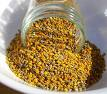
Once upon a time in the small Northern NSW village of Byron Bay, there lived a golden man who was gratefully known for his dealings in little golden pellets of pollen. Now these were not just your average pellets of gold, no no no … this particular gold carried with it stories of miraculous life saving qualities and nutritious benefits that far outweighed the average claims from a bottle of multi vitamins or even any food source on the market now days. The story of Jory goes a little something like this …

Jory was born in the U.S.A under the shadow of the Pentagon and spent the first part of his life witnessing his parents consume deadly cocktails of prescribed drugs that were washed down with litres of alcohol behind clouds of nicotine smoke, in what was considered ‘the norm’ … back then. The ‘norm’ for Jory went on to be the loss of both his parents due to toxic overload in their early/mid 30’s but before their passing they managed to instill in Jory the need to find a better way to live.  

This took Jory around the world and back again on his own discovery of life, food, nutrition, facts, fasts, dietary information and some ‘Waui Maui’ cultivation to name but a few mind altering adventures.  Saving Australia til last because he felt that it was the safest and best place to be (before the government sold us out and allowed the coal stream gas miners to invade us) and having come to his own conclusions that “Jarrah” Bee Pollen was the best food source in the world to live on, he decided he wanted to spread this golden magical message across our fair shores. This decision was coupled with the fact that West Australian Pollens, in his opinion, were the world’s most vibrant in terms of  ‘aura’ as seen and tested in his own extensive research and through “Kiruan Photography” (photographs of the aura). He eventually settled in Byron Bay some 27 years ago and has survived on a healthy income from moccasin making, bee pollen dealing and various other creative and captivating hobbies.

But besides all this, you may be wondering … “What is Bee Pollen” and “How can i get my hands on the gold ??” Well me hearty’s … look no further for all is about to be revealed !!

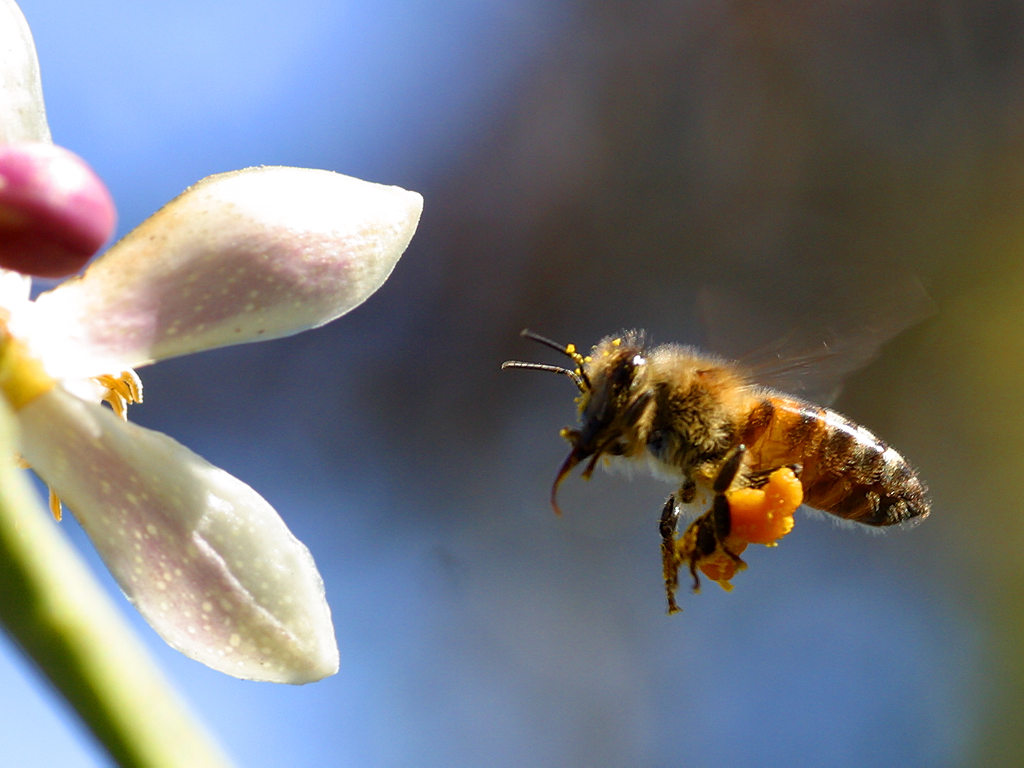
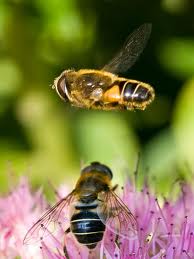
Jory did explain one thing to me that i was unsure of up until this interview and that is that the pollen that is collected by the bees is the sperm and the ova of the flowers about to be brought to life. It is carried on the back legs of the ‘bees knees’  as seen in the stunning picture above. Incredible isn’t it?

So energetically, which is where alot of Jory’s descriptions came from as i spoke to him, it carries the mammoth potential to become a life … alive !! Be it a plant, a flower, a tree, a bush, it’s all there in the pollen, captured in it’s purest essence and delivered to us by this charmingly sweet man.

The following is copied from Jory’s handout but hearing him talk about it in the studio was far more exciting and believable, especially when i had to remind myself that this was a man about to turn 60 sitting across from me who seemed as young and energetic as a boy half his age or less. A beautiful thing to witness in this world is the retainment of a youthful soul.

From Jory –

BEE POLLEN – THE WORLDS RICHEST SOURCE OF AMINO ACIDS

Amino acids are the building blocks of protein. Bee pollen has been found to be one of the world’s richest sources of amino acids with ‘Rare Australian Super Pollen’ being the most nutritionally potent and bio-available form of the product yet discovered. Instantly absorbable, clinicians have detected Bee Pollen in patients spinal fluid within thirty minutes of sub lingual (under the tongue) application !! Incredibly, bee pollen is richer in proteins than any animal source available.

Bee pollen contains more amino acids than beef, eggs or cheese of equivalent weight. It is important to know that bees recognize and select pollens which are rich in nitrogenous matter (amino acids) and leave poor quality proteins behind.

Not only does bee pollen contain a complete compliment of nutrients, it’s glucoside content helps transport these nutrients into the bloodstream.

Bee pollen contains folic acid along with an impressive vitamin array which cannot be artificially duplicated in the laboratory. It’s chemical make up is so complex that synthesising it artificially has eluded even the best modern day technology.

Bee pollen is so impressive that it contains many nutrients not found in animal products.

Linolenic acid is the only fatty acid essential for human nutrition that cannot be manufactured by the human body. Bee pollen contains linolenic acid in relative abundance.

A chemical analysis of Bee Pollen reveals it contains every nutrient required to sustain life.

Bee Pollen contains an unbelievable concentration of vital elements. It seems to be the most complete food found in nature. Some experts believe it could be the answer to world hunger !!

The story of Jory draws to it’s conclusion now with the invitation to sample some pollen and decide for yourself if it resonates with you.

!!! NB: IF YOU HAVE ALLERGIES WHEN IT COMES TO BEES AND THEIR PRODUCTS – SEEK ADVISE FIRST !!!

The golden man is contactable on 0421 509 291 and is so well known around town that if you ask anyone that sit’s outside one of our many fabulous organic cafe’s in town, they will be sure to point you in the right direction.  Join the buzz of the bay today and say g’day. Don’t be afraid to ask about what you don’t know about, we are all here to guide and teach one another.

With Love and Pollenation,

Sister Rasela

 Remember to take care of your own amazing planet – YOU !!

The Bees Knees … Drizzling your ears with sweet stories of Honey

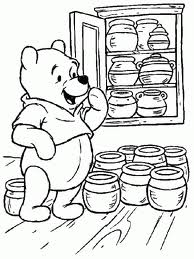
“Well” said Pooh, “what i like best” – and then he had to stop and think. Because although eating honey was a very good thing to do, there was a moment  just before you began to eat it which was better than when you were, but he didn’t know what it was called … 


Honey headed anticipation...


Talofa and welcome to the sweetest show on the airwaves, the tastiest radio in the Shire, where this week your ears will be drizzled with sticky stories of honey love.

The word honey along with variations like ‘hunny-bun’ ‘honey-pot’ and the abbreviated ‘hun’ have all become terms of endearment in most of the English speaking world. In some places it’s used for loved ones yet in others such as in Southern USA it can be used when addressing casual acquaintances… or even strangers !

In 2005 China, Argentina, Turkey and USA were the top produces of natural honey, according to reports from the Food and Agriculture Organisation of the United Nations (FAO). Significant regional producers include Turkey (ranked 3rd worldwide) and Ukraine (ranked 5th). Mexico is also an important producer of honey, providing  10% of the worlds supply. Production began there in the early 20th century and on the Yuctan Peninsular most producers are small family operations who still use traditional techniques such as moving hives to take advantage of various tropical and sub tropical flowers.

Do bees really have knees ???

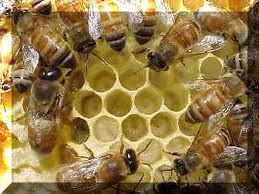
Honey is made by the honey bee – a subset of the genus APIS. Honey bees represent only a small fraction of the approximately 20,000 known species of bees. In the hive or in a wild nest, there are 3 types of honey bee. A single female queen bee, a seasonal but variable number of male drone bees to fertilize new queens and some 20,000 to 40,000 female worker bees. The worker bees gather sugar rich flower nectar which they carry in the pollen baskets on their back legs. They take 28 days to grow from a larvae to a worker bee and will then spend their entire life working … (no fun !!) They do not lay eggs or mate, no, no, no … instead  they build the comb from wax extruded from glands under their abdomen, they clean, defend and repair the hive as well as feed the queen, the larvae and the drones. They constantly gather nectar, pollen, water and propolis. They ventilate, cool and heat the hive to help maintain the constant ideal temperature of 34.4*C. They do this by depositing water to cool warm areas and fanning their wings for water evaporation. They also huddle together in other areas where warmth is needed.

Honey is created by the bees as their food source for energy. The nectar is regurgitated in the bees ‘honey belly’  a number of times until it is partially digested. The bees all work together with the digestion and regurgitation until the product reaches it’s desired consistency and quality. This is when it is stored in honeycomb cells.

Do not attempt to comb hair with this !!

After the final regurgitation the honeycomb is left unsealed, however the nectar is still high in both water content and natural yeasts, which if left unchecked would cause the sugars in the nectar to ferment and spoil.  The incredible process continues therefore, to protect the honey and create a seal … but how you may well ask ??  The bees inside the hive fan their wings, creating a strong draft across the honeycomb which enhances evaporation of much of the water from the nectar. The reduction in water content raises the sugar concentration and prevents fermentation.

num num num

“When late morning rolls around and you’re feeling a bit out of sorts, don’t worry, you’re probably just feeling a little eleven o’clockish”  Winnie the Pooh

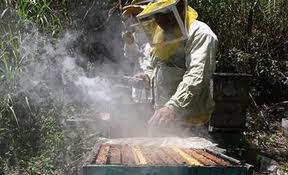
Removal and collection of the honey is typically achieved by using smoke from a bee smoker to pacify the bees. The smoke causes the bees to attempt to save the hive from a possible forest fire and they become far less agressive. The honeycomb is removed from the hive and honey is extracted from the comb and usually filtered … keep reading to discover the many differences in extracted honey.

Schmokin'

Sweet as bro –

Honey gets it’s sweetness from monosaccharides fructose and glucose and is about as sweet as granulated sugar. The benefits over sugar are that it contains trace amounts of vitamins and minerals and in it’s raw form is less processed than most other sweetners. Honey also contains tiny amounts of several compounds thought to function as antioxidants, including vitamin C. The specific composition of any batch of honey though, depends on the flowers available to the bees that produce the honey.

What am i buying ??

Generally honey is bottled in it’s familiar liquid form but it is also sold in other forms and can be subject to a variety of processing methods which produce any of the following – What’s your choice ???

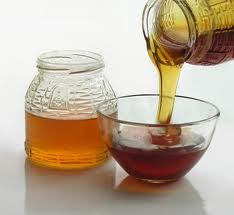
Crystalized Honey – Where some of the glucose content had spontaneously crystalized. Also called ‘granulated honey’. Honey that has crystalized over time in the home can be returned to it’s liquid state if stirred in a container sitting in fairly warm water.

Pasturized Honey –  Has been heated in the pasturization process. Pasturization destroys yeast cells. It also liquifies any micro-crystals in honey, which destroys the onset of visible crystalization. However !!! Excessive heat exposure also results in product deterioration as it reduces enzyme activity thus reducing it’s therapeutic benefits. Heat also affects it’s appearance (darkens natural colour), taste and natural fragrance.

Raw Honey – Pure Honey as it exisits in the beehive or as obtained by extraction, settling or straining, without adding heat. Raw honey contains some pollen and may contain small particles of wax. Local honey is sought after by allergy sufferers as the pollen impurities are thought to lessen sensitivity to hayfever.

*NOTE ON ALLERGIES AND HEALTH HAZARDS*

Because of the natural presence of BOTULINUM ENDOSPORES in honey, children under the age of 1 year should not be given honey. The more developed digestive system of older children and adults in general destoys the spores. Infants however can contract BOTULISM from honey

Strained Honey –  Sounds a bit uptight but it is what it says. Passed through a mesh material to remove peices of wax, propolis and other defects without removing pollen, minerals or other valuable enzymes.

Ultrafiltered Honey – Heats honey to 65-77*C so it more easily passes through a fine filter to remove all extraneous solids and pollen granules. Prefered by supermarket trade as it is clear and has a long shelf life. It’s pretty much lost all it’s natural goodness.

Ultrasonicated Honey – Processed by form of ultrasonification … yes yes, but what does that mean exactly ?? It’s a non-thermal processing alternative that destroys most yeast cells but the ones that do survive usually loose their ability to grow. Hmmm, sounds suss to me. It reduces the fermentation process substantially (for longer shelf life) and works at around 35*C. It is still processed and tampered with.

Whipped Honey – I’m sure there have been many a kinky thing done with honey but this type is also known as creamed, spun, churned or candied and has all been processed to control crystalisation and produces something for those of you that like it smooth with a spreadable consistency.

Dried Honey – Has moisture extracted from liquid honey but not by the bees flapping their little wings ten to the dozen. The process may or may not include the use of drying and anti-binding agents and produces a completely solid, non-sticky honey. Well where’s the fun in that ??? It is commonly used to garnish deserts. Oh, yummy, there’s the fun.

Comb Honey – Not a new kind of hair product. This is honey still in the hardworking honey bees wax comb, which is traditionally collected by using standard wooden frames and the comb cut out in chunks before packaging. In India, honey is harvested from forests in the bees natural habitat. It is said that the honey will be consumed by the bees on the new moon day so it is cultivated the day before.

Chunk Honey – Is this what you’ll be called if you eat too much ?? … No. This is infact honey that is packed in wide mouth containers consisting of one or more  peices of honeycomb immersed in extracted liquid honey, mmmmmm sounds delightfully delicious does it not ?

Too much of a good thing is as bad as too much of a bad thing (unfortunately) ...

“It is more fun to talk with someone who doesn’t use long difficult words but rather short, easy words like, ‘what about lunch ?’ ” Winnie the Pooh

Once you have chosen the honey of your dreams, you might like to know how best to preserve it. Because of it’s unique composition and chemical properties, both honey and objects immersed in honey have been preserved for decades or even centuries !! The key to preservation is limiting access to humidity. If exposed to moist air, it’s chemical structure means that it is able to pull moisture into the honey, eventually diluting it to the point where fermentation can take place. Sealed in honeycomb cells is ideal but at home it generally should not be kept in metal containers because the acids in the honey promote oxidation of the vessel. Traditionally it was stored in ceramic or wooden containers but today glass or plastic (yuk) is favoured.

WARNING - Honey addiction can lead to sticky situations like 'dry cupboard syndrome'

Excessive heat has detrimental effects on the nutritional value of honey. Heating up to 37*c causes loss of nearly 200 components, some of which are antibacterial. Heating up to 40*C destroys invertase – an important enzyme that helps in the breakdown of sugars. At 50*C the honey sugars caramalize. Sounds heavenly … but you’ve killed it !!

Regardless of preservation, crystalization may naturally occur over time. This does not affect the flavour, quality or nutritional content of the honey, though it does affect the colour and texture.

Indicators of Quality

High quality honey can be distinguished by fragrance, taste and consistency. Ripe, freshly collected honey should flow from a knife in a straight stream, without breaking into seperate drops. Honey should form temporary layers when poured, layers that dissapear fairly quickly indicating high viscosity (thickness). If not, it indicates high water content and is not suitable for long term preservation. In jars it should appear as pure, consistent fluid and should not set in layers.

Go with the flow

History in Medicine

For the last 2,700 years honey has been used by humans to treat a variety of ailments through topical application but only recently have their antiseptic and antibacterial properties been chemically explained. Some wound gels which contain antibacterial raw honey and have regulatory approval are now available to help treat drug resistant strains of MRSA – METHICILLIN RESISTANT STAPHYLOCOCCUS AURES – which is a bacterium responsible for several difficult to treat infections in humans. It had developed a resistance to some anti-biotics which include Penicillin. MRSA is eapecially troublesome in hospitals where patients with open wounds, invasive devises and weakened immune systems are at a greater risk of infection than the general public.

A quick buzz on ‘MANUKA HONEY’ (Leptospermum Scoparium)

Manuka collector

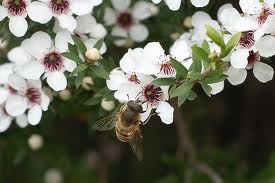
For the past 28 years, honey researchers at the university of Waikato in NZ have been investigating what many local New Zealanders have long accepted as common wisdom … that their local Manuka honey is a  superior treatment for wound infections (amongst other things). Manuka honey is gathered from the Manuka bush which grows uncultivated throughout NZ. A honey with the same properties has more recently been discovered right here in Australia. Leptospermum Polygalifolium, better known as JELLYBUSH HONEY also grows uncultivated in certain parts of this country but has not been around for long enough that we are able to bring investigative facts to you yet … and being a Kiwi i am always going to sway the Maunka way !! Both of these honeys contain high levels of additional non-peroxide antibacterial components that make them very unique. Incredibly, after 28 years of study on Manuka honey at the Waikato University,  researchers are still unable  to identify the specific synergistic component that is responsible for more than doubling the antibacterial activity within Manuka and Jellybush honey.

I encourage you to delve furtherand stick your nose into the honey pot of natural food products to enhance your health and wellbeing. I hope that the information i provide inspires you to learn more about what it is you eat, where it comes from and  ultimately what is best for YOU as an individual because it’s important to remember that we are all individual and so are our dietary needs.

Time to buzz off now ...

Thanks once again for listening, reading and keeping the fire in the belly burning as we enter into the cooler months. So much more to come so stay tuned !!

Honey dripping love,

Sister Rasela

PLAYING WITH FIRE – Interview with Gus and Rebecca – growers, suppliers and manufacturers of Native Australian Foods – Surprising what’s right under our noses…

PLAYING WITH FIRE in the studio this morning… better warn the fire brigade.

HOT STUFF !!

We were lucky enough to be graced by the presence of Gus Donaghy and Rebecca Barnes on belly today. Too bad if you missed the chat but don’t despair, i’ll fill you in…

Gus and Rebecca are growers, suppliers and manufacturers of award winning Australian native foods and operate under the codename – PLAYING WITH FIRE.

Playing in the bush is where it all began actually, as they stumbled across some delicious wild berries on some land they were exploring. It made sense that with the right amount of love and direction, those wild, unruly delicious berries and many other native fruits, nuts, seeds and foods could be a source of seasonal pleasure that provide us with all the purest  nutrients nature intended.

ssssshhhhh just listen .....

Foods – from the lush tropical and sub-tropical rainforests, coastal sand dunes, cool mountains and arid desert – are growing in their natural environment yet we are blinded by flourescent lights and plastic coverings that protect our chemical laden food and we somehow fail to notice that we have forgotten what real food actually is…

I know where i'd rather be...

LOCAL !!! ORGANIC !!! WHOLEFOODS !!! NATIVE !!! SEASONAL !!! …

… this is the food we should be eating ! Spray free, loved and nutured… any or all of the above. Our bodies will crave what grows around us if you take the time to stop and listen. Maybe you can stop and listen to what Rebecca has to say about what it is they do at one of the markets. I found her at the Bangalow weekend market which is the 4th Sunday of the month.

In the meantime though i can fill you in on a thing or two…

All of their products – which range from Rainforest Fruit Jellies to Tea Infusions to Indigenous Spices and Flavourings to Gourmet Treats, oh and don’t forget the rainforest produce such as Davidsons Plums and Bunya Bunya Nuts – are as nature created them. Free of genetically modified ingredients, artificial colours, flavours or preservatives and highly nutritious. We are so blessed in this area with the quality and integrity of our food producers.

One of my favorite things about these guys is that they are so big on the educational side of things. Knowledge brings awareness, brings change, brings inspiration to people so that they may open their eyes and notice more, like what is around us on the very land we stand on. Get in sync with it. If you want to learn more, t hey offer a Plantation Consultation Service if you are a property owner wishing to investigate further into what might be growing or what you may choose to plant on your land in the future.

They’ve been PLAYING WITH FIRE in schools too by offering an Educational School Presentation where children from primary to high school are given a constructed memorable introduction to experience our local native food plants.

… and if all of that wasn’t enough they also offer Plantation Tours which is a 40 minute wander through mature plantation trees, learning while exploring different smells and tasting seasonal produce mmmm… did someone say tasting ??

These guys have such a great website. Find out about the significance of the name  PLAYING WITH FIRE and how it relates to the stories of the Aboriginal people. Let your mouth water as you see what’s on offer from the land around us…  go in and warm your self up !

Davidsons Plum

www.playingwithfire.com.au

Phone: +61 2 66887 9254

Email: enquiries@playingwithfire. com.au

Come on baby light my fire !!

Flaming love,

Sister Rasela

Omid Jafarri in the RAW & Do Terra Oils

“Good chefs, like artists, are visionaries. You have a vision of the taste, the look, the smell of your masterpiece, you hold it in your mind and make it materialise” Omid Jafarri

On the belly menu today – An interview with “Botanical Chef” Omid Jafarri who’s culinary travels around the globe inspired and refined his apprecialtion for our planet’s freshest, local and organic ingredients. From such a fine foundation, Omid honed his flair for creating subtle dishes that deliver full flavour, optimum health benefits and exquisite visual beauty … and so Botanical Cuisine was born.

This telephone interview is as much about the philosophy of clean, simple, nutritious food as it is about the life-giving creations you could learn to make yourself. This is raw food simplified, with minimal use of nuts and seeds and no dehydrating techniques apart from the use of the sun in “sunblushing”.

Omid believes that if we continue to mimick our past habits with what we consider “comfort foods” ie. replicating cooked recipes such as quiches, burgers, pizza and sweet treats, then we are not opening fully to the possibility or truly embracing the raw food philosophy.

Omid Jafarri

Currently based in Melbourne Victoria, Omid showcases his cuisine delivering the Botanical Cuisine Tour, The Botanical Way Course, via his website Tried.Tasted.Served, and on his blog Shiitake. Dearest to his heart however, is the charity he is the chief Fundraiser for – the TTS Bali Project, which is dedicated to educating and supporting the most disadvantaged children of Bali and to creating educational projects that incorporate organic and sustainable living. A percentage of all of Omid’s Botanical Cuisine Tour and Botanical Way course profits will be donated to the TTS Bali Project. Check him out and change your life.

Edible artwork

From edible artworks to ingestible aromatherapy oils … we’ve got it all going on here on belly !!

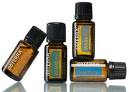
My live guest in the studio this week was Anna Parker who enlightens us on every occasion but this week she discussed the creation and benefits of the purest blend of organic aromatherapy oils that have ever been marketed. DoTerra means ‘Of the Earth’ and  the doTerra essential oils are CPTG (Certified Pure Therapeutic Grade). This means that they are so pure you an ingest them.

!!! NB: TO ALL OF THOSE WITH AN OIL BURNER AT HOME !!! Before we go any further, DO NOT – i repeat – DO NOT even think about guzzling down your aromatherapy oils !!! These are very specific and special oils and Anna taught us about the differences, the health benefits and ways to use them.

One of the most interesting facts i learned today was that any aromatherapy oil that is bottled and sold as ‘Pure’ need only be 3% pure essential oil. There is no governing body to monitor and test the quality of oils. Much like the bottled water industry. Watch what you are spending your hard earned money on !!!

Anna is more than happy to enhance your life with these oils and would love to introduce you to their amazing qualities and benefits. There are massage and training sesions available along with bargain introductory offers. Email her at anna.sophiawisdom@gmail.com or check out the doTerra website for yourself – google doTerra.

From Anna

Hello Folk who have expressed interest in Doterra,

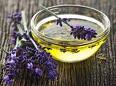
To make things easy I have attached the file again for this promotion of 3 oils and a DVD for $10 from Doterra which includes shipping from USA.  All you have to do is open the attachment , click view video which opens to a page where you don’t have to view the video if you don’t want to , but where you can fill out your details with  the  promotion code 42995 , make the payment with credit card and presto you will be sent 3 beautiful , very useful oils for $10: lemon, peppermint and lavender.

It’s too good to pass up and you can share this offer with as many friends as you like.

Here are some uses for the oils

Lavender; bruises, anxiety,cuts,depression,earache,insect repellant, insect bites, mental clarity, pain, scarring and skin problems, sttress, tension, sports injuries1

Lemon: concentration, depression,mental clarity, dispels odors, weight loss, detoxifier, , cleanser for home

Peppermint: concentration, digestion,fever,headaches,nausea, alertness,pain,clears sinuses,

Note: CPTG (CPTG certified pure therapeutic grade) Essential oils  can penetrate the cell membrane to fight bacteria and viruses where antibiotics can’t!

 Any questions give me  a ring on 0409224286.

Blessings, Anna

Download Australia...pdf (245.4 KB)
Australia…pdf
Download(245.4 KB)

That’s all folks !!

Sister Rasela

“Voices of Locals” and a paddle up the Root Canal.

Talofa! Sister Rasela here to paddle you through another tasty Belly show just in case you missed it the first time round, floatin over the airwaves, across this stunning Shire of ours.

If you’re here because something you heard on the show left a rumble in your Belly, even better!! It’s good to ignite the hunger pangs of wonder. Have you ever stopped to wonder… what am i really eating? Take control of your own life, your own body, your own thoughts, your own FOOD.

I’ve started to notice the otherwise unnoticeable since applying what i learned in Nutrition into my own life. The unmasking, the fog that clears, the clarity that  appears. The balance that grounds me now. I wouldn’t be able to preach what i didn’t truly and wholeheartedly believe if i had not made myself the study and begin to listen to my body, starting to eat more of what is grown on the land around me and living as close to ONE with NATURE as possible while keeping the balance in all of life’s enjoyments.

It’s been great to get to the point of so adamantly believing that the crap that most nutritionally defunct processed food is laiden with, is not only addictive but also hugely mind altering. This causes a rather large majority of people to act and react in ways they may not naturally.  What makes it ok to be the equivalent of ‘spiked’ by the local supermarket?

Stick to the FABULOUS FARMERS MARKETS around the Shire where your food is spiked with nothing but LOVE… what would you rather put into your magnificent body? Help it out, a little or alot. Whatever you can manage at the time. Just try to make it more GOOD that bad.

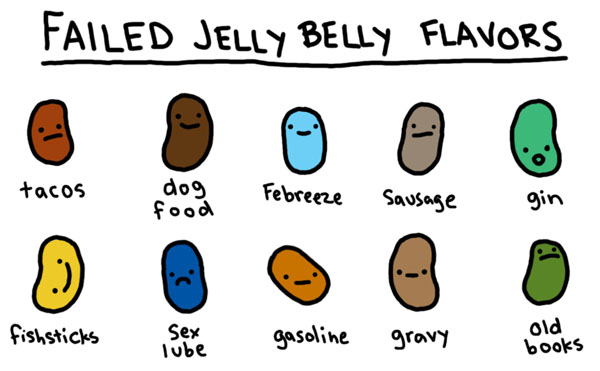
I reckon the Belly Sisters should bring out some new BELLY BEANS!!


I started the show today with the sounds of Mullum meandering in the rural regalness of the Friday farmers markets.  I strolled around asking the question – If you only had $10 to spend on food all day, what would you buy?

I asked this partly because i’m currently trying to stick to spending no more than $10 a day on food having listened to stories like  “SUPERMARKET SHELVES ARE BARE” following the devastating floods in Queensland recently, I asked myself the question… How much do you really NEED to survive? The answer is actually not that much if you’re not addicted to anything.

It really makes you STOP and think about what you’re going to eat for the day. Start by asking… Am i really hungry? To wait until you are actually hungry and to know that this is your one good meal of the day makes it taste soooo much better. Plus, your mouth waters for a reason… it is the FIRST STAGE of DIGESTION as your body starts preparing to accept food. A meal is truly satisfying if you choose the things your body naturally craves. To know what these things are means to listen to it, not overrule it.

I’d love to discover a way of posting recorded interviews such as this one which is just so refreshing to hear. Mullum market has such a beautiful feel to it as the majority of folk wander, half smiling in the knowledge that we are living a truly blessed life up here in Paradise Shire. Such an abundance of fresh foods served to you by the very hands that prepare, grow, produce and sell the goodies.  The idea wasn’t to find out exactly what foods people chose, but to make people stop and think about how much they are spending or over spending.

Thanks to everyone at the market that participated. It was lovely to meet new people and spread the LOVE across the Shire.

You also missed out on the next interview which was set at the opening of a Raw Food outlet in town almost a year ago now. We were spoiled raw rotten with all the equisite delights and i mingled with an interesting crowd and came across Sharon who i first approached earlier in the night because she had something lovely about. I had asked if she would be interested in telling me her story. She insisted that it was all about her son and that he was the more knowledgeable one and suggested i ask him. He is a beautiful boy glowing with health and gentle in nature but not too keen on speaking his inner feelings into a microphone. It’s confronting to alot of people and i understand that but later in the evening Sharon came back to me and happily informed me that she was now ready to have a chat. We found a bench outside and with passionate spanish guitar acoustics reverberating around us, Sharon shared her story about starting out on a Raw Food diet.

The most endearing thing about this interview is that after 50 odd years of living one way, Sharon is now experimenting in a world that is providing her with so much more energy and balance in her life. It’s great to hear her so excited about the changes she is making and bringing into others lives. Sharon was sure to point out that she is not 100% raw, at which point we agreed that changing one thing at a time and taking it slow is a far easier and more sustainable way of doing things.

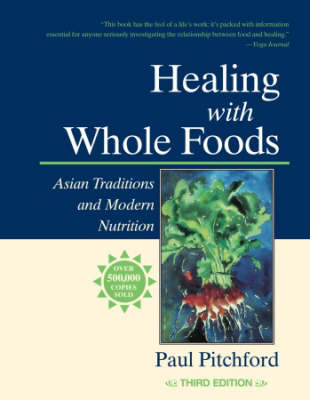
I finished this show with some information on Root Canal Treatment and how it affects your health. I shall return at a later date with that information but if you get tired of waiting then check out the book (my bible) HEALING WITH WHOLE FOODS By Paul Pitchford. Asian Traditions and Modern Nutrition.

The book that changes my life.


“This book has the feel of a life’s work: it’s packed with information essential for anyone seriously investigating the relationship between food and healing” – Yoga Journal

Healing with Whole Foods brings together authentic traditions of Asian medicine with current Western research on health and nutrition to create the most detailed sourcebook available on planning and preparing an optimal diet. I highly recommend it as did all of my nutrition tutors at college.

Well, that’s my lot for now. I’ll be bcak on Belly on Monday 28th Feb where i will have more tummy rumbling rambles for you to devour.

Be GOOD to your Belly’s and don’t panic – if it’s ORGANIC!!

Sista R

The Hangover Belly….

So, why do we get hangovers? How can we avoid them? How bad can it get? And what can we do when we have one?


The term hangover was originally a 19th century expression describing unfinished business—something left over from a meeting—or “survival.” In 1904, the meaning “morning after-effect of drinking too much” first surfaced.

In Norwegian, veisalgia derives from kveis (uneasiness following debauchery) and the Greek algia (pain).

THE QUESTION… How do I know if I have a hangover?
First of all, you will know when you have one, trust me. If you have never had one, consider yourself lucky and here’s to the hope that you are never plagued with one in your lifetime.

These are some of the symptoms of a hangover, if you are lucky you are not suffering from all of these at once. If this entire list describes your current condition, tell everyone to leave you alone and go back to bed.

  • Dehydration
  • Dry mouth
  • Tiredness
  • Headache
  • Nausea
  • Weakness
  • Anxiety
  • Irritability
  • Pessimism
  • Difficulty concentrating
  • Sensitivity to light and noise
  • Trouble sleeping
  • Suspension of the laws of gravity

If you would like to cheer up a little and gauge the severity of your pain, listen or read  The Six Stages of Hangovers.

Hangover ratings:

  • One Star Hangover:
    No pain. No real feeling of illness. Your sleep last night was a mere disco nap, which has given you a whole lot of misplaced energy. Be glad that you are able to function relatively well. However, you are still parched. You can drink 10 sodas and still feel this way. You are craving mostly stodgy, savory foods with a side of chips and gravy.
  • Two Star Hangover:
    No pain, but something is definitely amiss. You may look okay but you have the mental capacity of a staple gun. The coffee you are chugging is only exacerbating your rumbling gut, which is craving a fresh and fruity pancake breakfast with icecream. There is some definite havoc being wreaked upon your bowels. 
  • Three Star Hangover:
    Slight headache. Stomach feels crappy. You are definitely not productive. Anytime a girl walks by you gag because her perfume reminds you of the random gin shots you did with your alcoholic friends after the bouncer kicked you out at 1:45 a.m. Life would be better right now if you were in your bed with a dozen donuts and a thai takeaway watching the E! fashion awards. You’ve had 4 cups of coffee, a gallon of water, 3 Gatorades and a liter of coke, yet you haven’t peed once.
  • Four Star Hangover:
    Life sucks. Your head is throbbing. You can’t speak too quickly or else you might puke. Your boss has already lambasted you for being late and has given you a lecture for reeking of booze. You wore nice clothes, but that can’t hide the fact that you missed an oh-so crucial spot shaving, (girls, it looks like you put your make-up on while riding the bumper cars.) Your eyes look like one big vein and your hair style makes you look like a reject from the class picture of your highschool class of ’84.
  • Five Star Hangover:
    AKA “Dante’s 4th Circle of Hell.”
    You have a second heartbeat in your head, which is actually annoying fellow employees. Vodka vapor is seeping out of every pore and making you dizzy. You still have toothpaste crust in the corners of your mouth from brushing your teeth in an attempt to get the remnants of the garbage fairy out. Your body has lost the ability to generate saliva, so your tongue is suffocating you. Death seems pretty good right now. You definitely don’t remember who you were with, where you were, what you drank and why there is a stranger still sleeping in your bed at home.
  • Six Star Hangover:
    Otherwise known as the “Infinite Nut smacker”
    You wake up on your bathroom floor. For about 2 seconds you look at the ceiling, wondering if the cool refreshing feeling on your cheek is the bathroom tile or your vomit from 5 hours ago. You try to lift your head. Not an option. Then you inadvertently turn your head too quickly and smell the funk of 13 packs of cigarettes in your hair. Suddenly you realize you were smoking, but not ultra lights… someone handed you Marlboro reds, and you smoked them like it was your second full time job. You look in the mirror only to see remnants of the stamp “Ready to Rock” faintly on your forehead… the stamp on the back of your hand that has magically appeared on your forehead by alcoholic osmosis. You have to be to work in t-minus 14 minutes and 32 seconds and the only thing you can think of wearing is your “hello kitty” pajamas and your slippers. 

At least MOST of us make it to bed... MOST of the time.

Hangover Biology 101

While drinking isn’t necessarily bad, remember that alcohol is a drug. Your body attempts to protect itself by producing enzymes to metabolize (breakdown) and remove the toxins from your body. But when the toxin level exceeds your body’s ability to break them down  in an efficient manner, you experience the unpleasant and classic symptoms… of a hangover. The excess toxins may irritate your stomach, cause you to vomit, and in general, make you feel ill.

So, is it possible to avoid them? It would be a great strategy, but the fact is, the exact origin of the toxins is unknown. They may be present in the alcoholic beverage itself, or they may be created by the body as a metabolic by-product.

Alcohol also acts as a diuretic, which means that it increases the release of urine from the body. This is because your kidneys and liver require water to dilute and process the toxins. When you drink alcohol, your body actually requires more water than usual in order to perform this function efficiently. If water and fluids are not readily available to aid in this detoxification process, the body redistributes whatever water is available. All parts of the body are affected by this redistribution of fluid, even the brain. And you wonder why your head hurts!

The enzyme alcohol dehydrogenase (ADH) is responsible for breaking down the alcohol in the liver. The tolerance that habitual drinkers build to alcohol is due to increased levels of ADH. Some research suggests that men tend to have more of this enzyme than women, and as a result can usually drink more than women of equal weight. For some reason, people of Asian descent reportedly produce less of the enzyme and people of Polynesian, Maori and Aboriginal decent are often missing this enzyme altogether.

The Toxins Involved in a Hangover

Ethanol (ethyl alcohol)

Produced naturally during fermentation (the making of alcohol).

By-products of metabolism

When the liver breaks down alcohol, enzymes produce a by-product called acetaldehyde. This highly toxic substance enters the system and can make you feel very ill.

Congeners

Congeners are toxic substances created during the alcohol fermentation process. When you drink alcohol, these toxins are dispersed through your system as your liver breaks down the alcohol. While congeners are not the sole cause of a hangover, they do seem to contribute in some manner to the “quality” of the ensuing hangover.

Knowing something about the level of congeners in your chosen alcoholic beverage may help you determine how sick it can make you. In general, the fermentation and distillation processes determine the amount of congeners in the end product. Lower levels of congeners may mean a kinder, gentler hangover, if there is such a thing.

More expensive alcohol generally contains fewer congeners because it undergoes a more rigorous distillation process that filters out a higher percentage of the congeners. Darker colored drinks, such as whiskey, brandy and red wine have more congeners than lighter drinks such as vodka, gin and white wine.

Your liver breaks ethanol down with the aid of enzymes produced by liver cells. These chemical reactions do many things including impairing the liver’s ability to supply glucose to tissues, in particular to the brain. Glucose is responsible for the brain’s energy and the lack thereof results in fatigue, weakness, moodiness and decreased attention.

  • Some people believe the sugar in sweeter cocktails contribute to the severity of hangovers.
  • Smokers and even some non-smokers tend to smoke more when they are drinking and this can lead to nicotine poisoning which will also worsen hangovers.
  • Some people are genetically lucky when it comes to hangovers and rarely, if ever, suffer the effects.
  • Weight is a factor. The less one weighs the more that person will feel the effects and after effects of alcohol.
  • The older you are the more likely you are to have a severe hangover. This is usually not a factor because we tend to take it a little easier as we learn from the mistakes of the past. But you have been warned.  

Hangover Remedies

  • Drink Water: You’ll feel miserable until you are rehydrated. Water is an excellent hangover remedy. So is orange juice, unless your stomach is too upset to handle it.
  • Eat Something Simple: Eggs contain cysteine, which may help combat hangover symptoms. Milk is more food than water, but it serves to rehydrate you while supplying calcium, which may ease your misery.
  • Sodium Bicarbonate: Try a spoonful of baking soda in water to help quell the hangover queasiness.
  • Exercise: It raises your metabolic rate, which helps you clear toxins associated with metabolizing alcohol. Exercise helps you deliver oxygen to your cells, which can increase the speed at which you detoxify harmful compounds.
  • Oxygen: Supplemental oxygen is another way to speed up detoxification after drinking alcohol, without having to exercise.
  • Vitamin B1 or Thiamine: Thiamine helps prevent the buildup of glutarate in the brain, which may be associated with part of the headache associated with a hangover. Other B vitamins are depleted when you drink, so taking a B vitamin complex may be beneficial.

oh, the paaaaain...

FACT OR FICTION – DO THESE WORK?
Black Coffee


Coffee contains a high amount of caffeine, which is a stimulant and therefore helps fight fatigue. But when the caffeine wears off, a drinker may be even more tired than before. Coffee can help alleviate a pounding head because caffeine is a vasoconstrictor, meaning it reduces the size of blood vessels. This counteracts the effect of the alcohol, which makes them swell, making the head hurt in the first place. Unfortunately, caffeine is also a diuretic like alcohol and can make a drinker even more dehydrated than before, thereby increasing the severity of the hangover. Overall, coffee isn’t a good hangover cure.

Conclusion:

  • FICTION – Remedy

Hair of the Dog

Contrary to popular belief, more of the “hair of the dog that bit you” only delays the inevitable. One of the reasons hangovers are so unpleasant is the liver is still processing the toxins left over from alcohol metabolism. Drinking more alcohol can make the symptoms seem to lessen at first but will only make the situation worse once the liver breaks the alcohol down, because it will have even more toxins to deal with.

Conclusion:

  • FICTION – Remedy

Burnt Toast


At first, the burnt toast remedy may seem that it’s actually based on scientific fact. The culprit behind this fictional cure is the carbon in the charred bread. Carbon can act like a filter in the body. While it’s true that activated charcoal (which is a treated form of carbon) is used to treat some types of poisonings, it’s not currently used to treat alcohol poisoning (something that is vastly different from a regular hangover).

The carbon/charcoal found on burnt toast is not the same as activated charcoal and is actually a carcinogenic (cancer causing) … bbq meat etc

Conclusion:

  • FICTION – Remedy

Fried or Fatty Foods

Although eating fried or fatty foods the morning after will probably only irritate a drinker’s stomach further, eating them before drinking can actually be helpful. Putting anything in the stomach prior to indulging in alcohol helps prevent a hangover, but fatty foods in particular stick to the stomach lining longer and therefore slow down the absorption of alcohol into the bloodstream. While that might make it take longer to feel the alcohol’s effects, it also gives the body more time to process the byproducts and will increase a drinker’s chances of feeling decent in the morning. So much so, in fact, that a Mediterranean folk tactic is to take a spoonful of olive oil before drinking alcohol. Eating lighter food such as a fruit smoothie will provide energy and alleviate some symptoms by replenishing the electrolytes the body lost from dehydration.

Conclusion:

  • FACT – Prevention
  • FICTION – Remedy

Eggs


Eating eggs the morning after provides energy like any other food, which is the primary benefit. But eggs do also contain large amounts of cysteine, the substance that breaks down the hangover-causing toxin acetaldehyde in the liver’s easily depleted glutathione. Therefore, eggs can potentially help mop up the left-over toxins.

Conclusion: FACT – Remedy

Bananas


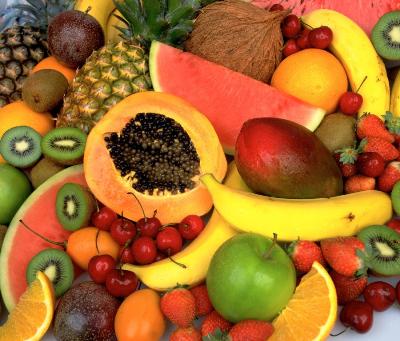
Eating bananas the morning after a night of heavy drinking provides lost electrolytes like any food would, but it also specifically replenishes the potassium lost to alcohol’s diuretic effect. Other potassium-rich foods such as kiwi fruit or sports drinks work just as well.

Conclusion:

  • FACT – Remedy

Water


Replenishing the body’s water supply after a night of drinking combats dehydration, and it also helps dilute the leftover byproducts in the stomach. Adding salt and sugar to water helps replace the sodium and glycogen lost the night before. Non-caffeinated, non-carbonated sports drinks can achieve the same effect.

As a prevention method, drinking a glass of water for every alcoholic beverage slows down drinking, providing more time for the body to deal with the alcohol (the body can only process about three-quarters of an ounce of alcohol in an hour). Drinking a few glasses of water before going to bed helps fight dehydration after the body finishes breaking down the alcohol.

Conclusion:

  • FACT – Prevention and Remedy

Fruit Juice/Coconut water!!!

­The fructose — fruit sugar — in fruit juice helps to naturally increase the body’s energy. Studies have proven that it also increases the rate at which the body gets rid of toxins such as those left over from alcohol metabolism. Fruit juice is also a good idea the morning after because it’s high in vitamins and nutrients that were depleted the night before because of alcohol’s diuretic effect. Vitamin supplements high in vitamins C and B are also effective.

Conclusion:

  • FACT – Remedy

MY PERSONAL REMEDY – WATER WATER WATER DURING DRINKING

VITAMIN B (before bed produces vivid dreams) but hey, I’d rather have a vivid dream than a vivid hangover!!!

BANANA SMOOTHIES MADE WITH COCONUT WATER

Perhaps good to try BEFORE you call an ambulance...

Ineffective or unproven remedies

Recommendations for foods, drinks and activities to relieve hangover symptoms abound. The ancient Romans, on the authority of Pliny the Elder, favored raw owl‘s eggs or fried canary. while the “Prairie Oyster” restorative, introduced at the 1878 Paris World Exposition, calls for raw egg yolk mixed with Worcestershire sauce, Tabasco sauce, salt and pepper. By 1938, the Ritz-Carlton Hotel provided a hangover remedy in the form of a mixture of Coca-Cola and milk (Coca-Cola itself having been invented, by some accounts as a hangover remedy). Alcoholic writer Ernest Hemingway relied on tomato juice and beer. Certain mixtures were developed specifically for the purpose. The “Black Velvet” consists of equal parts champagne and flat Guinness Stout. A 1957 survey by a Wayne State University folklorist found widespread belief in the efficacy of heavy fried foods, tomato juice and sexual activity.

NATURAL HANGOVER CURES

There are a number of tried and tested natural hangover cures, but today we’ll deal with one that has been seen to be the most effective of them all. Milk thistle beats everything else to the number one position of the ‘hangover cures‘ list.

Milk thistle is used in natural medicines to aid the functioning of the liver – which is, the primary organ responsible for detoxifying the human body. These leaves are known to help the body in clearing out the toxins and thus, they help reduce the risk and effect of hangovers.

If you are a regular drinker, it would be advisable for you to take milk thistle everyday or on most days of the week. It has been proven as a ‘safe’ herb; and doesn’t have any significant after-effects in the long run. Milk thistle tinctures are generally available in local health food stores; and are economical. So you won’t end up burning a hole in your pocket either.

If you don’t drink regularly, you could try taking these tinctures on the day when you are to indulge in drinking.

The best way, however, is to use this thistle before you start drinking. It is known to avoid the symptoms of a hangover. Like they say ‘An ounce of prevention is worth a pound of cure.’ Aye Aye, to that!

National Geographic has an interesting article about some of the strangest hangover cures from around the world. Perhaps they mean “cure” in a way that you’ll never touch alcohol again if you’re forced to take these the morning after:

Germany: Pickled Herring

Just what you need when you can't even hold down water!


Pickled or marinated herring is the main ingredient in a sour snack Germans call Rollmops. Considered an excellent way to ward off a bad hangover, they’re made by wrapping fillets of the tiny white fish around bits of onion and gherkin. Rollmops can be a welcome part of what Germans call katerfrühstück, or the hangover breakfast.


Romania: Tripe Soup
Tripe – aka cow stomach – is the go-to ingredient for many Romanians suffering from a hangover. It’s also a common “cure” in Mexico and Turkey, and no doubt many other countries as well. But in Romania, the edible offal is boiled in a greasy, salty soup of root vegetables, garlic vinegar, and cream.

Poland: Sour pickle juice
Polish hangover remedies are all about the sour. Some say that soured milk (which is unpasteurized and has been left at room temperature for a day or tow) does the trick. Others favor sour – very sour – pickle juice, heavy on the vinegar.

Fitting that it should be a 'little fuzzy'

Hangovers are poorly understood from a medical point of view. Health care professionals prefer to study alcohol abuse from a standpoint of treatment and prevention, and there is a view that the hangover provides a useful, natural and intrinsic disincentive to excessive drinking.

Next weeks Belly will be with Sista Tess and the lovely Lilith who will be here to present her regular segment “Cooking with the stars – Capricorns”

Sister Rasela wishing you a hangover free 2011!!

BayFM website – bayfm.org


“A sweeping look at how food, sex and desire are intertwined” Rasela’s rambles from the book “The Sex Life of Food”

Talofa. Your tastebuds are being tantalised today by Sister Rasela on which will be my last Belly show of the year. Of course we won’t be leaving your belies empty – Sister Tess is back next week and i’ll be serving up large portions of the Belly show in the new year but as always December is a time of reflection. I personally believe that every day you wake up is a new year but for now, let’s go with what the calendar says and think about what your journey with food has been like this year.

I don’t know about you but it has been another fascinating trip for me. I feel privileged and extremely lucky to be a part of both the belly show and the beautiful Bayfm – YOUR community radio station – where i have had opportunities in abundance to both meet and talk to so many incredible foodies from the Shire, both resident and passers through. I’ve also been drawn into the Raw Food world this year which has helped to give me the energy to continue with the 50,000 things i do (well, ok, maybe more like 20,000), I’ve also found myself working amongst and becoming a part of our blossoming farmers markets but most of all i have loved being able to share knowledge and information as well as stories and tales surrounding food as nutritional medicine. I always leave it up to you to decide what you feel is best for you.. FEEL being the operative word of course. You are your own experiment… don’t believe other people!! Listen to them and then see what works best for you through a process of trial and elimination. It’s a long and hopefully healthy life so there’s plenty of time to think about it… just don’t leave it too long because the benefits of being healthy are so incredible, you are going to wish you did it sooner, no matter when you start.

I’d like to give thanks to BayFM and all the guests for providing the place, the space and the time to share all of this with you – the listener – because without you there would be nothing to do and no reason to do it.

So, let’s get on with this show where i’m exercising my right to be Samoan and am taking it easy… I invite you to put the kettle on if you’re at home, make a cuppa, slow down if you’re driving to take a breather and settle in for the rest of the show… all you have to do is listen… how easy is that?

I send out this first track and ask you to stop for a moment to give thanks to your body for carrying you through this wonderful life. Whether you’re big or small, fat or skinny, whoever you are, whatever you’re doing and wherever you’re doing it – LOVE YOURSELF AND LOVE OTHERS, JUST THE WAY YOU ARE… Track 1 Billy Joel – Just the way you are.

The following is taken from the book “The Sex Life of Food” By Bunny Crumpacker.

“They dined on mince and slices of quince, Which they ate with a runcible spoon; And hand in hand, on the edge of the sand, They danced by the light of the moon” , by Edward Lear. -The Owl and the Pussycat

The first meal is a simple one. Eve’s was just a bite of apple; a baby’s is just a bit of milk.

Some babies try to eat even before their first meal. There are infants born with tiny calluses on their thumbs from sucking in utero, already working at filling the void. Once delivered, eating is the first continuing encounter the hungry babe has with the rest of humanity. Food is our first comfort, our first reward. Hunger is our first frustration.

Simple as it is, that small sip of milk, the first meal is the beginning of a complexity of food and emotion that is mirrored over and over again in a pattern that never stops. When we begin to eat as babies, we fall in love. We discover pleasure, we make friends, we learn to smile. We sup with darker things too – loneliness and fear, anger, even pain – and relief, afte having waited so long, empty, for the next meal.

No wonder, then, that grown up, when we open our mouths to eat, our souls fly out. We are too thin or too fat. We go on food binges, secret eaters alone with the refrigerator in the middle of the night. We eat too little and are afraid too little is too much. We eat too fast and develop heartburn. We work our mouths constantly: we chew gum, we make a fashion of cigars, we drop in for a cup of coffee, we suck on candy, we smoke cigarettes, we talk too much, we drink too much.

In one way or another, we’ve been worrying about food since the apes moved down from the trees when the fruit ran out. We’ve been so busy chewing that we haven’t sat down and thought about the missing link between our dinner and our selves, between the way we eat and what we eat and who we are – why we eat in the ways that we do….

This book is a great read and i suggest you do if you are interested in these few opening paragraphs. It goes on to cover some very interesting and intimate aspects of food and relates to just about everyone in one way, shape or form.

Without going on to copy the whole book, i will leave it here and hope that you enjoy this feasting season. I will NOT tell you to go easy on your bellies, listen to when yours say’s it’s full, to not overindulge and to remember that we live in times of excessive consumption so don’t buy into the need for more than you truly do need… i’m sure you already know these things. I WILL however wish you a relaxing and sunny break, full of love and happiness and all that comes with it.

See you again in the calendar New Year!

xx Rasela


Conversations with Dr David Jubb

Thanks to our guest Dr David Jubb for breathing life into the belly show today. He is believed to be one of the World’s leading Neuro-Behaviour Physiologists and a cell rejuvenation consultant, specialist in brain and gut dysfunction, microbial imbalances, metabolic neuropathic conditions and resulting cognitive and emotional processing dysfunction. Specialist in non-surgical, non-druggist approach to healing through vitalization.

Dr. David Jubb was a breatharian for over 20 years whilst living in New York. He runs Jubb’s Longevity and has written many books. He promotes lifefood, which is distinct from raw or living foods in that it still has it’s lifeforce intact, ability to reproduce, and can be found growing somewhere in the wild. He is also a blood formation specialist, shaman, and founder of colliodal biology which is the understanding of life below the level of the cell.

If you heard the show you will know that Dr David Jubb is hugely entertaining as well as ridiculously informative. There were definitely too many subjects to discuss with David in the short 1 hour that we had but by touching on a small variety of subjects, we hoped to ignite the little spark living within all of us that ultimately wants to lead a healthier life.

My intention on belly is to help bring awareness where it may be lacking, to increase the knowledge you may already have and to encourage you to make your own informed and educated decisions on the foods you choose to eat and the way you choose to look after your own unique planet… YOU!

The state of our precious planet and the state of your own health go hand in hand. I believe that by loving yourself from the inside out and understanding the inner workings of the gut and your digestive system to start with, you may begin recognize the similarities that exist in the delicate balance of both ecosystems and ultimately work towards a better life for all involved

May i suggest that you check out some of the links provided to hear Dr David Jubb’s discussions and teachings on a vast array of topics. What you decide to take on board is an individual choice and one that is suited to you and your own situation, at any given time in your life.

Listening to Dr David Jubb’s pod-casts is hugely inspiring for me coming from a Nutritional background. There were however many things that i would not have understood had i not studied it, so to our gorgeous listeners i would say, go easy on yourself and perhaps start with some of the YouTube presentations which may be more suited to people newer to the world of big long complicated words!

So, i’ll leave it with you to adventure into the world of Jubb and look forward to sharing many more interesting and informative belly shows with you in the future.

Dr David Jubb

Here is part of a short interview with him from he CBS interactive Business Network –

Dr. David Jubb was the scientific advisor to live foods expert and internationally-acclaimed author Anne Wigmore. Based in New York City, Dr. Jubb and his wife, Annie, have been teaching workshops and classes for 24 years in many aspects of healing, including fasting and “life food.” Life food is Dr. Jubb’s term for his program of natural foods and fasting. I’ve benefited from Dr. Jubb’s life food training, and I jumped at the opportunity to interview him for this issue of New Life Journal.

Why do you use the term life food as opposed to raw or live food?

DJ: Life food is food that has its life-force intact. Raw food people do raw flesh and raw grains and raw legumes. This is not life food. Raw food is just uncooked, that s all. Life food is food that is nutritionally available and easy to digest.

Living food is a term that Ann Wigmore coined. When people ate simply raw food, she realized that there were a lot of enzyme inhibitors in that food, and so she called what she does living food to define this principle of releasing the enzyme inhibitors from the food through sprouting.

I became her scientific advisor, and as I looked at her program, I saw that she included a lot of food that couldn’t be found growing in nature. And, under the microscope, that food just became mold, fungi, and yeast fairly quickly. And as a microbiologist and a cell histologist, I saw that the flora that makes up that food is only one step away from a mold, fungi, and yeast. Fermentation is the chief undertaker.

Banana and dates, and corn and wheat, and rice and carrots and beets, are composed symbiotically of a flora that really won t ecosterilize against mold, fungus, and yeast in nature. And they wreak havoc in the body and cause more mold, fungus, and yeast.

If this tickles your fancy then here are some links below to help you on your way.

Patrick Timpone’s podcasts – http://www.oneradionetwork.com/

http://www.youtube.com/watch?v=236F93Hj4nY

Jubbs Cell Rejuvenation: The Science Behind … – David Jubb – 2006

Alofa,

Sister Rasela

Fruitful Nutrition with Dr Sandy Tuszynska

Today we get fruity with our guest Dr Sandy who is (amongst other things) the author of a book called Fruitful Nutrition. In this book and on this show, Dr Sandy reveals her beliefs that the human body is specifically and perfectly designed to eat fruit, fruit and nothing but the fruit. With scientifically valid reasons for believing this, it is hard not to warm to her gentle coercing and knowledgeable inklings but as always i ask you to read the information and decide for yourself what you think is right and good for you… yes YOU!

I have left Sandy to speak in her own words as she does it so wonderfully. It was a true joy to have her on the show with her fruitfully passionate chatter and so inspiring to bring her into our fantastic community radio station so that her voice and teachings could fly free across the airwaves and land in various gardens and hearts around the Shire.I hope some seeds were planted and that thoughts and actions have grown from them.

From Sandy…

Fruit – The Optimal Human Food – by Dr. Sandra Tuszynska

Fruits are a forbidden food in our society. We have been conditioned to look at fruit as a treat or a sugar filled desert, not necessarily good for us when eaten in “excess”. There are many myths and fears associated with eating fruits such as “too much fruit sugar is not good for children and diabetics” and “fruit sugar and citrus acid is bad for your teeth”. These unsubstantiated myths are the primary reasons responsible for our health problems. We are designed for fruit consumption and fruits should be the staple food in our diet. Only by consuming fruits as our primary source of nutrients can we attain optimum health and overall wellbeing.

Our colour vision, memory, ability to climb trees, grasp and peel fruit and our natural sweet tooth are just the obvious biological adaptations to fruit consumption. Our digestive physiology and anatomy are almost identical to that of other anthropoid primates such as the chimpanzee, orangutan and the gorilla. These animals are frugivores, they eat primarily fruits and leaves. Taxonomically we belong to the great ape family called Hominidea. All of the other members of our family eat very similar diets except for us. They are on average five times stronger than we are. Our relatives in the wild do not share our diseases and live 7 times their age of maturity compared to only 4 times of the average human. We have cut down our lifespan by half largely due to the dietary choices, which we have been conditioned into over the last few hundred years. We have moved so far away from the diet of fruits and leaves, for which we are designed, that we suffer malnutrition and disease as a result.

Fruits are the only foods which perfectly satisfy our caloric requirements. Unlike other foods, they provide our bodies with a fuel mixture which is required for optimal wellbeing. Just like a racing car requires a particular ratio of fuel constituents, our food needs to contain the most optimal proportions of fuel providing nutrients. The nutrients which provide us with calories include carbohydrates, proteins and fats. These have to be converted into glucose to be used as fuel. The easier it is to derive glucose out of our diet the more energy we gain. Our body requires glucose to feed all of its cells. Brain, nerve and muscle cells are especially hungry for glucose. At least 80% of our calories should come from simple carbohydrates to optimally fuel our cells. On average around 90% of fruit calories are in the form of fructose and glucose. This provides us with an instant supply of energy that is efficiently delivered to our cells.

Fruits provide us with just the right amount of essential fatty acids and amino acids. The soluble fibre present in fruits is essential for our digestive system, it supplies oxygen and roughage to eliminate waste. The abundant vitamins and minerals present in fruits are essential for optimal wellbeing. While most animals produce their own vitamin C, those animals adapted to eating fruits do not synthesise this vital nutrients which is easily obtained from their natural diet. We also rely on fruits for our vitamin C supplies. When we lack this essential vitamin our immune system is prone to malfunction. Colds and flues are an accepted part of life in our society, but are something very unnatural and unnecessary – a signal of malnutrition, a fruit deficiency.

The nutritional information we are constantly bombarded with is based on half truths and propaganda in the name of profit. My mission is to educate others that there are human foods that we are designed for and that once we decide to respect our biological requirements, our health and wellbeing take on a whole new level. In my book called Fruitful Nutrition, http://www.fruitfulnutrition.com/, I have presented what I believe to be the most important of nutritional information.

Fruitful Nutrition is a scientific analysis of our nutritional requirements, written in a language we can all relate to. It is based on the principles of human evolution, biology, anatomy, physiology as well as psychology to illustrate our dietary needs. Like all animals we are adapted to a specific diet and we are the only species that does not respect this natural law and thus suffer dis-ease.

The principles of food combining, enzyme nutrition, fasting, our fuel requirements and the link between food and emotions are some of the topics, so seldom discussed in other nutritional books. This knowledge has transformed my life and the life of many readers. I believe that this book has the potential to revolutionise our health and the health of the planet.

For more information or to order a copy of Fruitful Nutrition please go to http://www.fruitfulnutrition.com/, or email me at fruitfulnutrition@gmail.com.


Fruitful Future

I would like to share my vision of where I see humanity is going. I believe we are heading for that Garden of Eden, utopian paradise scenario. I believe that once the majority of people start embracing our natural frugivorous nature, consuming fruit as our main source of nutrients, the world will become a peaceful paradise here on Earth. Fruits are produced by trees for our consumption, they are the most compassionate of foods, creating the least harm possible.

I see that as more and more people begin to eat fruits as the staple food many of today’s problems will be solved. For this to occur we need to be planting our own trees, in our yards, on the sidewalks and anywhere there is space, where a food producing tree can grow. In this way we will annihilate the need to drive to the supermarket and rely on an external supply of food.

We are the only species on earth that has created a system where we have to work all of our lives to be fed and sheltered. I find this very disturbing. Mother Earth feeds all of her children, yet we have given that birth given right away to profit makers. I am determined to change that.

Growing our own food trees will encourage us to share and swap produce with one another, creating social interaction and a strong sense of communities.

As we become properly nourished we naturally get in touch with our emotions, healing ourselves and the society into peace, love and harmony. Hungry and homeless people will be able to feed from the street. Hopefully, the third world nations will follow in our footsteps and re-embrace the path of simplicity. Right now they are obsessed with material wealth, wishing to experience consumerism just like we do. However, there are simply not enough resources for the third world citizens to live the way we do. We need to be ready to, to become a leading example for others, and be the change we wish to see.

We can solve many of the environmental problems by growing fruit trees which provide food and shelter for wildlife and encourage biodiversity. Trees also create rain and oxygen and are a carbon sink. They produce more calories in the space they take up than any other food. They are the only sustainable human food source. We can avoid monoculture practices such as grain production by growing a varieties of fruit trees.

Farming will no longer be required as there will be no demand for grains, meat and dairy. This will free up lots of land to accommodate people. It will lessen or annihilate the need for fossil fuels, pesticides and artificial fertilisers which are oil based, reducing pollution and exploitation of our environment.

We need to establish a deep connection with our food. The only way to achieve this is to have an interpersonal relationship with the plants that provides us with nourishment. There needs to be a level of communication, love and respect between us and the beings which feed us.

Imagine a world with no wars, conflict, fear, disease, competition or money. Imagine if we could all do exactly what we wish to do, develop different skills, teach one another, play in groups, and love and support one another. Imagine that we are all family and friends, living in trust and harmony, that we are a giving, peaceful society living in abundance.

It is up to each and one of us to make the choices which will be fruitful for humanity as a whole. We are living in very powerful times, we are powerful beings capable of achieving anything we desire. It is time to think about ourselves as the missing link in the web of life. It is time to acknowledge our Mother Earth, heal ourselves in order to heal her so she can continue to support this precious human life and all other life forms forever more. So I ask all of you to plant a fruit tree or a seed today so this fruitful scenario starts becoming our reality.

I’d like to thank Sandy for coming on the show and if you or anyone you know feels you have something important to share with the rest of the community then please don’t hesitate to contact us here on the belly website or at the beautiful Bayfm on     02 66 807 999.

Alofa,

Sister Rasela