Author Archives: sister Rasela

Mushy tunnels… To soy or not to soy… Lilith sways a Libran way…

Talofa, this is Sister Rasela checking into the Belly House.

What better way to spend another rainy day than to catch up on housework. Time to tidy up in the online Belly kitchen by letting you know what we munched on today.

I started by tracking down a highly unusual yet perfectly suitable place to grow mushrooms… beneath a hillside near Mt Gibraltar (a small mountain between Baurel and Mittagong) in Southern NSW. Now, when I say ‘beneath’ the hillside I mean that literally, for there is a gentleman by the name of Neil Arrold who has converted a disused train tunnel into his very own mushroom farm. Unusual? Maybe. Appropriate? Absolutely!

The mushroom tunnel on the left, originally built in 1886 before being replaced by the double track tunnel on the right

The single-track tunnel along the Sydney to Canberra route was built back in 1886 but only used until 1919 when another track was built beside it. In the post World War II years alot of abandoned tunnels and bomb shelters were transformed into underground growing houses. Back in the 1930’s the incomplete Circular Quay to St James line was also used for these wild and fun gi’s to grow.
Here in his controlled, damp and dark dungeon-like mushy abode Dr Arrold culitvates a true treasure trove of exotic species – Shitake, Golden Enoki, Shimeji, King Brown, Oyster and many more. (Cut to mad scientist wringing his hairy hands.)
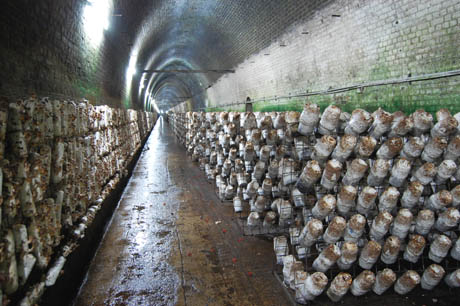
Shitake logs on racks in the Mittagong tunnel

In Australia more than 67,000 tonnes of mushrooms are consumed each year with a growing proportion of these being the more exotic types as the Ozzie palate becomes a touch more sofisticated. In fact consumption has lept from 0.6 kg’s per capita in 1974 to 3.1 kg’s last year… that’s about a five-fold leap!

Apparently customers are very keen on shitake and chestnut mushrooms mostly, but the fluorescent pink, blue and yellow oyster are gaining in popularity too, especially amongst old psychedelic hippies.

Down there in the Southern Highlands this grower produces 1.5 tonnes per week in the 1km long tunnel which keeps a constant temperature and humidity allowing the mushrooms to grow organically in a country that is not normally renowned for these dollops of delight.

Expand your tunnel vision and make the natural choice to buy local, organic mushrooms from a man with a different kind of tunnel vision.

Tour the tunnel. For information call 4871 2524 or go to siff.com.au.

To soy or not to soy… Soy is the question!
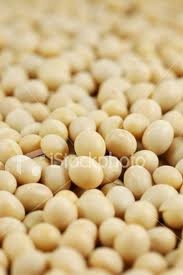
I’ve noticed a fair bit of talk going round recently in the circles I frequent regarding the ever confusing barrage of information around Soy and Soy products. Now, being a vegetarian/vegan for many many years, I have been presented with alternatives to meat, cheese, eggs, chicken, fish, milk, yogurt and a mammoth amount of other goods which I don’t care to eat. You see the reason behind my vegetarianism is that I don’t actually LIKE this stuff in it’s natural form so why would I go and eat a replication of it in a soy form? Further to that, having studied Nutrition it is my opinion that commercial, supermarket Soy products aint all that great for you.

There is good and bad in everyone and everything… the test we face is recognizing the difference.

The Good The Bad and umm.. The Ugly?

I share information that may or may not be of interest to you. My main aim is to bring awareness to certain things that I feel are not all that beneficial to your wellbeing.  All I ask is that you consider what you hear or read and if you choose to research it further then great, if you don’t then that’s fine too… as long as you make your own choices. I feel that it is important to be able to make informed and educated decisions regarding what you consume in order to become aware of the health repercussions of that consumption.

I’m not going to bombard you with information in technical terms, I’m going to keep it as simple and sweet as possible and leave the rest to you.

Taken from –

Menopausal Years – The Wise Woman Way by Susan S. Weed

Healing with Wholefoods by Paul Pitchford

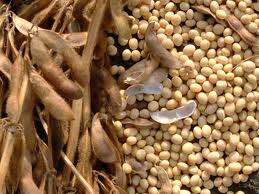
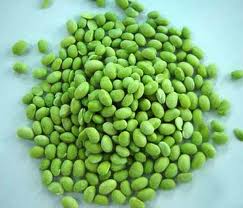
Soy is a member of the bean family.  They have many health benefits when used correctly including being a natural source of Lecithin – a brain food, they are also high in protein and very alkalizing to the body.

There are certain substances that are contained within most beans called ‘Anti Nutritional Factors’ and what this means is that these substances interfere with our ability to use, create or liberate certain key nutrients such as Calcium, Zinc, vit B12 and Trypsin (an important substance produced in the pancreas and secreted into the small intestine to assist in the breakdown of proteins.)

In MOST instances soaking and cooking are sufficient to remove the Anti Nutritional Factors making the beans generally safe to eat but this is not always the case. Some beans retain their Anti  Nutritional Factors unless they are treated in severe ways. SOY IS ONE SUCH BEAN.

Unless well cooked or fermented, soy beans inhibit the digestive enzyme Trypsin, making them very difficult to digest. Fermentation also destroy’s soy’s anti nutritional factors and increases it’s mineral availablity.

Fermented and recommended Soy products are L-R Miso, Natto and Tempeh.
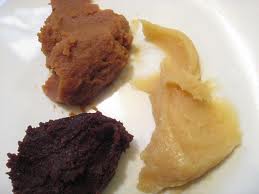
Three types of Miso paste varying in flavour. Darkest is srtongest and saltiest. Lightest is sweeter and more subtle.
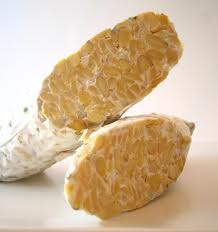
Raw Tempeh. It is far more apitising when cooked but if i show it to you cooked, you won't know what to buy!
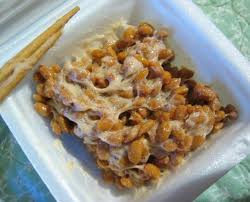
Natto... a traditional Japanese food. Soy beans that have been left to ferment. Haven't tried it personally... yet!

Not recommended are – Tofu*, soy nuts, soy beverages, soy granules and fake soy foods (soy burgers, soy dogs, soy cheese… and so on)
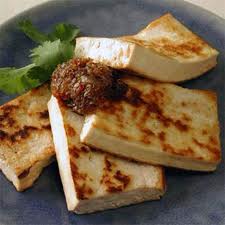
Fried tofu. Wait a minute... is that a meatball?!

*A note on Tofu – Traditionally it is eaten with seaweed to offset it’s thyroid damaging effects and miso to offset it’s B12 disrupting effests and whenever possible fish and meat to offset it’s mineral depleting effects (although this is usually unlikely seeing as most people that eat tofu are vegetarians!)

When unfermented soy is eaten frequently in a diet low or lacking in animal protein (as in the case for many vegetarians and vegans) the anti nutritional factors can wreak havoc: brittle bones, thyroid problems, memory loss, vision impairment, irregular heartbeat, depression and vulnerability to infections.

Unfermented soy is also high in haemoglutin – clumping of red blood cells which may increase the risk of stroke.

Soy milk has it’s own story… Here’s a brief comparison between human milk, cow’s milk and soy milk that may be enlightening especially if you are considering it’s place in your infant or child’s diet. It’s important to note that I am NOT advocating cow’s milk here. Although it appears to resemble human breast milk in these particular components, it is way out of whack with what your body needs in many other areas, including being excessively high in casein which is used in high quality wood glue (ever wondered why many kids who consume lots of dairy are so congested and phlegm filled?) … but that’s a whole topic of it’s own that I will go into at a later date!
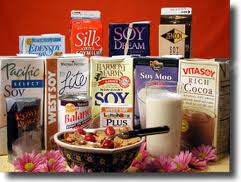
Q. Eeeny meeeny miny mo, on which one of these shall i spend my dough? A. None!

Taken from The Vegetarian Guide to Diet and Salad by Dr. N.W.Walker, D.Sc.

Human milk is composed of about 87% organic water, cow’s milk almost as much, while soy bean only contains little more than 10%.

Human milk contains a little more than 1 1/2% protein, cow’s milk a little more than 3 1/2% where as soy bean milk is composed of more than 33% protein.

Human milk contains a little more than 6% carbohydrates in the form of natural sugars, cow’s milk nearly 5%, while soy milk is composed of more than 33% starchy carbohydrates.

Human milk contains nearly 4% fat, cow’s milk a little more than 3 1/2%, while soy milk contains 17% fat.

In relation to the chemical composition of human milk and soy milk, we find that soy contains about 175% more phosphorous and about 400% more sulphur than does human milk, both these elements being acid forming.

Human milk contains 3,500% more chlorine, the cleansing element, than does soy milk.

These factors are of extreme importance when we consider that many cases of disturbances to the nervous system are due chiefly to the unbalanced proportion of these elements in our diet.

…And now on a much lighter note. Dreamy rather than creamy…

The ever lovely Lilith and her hula hips came a swayin’ our way to talk of Libran chefs and the characteristics of these well balanced (?) people in the world of food, with her “Cooking with the Stars” regular segment

I am currently awaiting an email to post her wonderful words and wisdom’s so you shall have to wait with me if you wish to gaze upon them.

Fine tunes that were played throughout the show were –

1. Oka Love – OKA – Oka Love Album

2. Element – Fyah Walk – Ocean Sounds Album

3. New People – Hemitude – Threads Album

4. Come Listen – Kooii – In This Life Album

5. Ancient Spirit – Fyah Walk – Ocean Sounds Album

6. Weaving Changes – Kooii – In This Life Album

7. The Dreaming – Oka – Oka Love Album

I shall be back floating on the airwaves on Monday 18th October while Sister Tess has her halo cleaned and Sister Bernadette repairs a feathered wing… Look forward to it!

Sister Rasela xxx

Spring has Sprung… Tis the season to get fresh… plus Raw Chocolate mmmmm say no more!

As always your taste buds can be tuned to the beautiful BayFM on a Monday morning where we serve up an hour of mouthwatering radio. Sister Rasela cooking up a storm for you today in the Belly kitchen and springing into action with talk of how this beautiful season allows us to connect with nature, our bodies and our taste buds.

SPRING… It’s a new beginning – the time of the year to rise early with the sun. You can’t help but notice plant life pushing upwards after winter slumber, just like many of us who feel the colour come back to our cheeks, having been hidden during these past cooler months.

Have you noticed the green colour of tender young shoots, the sight of which nourishes the soul through the eyes. The appetite for food decreases as the body naturally cleanses itself, not only of food residues but also of excessive desire and the accompanying emotions of dissatisfaction, impatience and anger.

The metaphorical membrane over the eyes and mind disappears and vision becomes clearer. Things are seen in new ways.This is a time for contacting your true nature and giving attention to self awareness and self expression.

Living in sync with nature is an incredible experience. When you buy local, seasonal, organic produce from farmers, growers and shops within your community, there is an energy which is quite pure and carried through all the stages of your foods life and into your life. You’ll know more what i mean if you grow and eat your own produce already.

Think about what you want to put in your mouth to nourish not only your body but your soul. It is not just a solid mass that lands in your stomach (well, sometimes it is) processed beyond all recognition and sealed in a plastic bag and ‘preserved’ (although goodness only knows what they are trying to ‘preserve’ as there is no goodness in it!)

Food that is natural, whole, fresh and seasonal is what you should be aiming for, then you may be able to experience the oneness with nature, the  s i m p l i c i t y.

Don’t deny yourself ‘treats’ just think about what a ‘treat’ is. Are you really ‘treating’ your body when you put something into it that is a chemical concoction of synthetic flavour and colour…. i mean, why would you bother?

Mimicking the colours and flavours of fruit... synthetic chemicals wrapped in processed sugar. Yum?

So… back to SPRING FOODS

This is the season to attend to the liver and gall bladder.

In spring we naturally eat less to cleanse the body of the fats and the heavy foods of winter. The diet should be the lightest of the year and should contain foods that emphasize the ascending and expansive qualities of spring (like a bloom about to blossom).

Young plants, fresh greens, sprouts and wheat or cereal grasses are ideal. Salty foods such as soy sauce, tamari, miso and sodium rich meats all have a strong component of sinking energy and are best limited during springtime.

EAT ME, EAT ME!

The expansive rising quality of sweet and pungent flavoured food is recommended as a means of creating a ‘personal spring within’. You could use a little concentrated sweetener with pungent herbs such as honey and mint tea.

The pungent cooking herbs : Basil, fennel, marjoram, rosemary, caraway, dill and bay leaf are all quite desirable at this time.

Most of the complex carbohydrates such as grains, legumes (beans) and seeds have a primarily sweet flavour which increases with sprouting.
Young beets, carrots and other sweet, starchy veges such as sweet potatoes are good too.

Try to get out of  the ‘habit’ of having the same thing for the same meal everyday. Our bodies change daily, monthly, seasonally, like the weather so we require different foods to maintain overall good health at different times in our lives and most certainly on different days..

RENEWAL AND RAW FOOD

Food preparation becomes simpler in spring and let’s face it, who doesn’t want more simplicity in life?

Raw and sprouted foods can be emphasized more… now I’m not suggesting that you give up eating what you are currently eating to live off a couple of lettuce leaves and a bag of sprouts (although that may well suit some people), it’s just a great time to add these to your diet if you haven’t already and maybe replace one winter vegetable with something more fresh and alive. Gradually adapt, like the changing of the leaves on a tree… slowly, slowly but surely.

Sprouts and raw foods are cleansing and cooling.

Meet Eric, owner of the first raw food business in town

Spring represents youth and raw foods are thought to bring about renewal by reminding the body of the earlier more youthful states of human development. A time before the use of fire when man was extremely active, physically generating abundant heat; so early people found balance in the cooling effects of raw foods.

All the stages of our evolution are still encoded within us; going back through the layers of our evolution to more primal biological states is necessary if renewal is to be complete.

Raw food consumption should increase with signs of heat in the individual. If you are frail and cold then take it easy and don’t go too hardcore on the raw food, please!

It is both better and easier in warmer climates and during times of great physical activity although most people do well eating at least a little raw food in their diet each day, with greater amounts in the spring and summer.

Remember there are always limitations. Uncooked foods can weaken digestion in some people and even sometimes trigger excessive cleansing reactions. Not recommended for people with bowel inflammation or for people who are frail with signs of weakness. (Although you would have to try it yourself and see what suits you as an individual)

Intuitive eating… is listening to your body and is far easier to do when you are not changing your thoughts and emotions with chemicals and stimulants. Get real and discover life!

SPRING COOKING

If you live somewhere that is cold, it’s pretty much a necessity to cook your food. Winter time also calls for the need for warmth within.

In spring, food is best cooked for a shorter time but at higher temperatures. In this way food is not as thoroughly cooked – especially the inner part, retaining vital nutrients.

If oil is used (coconut is recommended as it can reach high temperatures without destroying it’s goodness), make sure it’s quick and at a high temperature – sautee method is good.

When cooking with water, light steaming or minimal simmering is ideal

When making Raw Chocolate it is always essential to ensure that the bowl and fingers are well licked and none is left to waste…. which brings me to our next topic for today and that is talking to the lovely Robin Jackson about Raw Chocolate, Cacao vs Cocoa and what happens in a raw chocolate preparation class… amongst other things.

RAW CHOCOLATE = RAW ECSTASY

From nibs....

Chocolate has been enjoyed for thousands of years as a way of connecting to the divine Love of the Universe. No food symbolizes Love more than chocolate.

We would like to reveal the ancient mystery the has been uncovered… here on the Belly Show, lerned after years of searching…..

….. the secret ingredient in EVERY recipe is L O V E!

Now we’re talking Raw Chocolate here and into the studio enters Robin Jackson, a woman full of Love for many things but today we are focussing on Raw ‘Chocolate’ – RAW cacaoa (ka-cow) and the inevitable temptations accompanying this superfood.

.... to this!

CACAO vs COCOA

A slight change in the lettering represents a major difference. Cocoa (co-co) powder has been treated with alkaline salts, is mixed with a number of chemicals during processing and has powdered milk added to it which blocks the bodies absorption of the healing nutrients of RAW cacao.

Knowing the nutritional benefits of RAW cacao helps to act as an important reminder that when we eat food in it’s natural state, we are able to harness the magic of the food, it’s healing powers, it’s full life force and health benefits.

cacao pods

Cacao pods

Raw cacao contains Magnesium, Chromium, Antioxidants, Vitamins B1, B2, B5, B6, C, and E which are all present in significant quantities. It also contains fiber, iron, niacin, phosphorus, as well as containing ‘happy brain chemicals’ such as Theobromine, Phenylethylamine, Anandamide an Tryptophan the details of which are lengthy and interesting and can be googled at you own leisure. All you have to know is that it makes you feel GOOD.

The importance of RAW cacao in chocolate is emphasized in the fact that it remains caffeine free due to the natural state it remains in, unlike other chocolate where the theobromine is converted into caffeine when heated. This makes RAW cacao and raw chocolate a natural stimulant that is caffeine and comedown free 🙂

It is crucial that you think about where your chocolate comes from. 80% of cacao used by large companies in your average everyday chocolate bar is made with cacao that comes from West Africa, where horrible working conditions, including child slavery, degrade humanity on a daily basis (not to mention the pesticides!) So next time you reach for a mars bar or a packet of those chocolate biscuits you love so much, think about what it took to make. Some poor child’s life is hardly worth living just so you can get fat on a chocolate bar you don’t need anyway. Please, enjoy the good things in life, but not at the expense of others. Make your own or buy fair-trade, organic, RAW chocolate and be happy to eat it, guilt free in every way!

Look for the 'good stuff' when buying chocolate.

I was fascinated to hear Robin talk about the different forms Raw cacao comes in. It can be found in Beans/Nibs/Powder and Butter. Until today i thought each one was created for it’s own individual purpose but i learned that it starts as the bean, is blasted into the nibs, ground into powder and finally extracted into butter. Each form is just a step along the way and each form can also be tranformed into the most incredible chocolate delights you will ever have. Part of the enjoyment is knowing that this is GOOD for you!

Robin was lovely enough to offer a free place in her next Raw chocolate creation class which will be held on Sunday 26th September. If you wish to find out more info about anything to do with raw food, you can contact Robin from the info below. There is also a monthly newsletter that is released in conjunction with Raw Ecstasy so if you would like to be on the mailing list for that feel free to mention that in your email. Alternatively you can find the stand at the farmers markets on Thurs Byron, Fri Mullumbimby, Sat Bangalow and all of the Sunday/Weekend markets dotted around this wonderful Shire of ours.

Robin Jackson – robin.rawecstasy@gmail.com

Phone – 0449 133 418

See you at the markets!

P.S. This show featured the Album ‘Jiggy Jiggy’ by Shoebox… “it don’t take much to make me HAPPY” … lalalala 🙂

The L O V E show…

Be yummy and subscribe anytime on 02 66 807 999

Eating is a sensual pleasure which starts when we are no more than a roaring digestive system needing oceans of warm milk to fill our hungry void. As adults we still remember our beginnings. We talk about food when we talk about L O V E.
“YOU’RE DELICIOUS” “I LOVE YOU SO MUCH I COULD EAT YOU” (and sometimes we proceed to prove it.) Did you know that not long ago a sexy woman was called a tomato? A girl can be known as a chick, even the heart is sweet and we call our sweethearts food-love names like ‘Honey’ ‘Sweety Pie’ or if you’re very unlucky… ‘Lamb Chop’. Breasts are melons (or in some cases raisins… or even fried eggs!) lips are like strawberries, LOVE is intoxicating, it’s delectable and delicious!

“If you don’t like my peaches” says the blues lyric “then don’t shake my tree.” “It must be jelly” sings another “cause jam don’t shake like that” and the stoned Stones sang about some “brown sugar”.

AJ Lieling described Lilian Russell, a lucious woman from a time when more was better (she weighed over 200 pounds) as – “A butterscotch sundae of a woman, as beautiful as a tulip of beer with a high white collar”

Lillian Russell... before one too many tulips of beer....?


LOVE has it’s seasons. There is a time for laughter and a time for absentmindedness. There is the need to say the others name out loud, to give LOVE ‘presence’ by speaking it’s magic word. There is a moment for first sharing the same spoon and there’s also a time for discovering shared memories of food. What JOY! Obviously they were predestined to find each other, two souls in this whirling world whose passion remains hokey pokey ice cream with caramel sauce… (ok, ok, so that’s MY favorite)

Hokey-Pokey from the land of the long white icecream


In a world where sophistication can be measured by what books one keeps in their bathroom or the brand of water that is sipped with lunch, lovers bring the greatest innocence to the discovery that they share the same lusts – not only for each other, but also for food.

WEDDING CAKES

 Wedding cakes go far back in the history of celebrations. Wheat has always been a symbol of LOVE and fertility (bummer for all those ceoliacs out there) and one reason that special bread or cake and not a special meatloaf has been central to our wedding rituals, at least since the Greeks and Romans.
 

Greek brides baked cakes to give to their grooms. Later roman couples offered wheat cakes to Jupiter. The priest who served the God, burned the cake over a flame and this sacrifice symbolized that the woman was now under the jurisdiction and protection of her husband (old skool jargon) it also demonstrated that the marriage was both legal and sacred.

At Roman weddings the bride carried wheat as a good luck charm. At medieval weddings grains of wheat were thrown at the happy couple with exactly the same wishes – Luck, LOVE and fertility – as today’s rice and confetti.

So we’ve gone from chucking bread rolls at the happy couple to the ‘coeliac friendly’ version of gluten free rice or recycled paper confetti (how very modern)

The Anglo Saxons went one better and crumbled small cakes (bread or oatcakes) over the brides head to foretell fertility to follow (or to disguise a bad case of dandruff on that special day).

Romans eventually took to making their flour and water wedding cakes a little easier to swallow and there became less wastage and more eating (now that’s what i like to hear!) Spices and flavourings were added and before long the cakes were topped with white sugar and bitter almonds, chosen to represent the pleasures and pains that would inevitably follow.

Today the wedding cake is resplendent. It’s fragrant heart is sometimes covered in swirls of white icing, on top are tiny replicas of the bride and groom or more modestly a bed of flowers or some other such creation. It is, to the last crumb, a delicious physiological symbol.

FOOD IS LOVING, COOKING IS FOREPLAY AND EATING IS MAKING LOVE.

Poem…

“Honeysuckle Rose” by Fats Waller and Andy Razaf

I don’t buy sugar
You just have to touch my cup

You’re my sugar

 It’s sweet when you stir it up
When I’m taking sips from your tasty lips
Then the honey fairly drips
You’re confection, goodness knows

Honeysuckle Rose

26th July : Aphrodisiac Avocados, Reasons to ‘Swerve from a Big Serve’ and ‘Do You Kakadu?’

Sister Rasela in the Belly kitchen today bringing you the tastiest show on radio. On the menu today we’ll start with 

‘ The Pleasures of the Flesh’  Rumours of the Aphrodisiac Powers of the Avocado…

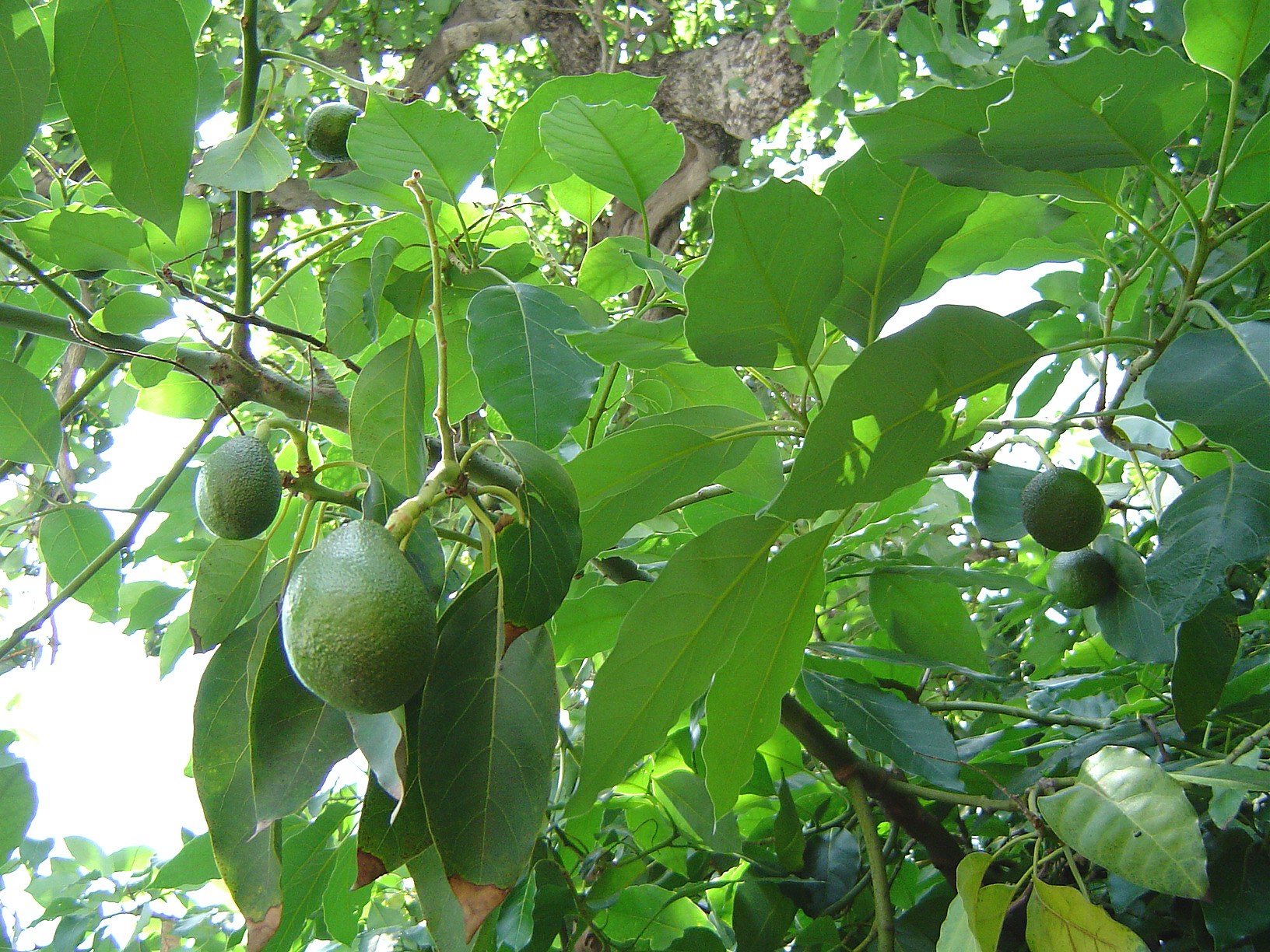
The Avocado has a ‘seedy’ and somewhat unexpected history. While many of us enjoy this delicious fruit in sandwiches and salads, you may be unaware that it has in fact been considered an aphrodisiac for centuries.

This notion probably started way back with the Aztecs, who were the first documented avocado eaters and who called the avocado tree ‘Ahuacatl’ which means testicle tree… something to do with the way the pear shaped fruit sometimes ‘dangle’ from the tree in pairs or perhaps their visual resemblence… i’ll let you decide.

In the 1920’s California growers enhanced the avocados sexy image in an advertising campaign in which they strenuosly denied the avocado was an aphrodisiac. The reverse phychology worked so well that this fabulous fruit has gone on to forge a fantastic career.

At the start ofg the 21st century the California Avocado Commission ran a Valentines Day survey on the Avocado’s libido enhancing properties. Six out of 10 nutritionalists, scientists and psychologists surveyed said they knew of cases where the avocado had improved a persons love life (we’re not sure what they actually did with the avocados…). The survey outcome can, however, be attributed as much to the fact that the fruit is high in nutrients such as fibre, folic acid, potassium, vitamin E and some B vitamins and lecithin as to any alleged properties.

Facts to nibble on –

  • Avocados are sodium  and cholesterol free
  • They contain only monounsaturated fats
  • Avocados were once a luxury food reserved for the tables of royalty, but thankfully we commoners are now able to share in their delights
  • In one year, a single avocado tree can absorb as much carbon as is produced by a car driven 26,000 miles!
  • Latin Americans wrap avocados up and give them as wedding gifts

… More to come about why you should  ‘Swerve from a BIG Serve’  while our waistlines and dinner plates are growing in size and temptation and the huge effects overeating has on your health. Relflux, Acid Indigestion and Heartburn are all things that could you live without if only you knew how. Explanations and Nutritional advice galore.

And finally… Do You Kakadu? Our lovely guest Anna Parker came in to talk about the ‘new’ 40,000 year old indigenous Bush Foods that are a part of the ingredients in this Super Food that is buzzing around town in the belly’s of the lucky ones.

5th July – Spice Up Your Life, The Lovely Lilith: Cooking with the Stars – Cancerians, and “Danger! : Cheese on a Roll”

Aloha… this weeks Belly starts with tales of exotic spices from around the globe.

Take a trip from your kitchen to just about anywhere in the world by adding a pinch of this and a pinch of that…

Adding various herbs and spices to your food can literally ‘spice up your life’ by not only tantalising your taste buds but also treating your troubles with very little effort on your behalf. Learning which countries use which particular herbs and spices to create traditional and favorite dishes is a fascinating journey as we travel the globe without having to go any further than the kitchen…

SPICES are the buds, bark, roots, berries and seeds and HERBS are the leaves of plants, so when we use corriander leaf for example, we refer to it as a herb, but when we use corriander seed, we say we are using spice.

Australia’s best known spice man Ian “Herbie” Hemphill has a list of 20 from which he says you can create just about any dish from around the globe. These global essentials can be used in a variety of dishes, so build a spice rack or refill the missing gaps with any or all of the following –

  • CorianderCumin
  • Black Peppercorns
  • Cinnamon and Cassai
  • Cloves
  • Chilli
  • Ginger
  • Cardamon
  • Paprika
  • Star Anaise
  • Tumeric
  • Allspice (a milder version of Cloves)
  • Fennel (seeds)
  • Nutmeg
  • Thyme
  • Oregano
  • Caraway seeds
  • Fenugreek seeds
  • Saffron
  • Vanilla


A short rundown on countries and their spices –

INDIAN

One of the worlds top producers of spice and because of it’s size, the range canvary from chilli heat to aromatics.

Corriander seed, Tumeric, Cinnamon, Cumin, Mustard seed, Fenugreek, Ginger, Pepper, Chilli, Nutmeg, Clove, Cardamon, Tamarind, Saffron.

MORROCAN

The ports of this North African country have been used for centuries as an avenue for spices from across the globe. Think aromatic, slow cooked stews.

Corriander seed, Tumeric, Paprika (sweet), Cumin, Cinnamon, Ginger, Cloves, Black pepper, Chilli, Saffron (Beware fake Saffron which can be passed off by using the stamen of the crocus flower and not it’s stigma. It can also be created by using corn silk or plastic and dyed with the dangerous chemical tartrazine. Test by disolving in water. If the colour runs it is probably not saffron.)

MIDDLE EASTERN

Typified by dry spice mixes such as dukkah, Middle Eastern food is also about marinated meats cooked on a shish. For you meat eaters out there… think lamb skewers.

Paprika, Corriander seed, Sumac, Parsley, Thyme, Cumin, Cassia (from South East Asia and China. Has a stronger, sharper taste than cinnamon) Pomegranates (seed or molasses), Black Pepper, Cloves, Cardamon, Mastic, Mahlab

MALAY/SINGAPORE

Divided by a peninsula, Malays prefer curry powder in coconut milk mixed with lemongrass, galangal, chilli paste and tumeric. The Singaporeans borrow some Maklay ingredients but tend towards Chinese styly spices including pepper.

Corriander (seed and leaf), Fennel seed, Cinnamon and Cassia, Tumeric, Lemongrass, Candlenut, Cumin, Ginger, Pepper, Galangal, Cardamon, Tamarind, Chilli, Star Anaise

THAI

The king of aromatics. This is all about greenery and freshness and the particular predominance of each spice, depending on the dish, with a fresh hit of chilli.

Corriander leaf, Kaffir Lime, Lemongrass, Chilli (red and green), Tumeric, Garlic, Galangal, Cloves, Thai Cardamon (similar to normal cardamon but rounder and almost white)

CHINESE/VIETNAMESE

Similar to India, because if it’s size it is difficult to pin down a typicaldish. It varies from the chilli and Szechuan pepper in the north to cassia and star anaise in the south. For Vietnam, you can’t beat the soup dish Pho for it’s trademark spices.

Star Anaise, Fennel seed, Corriander (leaf and seed), Dill (Vietnam – leaves), Cassia, Ginger, Szechuan pepper, Black pepper, Chilli, Cloves

MEXICAN

Smoky flavours dominate this cuisine because of it’s use of chillies – which are native to Mexico – including ancho, pasilla, mulato and chipotle.

Paprika, Cumin, Corriander (leaf), Oregano, Cinnamon, Chilli, Epazote (hard to find in Australia), Anatto (seeds)

Source: Spice Notes and Recipes, Macmillan (2000), $59.95, by Ian Hemphill. Available from Herbies.com.au

Next, the lovely Lilith swayed in with talk of Cancerians this month in ‘Cooking with the Stars’

LILITH’S COOKING WITH THE STARS

Cancer: Crabs in the kitchen

This month we’re wishing happy birthday to our favourite Cancerian masterchefs like Sydney’s Neil Perry, co-owner of Rockpool, Blue Water Grill and Spice Temple who apparently has a food brand sold under his name, which
you’ll soon be able to check out at locally loathed Woolies.

Cancerians tend to be obsessed with family and food and as chefs they’re strongly influenced by foods they ate as children. Crabs adore home cooked meals, love comfort food and traditional recipes like Mum used to make, and
are quite likely to still have her recipes. Food equals love to Cancers: a well stocked pantry makes them feel secure and a lot of their cooking pleasure comes from nurturing their loved ones and sharing meals with friends.

Cancerian chef Roy Yamaguchi, Hawaii’s first-ever James Beard Award winner, though born and raised in Tokyo, so vividly remembered the fish and lobster cooked fresh from the ocean on childhood visits to his grandparents on Maui, that he grew up to champion Hawaiian regional cuisine and develop his own style of Hawaiian Fusion food combining asian flavors, fresh local seafood, sushi and his signature Hawaiian martini made with, no prize for guessing, pineapple juice.  Sounds dreadful, though the pineapple wine from the Volcano Winery on the Big Island’s quite nice ­ the Hawaiians call it a party in the mouth. There are now 32 Roy’s restaurants in the U.S., Hawaii, Japan and Guam.

In traditional astrology Cancer’s ruled by the Moon, and they do seem to favor pale pearly foods: rice, potato, dairy and mayonnaise.  They also seriously appreciate their cheeses and are probably responsible for the
kids story about the Moon being made of cheese – which does contain the cell salt Calcium fluoride which helps soothe their sensitive digestions. But as you can imagine when comfort food marries dairy and produces
bechamels, creamy sauces, fondue and cheesecake we’re talking serious kilojoules ­ though its probably not worth your friendship to mention the Cancerian swear word, cholesterol… a major component of the splendidly rich, politically incorrect dishes of the popular British cooking series the Two Fat Ladies, famous for zooming round the countryside with their ample personages squeezed into a motorbike and sidecar – the Canceria half of this excessive pair was Clarissa Dickson-Wright, or to give her herfull title Clarissa Theresa Philomena Aileen Mary Josephine Agnes Elsie Trilby Louise Esmerelda Dickson-Wright.

Speaking of excess and politically incorrect Cancerian superchefs, my favorite is gonzo cowboy of the American food scene Anthony Bourdain, author of notorious best seller Kitchen Confidential: Adventures in the Culinary Underbelly, which he followed up with A Cook’s Tour recounting his bizarre taste travels, written in conjunction with his award winning tv series of culinary adventures: No Reservations.  After his third book The Nasty Bits, his fourth and latest, which came out this year, is Medium Raw: A Bloody Valentine to the World of Food and the People Who Cook.

Bourdain’s the Hunter Thompson of food journalism, a 30-year veteran of professional kitchens and a personal life that reads like a cocktail of cocaine, cannabis, methaqualone, LSD, secobarbital, tuinal, amphetamine, codeine, heroin and honey-soaked psilocybin mushrooms used to sweeten tea ­ naturally we’re not recommending you try this at home kiddies.  Infamous for his sarcastic comments about vegans, vegetarians and fellow chefs ­ Anthonycalled Californian restauranter Alice Waters “Pol Pot in a muumuu” and made playing Billy Joel or Abba in his kitchen grounds for instant dismissal.

Why is he so popular?  Because he’s outrageous, funny and fearless – a great advocate of using all parts of an animal once its killed, and champion of the quality and deliciousness of street food in developing countries as compared to American fast food chains. Though he’s eaten sheep testicles in Morocco, ant  eggs in Mexico, raw seal eyeballs with Inuit eskimos and a whole cobra in Vietnam, Bourdain still maintains the most disgusting thing he ever ate was a Chicken McNugget.

Did someone say chicken mcnugget?... Ggggrrrrr lemme at em!

Being the cardinal water sign Cancerians chefs often specialize in seafood, like the only female chef in France to hold three Michelin stars Cancerian Anne-Sophie Pic, one of whose signature dishes is sea bass steamed over
wakame kelp, served with oyster bonbons, cucumber chutney and vodka and lemon butter sauce ­ how good does that sound?

If you’re DIYing the sumptuous sea feast at home, it might be easier to try a creamy lobster bisque, caviar-topped oysters, scallops in champagne, a truffled lobster or salmon steamed in seaweed with a home made, lemon
myrtle-infused olive oil and egg mayo.  Or a slithery seductive manicotti stuffed with a trio of cheeses – ricotta, mozzarella and parmesan.

by Lilith

…and we finished with a giggle at what some people classify as a game –  “Danger: Cheese on a Roll”… and we’re not talking bread!

This is the amusing yet serious story of a bunch of enthusiasts that find running down an extremely steep hill after a round block of cheese travelling at around 100 miles per hour…… fun. I think the picture says it all. If you are interested in more you can google Coopers Hill Cheese Rolling and have a giggle.

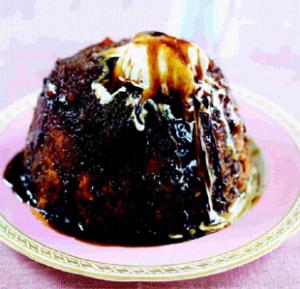
We also gave you a delicious recipe for a Ginger and Dark Treacle Steamed Pudding…

ooooh, please excuse me while i drool a little… this recipe is on it’s way i promise, i’m just giving you enough time to work up a real appetite!

sister Rasela

The Slow Show… Snails, Sloe Berries and The Slow Food Movement

MONDAY 28th JUNE

All aboard!! Sister Rasela is taking your Bellies for a ride in the slow lane.

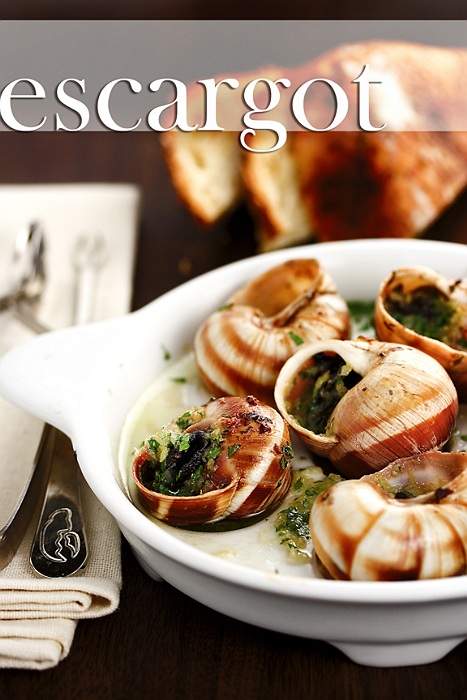
Cruising off at breakshell speed from the starting gate, we ventured into the world of the Escargot (otherwise known as those slimy little backpackers living in your garden beds)

'Johnathon'

Meet ‘John’.

John has aspirations of becoming a wicked camper van when he speeds up. Unfortunately he didn’t make it into the studio on time for the arranged interview but i was still able to bring you the life of the snail, from the garden to the plate… or in some cases – the Belly.

The garden snail “Helix Aspersa” first arrived in Britain with the Romans who loved to eat them. It is this type of snail that is most cultivated for gourmet food known as ‘Petit Gris’. Roasted snail shells have been found in archaeological excavations, an indication that snails have been eaten since pre-historic times.

Apparently there are approximately 300,000 tonnes of snail meat consumed around the world per year. France being the leader followed by the emerging markets of Japan and USA.

Edible snails range in size from 1mm long to the giant Africal snail which occasionally grows up to 1 foot long! mmmmmmm…? Escargot most commonly refers to either ‘Helix Aspersa’ or ‘Helix Promotia’ but beware, the ‘Achantina Fulica’, the giant African snail, is sliced and canned and passed off to some overseas consumers as escargot.

Heliculture is the process of farming or raising snails. In ancient Rome, snails were fattened up in ‘cochlear’ gardens before they were eaten. Anyone wishing to raise snails at home should first experiment until you find what works best in your situation. They must be kept in a cool, moist and shady environment, supplying artificial dew if necessary, supplying vegetation as feed and fattening them on a variety of mixtures which could include such things as cornmeal.

If you don’t care to raise a family yourself, easier ways to get them are to gather them from farms of artichokes, kiwifruit, avocado and citrus growers in certain areas. Be careful though that they haven’t eaten poisoned bait or agricultural toxins.

Favorite snail foods

Apples, artichoke (favorite), barley, beans, cabbage, carrot, cucumbers (favorite), lettuce (makes good clean snails), tomatoes (well liked).

They prefer juicy leaves as apposed to over dry ones and their diet is a combination of 20% wheat bran and 80% fruit.

Snails are mature when a lip forms at the opening of their shell. Before they are mature their shells are more easily broken making them undesirable. For Helix Aspersa, commercial weight is 8 grams or larger.

Before murdering… ooops, i mean cooking your little friends, you will need to purge their digestive systems of previously eaten foods which usually takes about 3-4 days and a diet of cornmeal or bran will suffice due to it’s fiber content. It’s basically a ‘fast’ and you will need to make sure that they are in a pen that does not touch the ground otherwise they will eat the dirt and dust. Be sure they don’t escape!

Nutrient composition of Raw Snail – (per 100g of edible portion) according to information from nutrient database in France is:

Energy (kcal) 80.5

Water (g) 79g

Protein (g) 16g

Avail Carb (g) 2g

No Fibre

Fat (g) 1g

Magnesium mg  250g

Calcium 170g

Iron 3.5g

To prepare live snails for cooking

  • Remove membrane, if any, over shell opening
  • Soak snails in enough water to cover. Add 1/2 cup salt or 1/4 cup vinegar for every 30 snails
  • Mucus will turn water white so change the water several times in 3-4 hour soaking period
  • Put snails in cold water and bring to boil. Boil for 8 minutes, drain, plunge into cold water.
  • Drain and then with a needle or fork, prick snails from their shells.
  • Remove intestine (yum), cut off black parts and prepare according to recipe.
  • Being the only vegetarian/vegan bellysister, i can’t find it in my heart or my taste buds to bring you a delicious recipe but i assure you if you are truly keen on swallowing these slippery little suckers, google snail recipes and there you will find them in abundance!

Next we moved onto something for those of you that like a Sloe tipple or three.


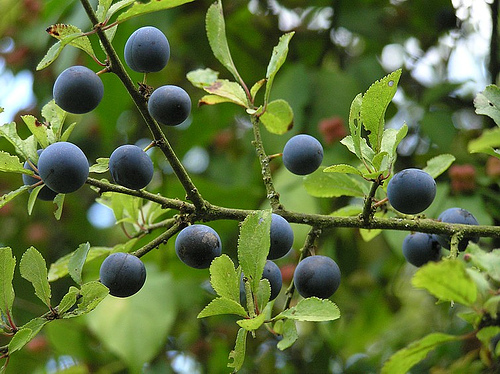
PRUNUS SPINOSA – The Blackthorn or SLOE

This is a species of Prunus, native to Europe, Western Asia and North West Africa.

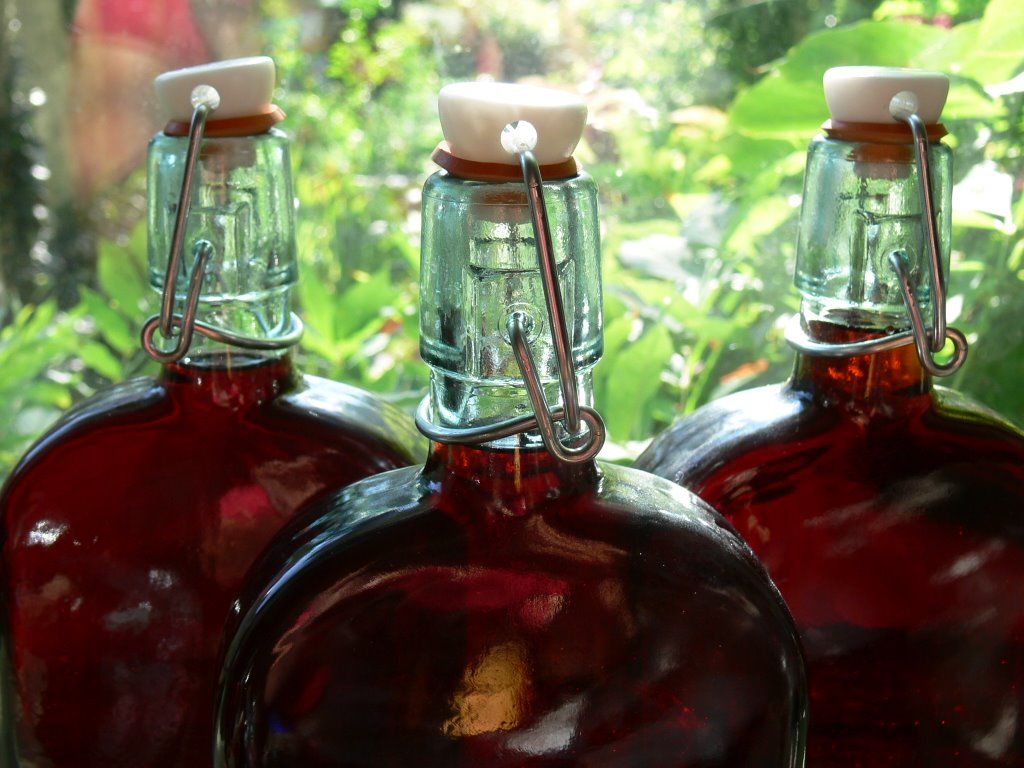
The beautiful berries are the ancestors of the cultivated plum. The Sloe or Blackthorn is best known for the excellent liqueur ‘Sloe Gin’, a wonderfully pink coloured drink much favoured at Christmas time when the Berries will have infused sufficiently well with the gin and sugar.

In the British Isles, it’s shrub is most commonly found in woodlands or hedgegrows and can easily groe up to 12 foot high. Look out for flowers from March to May and pick the fruit from September to October.

When making the gin, it is important for the gin to permeate the skin of the fruit so it is worth waiting for the ‘first frosts’ to soften the skin, although ‘pricking’ the fruit is still advisible.

Folklore has it that when making Sloe gin, one should not prick the berries with a metal fork unless it is made of silver. The traditional method is to prick the berries with a thorn taken from the Blackthorn bush on which they grow.

How to make Sloe Gin

Warning – this has an alcoholic content of between 15-30% by volume.

  • Berries must be ripe. In the northern hemisphere they are traditionally picked in late October or early November after the first frost of winter.
  • You will need a wide necked jar that can be sealed. Each berry is pricked and the jar is filled 1/2 way with the pricked berries.
  • For each imperial pint (570ml) of Sloes, 4oz (110g) of sugar is used, then the jar is filled with gin, adding a few cloves, a smaill stick of cinnamon and almond essence to taste.
  • Seal the jar and turn it several times to mix then store in a cool dark place. It is turnes everyday for the first 2 weeks and then each week until at least 3 months have passed.
  • The gin will now be a deep ruby colour.
  • Pour the liqueur off and if you want to re use the leftover berries you may do so by infusing them in cider, making a jam or they may be used as a basis for chutney or even as a filling for liqueur chocolates.

Homemade Sloe gin is a much more complex and subtle drink than that produced commercially.

All this talk of Sloe gin is making me thirsty but before i can indulge in such pleasures, i must first finish with the chatter from my studio guest this week from…

THE SLOW FOOD MOVEMENT

My guest was Vic Cossford, leader of the the Slow Food Movement in our lovely Shire, who spoke to us about philosophies, bio-diversity in this area and how SFM involves local growers and producers, progress on the petition for Raw Milk products and their (non) availability, events throughout the year, and a general clearing up of any misconception as to what exactly the SFM is all about.

Slow Food was featured on the Belly show a few years ago and you will find a link to the website on our home page, so my main aim this week was to ask about the raw milk and cheese petition and it’s subsequent progress.. or lack of it.

In Australia we are still unable to purchase raw milk or make specialty cheeses from raw milk products, although we are allowed to import other countries raw cheeses into Australia. People who are interested in purchasing, making or supplying any raw milk and cheese products may wish to sign the current petition by going to the slowfood website and showing your support.

On a separate and final slow note

Geir Berthelsen and his creation of ‘The World Institute of Slowness’ presented a vision in 1999 for an entire ‘Slow Planet’ and a need to teach the world “The Way of the Slow”

Professor Guttorm Floistad summarizes the philosophy stating:

“The only thing for certain is that everything changes. The rate of change increases. If you want to hang on, you better speed up, that is the message of today. It could however be useful to remind everyone that our basic needs never change. The need to be seen and appreciated. It is the need to belong. The need for nearness and care and a little love. This is given only through slowness in human relations. In order to master changes, we have to recover slowness, reflection and togetherness – there we will find real renewal”

21st June – Digging deep in this months seasonal fresh report

Sister Rasela getting fresh with you today by bringing you the seasonal monthly report to let you know the best produce this Earth has to offer right now.

Vegetables and fruits are grown throughout the year at precisely the times we need them most and an in depth look at them will reveal exactly what they do for your body.

Here we touch on a few select vegetables:

Jerusalem Artichoke: “Sunchoke”

Nourishes the lungs. It’s sunflower related tubers are indigenous to North America and were a staple in the Native American diet. Excellent raw or lightly cooked. *Rubbery if cooked more than 10-15 mins.

Avocado:

Natural source of Lecithin which protects cells from oxidation and largely comprises the protective sheaths surrounding the brain. Also an arterial cleanser as it is an emulsifier. More than 80% of an avocado’s caloric content is easily digestible fat. It is rich in copper which aids red blood cell formation.

Beetroot: This silicon rich vegetable promotes strength in connective tissue = skin. Strengthens the heart, improves circulation, purifies the blood. *The greens on top contain abundant oxalic acid which if eaten excessively, inhibit calcium metabolism.

Broccoli and Cabbage: Both contain more Vitamin C than citrus!

Garlic: Promotes circulation, inhibits common cold virus. A degree of potency is lost with any kind of cooking but due to it’s fiery nature it can be difficult to eat raw. Try placing it between 2 apple slices to eat. *Extremely warming and not for the already hot (ruddy complexion, night sweats)

Ginger: Combines well with bean dishes to diminish problems of flatulence. Cleansing as a tea in the morning. Simply add a few slices to boiling water.

Kale: Warming. Exceptional source of chlorophyll, calcium, iron, vitamin A (good for night blindness)

Parsnip: Warming vegetable but beware *Leaves are poisonous!

Potato: *Green potato’s and those with sprouts on top are toxic! Remove the eye of the sprout if you are using them this way.

Pumpkin: Who doesn’t love a bowl of pumpkin soup in the winter? Promotes discharge from the lungs, bronchi and throat.

Shallots: All members of the onion family share certain key qualities. The pungent flavour ‘enters’ the lungs and promotes warmth and thus moves energy in the body and expels coldness. One of the richest foods in sulphur- a warming element that purifies the blood. In spite of their medicinal virtue, these plants are thought to foster excessive emotional desire and therefore are not recommended in the major Eastern traditions for those seeking mental and spiritual refinement.

Spinach: Builds the blood. Rich iron and chlorophyll content.

Sweet potato: *Overeating causes indigestion and abdominal swelling/bloating.

Turnip: Member of the mustard family. Good source of sulphur which makes it warming. Mildly pungent qualities are easily destroyed through cooking. Turnip greens are exceptionally rich in vitamin A.

RAW BEETROOT SALAD RECIPE

The bursting BEETROOT with all it’s goodness makes a scrumptious raw salad

Two medium beetroots, peeled and grated

1/4 red salad onion finely sliced

6 baby tomatoes chopped (if tomatoes are out of season this dish is a delight as an alternative to a bruschetta mix)

1/2 lebanese cucumber chopped

3 dessert spoons of lemon juice

1 tbsp flax seed oil

2 tbsp extra virgin olive oil

2 tbsp capers in their juice

1 handful chopped mint

Ground pepper to taste

Fresh chilli to taste

Mix all the ingredients together and serve as a salad, a side dish or on toast rubbed with garlic. All ingredients can be varied to taste. As beetroot is quite sweet, a slightly tangy and salty balance is quite desirable. This dish is also tasty on top of tsatziki dip on toast or with cream cheese (soy or dairy) or blended as a dip.

Top tip for those of you wanting naturally red lips… Raw Beetroot. Not quite as elegant as carrying lipstick around with you but equally effective!

Synthetics – sneak a peak at what you might be eating

MONDAY 21st JUNE

This morning I inquired as to what you might have had in the way breakfast or a mid morning snack… perhaps a blueberry muffin, some carton orange juice or a coffee? I then proceeded to tell you exactly what each item contained synthetically and the impact on the Earth these products have if they were not grown organically. You know, the main stream stuff. Not wanting to put you off your favorite pleasures, I merely want to inform you so that you, the intelligent listener and reader, can make up your own mind.

Let’s just focus on the blueberry muffin and the synthetic chemicals it contains.

We can assume that it is made from flour ground from grain that has been genetically altered. It is also reasonable to assume it has been sprayed with various chemicals both in the field and in storage to keep the bugs out. The flour was almost certainly mixed with aluminum-based baking powder and chemically processed sugar, then treated with a preservative for longer shelf life. Who’s to know if the blueberries are clean, they’ve usually been sprayed. You’ll never know. The oil that is used would be barely food grade and also extracted from genetically altered seeds and to top it all off it’s probably wrapped in plastic packaging.

This is just an example of 1 single item in a day where EVERY key ingredient has been tampered with.

What is your body supposed to do with all these chemicals? Don’t despair… You have a choice!

I encourage you to buy your own ingredients and try to make your own. It can be as simple or as experimental as you like. There are few things i find more satisfying  than eating food I’ve prepared myself or that has been made by someone i know and love. It’s a way of loving yourself from the inside out rather than the other way around. Just think about how much money people spend on making the outside look good!

“Being aware of your choices and of the power those choices have to help you achieve a desired goal is what is called living with intent. If your wish is to live a life that does as little harm to the environment, for example, you must first become aware of all the ways your lifestyle has an impact on the Earth – and make choices and changes based on what you learn. However, intentions, no matter how worthy, are meaningless if they are not backed by appropriate action. Building a system of integrity and honor, where each action matters, reflects living with intent. Taking just any road won’t do”.

This we know,

all things are connected.

Like the blood which unites one family,

All things are connected.

Whatever befalls the Earth,

befalls the sons of the Earth.

Man did not weave the web of life;

he is merely a strand in it.

Whatever he does to the web,

he does to himself.

Taken from the book ‘The Angelica Home Kitchen, recipes and rabble rousings’. An award winning organic vegan restaurant in New York that built it’s foundations on supporting it’s local growers and runs a socially conscious business preparing food seasonally and sensationally.

Sister Rasela


Safety of plastic food packaging

MONDAY 21st JUNE

My intention is not to scare you into thinking you shouldn’t eat anything that comes in plastic packaging but simply to raise your awareness as to the many forms it comes in and reasons why to minimize your intake where possible.

Soft drinks come in plastic lined cans, mineral water comes in plastic bottles, babies are given milk in plastic bottles; cheese, meat, fruit and vegetables are sealed in plastic wrap, fast foods are served in plastic containers, the metal lids of jars are coated with plastic, and takeaway hot drinks often still come in polystyrene cups… think about it.

A spokesman for Food Science Australia (part of the CSIRO) explains that we have no way of knowing that packaging is perfectly safe. The Australian standard for food-grade plastic states that food manufactures must use plastics that are safe for their purpose. Therefore, says Food Standards Australia New Zealand, all plastic packaging properly used for it’s intended purpose should be quite safe. Interesting use of words there.

The point is you are never going to know if the plastic your food is wrapped, stored, served and packaged in is suitable. Because almost all plastics migrate into food and some of these migrating substances could disrupt our hormones or cause cancer, the standard requires that any potentially harmful ones are at low levels. Take into consideration the variety of ways they can enter your system and think again whether this amounts to ‘low levels’.

There are three monomers (the building blocks of plastic) for which the Code sets maximum migration levels because of their potential toxicity. They are vinyl chloride, acrylonitrile and vinylidene chloride. The different kinds of plastic are identified by the numbers shown in the recycling triangle.

Here’s a brief comment on the safety of each type as given by The Green Guide, produced by The Green Guide Institute:

1. Polyethylene terephthalate (PETE or PET). No known hazards. eg Glad oven bags

2. High density polyethylene (HDPE). No known hazards. eg Glad Go-Between bags

3. Polyvinyl chloride (PVC). PVC cling wrap was originally used for wrapping food but was found to leach out into cheese and was suspected of interfering with our hormones. It is now used to wrap newspapers and can be identified by it’s green tinge. Interestingly, during the manufacture or burning of PVC, dioxin is produced, dioxin being one of THE most toxic man-made chemicals in existence.

4. Low Density Polyethylene (LDPE). No known hazards. eg Glad Wrap, Glad Snaplock bags, Glad ice cube bags.

5. Polypropylene (PP). No known hazards. eg Clear plastic takeaway containers. Gladware.

6. Polystyrene (PS or Styrophoam). Made from styrene, suspected of causing cancer and also contains p-nonylphenol. Both chemicals are suspected of disrupting hormones.  The
Green Guide advises against consuming fatty foods and alcoholic beverages in polystyrene containers because the styrene can leach into these foods
.

7. Polycarbonate (PC) and other resins. Large 20 litre bottles are made from PC because it is incredibly strong. A key building block of PC is bisphenol A (BPA) which is a fairly toxic substance. Dietary intake is estimated to be 4000 times less than the permitted level so it’s use is considered to pose no risk to human health.

It appears that the different types of plastics are reasonably ‘safe’ if used for their intended purposes but are we just ingesting too much plastic altogether?

I’ll leave you to consider it.

All of this serves as yet another reminder to get down to your local weekly growers market and buy some of that beautifully grown, wild and free produce that jumps off the tables into your loving arms and nourishes your body and your spirit with it’s goodness.

See you there!

Sister Rasela

Monday 14th June – Belly’s On Tour

Sister Tess is still away taking her Belly on tour throughout Europe, sister Bernadette is touring around the Shire having just brought her Belly back from Melbourne and sister Rasela has taken her Belly to The Dreaming festival in Woodfordia this week so a big thanks to the lovely sister Andy for continuing with an extra hour of his Inspirational “Belly” Lounge on this particular Monday.

Rare as it is, we do try our very best not to leave you starving when we can avoid it and we promise to make it up to you with full fat chat and content upon our return…