On air on Byron Bay’s bayfm 99.9 community radio on September 5, 2011
This week the socks and cardies are coming off with the first true week of spring temperatures. It was an endless cold winter by our totally spoiled sub-tropical standards. For once the official start of spring matches what the skies are doing. And weeks of sun and rain every day are making even the most neglected veggie patch come to life. So we are celebrating by filling our plates with simple but vibrantly colourful salads, with plates covered in leaves and flowers like a happy hippie. And we are leaving the fancy cooking to the pros, and tasting their efforts at a big delicious festival this Saturday, September 10, in Bangalow, the Sample Food Festival.
Into the beautiful bayfm studio, turned for the occasion into a flower decked bower buzzing with nectar drunk bees, and the odd bit of static (too much spring energy may interact with your hardware – beware!), Miss September wafted in, bearing a jar of calendula and orange marmalade decorated with lavender flowers for sister T, and lots of seasonal goodness for the listener. Just remember, if Miss September invites you to dinner, take along a bucket of your best pee for her peas.
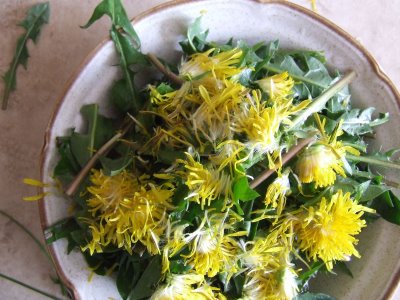
Miss September's dandelion salad
BEST IN SEASON FOR SEPTEMBER – by Miss September, Alison Drover
Its spring time….. pick and eat your flowers and love your lettuces, and pee for your peas.
WHAT’S IN SEASON IN NSW
Vegetables:
artichokes, asparagus, beetroot, cauliflower, kohlrabi, bitter melon
asian greens including wombok (aka Chinese cabbage, aka celery cabbage),
broad beans, sugar snaps, peas
broccolini, broccoli
lettuce, spinach, silverbeet
mushrooms, cultivated and shiitake
new potatoes, swedes, sweet potatoes, potatoes
Herbs, spices and aromatics:
chillies, coriander, curly parsley,flat leaf parsley
ginger, horseradish, turmeric
mint, oregano, rocket, thyme
spring onions (aka green onions, aka shallots – not eschallots)
Fruits, berries and nuts:
apples (Lady Williams), nashis
bananas, papaya, melons, pineapple
cumquats, grapefruit, lemons, mandarins (Honey Murcott), Seville and Blood oranges, pomelo, tangelos
strawberries
Watermelons in Queensland being harvested
LOCALLY AT NORTHERN RIVERS MARKETS
rocket, kale, lettuce, cabbage, beans, peas, fennel, beetroot, potatoes, ginger, passionfruit, bananas, herbs and honey
The best thing to be using a market and ideal for the arrival of warmer days are salads using combinations of different greens and lettuces, radishes and herbs. Make your own dressings and celebrate the arrival of the sugar snaps and peas.
Spring is a posy of flowers, which are great for people and planet. Many flowers are edible and can help us heal and stay healthy and also play a vital role in encouraging the bees in our garden, which are the pollinators for plant biodiversity.
EDIBLE FLOWERS
The first rule in growing edible flowers. Make sure of which kind of edible flower you are going to grow whether it is perennial or annual. The second rule is, you should choose those which you will likely use often. Thirdly, thoroughly check the soil you are going to use. If you want to grow the best tasting edible flowers, make sure that the soil is clean and the fertilizers you put in are organic.
In harvesting, the best time is at its growing peak and in the morning when the dew has already evaporated. It is also important to keep them cool after harvesting. Long-stemmed flowers must be placed in a vase with fresh cold water while short-stemmed flowers must be placed in plastic bags or damp paper towels and then refrigerated.
The ten easiest edible flowers to grow are lavender, chamomile, calendula, borage, chives, antique roses, sweet violet, pansy, Johnny-jump-ups, and nasturtium.
Violets aren’t just another pretty face. They are loaded with phytochemicals and medicinal constituents that have been used in the treatment of numerous health problems from the common cold to cancer. The late Euell Gibbons even referred to them as “nature’s vitamin pill”. A 1/2 cup serving of leaves can provide as much vitamin C as three oranges.
This lady is very inspiring www.herbsarespecial.com.au/free-herb-information/indexs.html
Her words on nasturtiums:
NASTURTIUMS
Scientific research has found the plant has a natural antibiotic action that is fast-working in the body. It is interesting to note that the antibiotic agent, tromalyt, has been found in the urine within one hour of digesting the herb. Noteworthy, too, is that this antibiotic does not interfere with intestinal flora, and it has been found to be effective against some microorganisms that have built up resistance to common antibiotic drugs.
Nasturtiums are good companion plants. They excrete a strong pungent essence into the air and soil, which has been found to deter aphids, white fly and root pests; and the essence secreted into the soil is also absorbed by other plants, helping them to resist attack by pests and disease. Plant nasturtiums between cabbages, broccoli, melons, cucumbers, pumpkins, potatoes, and around fruit trees.
Aphid Spray: nasturtium leaves (infused in boiling water, cooled, strained, and with a little liquid soap added) are used as a spray for aphids on vegetables and other plants.
Nasturtium is a vigorous ground sprawler, when the plants have thickened up and started to spread, start picking the leaves and flowers to eat.
Leaves have a pungent peppery taste, while the flowers are milder in flavour. If leaves and flowers are chopped up finely and added to other greens and vegetables, they are not as noticeably hot in flavour. I encourage every home grower to plant this valuable herb, learn to enjoy it and use it daily for its high content of vitamin C, iron and other minerals, and the powerful antibiotic, antimicrobial, antioxidant and general tonic actions. The hot pungent seeds can be eaten, too
NASTURTIUM VINEGAR
15g salt
100g nasturtium seed pods
A few peppercorns (optional – I used them)
Herbs, such as dill or tarragon sprigs, or bay leaves (optional – I used bay leaves)
200ml white wine vinegar
Rinse – make sure you don’t use pesticides
Tip – gather them up wrap in damp paper towel zip lock day
A SPRING PLATE
Spring potatoes boiled with a platter or greens rocket, radish, fennel, oranges and salsa verde with a nasturtium. ( this is what I will be cooking at Sample event)
Take your pick of what you would like on the plate according to what is good at the market e.g.
• 1 spring new potato
• 1 radish
• slices of orange
• spring peas
• rocket
“SALSA VERDE” – green sauce in Italian – goes with meat, fish or even pasta
1 spring onion trimmed very finely sliced
¼ cup chopped parsley
1 tablespoon chopped parsley
1 tablespoon chopped rocket leaves
1 tablespoon chopped French tarragon
1 teaspoon chopped lemon thyme
1 tablespoon chervil
1 tablespoon salted capers soaked and rinsed
¼ cup oil
sea salt
lemon zest and juice of one lemon
Add each ingredient stir in oil. Add lemon juice before serving so that you don’t lose the bright colour.
Variations: add croutons, add boiled egg
Tip for the garden fork :
Mulch to ensure you get onto those weeds and also make sure you are getting trellis ready for tomatoes ..
Visit www.sustainfood.com.au for planting and harvest tips.
Save your pee in a bucket as long as you are not taking medication it is a great fertilizer for your garden and cuts down the flushing.
Our urine is full of useful chemicals like nitrogen, potassium and phosphorus. But urine contains salt, making it a bit powerful to apply directly to plants. You’ll have to mix the urine with grey water at a ratio of 8 to 1.
You will also save on cleaning products.
Suitably nourished and refreshed by the spring energy and much giggling about peeing in the veggie patch (intriguing depth of flavour in those strawberries madame – what is your secret?), sister T went on to play an interview with the energetic and enterprising Remy Tancred, publisher of The Lennox Wave, and of the one year old Sample Magazine, the North Coast’s own Ita. Actually she looked a bit tired – organising a massive one day food festival will do that to you.
Sample is full of stories about locals involved in food, from farmers to chefs. Check out the recipes for a great idea to brighten pancakes in spring. A recipe from the Byron Beach Cafe, hot pink pancakes, coloured with puree from beetroots roasted in their skins, layered with orange slices. You could top them with nasturtium flowers for a truly vibrant breakfast.
The Sample Food Festival at the Bangalow Showgrounds will include lots of free music and entertainment for kids and adults, even those who don’t live breathe and dream food. You should catch the goat milking demo – those Nimbin goats have rectangular pupils, you can see how they got the demonic reputation. There is a session on knife skills, and some of our top chefs sharing knowledge. Twenty two local restaurants and caterers will have plates to taste, for $5 or 10, the list of dishes sounds far too good for an easy plan of attack. Tenterfield lamb to Barcoo beef, vegan lasagne to mixed grain risotto, cheviche to crocodile, lemon myrtle cupcakes to macadamia and honey meringues, goat, squid and of course lots of Bangalow pork. Just to start. There is a producers market in the morning, and about 60 stalls of other North Coast food and food related businesses. And the lovely Leah Roland of the Bangalow Cooking School is holding a 2 hour kids class at 10.30 and then an adult cooking class at 12.30 in the Scout Hall, with the help of some top local chefs. Lots more info here , in the new issue of Sample, or the local papers.
I think this is a great opportunity to see what our local restaurants, farmers and food businesses have to offer, with no entry fee. I hope lots of people go, so Remy and the Sample team are crazy enough to do all this again next year. And thanks Remy for donating a free adult class ticket with Leah Roland and a bunch of Sample magazines for bayfm subscribers.
BELLY BULLETIN
Bangalow-based macadamia farmers, Pam and Martin Brook of Brookfarm have won a lot of prizes for their macadamia products. Now they have been named finalists in the Diversification Farmer of the Year category in the 2011 Australian Farmer of the Year Awards. There are no categories for best ute or most battered hat, but a lot of emphasis on diversification, biosecurity and innovation. It is an elite group. Another finalist is Lindsay Bourke of Launceston (TAS), a beekeeper and honey producer. He runs 3000 hives and a honey production business without insecticides, preservatives or additives. The national winner is in the running for a $50,000 scholarship.
Good news on the fast food front. KFC has begun removing all toys from its children’s meals, a move welcomed by anti-obesity lobby groups. The Obesity Policy Coalition’s Jane Martin says:
“Parents are so familiar with the pester power that these kinds of toys create. We’d really urge other fast food outlets, to follow this example and stop using toys to market junk food to kids.”
Australia has brought in its biggest ever truffle harvest this year, due mainly to a big season in Western Australia. One WA company has doubled last year’s crop. Producers say the increase will help Australia make a name for itself in the global truffle market. And maybe prices will drop a bit for us consumers.
TODAY’S SUNNY SEPTEMBER MUSIC
Belleville Rendevous, by M – from the 2010 So Frenchy so Chic compilation
Yellow daisies, by Fertile Ground with Navasha Deva
The Street of Barefoot Lovers, by Muzika
Visa fran Utanmyra, by Jan Johansson, from ‘Jazz pa Svenska’, arrangements of Swedish folk songs
stay healthy and pee happy,
Sister T