Aloha and goooood day to your beautiful belly’s. Sister Rasela simmering in the belly pot today where it’s going to get very wet and a little wild – and I’m not talkin’ bout the weather. I’m actually talking SEAWEEDS and i will be for the next wave of interesting and informative belly-liciousness.
Hmmmm … What are the different types of seaweed you may ask ? What are their nutritional benefits and healing properties ? … and how the heck do you use them ?
Staying in the water, we swam amongst a few favorite foods and recipes provided by some of the worlds greatest surfers, who might have come across a bit of seaweed in their time. Then we drenched ourselves in a few water logged food facts you might not already know. For example, are you aware that …
- The largest modern fishing trawler drags a net twice the size of the Millennium Dome in London ??
- It takes 5,000 litres of water to make 1kg of cheese, 20,000 litres to grow 1kg of coffee and 100,000 litres to produce 1kg of hamburger beef ??
To help you stay afloat in a sea of belly love, all the music tracks i chose today were from Sunny Coast boys, OKA who released their eighth beautiful album titled “Milk and Honey” so i featured this through out the show. Trouble is though, i was so busy yapping away in the depths of a wonderous water world that i only got to play about three. I suggest you go buy it and listen to it yourself as they are my favorite flavoured band in the history of Australian music. Delicious. http://www.okamusic.com/HOME.html
Back in the world of coloured fronds and ocean grace, we get down to salty sultry business as we descend to the land of mermaids and starfish.
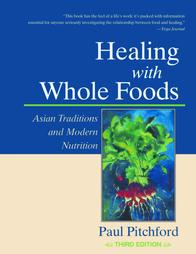
All of the information about seaweed is taken from my ‘bible’ and all time favorite nutrition book called “Healing with Wholefoods” – Asian Traditions and Modern Nutrition by Paul Pitchford.
Seaweeds are powerful sea vegetables which have been used for thousands of years, thanks to their ability to enhance health and heal many ailments. Their properties have enabled people of all nationalities over the years, to live happier and longer lives when used correctly in a balanced diet.
Our unique and beautiful human bodies begin their development in the womb, surrounded by saline solution where we are nourished and cleansed by blood that fascinatingly consists of almost the same composition as sea water.
The seaweeds can be classified by their colours, with a selection of reds, browns, greens, blue-greens and yellow-greens. Photosynthesis is responsible for their specific and individual colours and various conditions in which they grow determine their nutritional content and structure.
Sea plants contain up to ten to twenty times the minerals of land plants as well as a huge vareity of vitamins and other elements which make them an amazing source of both food and medicine.
Some healing and medicinal properties of seaweeds are – salty flavour; detoxify; soften hardened masses; act as lymphatic cleansers; alkalize the blood; lower cholesterol; remove residues from radiation in the body; improve water metabolism; treat swellings; reduce inflammation and other heat conditions affecting the heart and lungs; treat hemorrhoids; promote digestion; remedy for sea sickness; the list goes as deep as the ocean itself. Make sure you get advice on what is best for you depending on what you need at the time.
They are also used in general to treat swelling, nodules, lumps, goiter, swollen lymph glands and chronic coughs where heat signs and yellow or green phlegm is present.
The nutrients in seaweeds are absorbed and assimilated easily partly due to the fact that our own blood is made up of all one hundred or so trace elements in the ocean.
You don’t need much to get you started. Paul Pitchford recommends 5-15 grams a day. Introducing new foods into the body can sometimes take time and you may notice a few strange smells, in certain situations, that you haven’t previously encountered. Start slowly and add new foods gently. Combining them with foods such as adzuki beans works well as this both softens the fibre of the bean if you cook them with a strip of Wakame or Kombu, and also adds to the flavour of the dish.
When i first started eating seaweeds most of them were from Japan and as we know in recent times, our divine oceans have been used and abused and are sometimes so heavy in toxic pollutions and commercial waste that what comes out of them needs to be more thought about than ever. I would recommend exercising caution when selecting anything from the ocean. Make sure you know where it came from and the quality of the bed of water in which it grew. Then you are able to make your own informed and educated decision as to what you place on the tongue of your gorgeous body.
Here’s a few seaweeds and their high source of nutrients for a light lowdown from the book ‘Healing with Wholefoods’ –
“Hijiki, arame, and wakame each contain more than ten times the calcium of milk; sea lettuce contains twenty-five times the iron, hijiki eight times the iron, and wakame and kelp about four times the iron of beef; depending on when they are harvested, kelp, kombu and arame contain one hundred to five hundred more times iodine than shellfish, and six hundred to three thousand times the iodine average of other marine fish.”
As well as being harvested in Japanese waters, an increasing number are also being wild crafted on the shores of America and now Europe.
You may like to find out more about AGAR-AGAR which can be substitued for gelatin in jelly’s and to set certain dishes. Be careful of the highly processed forms though that have been bleached and transformed into something more toxic than nutritional. Do some research !!
DULSE is popular in flake form and can be sprinkled over veges or added to soups to give them an earthy purple colour and an oceanic flavour. Exceptionally high in iodine, it’s a good substitute for salt.
HIJIKI and ARAME grow over rocks or the sea bottom and once cut and dried in the sun, they are boiled til soft then dried again until it emerges black and ready to eat. These are both excellent sources of calcium, iron and iodine and full of B2 and niacin.
KOMBU and KELP have yellow-brown pigmentation and are known to be the longest and largest of all sea plants (up to 1500 feet). They can greatly improve the value of all food they are prepared with. Both of these seaweeds are fantastic when added to bean dishes, as their mineral content helps to balance the protein and oils in the beans, making them easier to digest. They are great because they also break down the tough fibres in foods they are cooked with.
NORI is probably the most commonly known and used form of seaweed in the western world now days with the explosion of sushi bars in recent years. It is a beautiful dusky-jade colour and the fronds are hollow-like tubes that flutter away in the currents, like ruffled fans. Nori has the highest protein content and is the most easily digested sea vegetable of all. It can be useful in conditions such as high cholesterol, high blood pressure, fatty cysts under the skin, warts and rickets; aids digestion especially when eaten with friend foods.
WAKAME is olive coloured and is one of the highest in calcium (hijiki is first), rich in niacin and thiamine and has been used traditionally in Japan to purify mothers blood after childbirth. It also softens beans and other hard fibres cooked with it.
IRISH MOSS fronds grow like broad forked fans in colours from reddish-purple to reddish-green. It is a superb and nutritional thickening agent for stews, gravies, salad dressings, aspics and gels. Better and less processed than agar-agar. Some of the benefits of Irish Moss are it’s ability to inhibit arteriosclerosis, guards against fat and cholesterol buildup and had a mild anti-coagulant effect on the blood. It also contains a gelatinous substance that treats peptic and duodenal ulcers. Traditional Irish used it as a food; they also extracted carrageenan as a remedy for respiratory diseases.
That’s all folks !
Hope you digest this information gently and learn something you didn’t already know. I urge you to look into seaweeds more if you are interested in diving into the world of underwater goodness. Remember we are all different and what you need is not what your neighbour or your lover needs. Learn about yourself and your bodies needs. Treat it well. Respect it and love it from the inside. You are beautiful.
Oceanic love and mermaidian magic
sister R xx