Category Archives: Uncategorized

getting lemony with Tegs and Nicky

A big thank you to guest bellysister Tegs for sistering the belly today and inviting one of our favourite cooks, animal lover and Bay Fm co-office manager with the lovely Lina, NicKy.  Nicky also shares her tunes, and shaggy dog stories, on Fridays at 9am on bayfm, Byron Bay’s one and only community radio station – see here.


here are Nicky’s recipes for you :


BAKED CHICKEN WITH LEMON, POTATO AND GREEN OLIVES


1KG roasting potatoes cut into chunks

1 red onion peeled and segmented

1/2 a cup of green olives (Sicilian)

1 lemon, sliced

2 bay leaves

1/2 cup chicken or vegetable stock

1.7 Kg chicken, jointed, or chicken pieces or breast

1 Tbs olive oil

sea salt and ground pepper

flat leaf parsley, chopped to serve


Pre-heat oven to 180 degrees celsius. Place potatoes, onion, olives,lemon and bay leaves in roasting tin and pour over stock. Place chicken pieces on top. Drizzle with olive oil and seasoning. Roast 50 minutes or until chicken is golden. Remove chicken and put on warm plate, cover with tin foil. Turn up oven to 200C and return roasting tin for 10 minutes to brown other stuff. Place chicken back on top, sprinkle with parsley and serve. YUM!

Hint: I par boil the potatoes first for 10 minutes to soften.

If you use chicken breast, cover the pieces with the peeled onion and place potatoes on top, so as not to dry out the chicken. That way, the potatoes roast better as well. You don’t have to remove chicken, just leave in and roast.


LEMON LAYER PUDDING


grated rind and juice of one lemon

50G butter

100G sugar

2 eggs, separated

50G self raising flour

300 mL milk


1. Add the lemon rind to the butter and sugar and whisk the mixture until pale and fluffy. Add the egg yolks and flour and beat well. Stir in the milk and 30-45 ml (2-3 tbsp) lemon juice.

2. Whisk the egg whites until stiff, fold in and pour the mixture into a buttered oven proof dish.

3. Stand in a shallow tin of water and cook at 200C, (400F, gas mark 6) for about 45 minutes, until the top is set and spongy to the touch. This pudding will separate into a custard layer with a sponge topping.


food books ain’t what they was & eating the whole cow

On air on Bayfm 99.9 community radio on July 2, 2012


Well maybe not the hair…or the skin.  Though I read that buffalo hide is a popular ingredient in Bhutan.   Here on the North Coast of NSW we feed our minds each year with a large serve of writers, at the Byron Bay Writers Festival.  And each month Miss Alison Drover feeds our bellies with in season deliciousness.  For July she is thinking about eating a whole cow, particularly the tail, a.k.a. oxtail, more versatile than I ever realised.  And yes you can vegetarianise the recipes.  Mooo.  (That’s ‘good’ in cow)

Today on belly, Jonathan Parsons, director of the2012  Byron Bay writers festival, talked about the authors who have written on food & will be on panels at the festival, no traditional cookbook writers but some very interesting takes on the world of food, Gay Bilson is teaching a workshop, & there will be a few dinners seasoned with great writers. In the second half of belly, miss July warmed us up with in season deliciousness, & we met a 9 year old food blogger who is now up to about 7 million visits on her site.


WHO IS COMING TO THE 2012  BYRON BAY WRITERS FESTIVAL

(Excerpts from the Festival website, full details here)

Charlotte Wood has been described as “one of the most intelligent and compassionate novelists in Australia” (The Age), and “one of our finest and most chamaleonic writers” (The Australian).  Her latest work is a book of contemplations on cooking, Love & Hunger: Thoughts on the Gift of Food.

Wayne Macauley is a highly acclaimed writer…His most recent novel, The Cook (Text, 2011), has been nominated a Pick of The Week (The Age & Sydney Morning Herald), Review of the Week (Sunday Age), Must Read (Sunday Herald Sun) and Book of the Week (Brisbane Sunday Mail), receiving many four and five star reviews. It has been listed as ‘Favourite Australian Fiction’ on ABC Radio National, a ‘Book of the Year’ in the Weekend Australian, ‘Best Fiction of 2011’ at Readings Bookshop and ‘Best of This Year’s Releases’ in the Sunday Herald Sun.

Mungo MacCallum has established himself as one of Australia’s most influential and entertaining political journalists, broadcasters and commentators.  He is the author of eight books on politics. His latest book is Eat My Words, which will launched at this year’s Festival on Friday 3 August at 4pm.  [ “Because every other bugger is doing it”.]

Jim Hearn is a researcher, writer and chef. As a chef, Jim has worked in commercial kitchens for over twenty years. Jim wrote High Season: a memoir of Heroin and Hospitality, after he quit his job as head chef at Rae’s on Watego’s in Byron Bay and enrolled in the writing program at Southern Cross University as a mature-age student. Louise Thurtell picked up the manuscript for High Season through Allen & Unwin’s Friday pitch session.

The wonderful Gay Bilson will present a workshop on food writing, called “What we talk about when we talk about food.  Details here.

And there are three literary food events, details here.  Jonathan says he loves those sorts of events at festivals because that is where the best conversations happen.

Also check out Charlotte Wood’s blog, “How to shuck an oyster”, all sorts of meditations and investigations of the world of food.  I was an instant fan.  There will be a permanent link from the belly site, but for now see here.


MARVELLOUS MARTHA


Have you heard about a 9 year old Scottish girl called Martha Payne? This year she started a blog to talk about the lunches provided by her school. Some days she loved them, but often she came home hungry. Some days the meals were too small, or just not good, which is why the blog is called Never Seconds. For example, she says the kids were not allowed fruit unless they had finished everything else on the tray. It quickly became a sensation, with kids sending pictures from schools all over the world, and Martha started to raise a lot of money for school lunches in a poor community in Africa through the blog. Soon the local council, in charge of providing the food to schools, dragged Martha from maths class and told her she could no longer take photos of her lunch. This caused such a swell of support and protest that the Argyll and Bute council reversed its ban and the blog now is up to about 7 million visits.  As most artists know, getting banned is great publicity.   But it’s an impressive effort if you are only 9 years old.  If you or your kids are bored during the holidays, maybe a little writing project is the answer.  Martha is also on holidays, and has asked schools from around the world to be guest bloggers on Never Seconds.  But even if nobody you know will ever darken the doorstep of a school again, those lunch tray pictures from around the world are very interesting, a window into other places.  Putting food into our own mouths and bodies is an intimate, important and literally visceral thing.  The food consumed by primary school kids feels like something that is building the people of our future, as much as everything they learn in class.

The Byron Bay Community Centre is also running a whole heap of classes for kids during these school holidays, including cooking classes with Ali, aka our wonderful seasonal bellysister Alison Drover.  It is called Kid Around.


NOSE TO TAIL EATING – BY MISS JULY, ALISON DROVER

On Belly today we discussed the‭ idea of eating everything from‭ ‬“nose to tail‭”‬ which simply put means considering that when we eat‭ ‬we should not be looking at wasting a life just for some choice eye fillet steaks.‭ ‬ Imagine a cow that just was made of eye fillet steaks‭!‬ There are other parts of the animal that are food for us and also contain‭ ‬varying nutritional‭ ‬benefits i.e.‭ ‬livers,‭ ‬marrow in bones of the oxtail and so worth and by discovering what these parts are and how to cook them we are ensuring that when an animal is killed is has fed as many people as possible and very little has been wasted.

Consider the other types of the animal in winter and chat to your butcher or farmer about stocking some of these cuts and making them more available.‭ ‬If you and a group of your friends shops at the butcher share recipes ideas so that it makes it worthwhile for the butcher to keep these cuts i.e.‭ ‬more customers and in turn you will be helping the planet too.

Oxtail is the tail of the cow‭…‬ amazing meat cooked slowly and one of the best bones for stock.‭ ‬Enjoy‭…

Reading‭ ‬– perhaps after you you have  eaten‭ ‬http://www.theecologist.org/green_green_living/food_and_drink/1299412/nose_to_tail_eating_its_sustainable_but_can_you_stomach_this_type_of_meat.html


JULY BEST IN SEASON
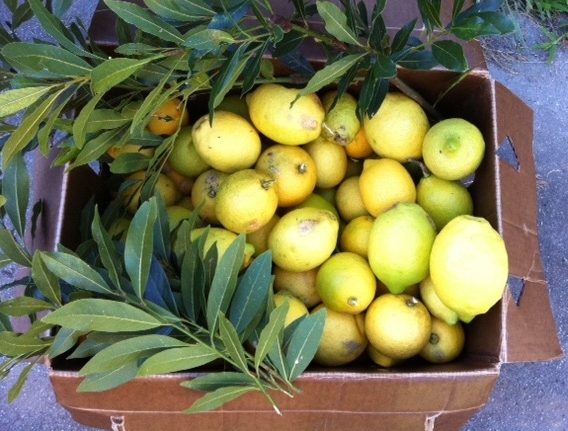
 

beautiful ugly lemons - photo Alison Drover

Time to celebrate citrus‭ ‬– make marmalade,‭ ‬compote and try candied fruits.


Soup making time so that you can snuggle up earlier at night.


FRUIT

Bananas, Carambola, Chestnuts, Custard apples, Fuji apples, Grapefruit, Kiwifruit

Lemons, Limes, Mandarins, Nashi, Navel oranges, Packham pears, Panama passionfruit

Pears, Persimmons, Pink lady apples, Quinces,

Red delicious apples, Rhubarb, Ruby red grapefruit


VEGETABLES

Baby fennel, Baby red capsicums, Beetroot, Broccoli, Brown onions, Brussels sprouts

Cabbage, Carrots, Cauliflower, Celeriac, Celery, Chinese greens

Dutch carrots, English spinach, Fennel, Gai lan‭ (‬Chinese broccoli‭)

Garlic, Ginger, Jerusalem artichokes, Kumara or sweet potatoes, Leeks

Parsnips, Potatoes, Pumpkin, Rosemary, Sage, Silverbeet, Spinach, Witlof


A tale of winter‭ ‬ – Miss July‭’‬s Oxtail Warmer


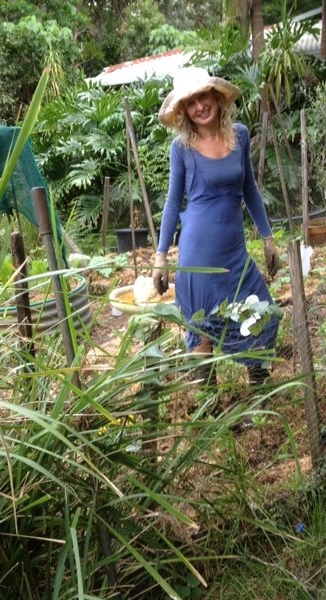
Miss July, blue with cold but fearlessly collecting ingredients

Enough for‭ ‬2‭ ‬but make more for the freezer


an oxtail‭ ‬-‭ ‬cut into joints

flour‭ ‬-‭ ‬a little for dusting the oxtail

cayenne pepper

ground black pepper

salt

butter‭ ‬-‭ ‬thick slice

carrots‭ ‬3,‭ ‬peeled and roughly chopped

1‭ ‬fennel chopped roughly‭ (‬optional‭)

onions‭ ‬-‭ ‬about‭ ‬2,‭ ‬peeled and roughly chopped

celery‭ ‬-‭ ‬a rib or two,‭ ‬chopped

seasonings‭ ‬-‭ ‬garlic and bay leaves‭ (‬4‭ ‬or‭ ‬5‭)‬,‭ ‬plus one or two from:‭ ‬orange peel,‭ ‬juniper berries,‭ ‬thyme

tin of chopped tomatoes local please or if in season fresh tomtaoes

a bottle of strong red wine‭ (‬like an Aussie shiraz‭)


-Preheat oven to‭ ‬160C.‭ ‬Trim the meat of fat and toss each joint into flour that you have seasoned with the cayenne,‭ ‬mustard powder and ground black pepper.

-Melt the butter in a roasting tin and seal the meat.‭ ‬Turn each piece as it colours,‭ ‬then add the carrots,‭ ‬onions,‭ ‬celery and some chopped garlic and let them colour a little,‭ ‬in the rapidly disappearing butter.

-Add the bay leaves,‭ ‬then pour over the wine and tinned tomatoes,‭ ‬and add in any extra seasonings‭ ‬-‭ ‬a few strips of orange peel,‭ ‬8‭ ‬or‭ ‬10‭ ‬juniper berries,‭ ‬or a few sprigs of thyme.

-Bring to the boil,‭ ‬cover with oiled greaseproof paper and place in the oven for an hour.‭ ‬After an hour the meat will be brown‭; ‬then turn the meat over and leave for a further hour.‭ ‬The sauce will have reduced and become intensely flavoured‭; ‬there will not be a great deal of it,‭ ‬especially if you haven’t added the tinned tomatoes,‭ ‬but it will be strong and sticky.‭ ‬With the tomatoes,‭ ‬there will be more sauce with less intensity of flavour,‭ ‬but also extremely tasty.

-Serve‭ ‬with mashed potato,‭ ‬crushed tinned cannellini beans,‭ ‬or mashed root vegetables.


Miss July has some free cooking classes coming up, all ages these ones, through the Byron Community College and the

Love Food Hate Waste‭ ‬campaign, details here.


by Alison Drover.


BELLY BULLETIN

– In Byron Bay, the YAC this Thursday July 5 is having a fundraiser with non-alcoholic gluhwein & other goodies, music,performances. It goes to support their work with young people, starts at 5.30 pm. There’s also a 1 day barista course for young people on July 17.

In Sydney, Michael Pollan, author of “The omnivore’s dilemma” & “in defence of food” , will be speaking at the Opera House on July 10. He is one of the people changing the way we think about food through his journalism. Someone please get him to this area.  Info here

& in Coorabell, at the hall, Argentinian chef Francisco Smoje will be hosting 3 pop up dinners, starting Sunday July 15. What’s a pop up dinner and who is Francisco? Tune in to belly on the 23rd of July to find out. Or check out his site.


MUSIC


I wrote a novel, by The trouble with Templeton  (his name is Thomas Calder, he’s from Brisbane, and who was Templeton? The bellysisters don’t know)

Manana, by Bustamento, Nicky Bomba’s new band (that’s the day some of us will finally start to write a novel)

The Never Seconds Song, by the totally fabulous Scottish Falsetto Sock Puppets, they wear kilts, they beat up the daleks, check em out on YouTube

Motion, by Hinterlandt, another fab solo Australian artist, to finish belly for another week.


Love and chocolate covered novelists, Sister T

(not so) scary food : puff pastry and artichokes

On air on Byron Bay’s Bayfm 99.9 Community radio on 25 June 2012

I decided to call today a scary belly because both puff pastry and artichokes are foods that can be a bit scary to handle for even an experienced cook. But so wonderful to eat, and fun to work with once you make friends.


DEANNA’S EASY AS PIE – PUFF PASTRY

Deanna’s easy as pie series has been all about baking from the kitchen of a good home cook, learning the secrets of various types of pastry and dough. Today she made even one of the scariest pastries of them all, puff pastry, sound achievable by a first timer. So much that I might even try it myself – like most of us I have relied on (strictly all butter – mmm) store bought puff pastry, which turns a marathon into convenience food.


There are two main types of puff pastry.  The main difference with ‘rough’ or ‘quick’ puff is that you don’t need to put the dough to chill in the fridge each time you work it.  It isn’t as light and flaky as the full deal, but still delicious.  Deanna recommends using a puff lid on your favourite stews and casseroles, turning a homey dish that her kids aren’t too excited about into something special.  See her beef pie below.

Puff is very versatile, used in everything from very complex dishes, sweet and savoury, to the humble sausage roll and meat pie.  If you make a fully enclosed pie, use shortcrust for the base.  Deanna also spoke about croissants, but she isn’t completely happy with her rough puff ones, and is still experimenting.  She made both types of puff pastry for the first time just before coming on belly to tell us all about it.  She spent the weekend covered in flour but as you can see the results are pretty good.


ROUGH PUFF PASTRY – by Deanna


250 g plain flour

250 g cold butter, chopped

1 tsp salt

150 ml very cold water

Place sifted flour and salt in a large bowl. Use fingertips or pastry cutter/knives to rub butter into flour

Make a well in the middle and add the water. Mix gently until a dough forms.

Wrap in cling film and rest in fridge for 30 min.

Roll out the dough on a lightly floured surface. (approx 20x 40 cm) You should be able to see streaks of butter in the pastry.

Fold a third of the dough into the centre, then fold the bottom third up over that. Rotate a quarter turn and repeat process. Repeat the round 4 times.

Chill the dough for one hour in the fridge.


LONG TEDIOUS  (BUT WORTH IT)  PUFF PASTRY – by Deanna


Exact same proportions as above.

Place the flour and salt in a large bowl. Place 25-30 g of butter into flour and rub in until resembles fine breadcrumbs.

Add the water and stir until a dough forms. Turn onto a lightly floured surface and knead until just smooth. Cover with cling film and chill in fridge for 30 minutes.

Roll out the dough to rectangle approx 20×40 cm. Place butter between two sheets of cling film or baking paper and roll out until flat and several centimetres smaller (both length and width) to dough rectangle.

Lay dough on floured surface with short end facing you. Remove butter from cling film/baking paper and place in centre of dough. Fold bottom end over the butter and then opposite end over the top (butter should now be in dough “envelope”)

Rotate one quarter turn and press edges together. Use a rolling pin to lightly tap butter and roll out dough to approx 20×40 cm rectangle repeating folding process as above. Cover with cling film and chill for 30 minutes.

Remove dough from fridge and repeat rolling and folding process 2 more times as above, chilling for 30 more minutes.

Repeat rolling, folding, chilling process a further 2 times. Dough should be folded and rolled a total of 6 times.


Tips: for puff pastry the ingredients should be as cold as possible. The chilling is necessary to ensure the butter doesn’t melt into the dough, and layers remain separate.

Oven must be hot when the pastry enters so the pastry is allowed to puff before the butter melts

The folding process creates lots of layers so as it cooks steam lifts and separates the layers resulting in a flaky pastry. Yum.


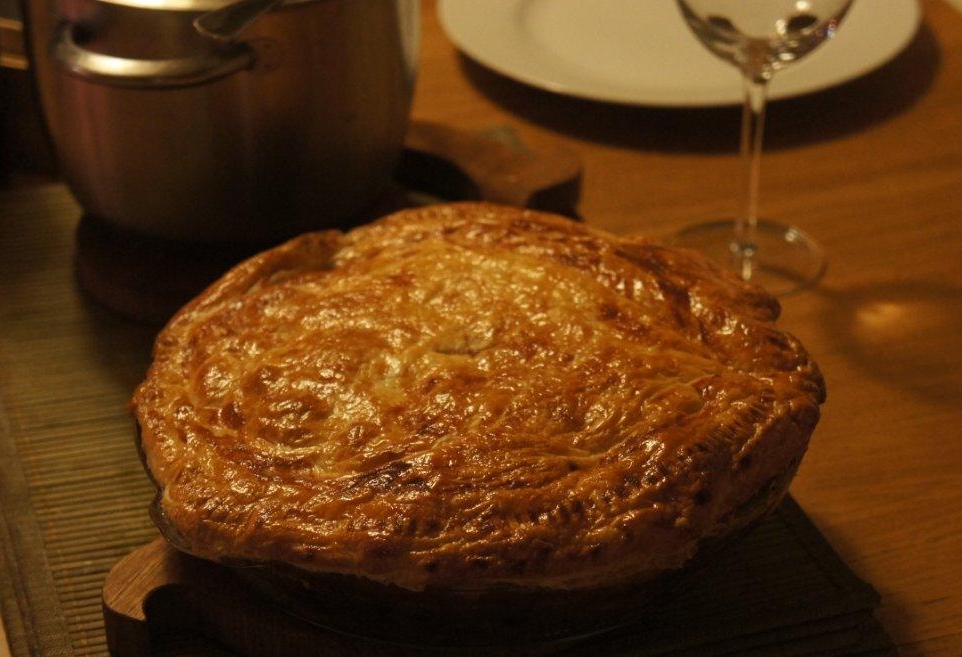
Deanna's Beef Bourguignon Pie - photo Paul Sudmals, baking team photographer and taster


BEEF BOURGUIGNON PIE – by Deanna

2tbsp vegetable oil
1 kg chuck steak trimmed and cut into 5 cm cubes
300 g smoked bacon, rind removed, sliced
Dollop of butter
12 shallots
250 grams mushrooms
30g plain flour
2 cups dry red wine (technically should be a burgundy)
250 ml beef stock
2 thyme sprigs
1 -2 rosemary sprigs (beef bourguignon recipes usually just call for thyme, but I like fresh rosemary in mine)
1 bay leaf
2-3 garlic cloves crushed
Salt and pepper
2 sheets ready made puff pastry or 1 quantity  homemade puff pastry (see recipe)
1 egg beaten

1.    Heat oil in large flameproof casserole, add beef in batches and cook over a high heat until browned all over.  Remove with a slotted spoon and drain on paper towels
2.    Add butter, bacon, mushrooms, garlic and shallots and cook until bacon crisp and shallots softened.  Drain on paper towels
3.    Add the flour and cook stirring for one minute.  Gradually add wine and stock, stirring until thickened.
4.    Return beef, bacon and mushrooms to pot (you can add the shallots at this point, but I usually leave until later otherwise they fall apart).  Add herbs and season to taste.
5.    Bring to the boil, cover and place in preheated oven at 160 for 1.5 hours.
6.    Add shallots (if not already in) and cook for another hour.
7.    Allow mixture to cool before pouring into pie dish.
8.    Cover with store bought pastry sheets (or home made puff).
9.    Crimp edges to seal around pie dish and make a cross in the middle to allow contents to steam
10.    Baste puff pastry with beaten egg.
11.    Place pie in 180 degree oven and cook for 20 minutes or until pastry is puffed and golden.


ARTICHOKES


You probably eat artichokes every day for breakfast, but many people find artichokes a bit intimidating to tackle, with their leathery and spiky appearance. Often in shops they are also quite old. You can keep them several days in a plastic bag in the refrigerator, but don’t buy them unless they are plump and glossy – it is the flower bud of a thistle plant, you don’t want to eat a dried up droopy flower.


Artichokes originally came from North Africa or Sicily, they were very popular in ancient times when Sicily was a Greek colony. Later, they were popular at French and Italian courts, helped along by a reputation as aphrodisiacs. They are still everywhere in Sicily, my parents lived there for a while and their house was surrounded by dusty green artichoke plants, so we had many lovely huge salads of young small artichokes.

Artichokes should be a spring veg but I see lots of good ones turn up in winter in our shops. It is a great healthy liver cleansing and diuretic veg, you can have them as a bitter herbal tea but it is much more fun to eat them.

I think the best way to make friends and get to really know the edible bits of these armoured buds is to eat them raw, dipping each slice in a bowl with olive oil,vinegar or lemon, a little salt and pepper (you could choose melted butter or mayo if you wish). This is a traditional way to eat them, and since you have to use your hands, may explain the sexy reputation.

Remove the outer leaves, all but about 5 cm of stem, wash well, start eating leaf by leaf, scraping the soft pale part at the inside bottom of the leaves. Gradually you will find that you can eat more & more of each, until the inner tender leaves are completely edible. Don’t eat the fluffy middle, called the choke (some modern varieties are chokeless). You will be left with the soft base of the bud, that’s the heart, all edible and delicious.

With very young small ones you can eat the whole thing, slice thin, eat raw in salad

Or steam, remove choke and stuff (breadcrumbs,garlic, anchovy,herbs, or just drop in a raw seasoned egg) and cook sitting at the base of a pot in liquid, batter and deep fry, make puree. You can eat a bigger percentage of the leaves when cooked, but often some remain hard and need to be discarded while eating. You can also eat the peeled, cooked stem of a fresh artichoke.

They are easy to grow perennials if you have lots of room and sun in your garden, and sandy soil, although I am not sure they can cope with our sometimes relentless rains. They also become a lovely flower if you miss the eating stage.

BELLY LAB RECIPE – ARTICHOKE MAYONNAISE, by sister T


I was busy in the belly lab over the weekend, adapting a Peter Gilmore recipe from his sumptious cookbook (named after his 3-hatted Sydney restaurant),  Quay. I got it from the library really just to look at the beautiful pictures. The recipes are pages long and require lots of unusual equipment and ingredients. However, many of the mini-recipes within each masterpiece are surprisingly achievable, and he combines many flavours in ways that are new to me and I can’t wait to try. For example, his artichoke mayonnaise. Artichokes and eggs love each other, it is a great idea, but I don’t have a temperature controlled combi-oven, vacuum bags and a vacuum sealer. Also I wanted to use raw oil and herbs. I am happy to report the result was delicious, my main taster calls it the best mayo I’ve ever done, very light and delicate. Good on prawns, fish, scallops, a steak, boiled potatoes or eggs.  Or on a grilled choko of course.


2 plump artichokes

2-3 heads and stems of young garlic (in markets now) or use a whole head of normal garlic – it will be very mild, you can use more if you wish

about 1/2 cup of chopped parsley (or try chervil or tarragon)

2 very fresh free range eggs – yolk only

lemon juice to taste

good olive oil to taste


Remove outer leaves of artichokes, cut off top 3-5 cm of petals, peel stems. Cut into segments, remove choke, wash well. Keep artichoke pieces in acidulated water so they don’t go black while you work. Wash young garlic or divide other garlic into cloves.

Steam garlic and artichokes separately until very soft.

Squeeze out garlic from skins, or remove any hard bits from young garlic.

Remove very hard bits of leaves from cooked artichoke – just scrape with a knife to make sure you don’t include too much fibre.

Chop in a food processor with a little olive oil until you have a very smooth paste – I did one lot of whizzing with the very soft bits and another lot with the slightly harder parts of the artichoke (but not the really hard ones) to try and get the most out of them. Allow to cool.

Make a mayonnaise with the egg yolks, olive oil, and lemon juice. Add herbs and artichoke puree, and salt and pepper to taste.

All quantities are approximate, just have a play. And maybe try other steamed veg purees next time. You could also fold the artichoke/garlic puree through mashed potatoes, or use in a pasta or beef or fish sauce with lots of butter.


Or to make the recipe even easier, use a couple of cloves of raw garlic and puree well drained tinned artichokes, just make sure it is a brand with a bit of taste – but do not use mayonnaise from a supermarket jar, horrible stuff. The bellysisters will give you 10 Hail Marys as penance if you do.


EDIBLE QUOTE


A French term today for someone who is very tender hearted, gets emotional and cries easily : coeur d’artichaut, artichoke hearted


MUSIC


My House, by The Little Sisters

Pot Of Honey, by The Mid North

Puff the Magic Dragon, by Peter Paul and Mary

Just Be Good To Me, by the Blackbirds

The La La Song, by Krista Pav

The Rhine, by  Sarah Collyer


love and chocolate croissants, Sister T


Le belly en rose – guavas and sister Ros

On air on Byron Bay’s community radio station, bayfm 99.9, on May 21, 2012


A big thank you to the wonderful Sister Ros Elliott, who took the mike to you to find out some of of your favourite winter comfort food as the socks and jumpers come out of hiding all around the Northern Rivers, chatted about food security, and gave our ears a taste of beautiful rosy guavas.  To give your palate a taste too, try her recipe below.  And look out for Ros again on belly on June 4.


GUAVA CUSTARD FLAN – PHOTO AND RECIPE BY ROS ELLIOTT


Sweet pastry for 24cm flan tin


3 large (600g) guava, all seeds removed & chopped

1/2 cup thickened cream

4 eggs

2/3 cup castor sugar


Process all ingredients till smooth.

Pour into uncooked pastry case and bake 1 1/4 hours in moderate slow oven.

Test custard cooked by inserted knife comes out clean.

Brush top of custard with guava jam and decorate with fresh guava crescents.


[For a belly shortcrust pastry recipe, by  our pie-eyed  bellysister Deanna, see here]


food, love and kids

So there i was one blissfully rainy weekend, having recently left my job and my flat to persue my dream of chasing the irresistably unreachable horizon that teasingly eludes me the closer i imagine i come to it, with a belly show to fill the following morning and nothing, as yet, to fill it with. Like a rumbling tummy with the smell of a delicious feast about to fill it but that’s as far as i had gotten. No biggie i think, it’s not as though i haven’t been trying, it’s just that nothing has come out and really grabbed me … yet. I have no doubt in my mind that something will, even if it is cutting it just a wee bit fine even for my liking.

On this particular dazzlingly drizzle filled Sunday, i find my spirit flying freely up to the New Brighton bushlands that surround my best friends house. Inside around a table of tea and homemade goodies, i sit with a group of female friends who all have kids over contributing to the headonistic school holiday time and i observe the great skill and imagination it takes for any parent to feed a family.

Being a barefoot and fancy free kinda gal myself, i have never had to consider feeding anyone but myself, various boyfriends, and many lucky (or unlucky) friends along the way, so it is with some interest that i wonder – how do they do it ?

My questions are most interestingly answered by the sensational Sita, a fabulous foodie Mum who feeds five … yes, FIVE kids of which the ages vary from 17 down to her most recent addition at age 3. I wonder how much it costs, how she manages to get anything else done in the day apart from cook and prepare food, what the inside of her fridge looks like (as i recall the recent contents of mine before i moved out as being a few coconuts, some miso paste and half an avocado), what she keeps in the cupboards (things i no longer possess) and how their varying tastes in food determines the meals and shopping  ? If all of that wasn’t enough to be whizzing around my mind like a smoothie in a blender, i also found out that she has raised most of her children and stepchildren as vegans or vegetarians …

… “might you want to come on the show tomorrow morning and talk about all of this Sita ??”

“Yes Rachael, i would LOVE to !!”

“Right, that’s sorted then, let’s have another one of your homemade, vegan custard tarts and talk some more … ”

And this we did. In fact from the moment i first met Sita last year we talked food and i knew then that we would grow to be great friends (not only around the waistline).

For me, the best thing about BayFM is that it is community radio and instead of feeling anxious at the lack of preparation for the show, i eased any stress by reminding myself and Sita that this is grass roots radio, coming from the lives and hearts of those who are a part of this community and that we all have a story to tell that when shared, may help another by recognizing both the difficulties and joys that face us all each day in our own unique way. To hear someone say – “It’s hard, but this is how i do it and by the way, here’s a recipe that might make life easier for you and your twenty children” … or something to that effect.

Sita has such a beautiful, open nature and was an absolute natural on the show, to the point where i suggested she host her own show, so keep your ears and eyes out for her won’t you. I’m going to get her to send me a little something about herself and all that she does along with a scrumptious recipe she provided for chocolate brownies. The recipe mixture can be frozen and brought out when needed (pre-pre-pre-preparation is one of Sita’s specialities … of course it is when you have a family of 7 to feed !!).

Food, Love and Kids … i didn’t ask her which came first as i think they all go together … just like custard tarts and tea on a drizzly Sunday afternoon in New Brighton.

Sister Rasela xx

A Tongan Feast


For the first belly of 2012  Professor Mike Evans from Southern Cross University joined sister T to talk about his time doing research in Tonga, and the great Tongan New Year feasts.


Music and dancing are very important in Tonga - photo Mike Evans


Mike  shared a couple of favourite recipes from his time in Tonga.


LU SIPI (LAMP FLAPS COOKED IN TARO LEAVES)

… can be done with other sorts of proteins as well. I’ll mention this one because it is a guilty pleasure. I have written on the impact of imported lamb flaps in a critical way, but I love this way of eating them. It may be that there is a lesson here in terms of portion control (though maybe not) … this way of cooking the lamb does not require much meat, and the taro greens are packed with goodness.

Take a portion of the lamb and cut into large bite size. In a large bowl mix with a little onion, shallots, garlic, or similarly savoury vegetable. Season to taste and put aside. Make some coconut cream and put aside.

Lay out a large section of banana leaf (or tin foil if leaf is not available); on top of the leaf make a nest of the taro greens; lay the leaves together to form a bowl, and then spoon the lamb mixture on to the leaves. Cup the leaves into a bowl shape using the underling banana leaves as additional support, and pour coconut cream over top of the mixture (150-250 ml or so to cover the meat). Close the taro leaves to seal the mix in a packet, seal the packet in the banana leaves and tie shut. Cook in the underground oven (called an ‘umu) … if using an oven place the packets into a covered pan with a bit of water in the bottom – the key is that the taro greens must cook in a moist heat. Be sure the packets are sealed … one hour at 170-80 …

Eat with baked or boiled taro, breadfruit, yams, cassava, or sweet potato.

To go heart smart trim the fat off the lamb, dilute the coconut cream with some water.


‘OTA ‘IKA

Take a firm white fish fillet (tuna is good) and cut into bite size pieces. Chop some onion and garlic into fine pieces and mix with fish in a bowl. Add citrus juice (say 2 lemons) and marinate for an hour or so. Pour off the lemon, add coconut cream (and maybe some chopped tomato or peppers [capsicum]), season to taste, and serve.


Kienga's traditional garden - photo Mike Evans

The belly love boat sails the world on Valentine’s day

The belly love boat went on a lovely world cruise today, thanks to a whole bunch of delicious romantics who shared their ideas for food and love with Sister T (captain T for today) and Sister B, on a special valentine edition of belly.  We have talked a lot about romantic meals in the past, this time we wanted to hear your ideas.  Luckily Sister B has a new friend called David who teaches at the Byron Bay English language school.  His students come from all over the world, and many know just how to be romantic, on Valentine Day or at any other time.  So much so that we think the school may have to hire security guards now.  Thank you very much to David (who is not advertising he says, but did mention he is single although I did not ask), Kim Yong Kyu from Korea, Dimitri from France, Carlos from Spain,Nawaf from Saudi Arabia, Marta from Catalunia, Ilona from Switzerland, Luca from Brazil, Kyoko from Japan, and Ashley from Korea.  And a couple of others that I couldn’t play because of technical  difficulties (radio term for ‘not pushing the right buttons’ ).

I also managed to find a few local romantics in the Brunswick Heads monthly market, a lovely smallish one held on the shores of the Brunswick river, not far from the beach.  Some good veggies and fruit too, not easy at the moment.  A drummer even improvised a whole riff on love and  food.  But it was hard to find people who would admit to planning a romantic or seductive meal.  So sad!  Even if you boycott Valentine’s Day and all its rampant commercialism, it really doesn’t take much to surprise someone occasionally.  As one woman said: “stick a candle in it and it’s romantic”.  A takeaway pizza with a candle in it is better than nothing!  Or a delicious picnic, pre-packed from your local deli.

A few tips from around the world:

Candles candles candles, chocolate, seafood especially lobster, strawberries, more chocolate and other sweet things, bubbles, the best you can afford – yes you’ve heard it before, but most people love them, from Mullumbimby to Montevideo.

If you are in a cold place, a cheese fondue in front of the fire – voted most romantic by 2 out of 2 Swiss women interviewed

If you are in a warm place – the beach, the outdoors, or somewhere beautiful – setting the scene is important

If you happen to live in the desert and your father owns a lot of camels, a camel ride in the moonlight works well

Women love a man who cooks, and everyone who cooks all the time loves not cooking occasionally

If you don’t have a sexy foreign accent, pretend

Expensive ingredients like lobster work because your loved one can see you are making an effort, but then cook them very simply and lightly.  And btw lobster is relatively affordable in Australia this year
Most food is sexier eaten with the hands (ok maybe not soup), even spaghetti says Sharna

If you are in the Byron area and want to cover a naked  someone in something delicious, go locally grown : macadamia paste not melted chocolate

AND FROM ROMANTIC BAYFM MONDAY PRESENTERS

Anna, Pregnancy Birth and Beyond :

I’m a fine wine and chocolate girl……..followed up by my husband on a plate! Ha!………the intensity of passion calls for light eating………which means to me of mouth watering morsels of delicious salads, exquisite tasting delicacies like marinated prawns, seafood or fish……………….I’m such a romantic!

Cruizy :

umm seductive meal ….
I’d keep it simple …….
I’d start with champagne
BBQ banana prawns &  scallops on a bed of oshitashi
(steamed spinach, with a soy and lemon dressing, dash of wasabi on side)
Mains would be lobster with virgin olive oil, lemon juice and some home
dried tomatoes  and a mango and pinenut leafy salad.
Dessert would be  lashings of strawberries with a dark chocolate and ginger
dipping sauce and a delicious chilled sauterne

The bellysisters just love Cruisy’s idea of simple – go girl!

EASY VALENTINE : THE BELLYSISTERS RECOMMEND

Melt chocolate slowly and cover pieces of fruit in season (not many strawberries sorry – but bananas, lychees, pears, much more)
Serve as individual pieces or make kebabs
Add more or less cream as you melt the chocolate depending on whether you’d like it hard or soft, maybe alcohol

Marinate fruit in season in a little spirit, cook pears in wine

Or make a slit in a Cavendish (not lady finger) banana skin and add rhum, cook in a dry pan or oven until soft, eat warm

EDIBLE QUOTES

We had to go for the love poetry book today of course
From “A POMEGRANATE” By Diodoros Zonas, About 100 BC

These are the gifts for Priapus, the god of love – well …of sex really

“A pomegranate just splitting, a peach just furry,
a fig with wrinkled flesh and juicy bottom,
a purple cluster (thick-berried well of wine),
nuts just skinned from their green peelings…”

And the full text of a gorgeous Pablo Neruda poem :

DRUNK AS DRUNK

“Drunk as drunk on turpentine
From your open kisses,
Your wet body wedged
Between my wet body and the strake
Of our boat that is made out of flowers,
Feasted, we guide it – our fingers
Like tallows adorned with yellow metal –
Over the sky’s hot rim,
The day’s last breath in our sails.

Pinned by the sun between solstice
And equinox, drowsy and tangled together
We drifted for months and woke
With the bitter taste of land on our lips,
Eyelids all sticky, and we longed for lime –
And the sound of a rope
Lowering a bucket down its well.  Then
We came by night to the Fortunate Isles,
And lay like fish
Under the net of our kisses.”

And if you recite this poem by candlelight, you probably don’t even need food….until afterwards.

Love and chocolate paint,

Sister T

Copyright © Soultravelmultimedia

MUSIC

The Love Boat theme

Bebel Gilberto, Summer Samba (So Nice), remixed by Mario Caldato Jr, from Tanto tempo remixes

Serge Gainbourg, La recette de l’Amour Fou

Asilah Island, Halim Love, from Bar Vista:Arabic

The Cruel Sea, Let’s lay down Here and Make Love

Joaquim Rodrigo, Tonadilla, allegro ma non troppo, Turibio Santos and Claudio Scimone on Spanish guitar

Diana Ross and the Supremes, The Look of Love

Positive Black Soul, Wooyuma

The Hangover Belly….

So, why do we get hangovers? How can we avoid them? How bad can it get? And what can we do when we have one?


The term hangover was originally a 19th century expression describing unfinished business—something left over from a meeting—or “survival.” In 1904, the meaning “morning after-effect of drinking too much” first surfaced.

In Norwegian, veisalgia derives from kveis (uneasiness following debauchery) and the Greek algia (pain).

THE QUESTION… How do I know if I have a hangover?
First of all, you will know when you have one, trust me. If you have never had one, consider yourself lucky and here’s to the hope that you are never plagued with one in your lifetime.

These are some of the symptoms of a hangover, if you are lucky you are not suffering from all of these at once. If this entire list describes your current condition, tell everyone to leave you alone and go back to bed.

  • Dehydration
  • Dry mouth
  • Tiredness
  • Headache
  • Nausea
  • Weakness
  • Anxiety
  • Irritability
  • Pessimism
  • Difficulty concentrating
  • Sensitivity to light and noise
  • Trouble sleeping
  • Suspension of the laws of gravity

If you would like to cheer up a little and gauge the severity of your pain, listen or read  The Six Stages of Hangovers.

Hangover ratings:

  • One Star Hangover:
    No pain. No real feeling of illness. Your sleep last night was a mere disco nap, which has given you a whole lot of misplaced energy. Be glad that you are able to function relatively well. However, you are still parched. You can drink 10 sodas and still feel this way. You are craving mostly stodgy, savory foods with a side of chips and gravy.
  • Two Star Hangover:
    No pain, but something is definitely amiss. You may look okay but you have the mental capacity of a staple gun. The coffee you are chugging is only exacerbating your rumbling gut, which is craving a fresh and fruity pancake breakfast with icecream. There is some definite havoc being wreaked upon your bowels. 
  • Three Star Hangover:
    Slight headache. Stomach feels crappy. You are definitely not productive. Anytime a girl walks by you gag because her perfume reminds you of the random gin shots you did with your alcoholic friends after the bouncer kicked you out at 1:45 a.m. Life would be better right now if you were in your bed with a dozen donuts and a thai takeaway watching the E! fashion awards. You’ve had 4 cups of coffee, a gallon of water, 3 Gatorades and a liter of coke, yet you haven’t peed once.
  • Four Star Hangover:
    Life sucks. Your head is throbbing. You can’t speak too quickly or else you might puke. Your boss has already lambasted you for being late and has given you a lecture for reeking of booze. You wore nice clothes, but that can’t hide the fact that you missed an oh-so crucial spot shaving, (girls, it looks like you put your make-up on while riding the bumper cars.) Your eyes look like one big vein and your hair style makes you look like a reject from the class picture of your highschool class of ’84.
  • Five Star Hangover:
    AKA “Dante’s 4th Circle of Hell.”
    You have a second heartbeat in your head, which is actually annoying fellow employees. Vodka vapor is seeping out of every pore and making you dizzy. You still have toothpaste crust in the corners of your mouth from brushing your teeth in an attempt to get the remnants of the garbage fairy out. Your body has lost the ability to generate saliva, so your tongue is suffocating you. Death seems pretty good right now. You definitely don’t remember who you were with, where you were, what you drank and why there is a stranger still sleeping in your bed at home.
  • Six Star Hangover:
    Otherwise known as the “Infinite Nut smacker”
    You wake up on your bathroom floor. For about 2 seconds you look at the ceiling, wondering if the cool refreshing feeling on your cheek is the bathroom tile or your vomit from 5 hours ago. You try to lift your head. Not an option. Then you inadvertently turn your head too quickly and smell the funk of 13 packs of cigarettes in your hair. Suddenly you realize you were smoking, but not ultra lights… someone handed you Marlboro reds, and you smoked them like it was your second full time job. You look in the mirror only to see remnants of the stamp “Ready to Rock” faintly on your forehead… the stamp on the back of your hand that has magically appeared on your forehead by alcoholic osmosis. You have to be to work in t-minus 14 minutes and 32 seconds and the only thing you can think of wearing is your “hello kitty” pajamas and your slippers. 

At least MOST of us make it to bed... MOST of the time.

Hangover Biology 101

While drinking isn’t necessarily bad, remember that alcohol is a drug. Your body attempts to protect itself by producing enzymes to metabolize (breakdown) and remove the toxins from your body. But when the toxin level exceeds your body’s ability to break them down  in an efficient manner, you experience the unpleasant and classic symptoms… of a hangover. The excess toxins may irritate your stomach, cause you to vomit, and in general, make you feel ill.

So, is it possible to avoid them? It would be a great strategy, but the fact is, the exact origin of the toxins is unknown. They may be present in the alcoholic beverage itself, or they may be created by the body as a metabolic by-product.

Alcohol also acts as a diuretic, which means that it increases the release of urine from the body. This is because your kidneys and liver require water to dilute and process the toxins. When you drink alcohol, your body actually requires more water than usual in order to perform this function efficiently. If water and fluids are not readily available to aid in this detoxification process, the body redistributes whatever water is available. All parts of the body are affected by this redistribution of fluid, even the brain. And you wonder why your head hurts!

The enzyme alcohol dehydrogenase (ADH) is responsible for breaking down the alcohol in the liver. The tolerance that habitual drinkers build to alcohol is due to increased levels of ADH. Some research suggests that men tend to have more of this enzyme than women, and as a result can usually drink more than women of equal weight. For some reason, people of Asian descent reportedly produce less of the enzyme and people of Polynesian, Maori and Aboriginal decent are often missing this enzyme altogether.

The Toxins Involved in a Hangover

Ethanol (ethyl alcohol)

Produced naturally during fermentation (the making of alcohol).

By-products of metabolism

When the liver breaks down alcohol, enzymes produce a by-product called acetaldehyde. This highly toxic substance enters the system and can make you feel very ill.

Congeners

Congeners are toxic substances created during the alcohol fermentation process. When you drink alcohol, these toxins are dispersed through your system as your liver breaks down the alcohol. While congeners are not the sole cause of a hangover, they do seem to contribute in some manner to the “quality” of the ensuing hangover.

Knowing something about the level of congeners in your chosen alcoholic beverage may help you determine how sick it can make you. In general, the fermentation and distillation processes determine the amount of congeners in the end product. Lower levels of congeners may mean a kinder, gentler hangover, if there is such a thing.

More expensive alcohol generally contains fewer congeners because it undergoes a more rigorous distillation process that filters out a higher percentage of the congeners. Darker colored drinks, such as whiskey, brandy and red wine have more congeners than lighter drinks such as vodka, gin and white wine.

Your liver breaks ethanol down with the aid of enzymes produced by liver cells. These chemical reactions do many things including impairing the liver’s ability to supply glucose to tissues, in particular to the brain. Glucose is responsible for the brain’s energy and the lack thereof results in fatigue, weakness, moodiness and decreased attention.

  • Some people believe the sugar in sweeter cocktails contribute to the severity of hangovers.
  • Smokers and even some non-smokers tend to smoke more when they are drinking and this can lead to nicotine poisoning which will also worsen hangovers.
  • Some people are genetically lucky when it comes to hangovers and rarely, if ever, suffer the effects.
  • Weight is a factor. The less one weighs the more that person will feel the effects and after effects of alcohol.
  • The older you are the more likely you are to have a severe hangover. This is usually not a factor because we tend to take it a little easier as we learn from the mistakes of the past. But you have been warned.  

Hangover Remedies

  • Drink Water: You’ll feel miserable until you are rehydrated. Water is an excellent hangover remedy. So is orange juice, unless your stomach is too upset to handle it.
  • Eat Something Simple: Eggs contain cysteine, which may help combat hangover symptoms. Milk is more food than water, but it serves to rehydrate you while supplying calcium, which may ease your misery.
  • Sodium Bicarbonate: Try a spoonful of baking soda in water to help quell the hangover queasiness.
  • Exercise: It raises your metabolic rate, which helps you clear toxins associated with metabolizing alcohol. Exercise helps you deliver oxygen to your cells, which can increase the speed at which you detoxify harmful compounds.
  • Oxygen: Supplemental oxygen is another way to speed up detoxification after drinking alcohol, without having to exercise.
  • Vitamin B1 or Thiamine: Thiamine helps prevent the buildup of glutarate in the brain, which may be associated with part of the headache associated with a hangover. Other B vitamins are depleted when you drink, so taking a B vitamin complex may be beneficial.

oh, the paaaaain...

FACT OR FICTION – DO THESE WORK?

Black Coffee


Coffee contains a high amount of caffeine, which is a stimulant and therefore helps fight fatigue. But when the caffeine wears off, a drinker may be even more tired than before. Coffee can help alleviate a pounding head because caffeine is a vasoconstrictor, meaning it reduces the size of blood vessels. This counteracts the effect of the alcohol, which makes them swell, making the head hurt in the first place. Unfortunately, caffeine is also a diuretic like alcohol and can make a drinker even more dehydrated than before, thereby increasing the severity of the hangover. Overall, coffee isn’t a good hangover cure.

Conclusion:

  • FICTION – Remedy

Hair of the Dog

Contrary to popular belief, more of the “hair of the dog that bit you” only delays the inevitable. One of the reasons hangovers are so unpleasant is the liver is still processing the toxins left over from alcohol metabolism. Drinking more alcohol can make the symptoms seem to lessen at first but will only make the situation worse once the liver breaks the alcohol down, because it will have even more toxins to deal with.

Conclusion:

  • FICTION – Remedy

Burnt Toast


At first, the burnt toast remedy may seem that it’s actually based on scientific fact. The culprit behind this fictional cure is the carbon in the charred bread. Carbon can act like a filter in the body. While it’s true that activated charcoal (which is a treated form of carbon) is used to treat some types of poisonings, it’s not currently used to treat alcohol poisoning (something that is vastly different from a regular hangover).

The carbon/charcoal found on burnt toast is not the same as activated charcoal and is actually a carcinogenic (cancer causing) … bbq meat etc

Conclusion:

  • FICTION – Remedy

Fried or Fatty Foods

Although eating fried or fatty foods the morning after will probably only irritate a drinker’s stomach further, eating them before drinking can actually be helpful. Putting anything in the stomach prior to indulging in alcohol helps prevent a hangover, but fatty foods in particular stick to the stomach lining longer and therefore slow down the absorption of alcohol into the bloodstream. While that might make it take longer to feel the alcohol’s effects, it also gives the body more time to process the byproducts and will increase a drinker’s chances of feeling decent in the morning. So much so, in fact, that a Mediterranean folk tactic is to take a spoonful of olive oil before drinking alcohol. Eating lighter food such as a fruit smoothie will provide energy and alleviate some symptoms by replenishing the electrolytes the body lost from dehydration.

Conclusion:

  • FACT – Prevention
  • FICTION – Remedy

Eggs


Eating eggs the morning after provides energy like any other food, which is the primary benefit. But eggs do also contain large amounts of cysteine, the substance that breaks down the hangover-causing toxin acetaldehyde in the liver’s easily depleted glutathione. Therefore, eggs can potentially help mop up the left-over toxins.

Conclusion: FACT – Remedy

Bananas


Eating bananas the morning after a night of heavy drinking provides lost electrolytes like any food would, but it also specifically replenishes the potassium lost to alcohol’s diuretic effect. Other potassium-rich foods such as kiwi fruit or sports drinks work just as well.

Conclusion:

  • FACT – Remedy

Water


Replenishing the body’s water supply after a night of drinking combats dehydration, and it also helps dilute the leftover byproducts in the stomach. Adding salt and sugar to water helps replace the sodium and glycogen lost the night before. Non-caffeinated, non-carbonated sports drinks can achieve the same effect.

As a prevention method, drinking a glass of water for every alcoholic beverage slows down drinking, providing more time for the body to deal with the alcohol (the body can only process about three-quarters of an ounce of alcohol in an hour). Drinking a few glasses of water before going to bed helps fight dehydration after the body finishes breaking down the alcohol.

Conclusion:

  • FACT – Prevention and Remedy

Fruit Juice/Coconut water!!!

­The fructose — fruit sugar — in fruit juice helps to naturally increase the body’s energy. Studies have proven that it also increases the rate at which the body gets rid of toxins such as those left over from alcohol metabolism. Fruit juice is also a good idea the morning after because it’s high in vitamins and nutrients that were depleted the night before because of alcohol’s diuretic effect. Vitamin supplements high in vitamins C and B are also effective.

Conclusion:

  • FACT – Remedy

MY PERSONAL REMEDY – WATER WATER WATER DURING DRINKING

VITAMIN B (before bed produces vivid dreams) but hey, I’d rather have a vivid dream than a vivid hangover!!!

BANANA SMOOTHIES MADE WITH COCONUT WATER

Perhaps good to try BEFORE you call an ambulance...

Ineffective or unproven remedies

Recommendations for foods, drinks and activities to relieve hangover symptoms abound. The ancient Romans, on the authority of Pliny the Elder, favored raw owl‘s eggs or fried canary. while the “Prairie Oyster” restorative, introduced at the 1878 Paris World Exposition, calls for raw egg yolk mixed with Worcestershire sauce, Tabasco sauce, salt and pepper. By 1938, the Ritz-Carlton Hotel provided a hangover remedy in the form of a mixture of Coca-Cola and milk (Coca-Cola itself having been invented, by some accounts as a hangover remedy). Alcoholic writer Ernest Hemingway relied on tomato juice and beer. Certain mixtures were developed specifically for the purpose. The “Black Velvet” consists of equal parts champagne and flat Guinness Stout. A 1957 survey by a Wayne State University folklorist found widespread belief in the efficacy of heavy fried foods, tomato juice and sexual activity.

NATURAL HANGOVER CURES

There are a number of tried and tested natural hangover cures, but today we’ll deal with one that has been seen to be the most effective of them all. Milk thistle beats everything else to the number one position of the ‘hangover cures‘ list.

Milk thistle is used in natural medicines to aid the functioning of the liver – which is, the primary organ responsible for detoxifying the human body. These leaves are known to help the body in clearing out the toxins and thus, they help reduce the risk and effect of hangovers.

If you are a regular drinker, it would be advisable for you to take milk thistle everyday or on most days of the week. It has been proven as a ‘safe’ herb; and doesn’t have any significant after-effects in the long run. Milk thistle tinctures are generally available in local health food stores; and are economical. So you won’t end up burning a hole in your pocket either.

If you don’t drink regularly, you could try taking these tinctures on the day when you are to indulge in drinking.

The best way, however, is to use this thistle before you start drinking. It is known to avoid the symptoms of a hangover. Like they say ‘An ounce of prevention is worth a pound of cure.’ Aye Aye, to that!

National Geographic has an interesting article about some of the strangest hangover cures from around the world. Perhaps they mean “cure” in a way that you’ll never touch alcohol again if you’re forced to take these the morning after:

Germany: Pickled Herring

Just what you need when you can't even hold down water!


Pickled or marinated herring is the main ingredient in a sour snack Germans call Rollmops. Considered an excellent way to ward off a bad hangover, they’re made by wrapping fillets of the tiny white fish around bits of onion and gherkin. Rollmops can be a welcome part of what Germans call katerfrühstück, or the hangover breakfast.


Romania: Tripe Soup
Tripe – aka cow stomach – is the go-to ingredient for many Romanians suffering from a hangover. It’s also a common “cure” in Mexico and Turkey, and no doubt many other countries as well. But in Romania, the edible offal is boiled in a greasy, salty soup of root vegetables, garlic vinegar, and cream.

Poland: Sour pickle juice
Polish hangover remedies are all about the sour. Some say that soured milk (which is unpasteurized and has been left at room temperature for a day or tow) does the trick. Others favor sour – very sour – pickle juice, heavy on the vinegar.

Fitting that it should be a 'little fuzzy'

Hangovers are poorly understood from a medical point of view. Health care professionals prefer to study alcohol abuse from a standpoint of treatment and prevention, and there is a view that the hangover provides a useful, natural and intrinsic disincentive to excessive drinking.

Next weeks Belly will be with Sista Tess and the lovely Lilith who will be here to present her regular segment “Cooking with the stars – Capricorns”

Sister Rasela wishing you a hangover free 2011!!

BayFM website – bayfm.org


“A sweeping look at how food, sex and desire are intertwined” Rasela’s rambles from the book “The Sex Life of Food”

Talofa. Your tastebuds are being tantalised today by Sister Rasela on which will be my last Belly show of the year. Of course we won’t be leaving your belies empty – Sister Tess is back next week and i’ll be serving up large portions of the Belly show in the new year but as always December is a time of reflection. I personally believe that every day you wake up is a new year but for now, let’s go with what the calendar says and think about what your journey with food has been like this year.

I don’t know about you but it has been another fascinating trip for me. I feel privileged and extremely lucky to be a part of both the belly show and the beautiful Bayfm – YOUR community radio station – where i have had opportunities in abundance to both meet and talk to so many incredible foodies from the Shire, both resident and passers through. I’ve also been drawn into the Raw Food world this year which has helped to give me the energy to continue with the 50,000 things i do (well, ok, maybe more like 20,000), I’ve also found myself working amongst and becoming a part of our blossoming farmers markets but most of all i have loved being able to share knowledge and information as well as stories and tales surrounding food as nutritional medicine. I always leave it up to you to decide what you feel is best for you.. FEEL being the operative word of course. You are your own experiment… don’t believe other people!! Listen to them and then see what works best for you through a process of trial and elimination. It’s a long and hopefully healthy life so there’s plenty of time to think about it… just don’t leave it too long because the benefits of being healthy are so incredible, you are going to wish you did it sooner, no matter when you start.

I’d like to give thanks to BayFM and all the guests for providing the place, the space and the time to share all of this with you – the listener – because without you there would be nothing to do and no reason to do it.

So, let’s get on with this show where i’m exercising my right to be Samoan and am taking it easy… I invite you to put the kettle on if you’re at home, make a cuppa, slow down if you’re driving to take a breather and settle in for the rest of the show… all you have to do is listen… how easy is that?

I send out this first track and ask you to stop for a moment to give thanks to your body for carrying you through this wonderful life. Whether you’re big or small, fat or skinny, whoever you are, whatever you’re doing and wherever you’re doing it – LOVE YOURSELF AND LOVE OTHERS, JUST THE WAY YOU ARE… Track 1 Billy Joel – Just the way you are.

The following is taken from the book “The Sex Life of Food” By Bunny Crumpacker.

“They dined on mince and slices of quince, Which they ate with a runcible spoon; And hand in hand, on the edge of the sand, They danced by the light of the moon” , by Edward Lear. -The Owl and the Pussycat

The first meal is a simple one. Eve’s was just a bite of apple; a baby’s is just a bit of milk.

Some babies try to eat even before their first meal. There are infants born with tiny calluses on their thumbs from sucking in utero, already working at filling the void. Once delivered, eating is the first continuing encounter the hungry babe has with the rest of humanity. Food is our first comfort, our first reward. Hunger is our first frustration.

Simple as it is, that small sip of milk, the first meal is the beginning of a complexity of food and emotion that is mirrored over and over again in a pattern that never stops. When we begin to eat as babies, we fall in love. We discover pleasure, we make friends, we learn to smile. We sup with darker things too – loneliness and fear, anger, even pain – and relief, afte having waited so long, empty, for the next meal.

No wonder, then, that grown up, when we open our mouths to eat, our souls fly out. We are too thin or too fat. We go on food binges, secret eaters alone with the refrigerator in the middle of the night. We eat too little and are afraid too little is too much. We eat too fast and develop heartburn. We work our mouths constantly: we chew gum, we make a fashion of cigars, we drop in for a cup of coffee, we suck on candy, we smoke cigarettes, we talk too much, we drink too much.

In one way or another, we’ve been worrying about food since the apes moved down from the trees when the fruit ran out. We’ve been so busy chewing that we haven’t sat down and thought about the missing link between our dinner and our selves, between the way we eat and what we eat and who we are – why we eat in the ways that we do….

This book is a great read and i suggest you do if you are interested in these few opening paragraphs. It goes on to cover some very interesting and intimate aspects of food and relates to just about everyone in one way, shape or form.

Without going on to copy the whole book, i will leave it here and hope that you enjoy this feasting season. I will NOT tell you to go easy on your bellies, listen to when yours say’s it’s full, to not overindulge and to remember that we live in times of excessive consumption so don’t buy into the need for more than you truly do need… i’m sure you already know these things. I WILL however wish you a relaxing and sunny break, full of love and happiness and all that comes with it.

See you again in the calendar New Year!

xx Rasela


on air 6.12.10 : December’s fish and fruit and fiery Sagittarians

Today the belly astrogourmet Lilith beamed down to the belly kitchen to talk Sagittarius for her regular “Cooking with the Stars” segment, we went around Australia to see what’s in season in December, lots of fruit and veg as usual but a fish focus this month as it is so popular leading up to the holidays, lots of local events in our Belly Bulletin , and some of your holiday cooking and eating and drinking plans.

Cherries in a Chinese Bowl, by Gatya Kelly, part of the Eat/Paint/Love opening Friday 10.12.10 at Still At the Centre in Byron Bay. © Gatya Kelly

IN SEASON IN DECEMBER:

FISH AND SEAFOOD

All you need to know is on 2 really good websites – the Sydney Fish Market and the  Australian Marine Conservation Society (AMCS).

The Sydney Fish Market has a season guide, what’s in peak season or good availability so cheaper,better fish that hasn’t travelled the world to get to you.
Peak in December -Sydney rock oysters, school prawns (lovely Yamba prawns locally), loligo squid peak but southern calamari good availability, blue swimmer crabs – lots in local fish shops
Fish peak availability – atlantic salmon, tiger flathead, gold band snapper and big eye tuna, but unfortunately all problematic according to the AMCS – on their avoid list

The good news is that  on the AMCS better choice list,  there are lots of choices of fish and seafood in season:
wild australian salmon, blue mussels and blue swimmer crabs, all farmed oysters, school and bay or greentail prawns in NSW, the squids, farmed scallops, whitings and trevally

Lots of recipes on the fish markets site too.  And you can even find out how to tell the gender of a squid.  If you want to.

VEGETABLES

Asparagus, Hass avocadoes, beans, beetroot especially small young ‘uns, broccoli, capsicum (skip the green ones, they are just unripe red and yellow caps), celery, cucumbers fat and thin, eggplant, onions, peas, radishes, corn, tomatoes hit full flavour, and zucchini and their flowers if the rain doesn’t rot them all.  Try pumpkin flowers if you have a vine.

FRUIT

As we said in the bulletin, rain is really playing havoc this year, and not just locally for once.  But look for stone fruit now : glorious cherries and apricots,  berries (locally strawberries on their way out), blueberries in full swing, raspberries, rock, water and honeydew melons, bananas, mangoes, valencia oranges, passionfruit, pineapple, and starting a bit late, so maybe at the end of the month, lychees.

BELLY BULLETIN

Honu tells us the  Liberation Larder Christmas is on, free and veg and delicious at the Byron Community Centre, 12.30 on December 25th.  All welcome.

This Friday December 10 the Eat, Paint, Love art exhibition kicks off with plenty of real food and drink and music at Still at the Centre Art gallery on the Byron arts and industry estate.  But look closely at what you put in your mouth, as they have gathered more than 60 artists and 90 artworks all on, or around, food.  Table Manners  a ceramic installation by various artists will also be on for 2 days only, the 10th and 11th. Veet, will launch “Veet’s Cuisine” her first cookbook with 100 Vegetarian Recipes and beautiful drawings.  The exhibition runs until the end of January.  For more info listen to Arts canvass on bayfm around 9.30 this Thursday.

Look out for a new local magazine, focused on Northern rivers cooks and food producers, a quarterly called Sample.  It is edited by the Echo’s food writer Victoria Cosford, and produced by Remy Tancred of Lennox Heads, who was behind that handy guide to local restaurants, and record of many great girl nights out, Ate Phat Ducks.  You can find some tastes online, including a scallop risotto and an interview with the very successful macadamia producers from Brookfarm, at www.samplennsw.com

And wonderful Mullumbimby cook and food writer Belinda Jeffery has a new book out, called “the country cookbook”.  In Belinda’s own words, “This book… chronicles a year of my life in one of the most beautiful corners of Australia, the Far North Coast of NSW. It really is a celebration of the ‘Rainbow Country’ as it’s called, and of the simple pleasures and food that mean so much to me.”

If you are into learning to grow and cook with plants suited to our sub-tropical environment, check out the Starseed Nursery website or see them at a Farmers market.  They sound like they are doing really interesting projects, and we plan to get them on belly soon.  Lotus, mushrooms and papaya are all upcoming workshops, as well as the fabulously named coconut day.  This weekend, 11 and 12 December, they are cooking in and with bamboo, exploring bamboo and fire, and making bamboo bio-char which is a soil conditioner. It’s a 2 day workshop with food and music.  www.starseed.co

In national news, cereal company Kelloggs has been crowned Australia’s most misleading junk food advertiser for the fourth year running in this year’s Fame and Shame Awards.  They are organised by advocacy group The Parents Jury, which fights against junk food advertising to children.  Kellogs won both the pester award for their LCM snack bars, and the Smoke and Mirrors Award for claiming Nutri-Grain is good for aspiring athletes.

If your favourite Christmas food is fruit, be ready to pay more and accept slightly damaged fruit.   Australia’s wettest spring on record and a rainy start to summer threatens fruit and grain harvests all across the south-east.  Hail and rain has wiped out 80 per cent of some cherry crops at Young in New South Wales.
Mango growers in Queensland and the Northern Territory are also badly affected.Trevor Dunmall from the Australian Mango Industry Association says the wet conditions are damaging what was already a light crop. He says there will be fewer mangos around this season, and those that make it into the supermarkets will be slightly damaged. “To pick mangos you really need dry conditions, the rain can damage the skin and leads to easier marking and blemishes … so the appearance may not be ideal,” he said.
The National Farmers Federation says fruit and grain harvests across the south-east are under serious and continued threat.

But we like to finish on a positive note, so if you are on social networking site facebook, you may soon be getting slices of virtual pizza.  And if your facebook  friends send you enough virtual pizza you will be able to redeem it for slices of real pizza.  Well sort of…real major chain fast food pizza.  And of course you can find the branches with the GPS on your mobile phone.

And if your food dreams are more of the fancy restaurant variety, you don’t need to go all the way to France to eat in a 3 Michelin star place.  There are now as many 3 star restaurants in Japan as in France, 26.  Japan also has more than twice as many restaurants as France, roughly 500 thousand to 200 thousand.  So just pop off up the road to Japan and make a start.

Lilith’s Cooking with the Stars for

Sagittarius is here

or click above the rainbow

CHRISTMAS SPECIAL ON BELLY DECEMBER 20

You don’t do Christmas?  We are happy to hear about whatever you like to use as a reason to get around a table with loved ones, and most importantly, what you will eat!  As I type this I remember the Christmas phonecalls to grandparents, in the dark days before skipe or cheap calls of any kind.  One of the first questions was always : “What are you eating?”  And the longest, most detailed answers.

So now everyone within radio or computer or phone range can join that conversation.  So go on, tell your bellysisters, what are you eating this year, and who will be around your table?  (don’t do tables?  that’s ok too)

Sister T

MELLOW SUMMER TUNES (rain? what rain?)


Watermelon Man, sung by Les Mc Cann
Summertime, delicious version by Angelique Kidjo
Distant Shore by Chieko Kinbara
Sarah Vaughan with Gotan Project – Whatever Lola Wants