Today on belly we welcomed the opening of a new community garden, enjoyed a bit of opera, heard some of Susi Papi‘s many food stories, and shared our mutual love for fabulous no-knead bread. And we heard Herbie Hancock tell how listening to watermelon vendors as a kid resulted in his great hit “The watermelon Man”, that we play whenever we talk fresh fruit and veg.
Thank you very much to Susanne from the Byron Bay Community markets for sharing this clip. The bellysisters will not rest until we convince the farmers marketeers to break into passionate song. Great idea for getting people to go to the markets!
There is another video of this event here – wobblier, but you see how very beautiful the Valencia market is.
THE LAUNCH OF SHARA GARDENS
David Hall was on the show to talk about the brand new Ocean Shores community garden, to be called Shara Gardens. It will be officially be launched on April 2, when all the paperwork is signed and ‘i’s duly dotted. Speaking of which, they were lucky to have the support of the Mullumbimby Community garden, which made even the regulatory requirements a bit easier.
The garden is planned as an educational space (partly because they haven’t got enough land for everyone to have a plot on site), fully organic shared garden, and meeting place.
The launch will be Saturday April 2, from 1 to 3 pm, at the Ocean Shores Public School, at the very end of Shara Boulevard. The Major will be there to entertain the adults, there will be stuff on for the kids too, everyone welcome including people from other areas interested in sharing information. Check the local press for more details.
Whatever your skills or interests, you are needed: green thumbs, tradies, school kids, retired professionals to help in areas like grants and book keeping, and anyone who’d like to learn. Call David on 6680 4728 for more details.
SUSI’S FOOD STORIES
Well just a few spoonfuls of what has obviously been a fascinating life. I have known Susi since 1977, but by that time she had probably settled down a bit, and was importing her handsome Roman husband Luciano and 2 kids to the family farm in Camden NSW. But before that she had quite a few adventures. So often I discover great stuff about old (and new) friends by dragging them into the studio and turning on the mike.
Susi shared stories of being a kid in Australia after WW2, when food shortages were still common. Growing up with a dairying family she wasn’t hungry, but the diet wasn’t very varied. Then her mother remarried and the family she was off to Long Island, in the USA, where there was abundance, especially among the very wealthy Long Islanders, but the food was still very far from exciting “All the meals were white”. But Susi still remembers fondly the revelation of her first artichoke.
Back to Australia and uni in the early 60s, and a fair bit of socialising in pubs with the infamous Sydney Push. When everyone was thrown out at 6pm after the ‘6 o’clock swill’, food was the next best option. Finally some colour and flavour, whether the choice was ‘the good Greek’ or ‘the bad Greek’. And food that was ‘intentionally slow cooked’, as opposed to cooked to death.
Then Dolce Vita Rome in 1963, the years depicted in the famous Fellini film, when the wild and beautiful people gravitated to Rome. We only really managed to touch on that, and on the beautiful flavours of Roman food. We detoured to Susi’s wonderful tomatoes for a few growing tips, and managed to squeeze in a mention of the one recipe she always tells friends to try, and my addiction ever since a belly guest, Nirava, put me on to it : the New York Times no knead bread.
Reasons this bread rules:
. It is very easy to make – takes longer to explain than to prepare
. It is slow risen so it is healthier, more digestible, very little yeast used, kind of a semi-sourdough
. No knead means no work
. You get crust, flavour and big air pockets
. It also works full of nuts and dried fruit, or seeds, or other flours
Original New York Times recipe.
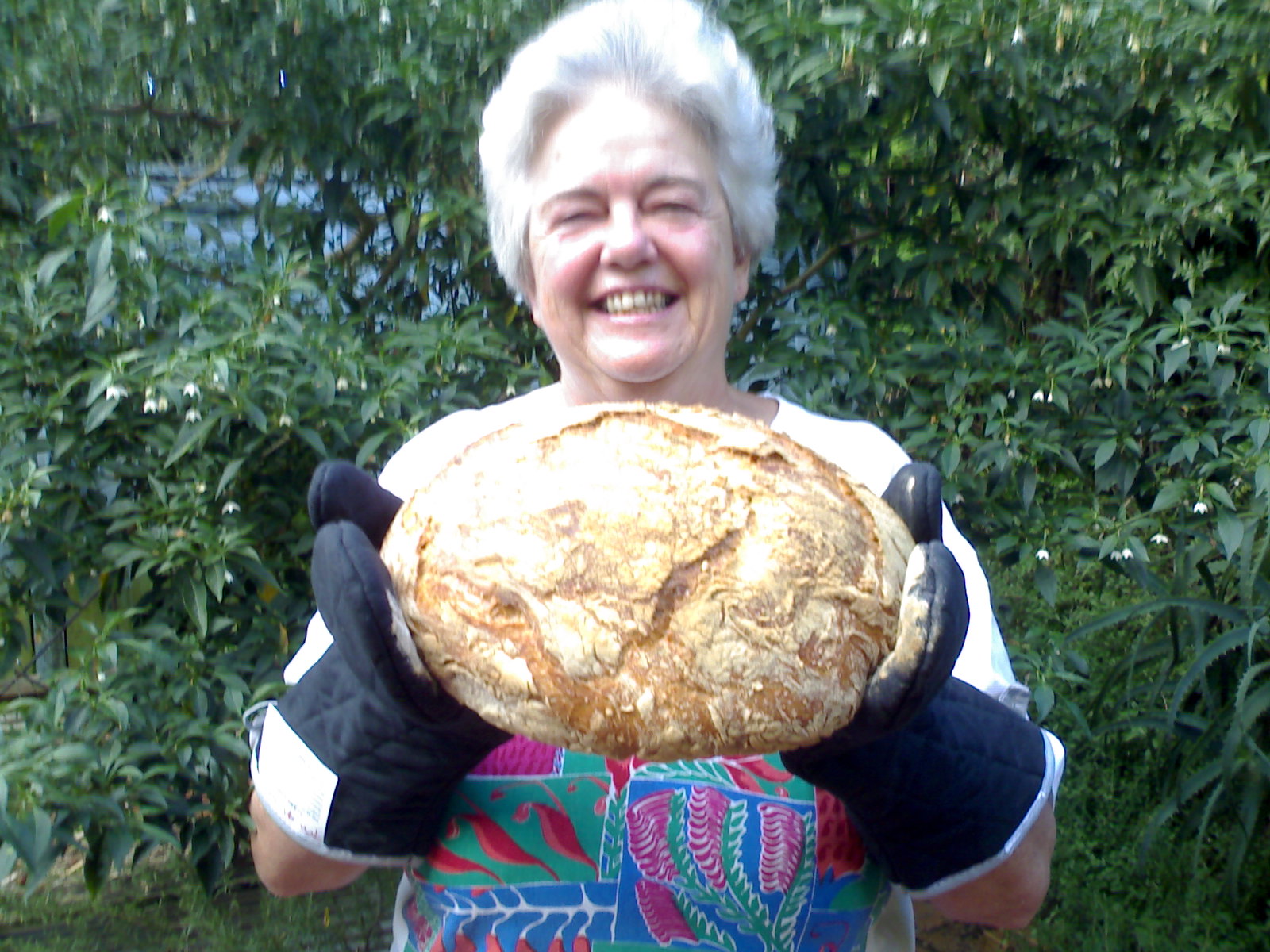
Susi Papi with a beautiful double size loaf of no knead bread - about 3 days supply for Sister T
THE BELLY HOUSE NO-KNEAD BREAD
Having found and tried and adapted this recipe, I now leave it to my partner who EVERY TIME turns out a better bread than I can. I think the secret is being very absent minded and forgetting it at every step, especially while it is cooking. It probably helps that we have a really good, solid cast iron pot that holds the heat, and a standard electric oven that can’t get too hot. Also making it twice a week (because I cry when there is none left), means much practice and no need to worry about quantities any more. But even the first time, when I miscounted the cups of water and ended up with a ridiculous liquid mess, still cooked to a fine tasting (though flat and funny looking) crusty loaf. Yes, crusty bread in Byron Bay is possible!
3 cups bread flour; more for work surface [1]
1/4 tsp instant yeast
1 1/4 tsp salt
cornmeal or wheat bran or more white flour
note : we now double the quantities because it keeps so well and I eat so much, to save work and electricity. But try this size until you have mastered the only tricky bit, getting it into a heated pot without getting burned.
In a large bowl, combine flour, yeast, and salt. Add 1 5/8 cups water, [=1 and 1/2 cups, then keep another spoonful or 2 ready, see if it needs the extra water to come together – usually yes]
And stir until just blended; dough will be shaggy and sticky. Cover bowl with a plate. Let dough rest at least 12 hours, but preferably up to
18 [even 24], at room temperature. When surface is dotted with bubbles, dough is ready.
Lightly flour work surface. Place dough on work surface and sprinkle with more flour. Fold the dough over on itself once or twice. Cover with bowl and let rest about 15 minutes.
Sprinkle just enough flour over work surface and your fingers to keep dough from sticking; quickly and gently shape dough into a ball.
Generously flour the bowl with plain flour, cornmeal/polenta flour, or wheat bran; place dough seam side down in bowl and dust with more flour. Cover with a towel and let rise until it has more than doubled in size and does not readily spring back when poked with a finger, about 2 hours. The original recipe calls for rising bread in between floured tea-towels, but we now have got tired of cleaning bread dough from tea towels and find this works just as well.
After about 1 1/2 hours, preheat oven to 220-230°C. Place a large heavy covered pot, such as cast iron or Pyrex, in oven as it heats (for 20 to 30 minutes). When dough has fully risen, carefully remove pot from oven. Sprinkle some flour on the bottom of the pot. Gently put dough into VERY HOT pot. Shake pot once or twice if dough looks unevenly distributed; it will straighten out as it bakes. Cover, and bake 30 minutes. [40 in our oven]
Uncover, and continue baking until browned, about 30 minutes. [tap to see if it feels crusty and hollow] Cool on a wire rack. In our climate it’s better to get it very crusty at this stage, anything else will lose the crust in a few hours. If baked long enough, this is the only bread we have found here that will stay crusty – and not mouldy (!) for days.
[1] We use bakers’ white flour (5 kg bags) or organic white as the base usually, sometimes 1 cup of wholemeal/kamut/semolina etc
Depending on the oven and the pot used, you may not need to leave the oven on so long before baking – but at least 10 minutes after it reaches 220-230 is good.
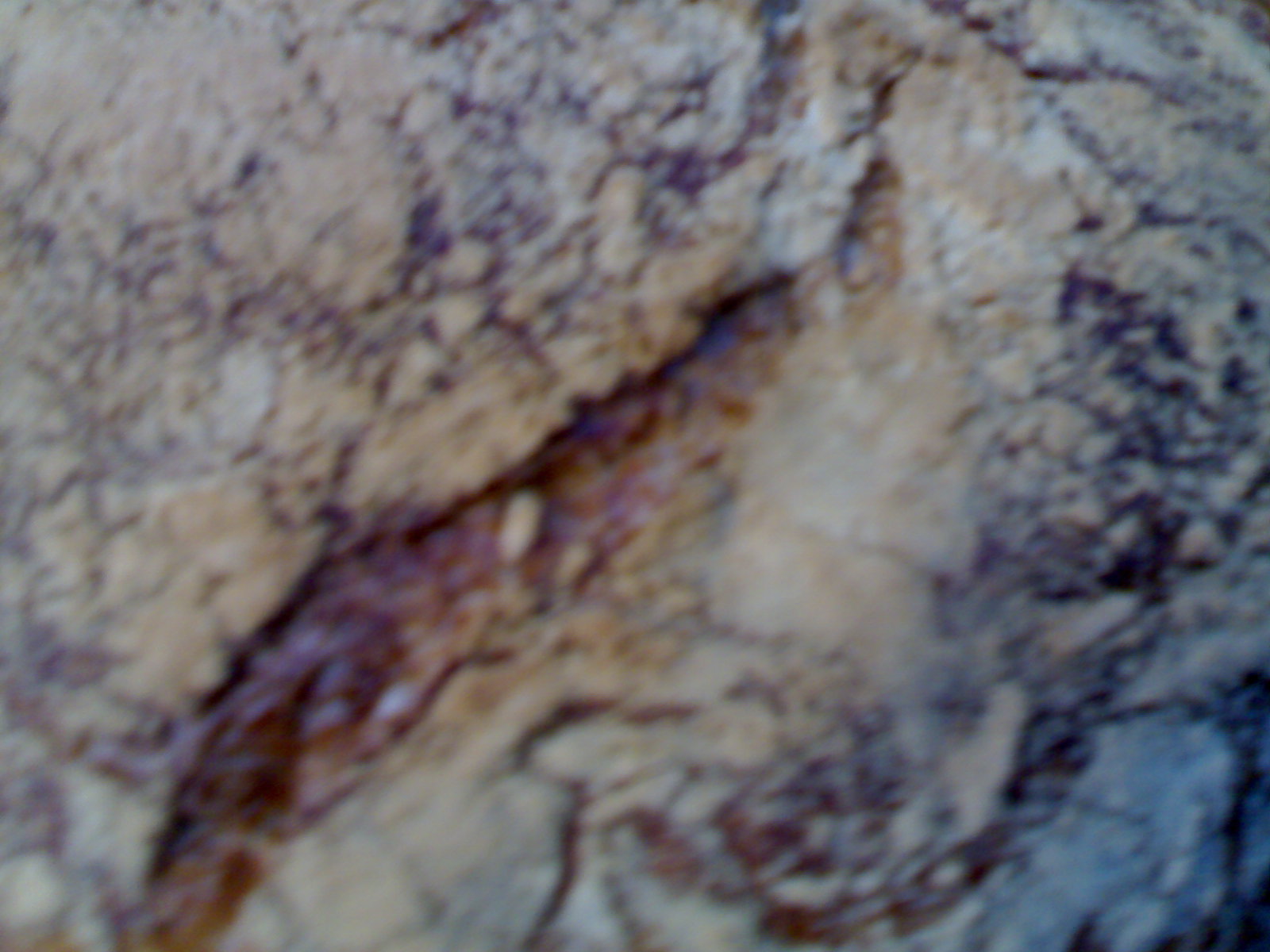
this bread is so crusty it should have dreadlocks
Susi has promised more stories in the near future – it seems she was in London when it was called Swinging, too – if I can find a vague food link, we’ll be there.
Love and chocolate sandwiches,
Sister T
MUSIC
Herbie Hancock’s story of “the Watermelon Man” is on the album “Watermelon Man, the ultimate Hancock!”
Sapore di Sale by Gino Paoli, 1963
On the sunny side of the street by Kermit Ruffins, from Putamayo presents kermit Ruffins
Cantiam, facciamo brindisi (Let’s sing, let’s toast) from the opera L’elisir d’amore (the elixir of love), by Donizetti
Les Moissoneurs (the haymakers) by Couperin, performed by John Williams on guitar, from “the baroque album”